
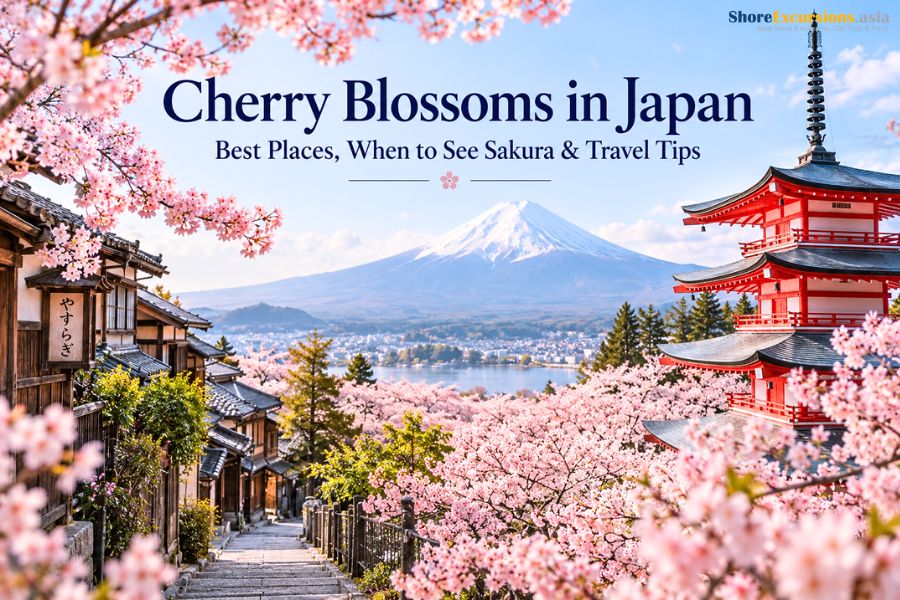
Cherry blossoms in Japan are one of the country’s most anticipated seasonal experiences. For a few short weeks each spring, riversides, temple gardens, castle grounds and city parks turn pink and white as sakura moves gradually from the warmer south toward northern Japan.
But planning a cherry blossom trip is not as simple as choosing “April in Japan.” Tokyo, Kyoto, Mount Fuji, Kanazawa, Aomori and Hokkaido do not bloom at the same time, and even a few days of warmer or colder weather can change the best viewing period. The right destination therefore depends just as much on when you are visiting as where you want to go.
At Shore Excursions Asia, we help travelers explore Japan from major cruise ports with itineraries built around actual port times, local travel distances and comfortable sightseeing. This guide explains when cherry blossom season usually occurs, the best places to see sakura across Japan and how to choose the right destination for your spring travel dates.
If you are arriving by cruise ship, you can also browse our Japan shore excursions for private and small-group experiences from major ports including Yokohama, Kobe, Shimizu, Hiroshima, Kanazawa, Hakodate and Aomori.
When Is Cherry Blossom Season in Japan?
Cherry blossom season does not happen across Japan at once.
Flowering generally begins earlier in warmer southern and central areas before progressing north through the country. Major cities such as Tokyo, Kyoto, Osaka and Hiroshima are usually associated with late March and early April, while northern destinations such as Aomori and Hakodate tend to bloom considerably later.
The following periods are useful as general planning windows rather than exact forecasts:
| Destination / Region | Typical Sakura Planning Window |
|---|---|
| Southern Kyushu | Late March |
| Tokyo & Yokohama | Late March to Early April |
| Kyoto, Osaka & Kobe | Late March to Early April |
| Hiroshima | Late March to Early April |
| Mount Fuji / Lake Kawaguchi | Early to Mid April, depending on elevation |
| Kanazawa | Early to Mid April |
| Aomori / Hirosaki | Mid to Late April |
| Hakodate | Late April to Early May |
These are not guaranteed bloom dates. Winter temperatures, spring warmth, rainfall, elevation and individual cherry varieties all influence flowering.
If seeing sakura is one of the main reasons for your trip, check the current seasonal forecast again shortly before departure rather than relying only on a calendar prepared months in advance.
How Long Do Cherry Blossoms Last in Japan?
The short lifespan of the flowers is part of what makes sakura season so special.
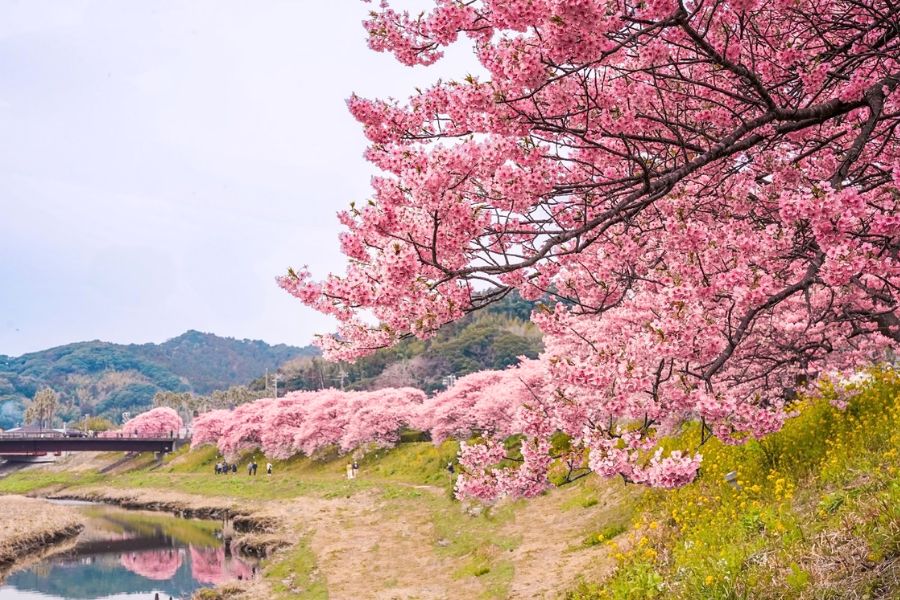
After trees reach full bloom, the strongest display may last only around a week. Cool and calm conditions can preserve the flowers longer, while heavy rain, strong wind or sudden warmth may shorten the viewing period.
The entire local season is usually longer than the exact full-bloom period because trees move through several stages:
- buds begin to open;
- early flowering appears;
- the trees approach full bloom;
- petals begin to fall;
- the ground and waterways may become covered with scattered petals.
A location does not have to be at mathematically perfect “full bloom” to be worth visiting. Early blossoms and falling petals can both create memorable spring scenery.
What Month Is Best to See Cherry Blossoms in Japan?
For a first visit covering Tokyo, Kyoto or Osaka, late March through early April is generally the most useful period to consider.
However, there is no single best month for the whole country.
Late March
Late March is when the main season often begins across many warmer parts of central and western Japan.
Destinations such as Tokyo, Kyoto, Osaka and Hiroshima may begin flowering during this period depending on the year.
This is a popular travel period, so hotels, trains and major attractions can also become very busy.
Early April
Early April is one of the most sought-after periods for sakura travel because many of Japan’s classic sightseeing destinations may be flowering around this time.
Tokyo, Kyoto, Osaka, Kobe and Hiroshima can all be strong choices, while slightly cooler or higher-altitude areas may still be approaching their best period.
Mid April
By mid April, travelers should begin looking toward cooler areas, northern regions and destinations at higher elevations.
Kanazawa and the Mount Fuji area may offer good opportunities depending on seasonal conditions.
This period is especially useful for travelers who cannot visit Japan during the crowded late-March and early-April peak.
Late April to Early May
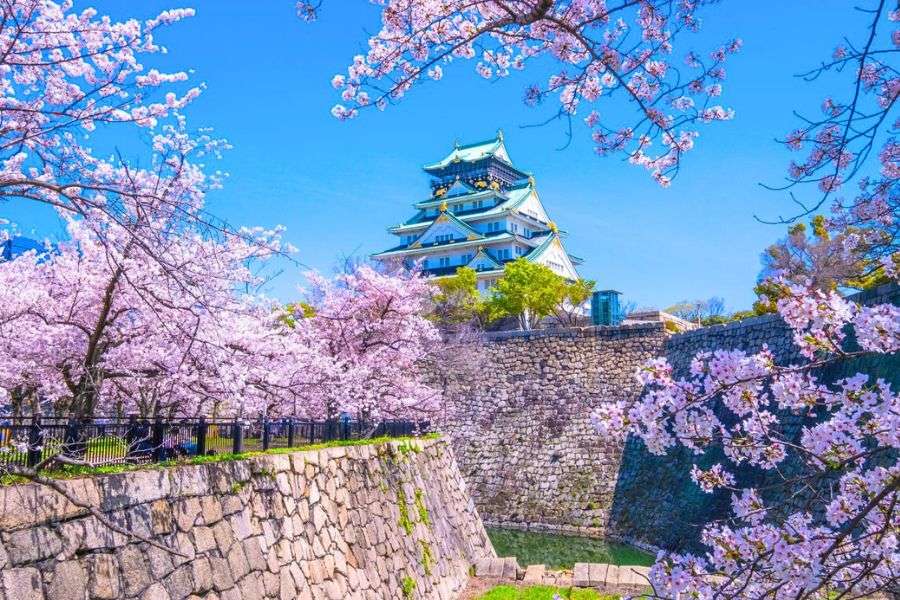
Northern Japan extends the cherry blossom season significantly beyond Tokyo and Kyoto.
Aomori, Hirosaki and Hakodate are particularly important for late-season travelers.
For cruise passengers sailing through northern Japan in late April, these ports can provide sakura opportunities weeks after blossoms have disappeared from many areas farther south.
Best Places to See Cherry Blossoms in Japan
Tokyo: Classic Urban Cherry Blossom Scenery
Tokyo offers one of the broadest selections of cherry blossom experiences in Japan.
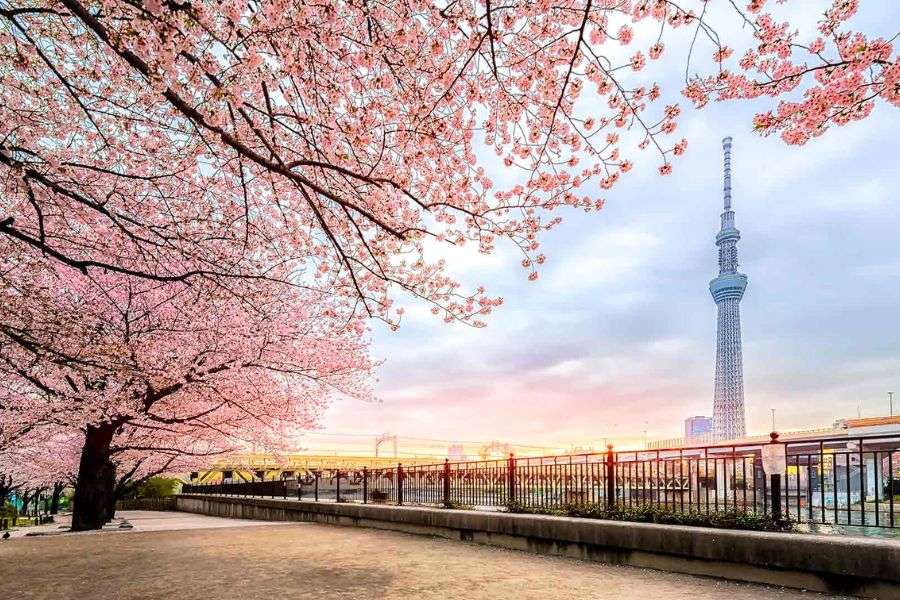
The city combines riverside walks, large public parks, landscaped gardens and historic moats, meaning travelers can choose between energetic hanami areas and quieter settings.
Popular locations include:
- Shinjuku Gyoen National Garden
- Chidorigafuchi
- Meguro River
- Ueno Park
- Sumida Park
Shinjuku Gyoen is especially useful because the garden contains multiple varieties of cherry trees with different flowering periods. That can provide opportunities outside the narrow peak of the most common Somei Yoshino trees.
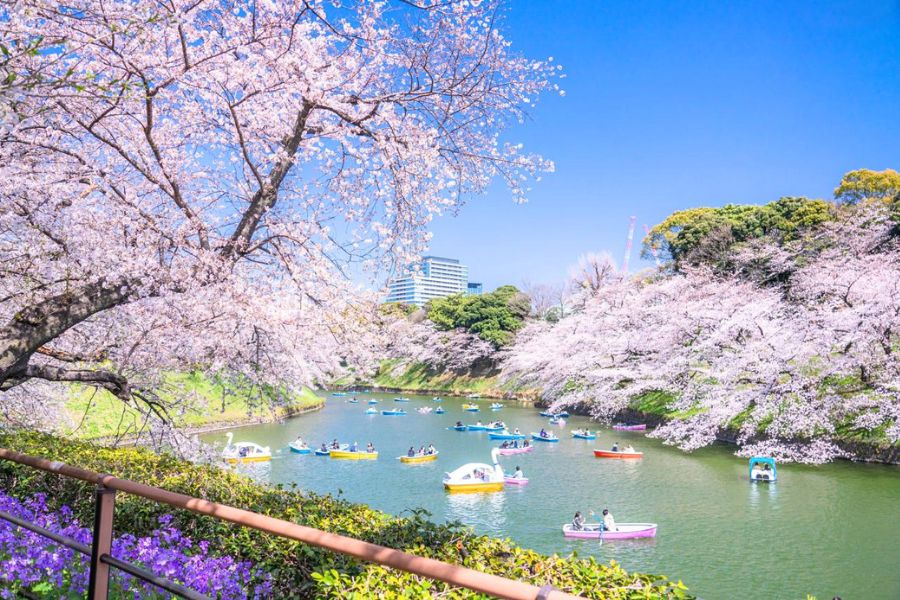
Chidorigafuchi is known for cherry trees around the former Edo Castle moat, while Meguro River creates a more urban experience with blossoms lining the water through the surrounding neighborhoods.
Cruise passengers arriving through Yokohama can reach Tokyo during longer port calls. If Tokyo sightseeing is part of your cruise itinerary, explore our Yokohama shore excursions for routes from the cruise port into Tokyo and surrounding destinations.
Kyoto: Sakura Among Temples and Traditional Streets
Kyoto is one of the most atmospheric destinations for cherry blossoms because the flowers appear within landscapes already filled with temples, canals, gardens and traditional architecture.
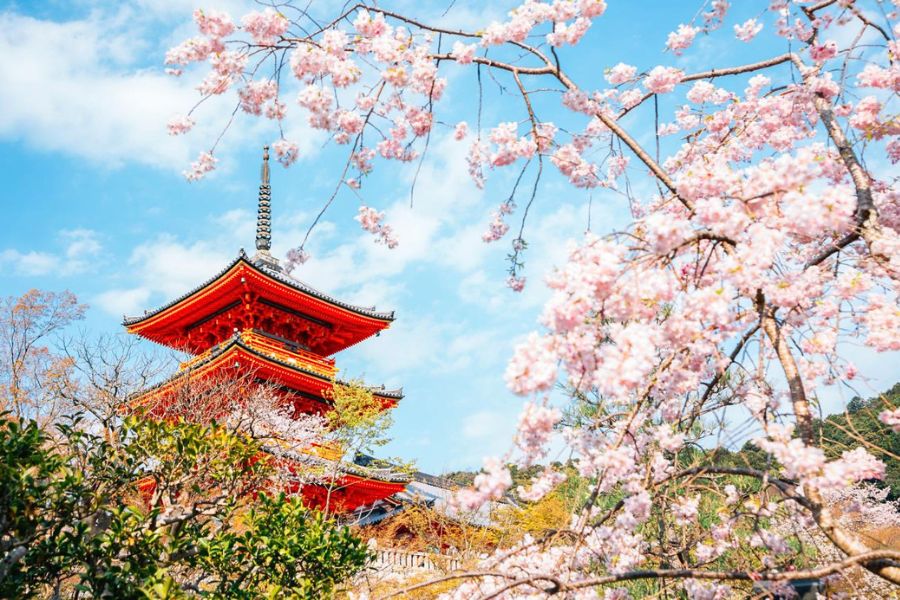
Some of the best-known locations include:
- Philosopher’s Path
- Maruyama Park
- Kiyomizu-dera area
- Arashiyama
- Keage Incline
The Philosopher’s Path follows a canal through northern Higashiyama and becomes lined with blossoms during spring.
Maruyama Park is another classic hanami area, while the historic lanes and temple districts around Higashiyama allow visitors to combine blossoms with some of Kyoto’s most recognizable architecture.
Kyoto can be reached from Kobe during a sufficiently long cruise call, but port passengers should avoid trying to cover Kyoto, Osaka and Nara all in the same day. Browse our Kobe shore excursions for routes designed around realistic port-day travel times.
Osaka: Castle Grounds and Riverside Sakura
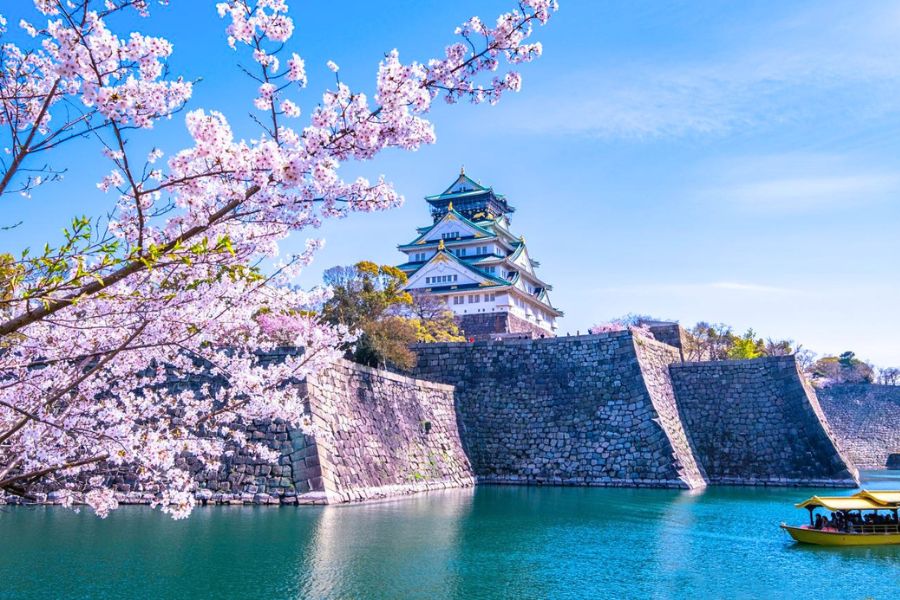
Osaka provides a more urban cherry blossom experience than Kyoto but has several excellent viewing areas.
Osaka Castle Park is the headline location. Cherry trees spread around the castle grounds, combining the reconstructed castle tower with broad spring landscapes.
The nearby Nishinomaru Garden is particularly popular during blossom season.
Kema Sakuranomiya Park offers another experience, with long riverside stretches lined with cherry trees along the Okawa River.
For cruise passengers arriving at Kobe, Osaka can often be easier to reach than Kyoto and may allow more sightseeing time ashore. Available options can be found through our Kobe cruise tours.
Himeji Castle: Sakura Around Japan’s White Castle
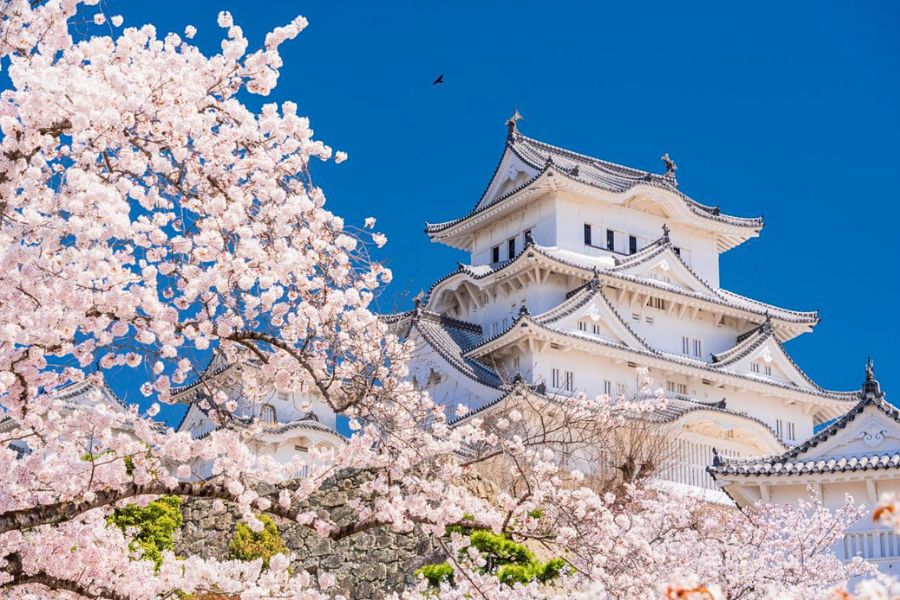
Few spring scenes are more recognizably Japanese than cherry blossoms surrounding Himeji Castle.
The brilliant white castle rises above the surrounding grounds while pink and white blossoms frame its walls, gates and defensive structures.
Himeji works particularly well for travelers interested in both seasonal scenery and Japanese history because the castle itself remains the main reason to visit even if bloom timing is not perfect.
Passengers docking in Kobe may consider Himeji as an alternative to Kyoto or Osaka during a longer call. Our Kobe shore excursions include a range of day-trip options across the Kansai region.
Mount Fuji and Lake Kawaguchi: Sakura with Japan’s Most Famous Mountain
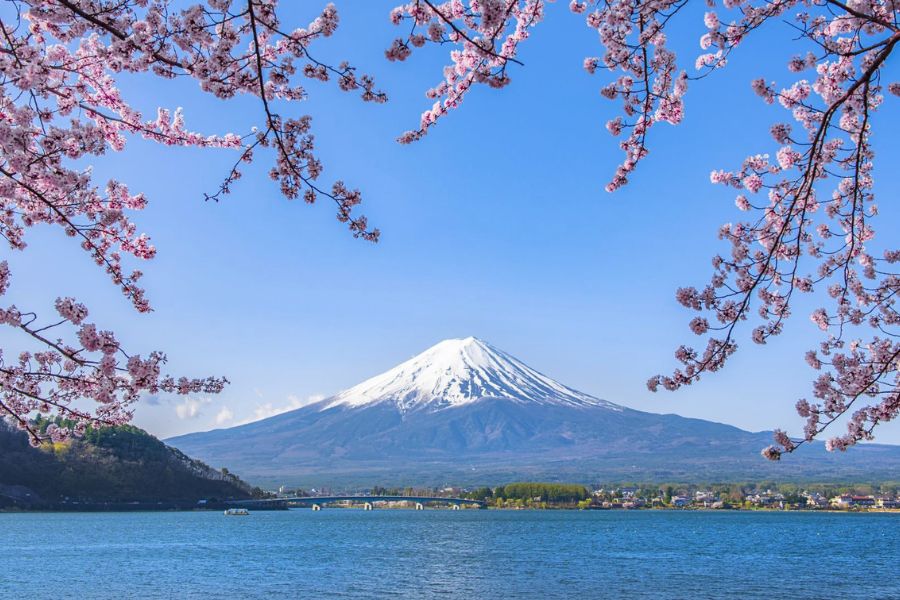
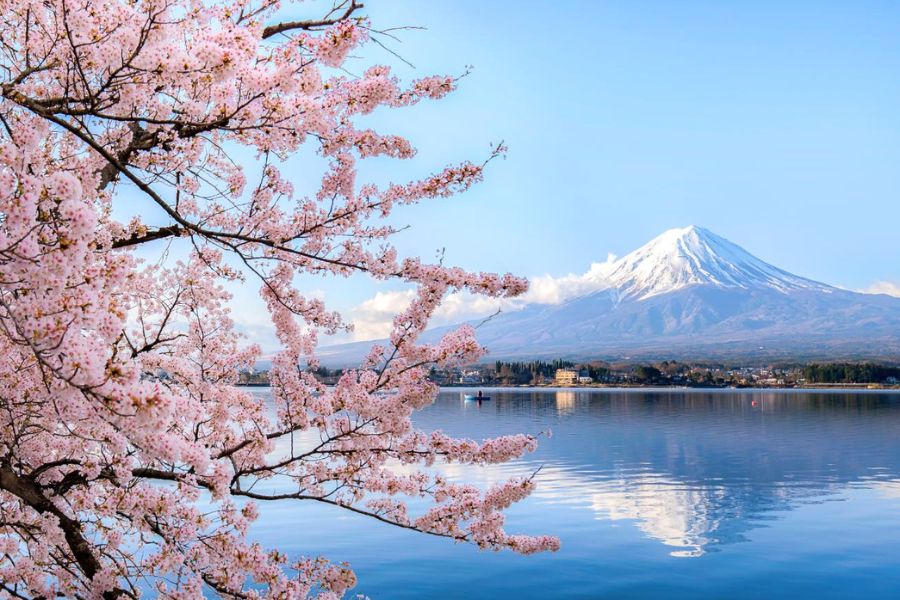
Cherry blossoms and Mount Fuji together create one of Japan’s most iconic spring landscapes.
The northern shore of Lake Kawaguchi is particularly popular when the weather is clear, with sakura in the foreground and Mount Fuji rising beyond the lake.
Because the Fuji Five Lakes sit at a higher elevation than Tokyo, flowering can occur later than in the capital.
This difference can work in favor of travelers arriving after Tokyo’s main blossom period has finished.
The important limitation is visibility. Even during perfect cherry blossom conditions, clouds can hide Mount Fuji completely.
Travelers should therefore choose the area because they value the wider lake and Fuji-region experience rather than expecting a guaranteed clear mountain view.
Passengers arriving at Shimizu can explore Mount Fuji and the wider Shizuoka region through our Shimizu shore excursions. Travel time to individual Fuji-area blossom locations depends on the ship schedule and road conditions, so the route should be planned around the actual port call.
Kanazawa: Kenrokuen Garden and Castle Park
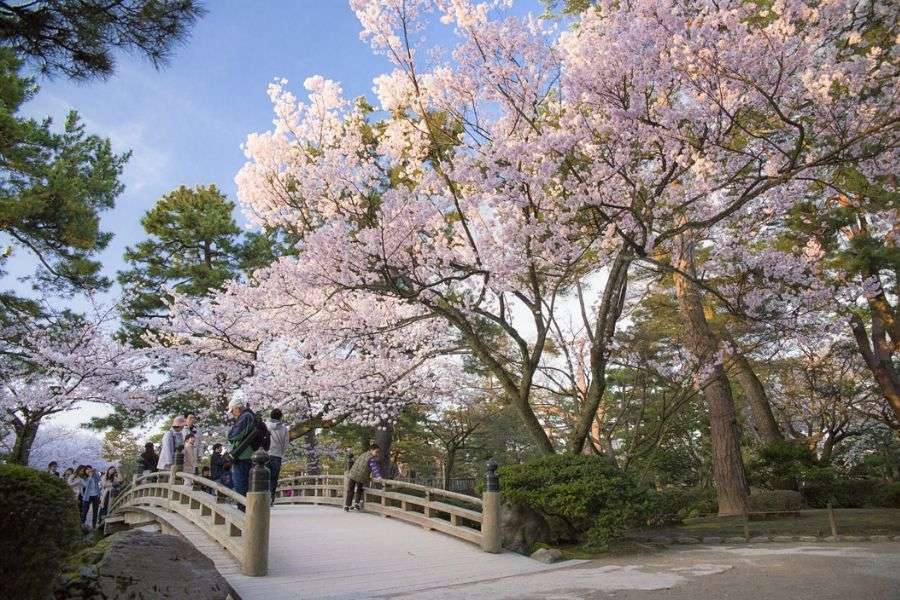
Kanazawa is one of the strongest choices for travelers visiting slightly later in the spring season.
The city combines a compact historic center with one of Japan’s most celebrated landscape gardens.
Kenrokuen Garden becomes especially attractive when cherry blossoms appear around ponds, bridges and traditional garden scenery.
Nearby Kanazawa Castle Park adds another layer of seasonal interest, while districts such as Higashi Chaya and Nagamachi allow travelers to combine sakura with geisha and samurai heritage.
For cruise visitors arriving directly at Kanazawa Port, see our Kanazawa shore excursions for routes including Kenrokuen, historic districts and other city highlights.
Hiroshima: Peace Memorial Park and Riverside Blossoms
Hiroshima’s rivers create many natural settings for cherry blossoms, and spring gives the city a noticeably softer atmosphere.
Peace Memorial Park is one of the easiest blossom areas for first-time visitors because sightseeing there already forms part of most Hiroshima itineraries.
Cherry trees appear along the rivers and park spaces around the memorial district, allowing visitors to experience the season without traveling to a separate garden purely for sakura.
Hiroshima Castle also provides additional spring scenery when time allows.
Passengers arriving at Hiroshima cruise port can combine seasonal sightseeing with the city’s historical sites through our Hiroshima shore excursions.
Miyajima: Sakura Around Shrines and Island Landscapes
Miyajima offers a very different spring setting from central Hiroshima.
Cherry trees appear around temple and shrine areas, wooded slopes and walking paths across the island, adding seasonal color to the famous Itsukushima Shrine landscape.
A Miyajima visit can often be combined with Hiroshima city during a longer cruise call, although ferry timing and all-aboard requirements need to be considered carefully.
If the port schedule is short, it may be better to focus on either Hiroshima city or Miyajima rather than rushing through both.
Our Hiroshima shore excursions include both city-focused itineraries and routes combining Hiroshima with Miyajima.
Aomori and Hirosaki: One of Japan’s Best Late-Sakura Destinations
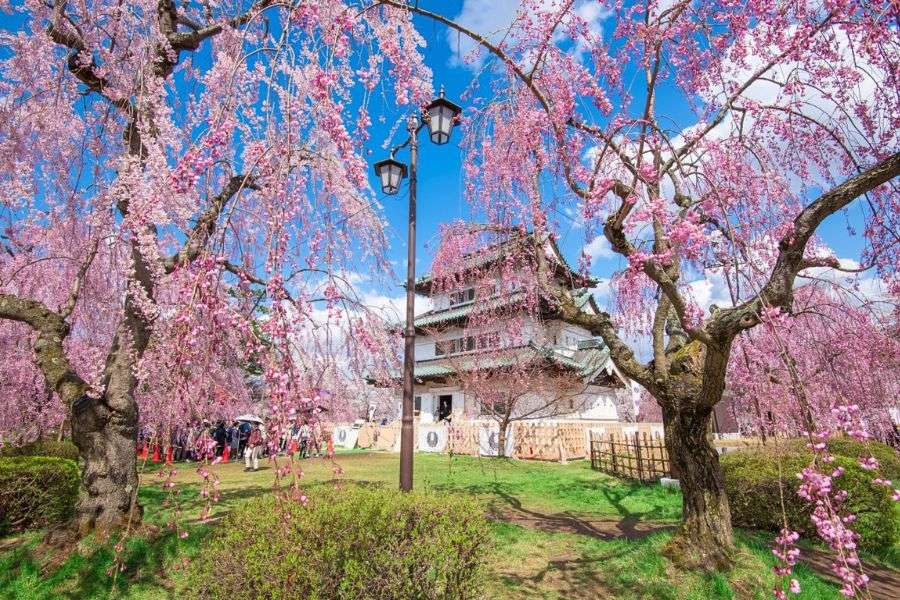
Travelers visiting northern Honshu later in April should consider Aomori Prefecture.
Hirosaki Park is one of Japan’s most celebrated cherry blossom destinations. Thousands of trees spread around the former castle grounds, creating blossom tunnels, reflections in the moats and areas where fallen petals can cover the water.
Because Aomori is significantly farther north than Tokyo or Kyoto, flowering normally occurs later.
This makes Hirosaki especially valuable to travelers whose Japan trip begins after the main central-Japan bloom has finished.
Cruise passengers arriving at Aomori can reach Hirosaki during an appropriately timed port day. Browse our Aomori shore excursions for routes to Hirosaki and other northern Japan highlights.
Hakodate: Goryokaku in Late April and Early May
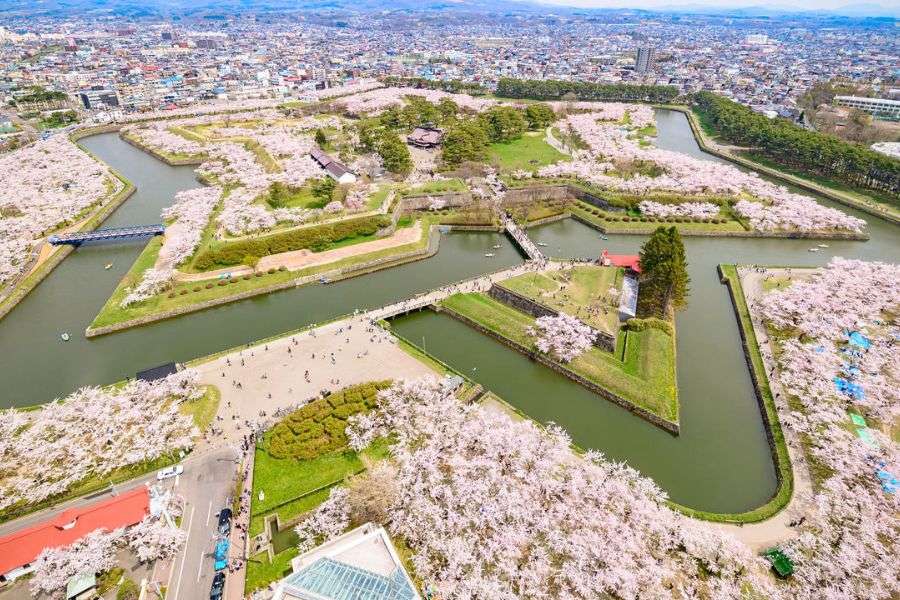
Hakodate is one of Japan’s most distinctive late-season cherry blossom destinations.
The main attraction is Goryokaku Park, where cherry trees surround a star-shaped nineteenth-century fort.
From Goryokaku Tower, visitors can look down across the geometric fort with blossoms filling the grounds and tracing sections of the moat.
The combination of the star-shaped layout and spring color creates a scene unlike Japan’s traditional castle parks.
Hakodate also offers the advantage of timing. While Tokyo and Kyoto may be completely green again by late April, southern Hokkaido can still be approaching its main sakura season.
If your spring cruise reaches Hokkaido later in the season, browse our Hakodate shore excursions. SEA currently offers Hakodate itineraries that include Goryokaku and other city highlights.
Best Japan Cruise Ports for Cherry Blossom Season
For cruise passengers, finding the most famous cherry blossom location is only part of the planning process.
The destination must also be realistic from the ship.
A beautiful sakura spot located three hours inland may be a poor choice during a short port call, while a slightly less famous garden close to the terminal can provide a much better overall day.
Yokohama: Access to Tokyo Sakura
Yokohama provides access to Tokyo’s large selection of gardens, parks and riverside blossom areas.
This works best when the ship has a long enough stay to account for travel between Yokohama and central Tokyo.
Instead of trying to visit several blossom locations, choose one or two that fit naturally with the Tokyo attractions you already want to see.
Explore available Yokohama shore excursions for Tokyo and Kamakura routes from the cruise port.
Kobe: Access to Kyoto, Osaka and Himeji
Kobe is especially useful during cherry blossom season because several major Kansai destinations are possible from the port.
However, the choice should normally be between Kyoto, Osaka or Himeji, rather than attempting all three.
Kyoto offers temples and traditional neighborhoods, Osaka provides castle and riverside scenery, while Himeji combines sakura with one of Japan’s most impressive original castles. Compare options through our Kobe shore excursions.
Shimizu: Fuji Scenery and Later Spring Blooms
Shimizu is particularly attractive for travelers hoping to combine spring flowers with Mount Fuji scenery.
Because elevation affects flowering time, some Fuji-area locations can bloom after Tokyo.
Road travel is a major consideration, however. Cruise passengers should choose a Fuji-area route that fits the hours genuinely available rather than selecting a destination only because it appears on a “best sakura spots” list.
See current Shimizu shore excursions for Mount Fuji and Shizuoka sightseeing options.
Hiroshima: Sakura Without Leaving the Main Sightseeing Route
Hiroshima is one of the easiest ports for passengers who want cherry blossoms without restructuring the entire shore day around them.
Peace Memorial Park, riverside areas, Hiroshima Castle and Miyajima can all provide seasonal scenery while remaining meaningful attractions even if the flowers are early or late.
Browse our Hiroshima shore excursions for city and Miyajima itineraries.
Kanazawa: Gardens and Traditional Districts
Kanazawa often becomes useful when the main Tokyo and Kyoto season begins to move north.
Kenrokuen and Kanazawa Castle Park provide obvious spring highlights, while Higashi Chaya and Nagamachi ensure that the day remains worthwhile even if blossom timing is not perfect.
See our Kanazawa shore excursions for port-based city routes.
Aomori: Late-Season Hirosaki Sakura
Aomori is one of the strongest ports for cruise passengers traveling later in April.
Hirosaki Park is the headline destination, although the road journey means passengers need sufficient time ashore rather than treating Hirosaki as a quick add-on.
Browse Aomori shore excursions for Hirosaki-focused routes and other regional options.
Hakodate: Sakura After Central Japan Has Finished
Hakodate can extend a traveler’s cherry blossom season into late April or early May.
Goryokaku is also relatively easy to combine with other Hakodate attractions during a normal cruise call, making it particularly practical for port passengers.
Explore our Hakodate shore excursions for city and spring sightseeing options.
How to Choose Where to See Sakura Based on Your Travel Dates
If You Visit Japan in Late March
Look first toward central and western Japan.
Tokyo, Kyoto, Osaka, Kobe and Hiroshima may all become possibilities depending on that year’s weather.
Do not assume every city will be at the same stage. Even within central Japan, flowering can differ by several days.
If You Visit in Early April
This is generally the broadest period for first-time travelers.
Tokyo, Kyoto, Osaka and Hiroshima can still be strong, while slightly cooler destinations may be moving toward peak bloom.
If your itinerary crosses several Japanese ports, you may encounter different blossom stages during the same trip.
If You Visit in Mid April
Begin looking farther north and toward higher elevations.
Kanazawa and parts of the Fuji region may offer more promising timing than Tokyo.
By this stage, relying entirely on famous Tokyo and Kyoto photographs from earlier weeks can lead to disappointment.
If You Visit in Late April
Aomori, Hirosaki and southern Hokkaido become much more relevant.
This is one reason a northern Japan cruise itinerary can be particularly rewarding in spring.
Travelers may find that Tokyo has finished flowering while Hirosaki or Hakodate is only beginning.
If You Visit Around Early May
Hokkaido provides some of Japan’s latest major cherry blossom opportunities.
Hakodate is one of the easiest late-season destinations for cruise passengers thanks to Goryokaku and the compact nature of the city.
How to Use Japan’s Cherry Blossom Forecast
Cherry blossom forecasts are useful, but they should not be treated like fixed event schedules.
Forecasts generally estimate dates such as:
- first flowering;
- approaching full bloom;
- expected peak viewing.
These estimates become more reliable as spring approaches.
If you are planning months in advance, use the normal regional pattern to choose your itinerary. Then check updated forecasts closer to the trip.
For cruise travelers, the ship date cannot usually be changed just because flowers bloom three days early. The better strategy is to identify several realistic attractions from the same port and adjust the final sightseeing route according to local conditions.
What Happens If You Miss Peak Bloom?
Missing the exact peak does not mean the port day has failed.
If trees are still opening, you may encounter less crowded conditions and a mixture of buds and flowers.
After full bloom, falling petals can create some of Japan’s most atmospheric spring scenes, particularly around castle moats, rivers and garden paths.
The strongest itineraries therefore combine sakura with attractions that have independent value.
Examples include:
- Tokyo gardens combined with major city sightseeing;
- Kyoto blossoms combined with historic temples;
- Mount Fuji scenery combined with Shizuoka highlights;
- Hiroshima blossoms combined with Peace Memorial Park;
- Miyajima blossoms combined with Itsukushima Shrine;
- Kanazawa blossoms combined with Kenrokuen and historic districts;
- Goryokaku blossoms combined with Hakodate city sightseeing.
This approach protects the day from the unpredictable nature of the season.
Cherry Blossom Season and Crowds in Japan
Sakura season is one of Japan’s busiest domestic and international travel periods.
Famous places such as Kyoto, Tokyo and Osaka can become extremely crowded during peak bloom, particularly on weekends and during good weather.
Allow more time than normal for:
- traffic around major attractions;
- walking through busy parks;
- restaurant queues;
- public transport;
- parking and vehicle access;
- photography stops.
For cruise passengers, this matters because a route that works comfortably in November may require more time during peak sakura season.
Do not compensate for crowds by reducing the buffer needed to return to the ship.
What to Wear During Cherry Blossom Season in Japan
Spring weather in Japan can change significantly during the day.
Sunny afternoons may feel mild, but mornings, evenings and cloudy days can still be cool.
Layered clothing is generally more practical than one heavy coat.
Comfortable walking shoes are also important because many of the best blossom experiences involve parks, temple grounds, castle areas and riverside paths.
Travelers visiting Mount Fuji, Kanazawa, Aomori or Hokkaido should expect cooler conditions than passengers visiting Tokyo or Hiroshima during the same week.
Is Cherry Blossom Season Suitable for Senior Travelers?
Yes, but route design matters.
There is no need to walk for hours beneath sakura trees to enjoy the season.
Senior-friendly options include gardens with clear paths, castle parks with vehicle access nearby, observation towers and routes where a private vehicle connects several short sightseeing stops.
For example:
- Goryokaku Tower allows passengers to see Hakodate’s blossom-filled fort from above;
- Kenrokuen can be explored selectively rather than covering every garden path;
- Hiroshima combines flat central sightseeing with seasonal riverside scenery;
- selected Tokyo gardens allow visitors to enjoy sakura without a long cross-city walking route.
When choosing a shore excursion, consider not only total tour duration but also walking distance, stairs, temperature and how often you can rest during the day.
Can Cruise Passengers See Cherry Blossoms in Japan?
Yes. Japan cruises between late March and early May can provide excellent opportunities to see cherry blossoms.
However, cruise passengers face a different planning challenge from land travelers.
Your port date is fixed, while the flowers are not.
The most effective strategy is therefore to plan around:
- your exact port date;
- the regional blossom window;
- the distance from the port to the viewing area;
- how much sightseeing time is genuinely available;
- alternative attractions if flowering is early or late.
A port close to a famous cherry blossom location is often more useful than chasing the most photographed place in Japan.
For example, a passenger arriving at Hiroshima can experience spring scenery as part of a normal Hiroshima or Miyajima visit, while reaching a distant inland sakura location from another port may consume much of the day.
How to Plan a Cherry Blossom Shore Excursion in Japan
Start with Your Ship Schedule
Check arrival time, expected disembarkation, all-aboard time and actual sightseeing window.
A ship shown as staying in port for eight hours does not necessarily provide eight full sightseeing hours.
Choose the Region Before the Exact Sakura Spot
First determine which destinations fit your date.
Then choose the blossom location that makes sense from your port.
This is more reliable than beginning with a famous park and trying to force it into the itinerary.
Keep an Alternative Route
If bloom timing is poor, the day should still work.
Choose destinations where temples, castles, gardens, food or historic districts remain worthwhile without cherry blossoms.
Do Not Overload the Day
Sakura season adds crowds and often increases travel time.
Trying to visit four blossom spots usually produces a weaker experience than spending meaningful time at one or two locations.
Move Back Toward the Port Later in the Day
For long-distance excursions, visit the farthest location first where practical and gradually work back toward the ship.
This provides more flexibility if crowds or traffic affect the schedule.
Explore Japan in Spring with Shore Excursions Asia
Cherry blossom season can make an ordinary Japan port call extraordinary, but the best experience comes from matching the destination to your travel date and available time ashore.
Shore Excursions Asia offers private and small-group shore excursions across Japan, with itineraries designed around cruise schedules, realistic travel times and comfortable sightseeing.
Depending on your itinerary, you can explore Tokyo from Yokohama, Kyoto or Osaka from Kobe, Mount Fuji scenery from Shimizu, spring landscapes around Hiroshima, Kenrokuen from Kanazawa, late-season sakura from Aomori or Goryokaku through our Hakodate shore excursions.
Browse all Japan shore excursions or create your own private itinerary based on your cruise port, arrival date, interests and preferred walking pace.
Frequently Asked Questions About Cherry Blossoms in Japan
What month is cherry blossom season in Japan?
Japan’s main cherry blossom season generally runs from late March through April, although flowering begins and ends at different times across the country. Tokyo, Kyoto, Osaka and Hiroshima are commonly associated with late March and early April, while Aomori and Hokkaido bloom later.
Is March or April better for cherry blossoms in Japan?
Both can work. Late March can be suitable for warmer parts of central and western Japan, while early April often provides more possibilities across Tokyo, Kyoto and Osaka. Travelers visiting later in April should look farther north or toward cooler regions.
How long do cherry blossoms stay in full bloom?
Full bloom is short and may last around a week under favorable conditions. Wind, rain and temperature can shorten or extend the display, which is why travelers should avoid depending on one exact date months in advance.
Where is the best place to see cherry blossoms in Japan?
There is no single best place. Tokyo is convenient and varied, Kyoto combines sakura with temples and traditional streets, Mount Fuji offers iconic scenery, Hiroshima and Miyajima combine blossoms with major historic attractions, while Hirosaki and Hakodate are excellent later in the season.
Where can I see cherry blossoms with Mount Fuji?
Lake Kawaguchi and other Fuji Five Lakes locations are among the best-known places to combine cherry blossoms with Mount Fuji. Flowering is often later than Tokyo because of the area’s elevation, but clear views of the mountain are always weather-dependent.
Where can I see cherry blossoms in late April?
Late April is a good time to consider northern Japan. Hirosaki in Aomori Prefecture and Hakodate in southern Hokkaido are two of the most important late-season destinations.
Can I see cherry blossoms in Japan in May?
Yes, particularly in Hokkaido during some years. Hakodate and destinations farther north can still have blossoms around late April and early May depending on seasonal conditions.
Is Kyoto better than Tokyo for cherry blossoms?
They offer different experiences. Kyoto combines blossoms with temples, canals and traditional neighborhoods, while Tokyo offers a greater variety of large gardens, urban river scenery and parks. Choose according to the wider destination experience you prefer rather than sakura alone.
Can cruise passengers see cherry blossoms in Japan?
Yes. Yokohama, Kobe, Shimizu, Hiroshima, Kanazawa, Aomori and Hakodate all provide access to spring sightseeing areas. The best port depends on the sailing date because the blossom season moves northward over several weeks.
Which Japan cruise port is best for cherry blossoms?
There is no single best port for the entire season. Yokohama and Kobe can be strong choices around late March and early April, Kanazawa may suit somewhat later arrivals, while Aomori and Hakodate are particularly useful for late-April itineraries.
Do I need to book a special cherry blossom shore excursion?
Not necessarily. Many famous sakura locations can be included within normal city sightseeing routes. However, a private or carefully planned excursion can be useful when the blossom location is farther from port, seasonal crowds are heavy or the route needs to be adjusted around current flowering conditions.
What happens if cherry blossoms bloom early?
Use the port day for attractions that remain worthwhile regardless of flowering. Gardens, temples, castles, markets and historic areas should form the core itinerary, with sakura treated as a seasonal enhancement rather than the only reason for the excursion.
Should I check the cherry blossom forecast before my trip?
Yes. Use general historical windows for early planning, then check updated bloom information closer to departure. Forecasts can shift as temperatures change, particularly when the trip is still several months away.
Cherry blossom timing varies every year according to temperature, rainfall, elevation and local conditions. The regional periods in this guide are intended for travel planning rather than as exact bloom forecasts. Check current local conditions before finalizing a blossom-focused itinerary.


 Contact Us via Messenger
 Send Inquiry