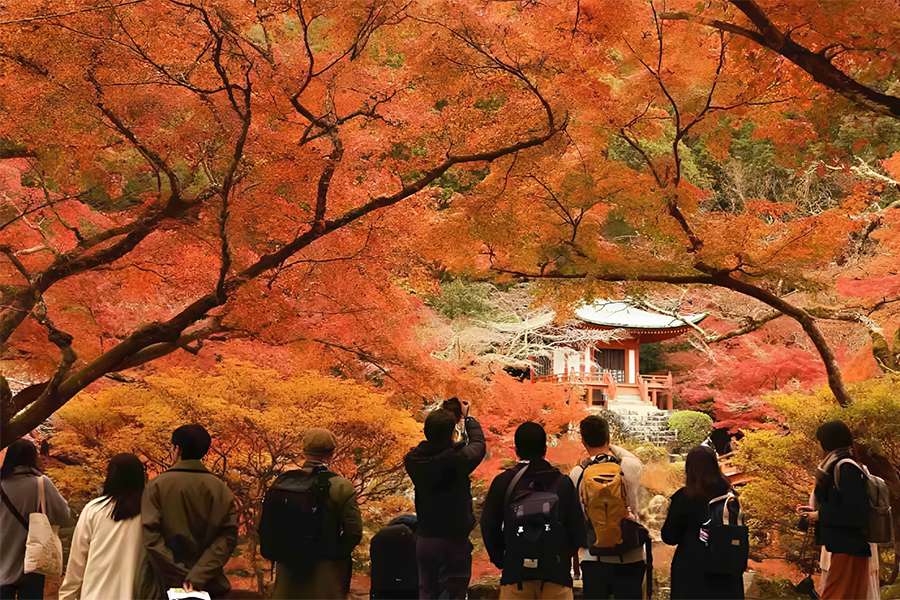
Autumn in Asia brings together golden ginkgo avenues, crimson maple forests, historic temples and mountain landscapes reflected in clear blue lakes. The season does not arrive everywhere at once. Colors can begin in northern Japan and high-altitude areas of China from late September, move through South Korea and Beijing during October, and reach Tokyo and Kyoto from mid-November into early December.
This wide seasonal range gives travelers several opportunities to experience fall foliage during an Asian journey. For cruise passengers, however, timing requires more careful planning. The ship’s port date is fixed, while the strongest colors at an individual location may last for only a limited period.
This updated guide from Shore Excursions Asia introduces eight rewarding places to experience autumn in Asia in 2026. It also explains the expected viewing periods, the character of each destination and whether it can realistically fit into a cruise port day.
When Is Autumn in Asia in 2026?
The broader autumn travel season in Asia runs from September to early December, although the timing varies substantially by latitude, elevation and local weather.
High mountain areas and cooler northern regions generally change first. Warmer cities and lower-elevation destinations follow later. For this reason, a traveler visiting several countries may encounter different stages of the season during the same trip.
- Late September to mid-October: Jiuzhaigou and some high-altitude areas of China
- Mid to late October: Aomori, Oirase Gorge, Nami Island and northern South Korea
- Late October to early November: Seoul, Gyeongju and the Beijing Great Wall area
- Mid-November to early December: Tokyo, Kyoto and Nara
- Late autumn into winter: Selected mountain areas of Taiwan
These periods are intended as general planning windows. Warmer weather may delay the changing leaves, while an early cold spell can bring the colors forward.
Has the 2026 Asia Fall Foliage Forecast Been Released?
Detailed official forecasts for the 2026 autumn foliage season have not yet been released for every country and city covered in this guide. Japan and South Korea normally publish more useful regional forecasts closer to the season, when temperature patterns can be assessed more accurately.
The dates below should therefore be treated as expected viewing periods rather than guaranteed peak days. Travelers should check updated local reports around seven to fourteen days before visiting.
A forecast may also distinguish between the beginning of the color change and peak foliage. The first stage means that part of the forest has started turning, while the richest overall display usually comes later.
Autumn in Asia 2026 at a Glance
The best destination depends on the month of travel and the type of experience you prefer.
- For an early autumn journey: Jiuzhaigou or Aomori
- For mountain forests and waterfalls: Oirase Gorge
- For palaces and urban parks: Seoul or Tokyo
- For temples surrounded by red maples: Kyoto or Gyeongju
- For iconic tree-lined pathways: Nami Island
- For historic landscapes on a grand scale: The Great Wall near Beijing
- For a late-season autumn trip: Tokyo and Kyoto
- For cruise passengers: Aomori, Yokohama, Kobe, Osaka and Busan provide some of the most practical gateways
1. Aomori and Oirase Gorge, Japan
Expected 2026 viewing window: Mid-October to early November.
Aomori Prefecture is one of the first major regions on Japan’s main island to receive autumn color. Its cooler climate, mountain forests and deep valleys create an earlier foliage season than Tokyo or Kyoto.
Oirase Gorge is the region’s most celebrated autumn landscape. The Oirase Stream runs through a forested valley filled with moss-covered rocks, waterfalls and trees that shift through shades of yellow, orange and red. The moving water contrasts with the still forest, creating a softer and more natural scene than the formal gardens found in Japan’s larger cities.
Lake Towada provides another rewarding setting. Forested slopes surround the caldera lake, and selected viewpoints reveal layers of seasonal color above the water. Hakkoda also offers mountain scenery, although its higher elevation means the leaves may change earlier.
Can Cruise Passengers Visit Oirase Gorge?
Oirase Gorge can be considered from Aomori Port, but it requires a substantial transfer and a full port day. Travelers should not combine it with too many city attractions. A focused itinerary covering Oirase Gorge and selected Lake Towada scenery is more practical than trying to include Hirosaki, Aomori City and the gorge in one day.
Passengers with a shorter call can remain closer to the port and explore Aomori’s museums, cultural sites and local markets. The region may still show seasonal color, although the experience will be more urban.
Explore available Aomori shore excursions and ask for a route based on your ship’s arrival date and time in port.
2. Tokyo, Japan
Expected 2026 viewing window: Mid-November to early December.
Tokyo is one of the strongest late-season choices for autumn in Asia. While northern Japan may be moving toward winter, the capital’s ginkgo trees and Japanese maples often remain colorful into late November or early December.
Meiji Jingu Gaien is known for its symmetrical avenue of ginkgo trees. During the strongest part of the season, the leaves create a golden canopy above the road and a bright carpet below. Rikugien Garden offers a more traditional atmosphere, with Japanese maples arranged around ponds, bridges and landscaped paths.
Other possible locations include Koishikawa Korakuen, Kitanomaru Garden and selected parts of the Imperial Palace area. These places can be combined with Tokyo highlights such as Asakusa, Senso-ji Temple or the Meiji Shrine area, depending on the available port time.
Visiting Tokyo from Yokohama Port
Many cruise ships use Yokohama as the gateway to Tokyo. The transfer is manageable, but road conditions and the ship’s all-aboard time must still be considered.
Rather than crossing the city several times, passengers should select one or two foliage locations within a logical route. For example, Meiji Jingu Gaien can be paired with the Meiji Shrine and central Tokyo, while Rikugien works better with northern or eastern districts.
Browse Yokohama shore excursions for private routes from the cruise port to Tokyo.
3. Kyoto and Nara, Japan
Expected 2026 viewing window: Mid-November to early December.
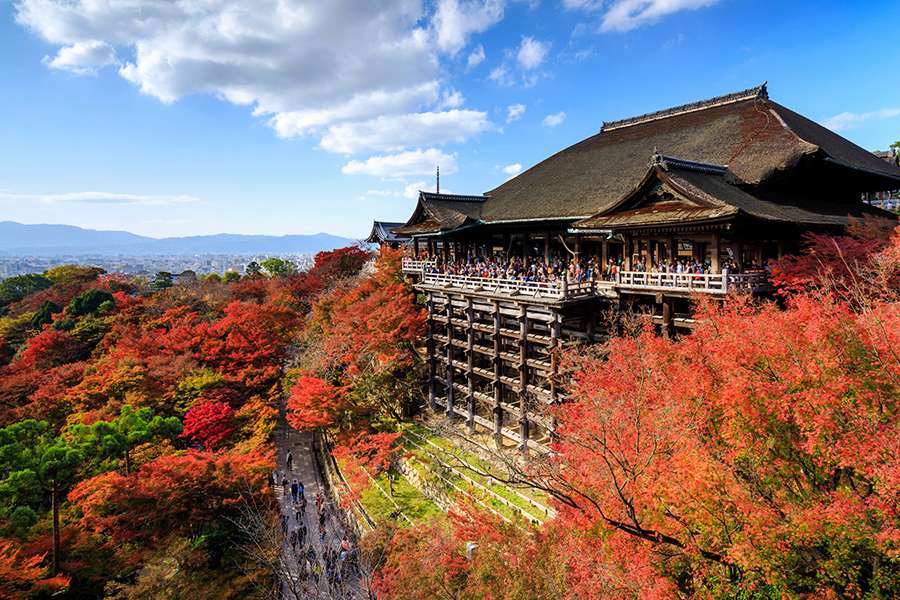
Kyoto is among the most recognizable destinations for fall foliage in Asia. Red maples frame temple gates, stone paths, ponds and wooden halls, adding a warmer seasonal layer to the city’s historic architecture.
Popular viewing locations include Tofuku-ji Temple, Eikando, Kiyomizu-dera and the Arashiyama area. Each provides a different setting. Tofuku-ji is known for broad views over a valley of maples, while Eikando combines vivid leaves with traditional temple buildings and a landscaped pond.
Kiyomizu-dera offers elevated views across eastern Kyoto. Arashiyama provides a broader landscape of forested hills, temples and riverside scenery. Because these areas are in different parts of the city, attempting to cover all of them in one day can create unnecessary rushing.

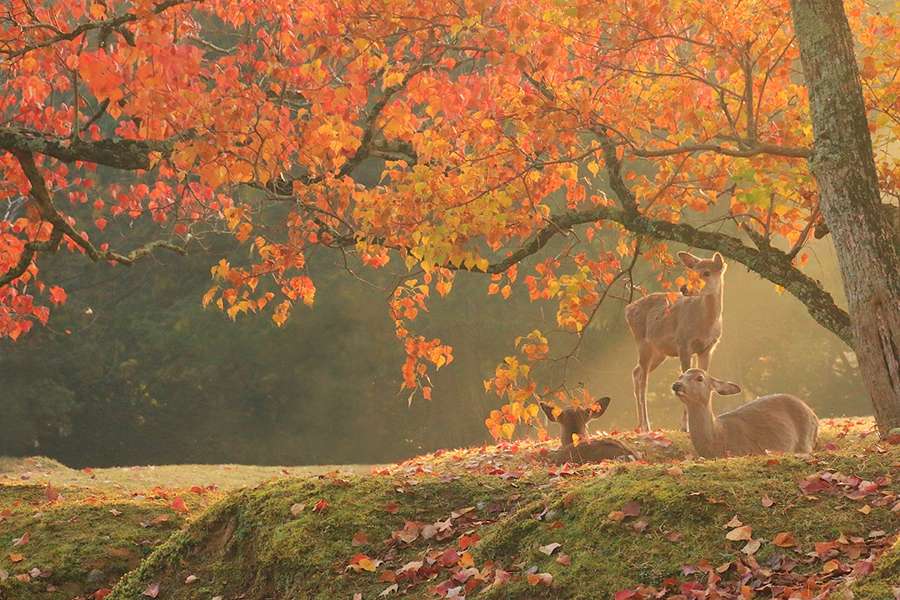
Nara provides a quieter alternative. Nara Park combines autumn trees with Todaiji Temple, Kasuga Taisha Shrine and the city’s free-roaming deer. The expected season is broadly similar to Kyoto, although individual parks and gardens may change at different times.

Kyoto from Kobe or Osaka Cruise Port
Kyoto can be visited from Kobe or Osaka when the ship has a long enough port call. Transfers, seasonal crowds and walking time around temples must be included in the schedule.
A cruise itinerary should usually focus on two or three meaningful places. Pairing one major autumn temple with a cultural district often creates a better experience than attempting to visit Kyoto, Osaka and Nara in the same day.
Explore Kyoto shore excursions or review departure options through our Kobe shore excursions.
4. Seoul, South Korea
Expected 2026 viewing window: Late October to early November.

Seoul combines autumn leaves with royal palaces, traditional neighborhoods, mountain scenery and modern city views. This makes it one of the most varied urban destinations in Asia during fall.
Deoksugung Stone Wall Path is especially attractive when its ginkgo trees become golden. Gyeongbokgung and Changdeokgung provide a more traditional setting, with autumn trees surrounding tiled roofs, courtyards and palace gardens.
Namsan offers both foliage and wide views over the capital. Visitors can explore parts of the Namsan walking trail before continuing toward N Seoul Tower. Seoul Forest and Olympic Park provide more open spaces for travelers who prefer level paths and a slower pace.
Seoul from Incheon Cruise Port
Incheon is the main cruise gateway to Seoul. The transfer into the capital takes a meaningful portion of the port day, particularly when traffic is heavy.
Passengers should choose a focused city route rather than combining central Seoul with distant mountain parks. A palace, a seasonal walking area and one additional city highlight can usually provide a balanced day.
See available Seoul shore excursions designed around cruise arrival and departure times.
5. Nami Island, South Korea
Expected 2026 viewing window: Mid-October to early November.

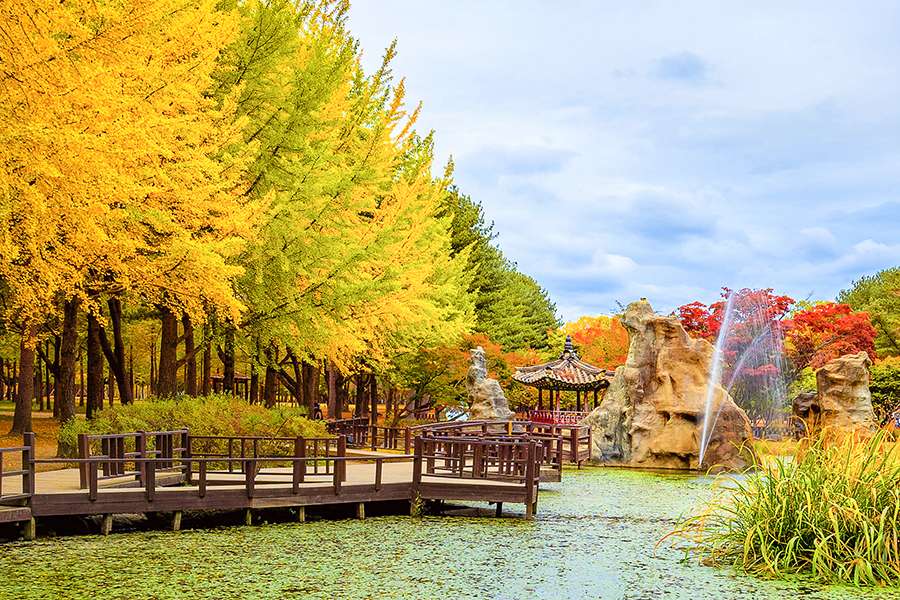
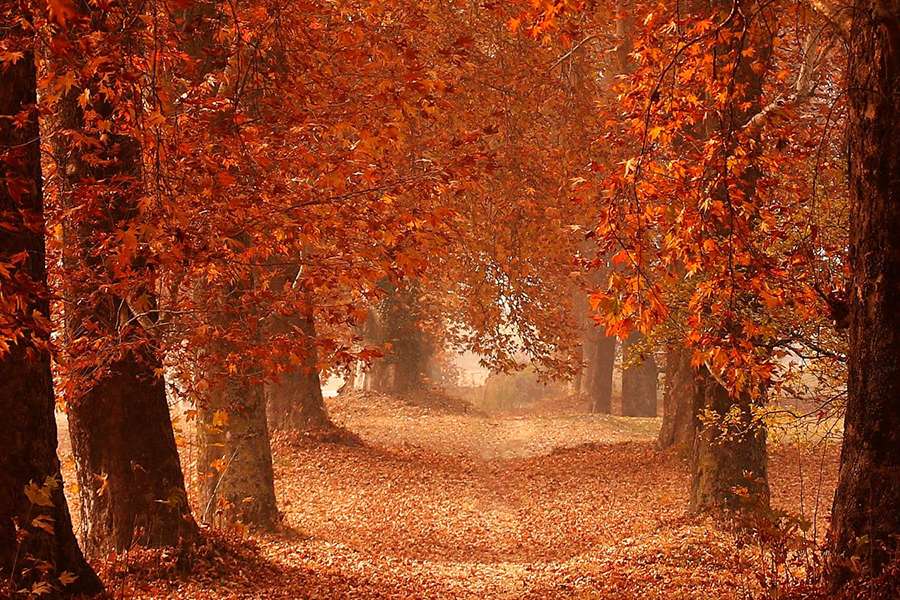
Nami Island is known for long rows of ginkgo, metasequoia and other deciduous trees. In autumn, its pathways change from green to yellow, orange and warm brown, creating one of South Korea’s most photographed seasonal landscapes.
The Ginkgo Tree Lane is especially distinctive when the leaves form a golden canopy. Metasequoia Lane offers a more structured view, with tall trees creating a corridor through the island. Riverside paths provide quieter alternatives to the busiest central areas.
Because Nami Island is a popular day-trip destination, weekends and peak foliage days can be crowded. Morning arrival generally provides a calmer experience and more time to explore before the largest groups arrive.
Is Nami Island Suitable for a Cruise Port Day?
Nami Island is not the most practical choice from Incheon Port because it lies beyond Seoul and requires multiple transfers. Attempting it during an ordinary port call can leave limited time for the island itself and increase return-time pressure.
It is better suited to a pre-cruise or post-cruise stay in Seoul. Passengers with a particularly long call should confirm the complete transfer plan before choosing it over central Seoul.
Travelers planning a wider journey can explore more South Korea shore excursions and land-based options.
6. Gyeongju, South Korea
Expected 2026 viewing window: Late October to mid-November.
Gyeongju combines Korea’s autumn colors with temples, royal tombs and historic landscapes. The city is less urban than Seoul and offers a more spacious setting for viewing seasonal scenery.
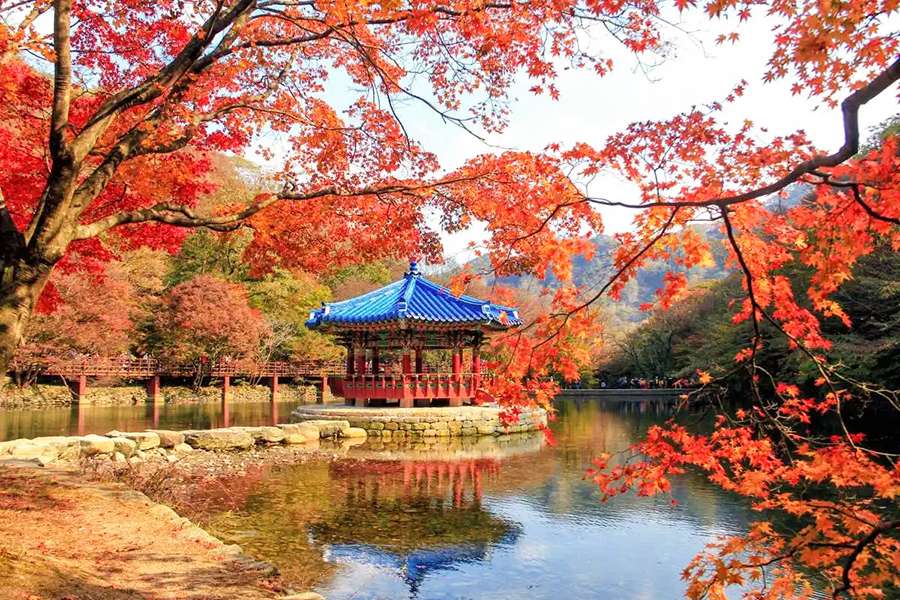
Bulguksa Temple is one of the strongest autumn locations. Maple trees add red and orange color around the temple’s stone bridges, courtyards and traditional buildings. The contrast between the foliage and the historic architecture makes the setting particularly atmospheric.
Bomun Lake offers an easier walking environment, with autumn trees, lakeside paths and open views. Tongiljeon is known for a road lined with ginkgo trees, while Dori Village provides another golden ginkgo landscape outside the central sightseeing area.
Gyeongju from Busan Port
Gyeongju can be visited from Busan, but the transfer reduces the time available at each attraction. It is most suitable when the cruise ship remains in port for a full day.
A practical route might combine Bulguksa Temple with one central Gyeongju location. Adding several distant sites can result in too much time on the road, especially during busy weekends.
Review Busan shore excursions and request a customized Gyeongju route if the port schedule allows.
7. Beijing and the Great Wall, China
Expected 2026 viewing window: Mid-October to mid-November.
Autumn is one of the most rewarding seasons for visiting Beijing. Cooler air and lower humidity can provide clearer views, while hills around the capital turn through shades of red, orange and gold.
The Great Wall creates the most dramatic setting. Sections such as Mutianyu and Simatai wind through forested mountains, allowing visitors to see the fortifications surrounded by broad areas of changing foliage.
Mutianyu provides restored sections, cable-car access and expansive views across the hills. Simatai offers a more rugged landscape and can be paired with Gubei Water Town, where seasonal vines and trees add color around traditional-style streets and waterways.
Within Beijing, the Summer Palace and Fragrant Hills are also associated with autumn scenery. However, Fragrant Hills can become extremely busy during the strongest red-leaf period.
Visiting Beijing from Tianjin Cruise Port
Beijing is a considerable distance from the cruise terminals in Tianjin. A city tour or Great Wall visit is possible only when the ship’s port time supports the long return journey.
An overnight call creates a much more comfortable experience. Passengers with one day should choose either central Beijing or the Great Wall instead of trying to complete both at a rushed pace.
Explore Beijing shore excursions from Tianjin Port, including private and overnight options.
8. Jiuzhaigou, China
Expected 2026 viewing window: Late September to mid-October.

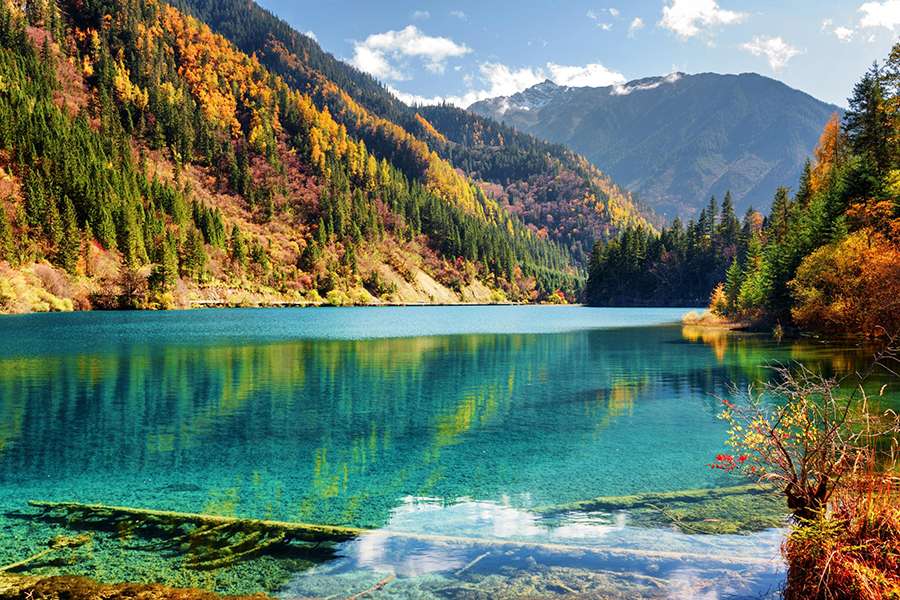
Jiuzhaigou offers one of Asia’s most distinctive autumn landscapes. Forests of mixed color surround clear lakes, waterfalls and mountain valleys in northern Sichuan.
The water is an important part of the experience. Blue and turquoise lakes reflect yellow, red and orange trees, often with mountain slopes visible behind them. This creates a layered landscape that differs from the temple gardens and urban parks found elsewhere in Asia.
The reserve covers a large area divided among several valleys. Shuzheng Valley contains lakes, waterfalls and Tibetan villages, while Rize Valley includes some of the destination’s best-known water scenery. Zechawa Valley reaches higher elevations and may feel colder.
Autumn arrives comparatively early because of Jiuzhaigou’s elevation. Travelers visiting later in October may encounter fewer leaves in the highest areas, so checking current conditions is important.
Can Jiuzhaigou Be Visited from a Cruise Port?
Jiuzhaigou is far inland and cannot be included in a normal coastal shore excursion. It is suitable for a separate land journey before or after a cruise through China.
Travelers should allow more than one day and consider the altitude, walking requirements and internal transportation within the reserve. Browse broader China shore excursions for cruise ports and discuss an extended land itinerary separately.
More Places to Experience Autumn in Asia
Aowanda and Taiwan’s Mountain Regions
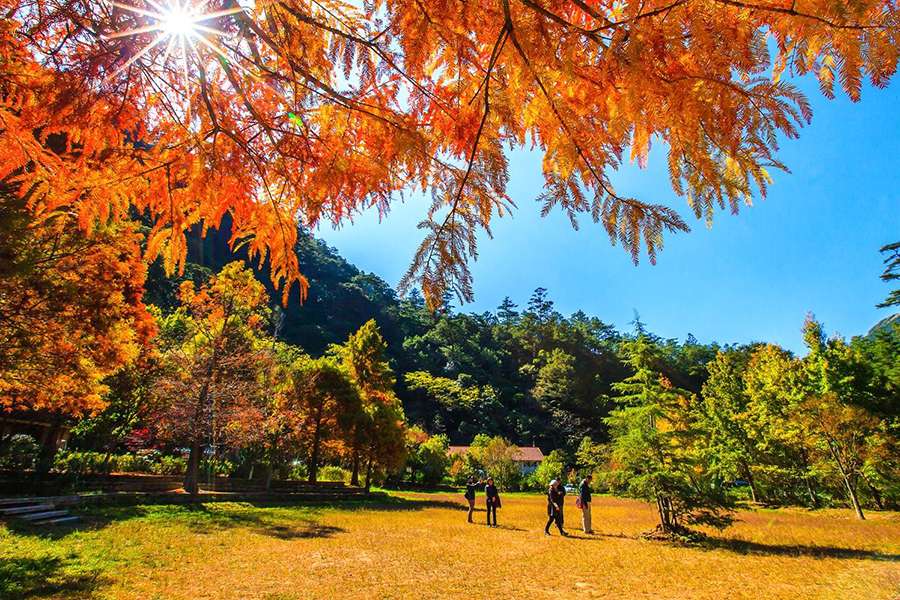
Taiwan’s most recognizable maple scenery is generally found in mountain regions rather than near its major cruise terminals. Aowanda National Forest Recreation Area is known for maple trees that change to red and orange during the cooler season.

The timing is later and more variable than in northern Japan or South Korea. Some mountain areas develop their strongest colors from late autumn into winter rather than during October.
Aowanda and the neighboring highlands require significant inland travel. They are more suitable for a land extension than a port day from Keelung or Kaohsiung. Travelers arriving by ship can instead explore available Taiwan shore excursions and treat any seasonal color as an additional feature.
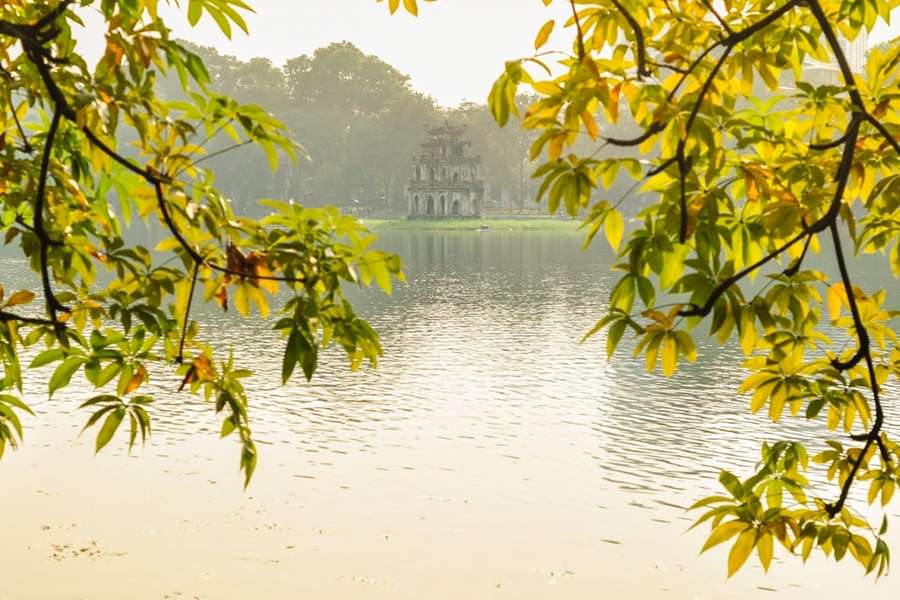
Hanoi’s Autumn Atmosphere

Hanoi does not offer the same extensive maple forests as Kyoto, Aomori or Jiuzhaigou. Its autumn appeal comes from a different combination of clear skies, milder temperatures, tree-lined streets, lakes, seasonal food and a slower urban atmosphere.
Hoan Kiem Lake, West Lake, Phan Dinh Phung Street and the French Quarter are especially pleasant for walking during this period. Visitors may also encounter the fragrance of hoa sua and seasonal foods such as young green rice.
For cruise passengers arriving at Halong Bay, Hanoi requires a long inland transfer. The journey is most suitable for ships with an extended port call. See our Hanoi shore excursions for practical timing and route options.
Best Fall Foliage Destinations for Cruise Passengers
Not every famous autumn location can realistically be visited during a cruise stop. The following gateways provide the most practical opportunities when the ship date matches the local season:
- Aomori Port: A possible gateway to Oirase Gorge and Lake Towada during a long call
- Yokohama Port: Access to Tokyo’s gardens, parks and ginkgo avenues
- Tokyo Port: Direct access to late-season urban foliage
- Kobe or Osaka Port: Access to selected autumn locations in Kyoto
- Busan Port: Access to local parks or Gyeongju when time permits
- Incheon Port: Access to Seoul’s palaces and city foliage
- Tianjin Port: Possible access to Beijing or the Great Wall during a long or overnight call
Nami Island, Jiuzhaigou and Taiwan’s mountain forests are generally better suited to a pre-cruise or post-cruise extension.
How to Plan an Autumn Shore Excursion
Start with the Exact Port Date
Compare the ship’s arrival date with the expected viewing period for that region. A destination may be famous for autumn leaves but still be green or largely bare on the day your ship arrives.
Check Conditions Before the Cruise Call
Review current foliage reports approximately seven to fourteen days before arrival. Conditions can vary between a city center, mountain area and higher-elevation park within the same region.
Choose a Flexible Route
An autumn itinerary should remain enjoyable even if the leaves have not reached their strongest color. Combine seasonal scenery with temples, palaces, historic districts or cultural attractions rather than making the whole day depend on a single park.
Leave More Time for Crowds
Popular foliage locations can become busy, particularly on weekends. Parking, entrance queues and walking paths may all take longer than expected.
Protect the Return to the Ship
Long inland routes require a realistic return buffer. Traffic between Tianjin and Beijing, Incheon and Seoul, or Kobe and Kyoto can affect the available sightseeing time.
Consider Walking Comfort
Many autumn destinations include slopes, steps, uneven paths and extended periods outdoors. Travelers should check walking levels and request a comfortable pace when necessary.
What to Wear During Autumn in Asia
Autumn temperatures vary considerably between the destinations in this guide. Aomori and Jiuzhaigou can feel cold earlier in the season, while Tokyo and Kyoto may remain mild during the day.
Layering is the most practical approach. Pack a light base layer, sweater or fleece, and an outer jacket that can be removed when temperatures rise. A compact rain jacket is useful for changing weather.
Comfortable walking shoes are important for temple grounds, forest paths and palace complexes. Travelers visiting higher elevations should bring warmer clothing than they would need in the nearest city.
Autumn in Asia 2026 FAQ
When is the best time to see autumn leaves in Asia in 2026?
The widest range of options is expected from mid-October to early December. Northern Japan and high-altitude China change earlier, South Korea and Beijing usually follow, and Tokyo and Kyoto provide later-season opportunities.
Have the official 2026 fall foliage forecasts been released?
Detailed forecasts are not yet available for every region. More precise information is normally released closer to autumn and may be revised as temperatures change.
Which country has the longest fall foliage season?
Japan offers one of the broadest seasonal ranges. Colors begin in northern and mountain areas before moving toward central cities such as Tokyo and Kyoto, extending the overall viewing period from early autumn into December.
Where can I see autumn leaves in Asia in October?
October travelers can consider Jiuzhaigou, Aomori, Oirase Gorge, Nami Island, Seoul, Gyeongju and the Great Wall near Beijing. The most suitable choice depends on whether the visit is in early, middle or late October.
Where can I see autumn leaves in Asia in November?
Early November can still provide color in South Korea and Beijing. From mid-November onward, Tokyo, Kyoto and Nara become stronger options.
Can cruise passengers see fall foliage during a port day?
Yes. Aomori, Tokyo, Yokohama, Kobe, Osaka, Busan, Incheon and Tianjin can provide access to autumn scenery. The route must be matched carefully to the ship’s port hours and local transfer times.
How long does peak fall foliage last?
The strongest color at an individual site may be relatively brief. However, mixed tree varieties and differences in elevation can create a broader period in which some part of the destination remains attractive.
Is Hanoi a fall foliage destination?
Hanoi has an appealing autumn season, but it should not be compared directly with Japan’s maple forests or Korea’s mountain parks. Its appeal lies in pleasant weather, lakes, tree-lined streets, seasonal food and local atmosphere.
Plan an Autumn Cruise Day in Asia
Autumn in Asia in 2026 can be experienced in many different ways, from mountain streams in Aomori and temple gardens in Kyoto to palace grounds in Seoul and the forested Great Wall outside Beijing.
The best route is not always the most famous location. For cruise passengers, the right choice must also fit the port, transfer time, walking comfort and ship schedule.
Explore private and small-group tours with Shore Excursions Asia, or send us your cruise ship, arrival date and port. Our team can suggest an autumn itinerary based on your time ashore, preferred pace and the latest seasonal conditions.


Contact Us via Messenger
Send Inquiry