
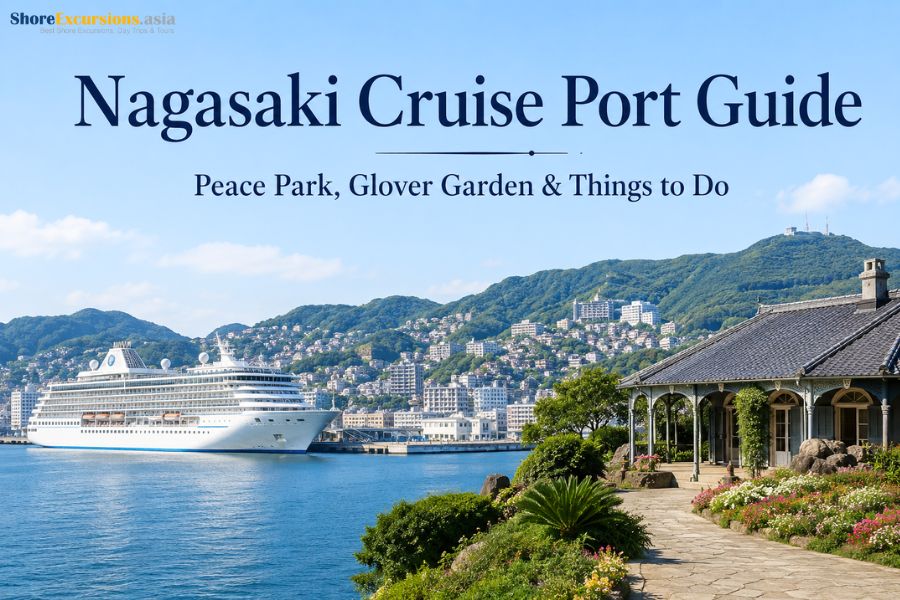
Nagasaki is one of Japan’s most rewarding cruise ports for passengers who want to experience history, culture and city sightseeing within a single day. Cruise ships arrive close to the historic southern districts, placing Glover Garden, Oura Cathedral and the former foreign settlement within easy reach, while Nagasaki’s Peace Park, Atomic Bomb Museum, Dejima and Chinatown can all be combined into a broader city itinerary.
Unlike ports where a long transfer is required before sightseeing begins, Nagasaki gives cruise passengers relatively quick access to the city. The challenge is deciding which side of its history you want to explore. You can focus on the port’s international heritage, spend more time understanding the events of 1945, or combine both in a well-planned full-day route.
This Nagasaki Cruise Port Guide covers where ships dock, what you can reach from the terminal, the best things to do, how to use the city’s tram network and what can realistically fit into one port day. If you prefer transportation and sightseeing arranged around your ship schedule, Shore Excursions Asia offers private and selected small-group experiences designed for cruise passengers. Browse our Nagasaki shore excursions or explore more Japan shore excursions.
Where Do Cruise Ships Dock in Nagasaki?
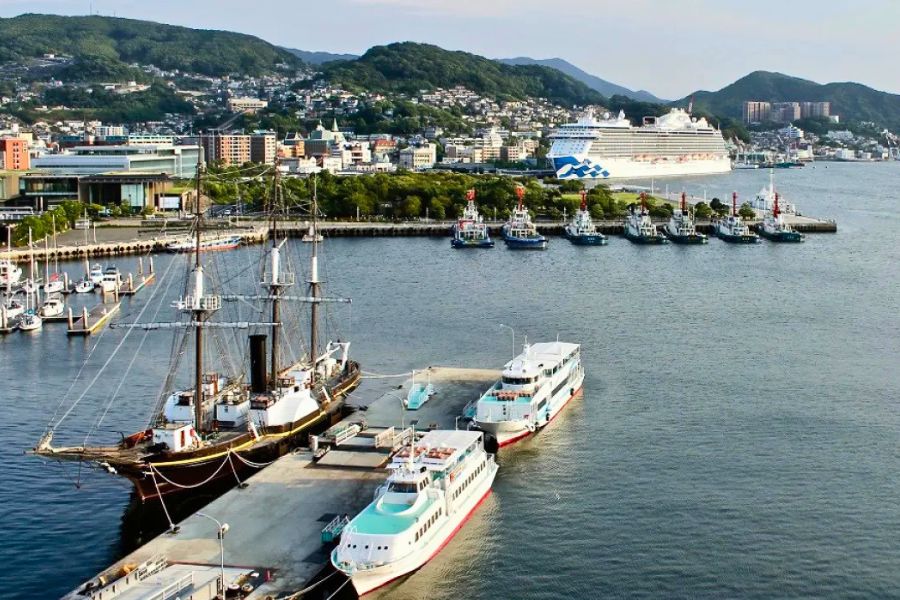
International cruise ships visiting Nagasaki commonly use the Nagasaki Port Matsugae International Terminal.
The terminal was designed specifically to handle international cruise ships and is located on the southern side of central Nagasaki. For cruise passengers, its biggest advantage is proximity to one of the city’s most interesting sightseeing districts.
Glover Garden, Oura Cathedral and the Minamiyamate area are all close to the port, while the Oura Kaigan Dori tram stop provides access to attractions farther across the city.
This makes Nagasaki one of the easier Japanese cruise ports to explore independently if you are comfortable using trams and walking.
Nagasaki Cruise Port at a Glance
- Main cruise terminal: Matsugae International Terminal
- Location: Southern central Nagasaki
- Direct docking: Generally yes
- Nearby attractions: Glover Garden, Oura Cathedral and Minamiyamate
- Public transport: Nagasaki electric tram and local buses
- Good for independent sightseeing: Yes
- Best-known cruise-day sights: Peace Park, Atomic Bomb Museum, Glover Garden, Dejima and Chinatown
Always check the exact berth information provided by your cruise line before arranging a meeting point or independent transport.
Can You Walk from Nagasaki Cruise Port to the City?
Yes, although it depends on which part of Nagasaki you want to visit.
The areas immediately around Matsugae Terminal are particularly convenient for walking. Glover Garden and Oura Cathedral are close enough to form the beginning of a port-day route without first arranging a long transfer.
From there, passengers can continue toward the Dutch Slope, Chinatown and Dejima, although the total walking distance becomes more substantial as the day progresses.
Peace Park and the Atomic Bomb Museum are farther north and are better reached by tram, taxi or arranged vehicle.
Nagasaki therefore works well with a mixed approach: walk around the historic southern districts, then use transport for the more distant northern attractions.
Best Things to Do from Nagasaki Cruise Port
Visit Glover Garden
Glover Garden is one of the most convenient major attractions for cruise passengers because it sits on the hillside above the port.
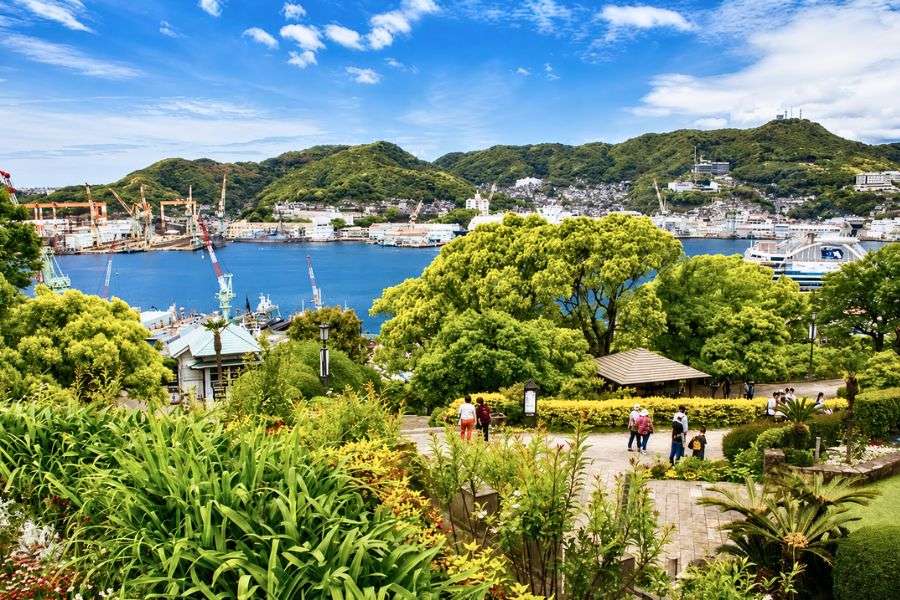
The garden brings together Western-style residences dating from Nagasaki’s era of international trade, including the former residence associated with Scottish merchant Thomas Glover. From the elevated grounds, visitors can also enjoy wide views across Nagasaki Harbor.
Glover Garden is especially useful on a cruise day because it combines history, architecture and scenery without requiring a long transfer from the ship.
The hillside setting does involve slopes and some changes in level. Escalators and moving walkways help in parts of the garden, but passengers who prefer an easier pace should still allow enough time rather than rushing through the site.
Glover Garden is included in our six-hour Nagasaki History Tour, together with Peace Park, the Atomic Bomb Museum and Dejima.
See Oura Cathedral
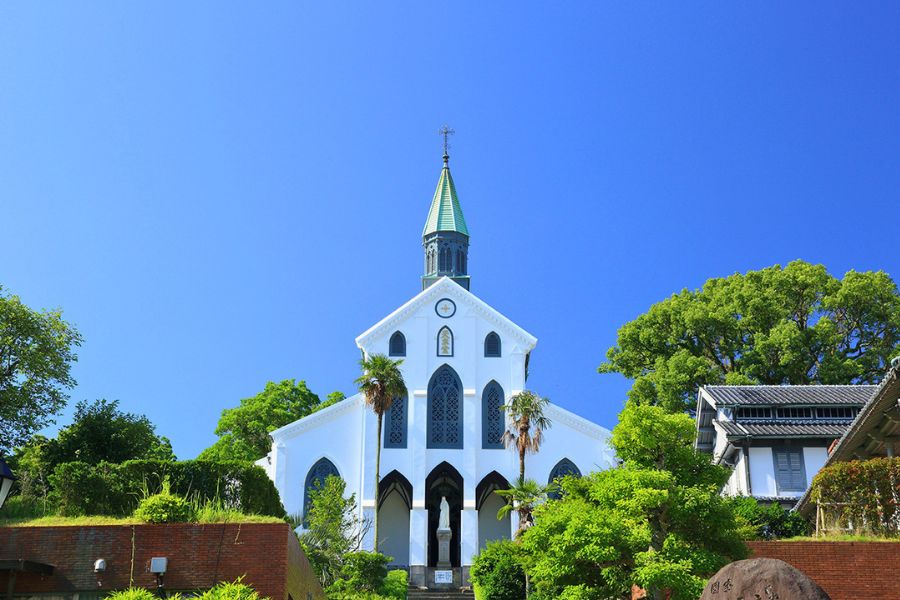
Oura Cathedral stands close to Glover Garden and is another important reminder of Nagasaki’s long history of contact with foreign communities.
Its location makes it easy to pair with Glover Garden during a walking route through Minamiyamate.
For passengers with only a short time ashore, visiting the southern historic district around Oura and Glover Garden can provide a meaningful introduction to Nagasaki without crossing the entire city.
Visit Nagasaki Peace Park
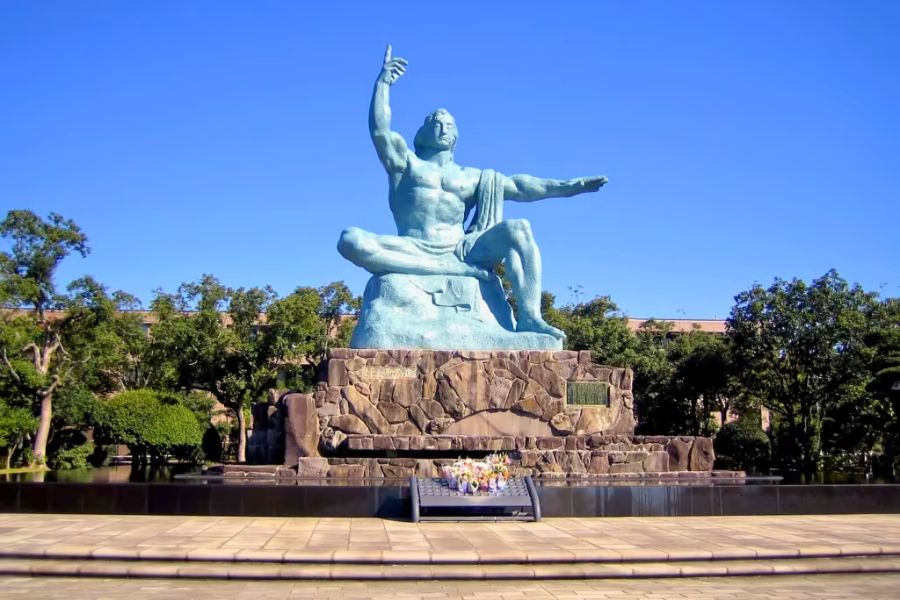
Nagasaki Peace Park is one of the most significant places to visit during a first port call.
The park was created as a place of remembrance and a symbol of the hope for lasting peace after the atomic bombing of Nagasaki on August 9, 1945.
Its best-known monument is the Peace Statue, whose raised right hand points upward to symbolize the threat of atomic weapons while the extended left arm represents peace.
The atmosphere here is very different from Nagasaki’s waterfront and historic foreign settlement. Allow enough time to experience the site respectfully rather than treating it simply as a quick photo stop.
Explore the Nagasaki Atomic Bomb Museum
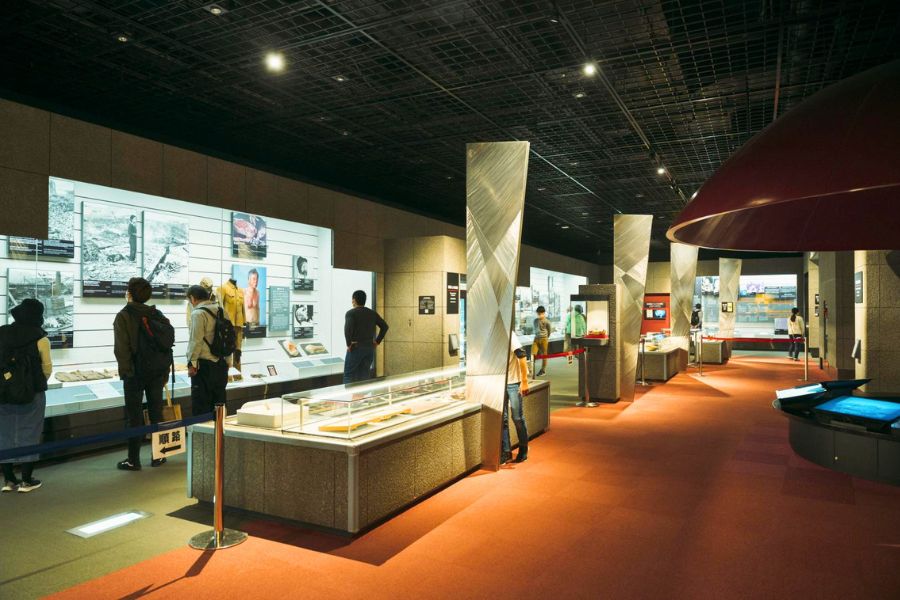
The Nagasaki Atomic Bomb Museum provides essential historical context for understanding the events of 1945 and their consequences for the city and its residents.
Displays cover Nagasaki before the bombing, the destruction caused by the explosion, personal experiences of survivors and the wider history of nuclear weapons.
The museum can be emotionally demanding, so passengers may prefer to keep the sightseeing immediately afterward relatively quiet rather than rushing straight into another intensive attraction.
Peace Park, the museum and the nearby hypocenter work naturally as one historical cluster.
See the Atomic Bomb Hypocenter
The hypocenter marks the area beneath the point where the atomic bomb exploded over Nagasaki.
It is located near Peace Park and the Atomic Bomb Museum, making it easy to include all three in the same part of the itinerary.
This is another reason not to treat Nagasaki’s attractions as separate stops scattered randomly through the day. Grouping nearby sites creates a more efficient route and provides better historical context.
Visit Urakami Cathedral
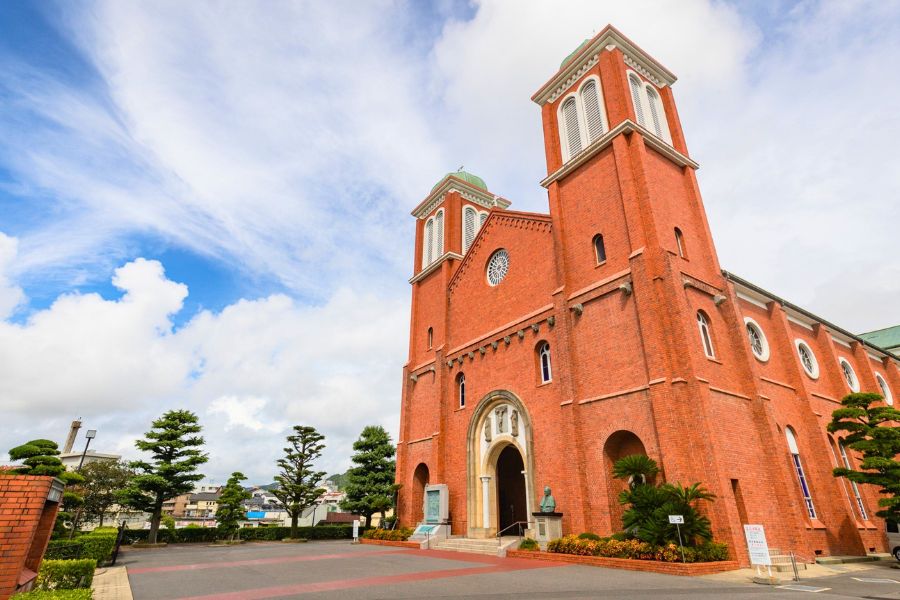
Urakami Cathedral adds another important layer to Nagasaki’s twentieth-century history.
The original cathedral was devastated by the atomic bombing and later rebuilt. Its story connects Nagasaki’s Christian heritage with the events of 1945 and the city’s post-war recovery.
Passengers who want to focus more deeply on this history can consider the Nagasaki Historical Highlights with Urakami Cathedral, a five-hour route combining the cathedral, Peace Park, Atomic Bomb Museum and hypocenter.
Explore Dejima
Dejima tells a very different chapter of Nagasaki’s history.
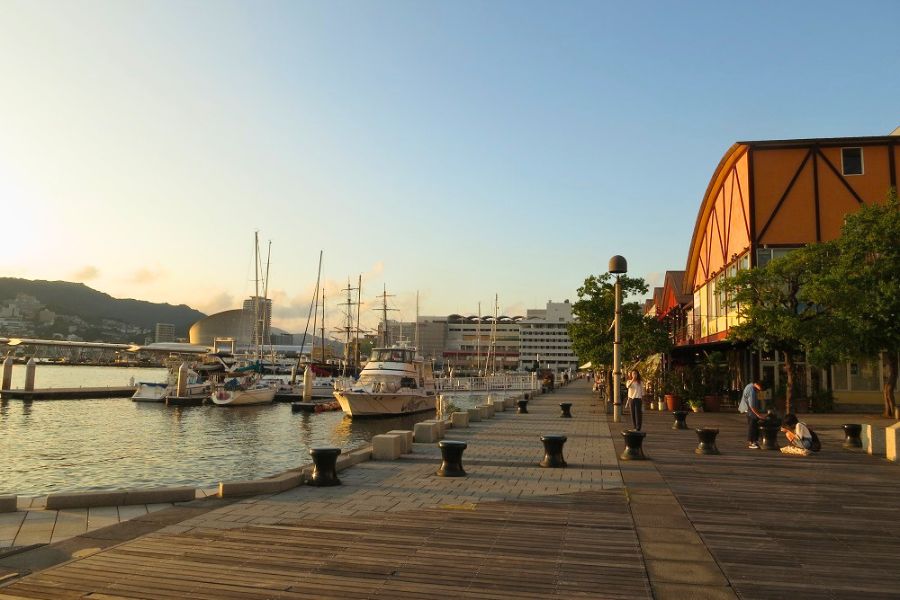
The former artificial island played a central role in Japan’s controlled contact with Dutch traders during the Edo period. Reconstructed buildings and exhibitions help visitors understand how merchants lived, how trade was regulated and how knowledge entered Japan through Nagasaki.
Today Dejima is no longer physically separated from the city as it once was, but the restored district provides one of Nagasaki’s strongest historical experiences.
It also works particularly well on a cruise itinerary because it lies between the southern port area and other central attractions.
Walk Through Nagasaki Shinchi Chinatown
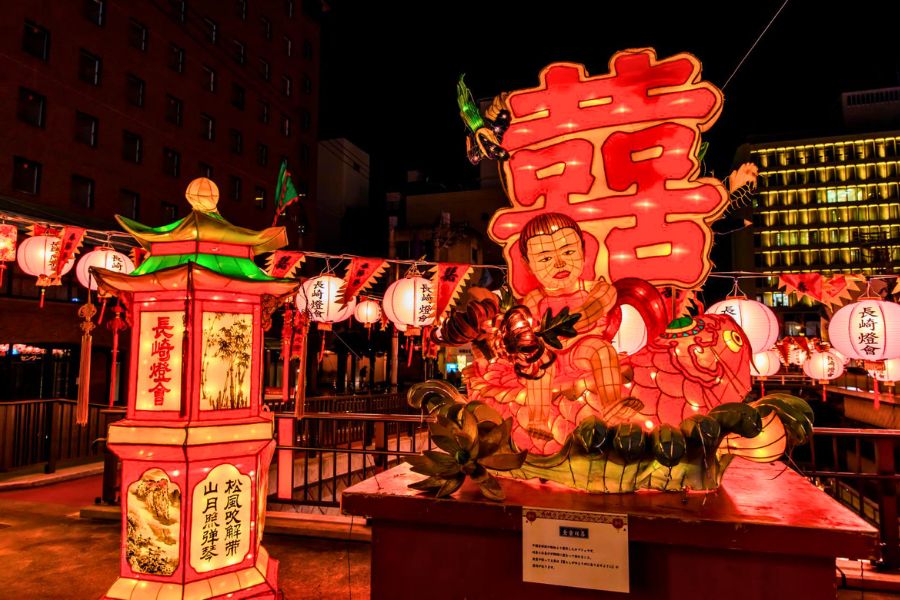
Nagasaki Shinchi Chinatown is compact compared with some of Asia’s larger Chinatown districts, which actually makes it convenient for a cruise day.
The area contains Chinese restaurants, shops and colorful gates and reflects the city’s centuries of exchange with China.
It can work as a lunch stop or a short break between historical attractions.
Nagasaki is especially known for dishes such as champon and sara udon, both of which reflect the city’s multicultural food history.
See Megane Bridge
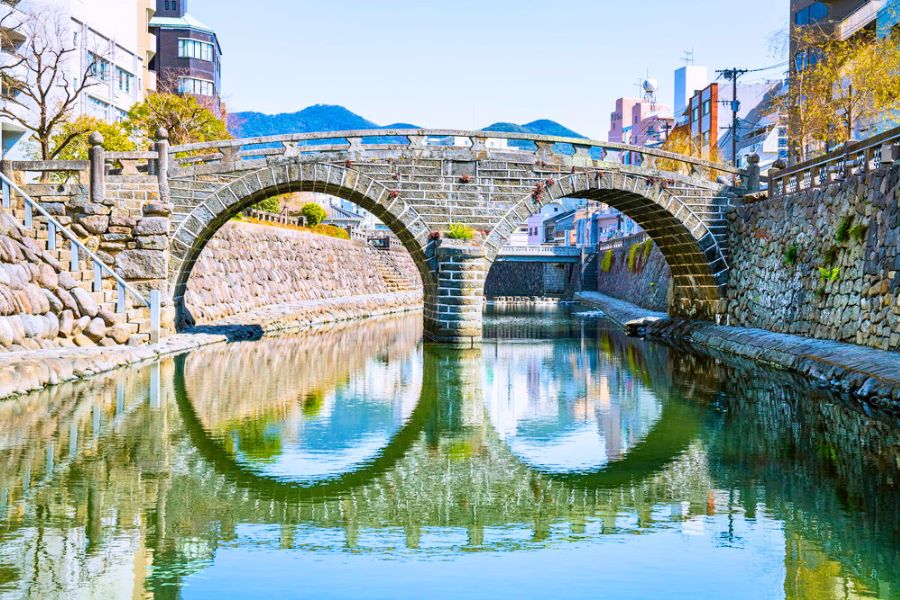
Megane Bridge, or Spectacles Bridge, is one of Nagasaki’s most recognizable small landmarks.
The stone bridge takes its nickname from the reflection of its arches in the water, which can resemble a pair of spectacles.
It is not a destination that requires a long visit, making it easy to include in a broader central Nagasaki route if time allows.
Visit Mt. Inasa
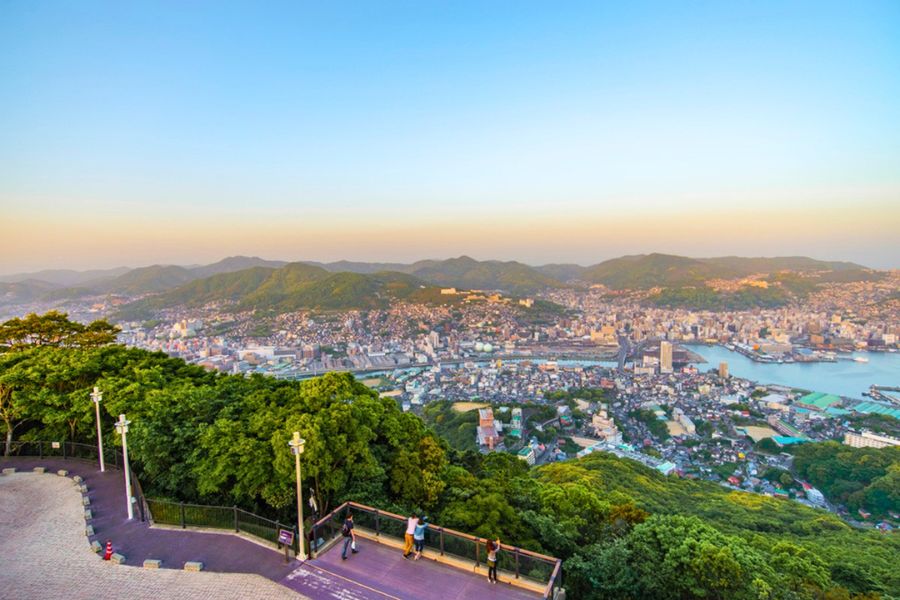
Mt. Inasa provides one of the best panoramic views across Nagasaki.
From the observation area, visitors can see the city wrapped around the harbor and surrounding hills, helping explain Nagasaki’s distinctive geography.
The viewpoint is particularly famous after dark, but daytime visits also offer excellent scenery and are much more practical for most cruise schedules.
Mt. Inasa sits away from the walkable southern port area, so it works best as part of a vehicle-based itinerary rather than an independent walking route.
Our approximately seven-hour Nagasaki City Day Tour includes Mt. Inasa together with several of the city’s cultural and historical attractions.
What Can You See Near Nagasaki Cruise Port?
Nagasaki stands out because several worthwhile attractions begin close to the cruise terminal.
If you have limited time, you do not need to cross the entire city to have a meaningful port day.
A compact route can include:
- Glover Garden
- Oura Cathedral
- Minamiyamate historic streets
- Dutch Slope
- Shinchi Chinatown
- Dejima
This route focuses on Nagasaki’s international heritage rather than its twentieth-century history and can work especially well for passengers who prefer independent sightseeing.
How to Spend One Day from Nagasaki Cruise Port
Option 1 Short Walkable Nagasaki Day
Matsugae Terminal → Oura Cathedral → Glover Garden → Dutch Slope → Chinatown → Dejima → Port
This is one of the easiest ways to experience Nagasaki when you have a shorter call or do not want to spend much time in transport.
The route begins very close to the ship and stays mostly within the southern and central areas of the city.
If time becomes limited, Dejima or Chinatown can be shortened while keeping the main historic district intact.
Option 2 Nagasaki History and Peace
Port → Peace Park → Atomic Bomb Museum → Hypocenter → Dejima → Glover Garden → Port
This is the strongest route for first-time visitors who want to understand both major sides of Nagasaki’s history.
The morning can focus on the events of 1945 before moving south toward the city’s earlier international heritage.
This combination closely follows our six-hour Nagasaki History Tour, which is designed around cruise-port pickup and return.
Option 3 Peace Park and Easy City Highlights
Port → Peace Park → Atomic Bomb Museum → Urakami Cathedral → Chinatown → Port
This route concentrates on northern Nagasaki before returning toward the waterfront.
It is a good choice for passengers particularly interested in the city’s twentieth-century history or those who prefer fewer major attractions with more time at each stop.
The five-hour Nagasaki Historical Highlights with Urakami Cathedral is structured around this theme.
Option 4 Nagasaki Views and Cultural Heritage
Port → Mt. Inasa → Nagasaki Museum of History and Culture → Sofukuji Temple → 26 Martyrs Site → Central Nagasaki → Port
This route works well for travelers who have already visited the main Peace Park area or prefer a broader cultural overview.
It requires more vehicle travel but offers a different perspective from the classic Peace Park–Glover Garden combination.
Option 5 Relaxed Nagasaki for Senior Travelers
Port → Peace Park → Dejima → Chinatown → Glover Garden → Port
A slower itinerary with four major areas can often be more enjoyable than trying to fit seven or eight attractions into the same day.
Using a vehicle or taxi between the northern and southern parts of Nagasaki reduces walking, while the number of stops can be adjusted to suit the group.
Getting Around from Nagasaki Cruise Port
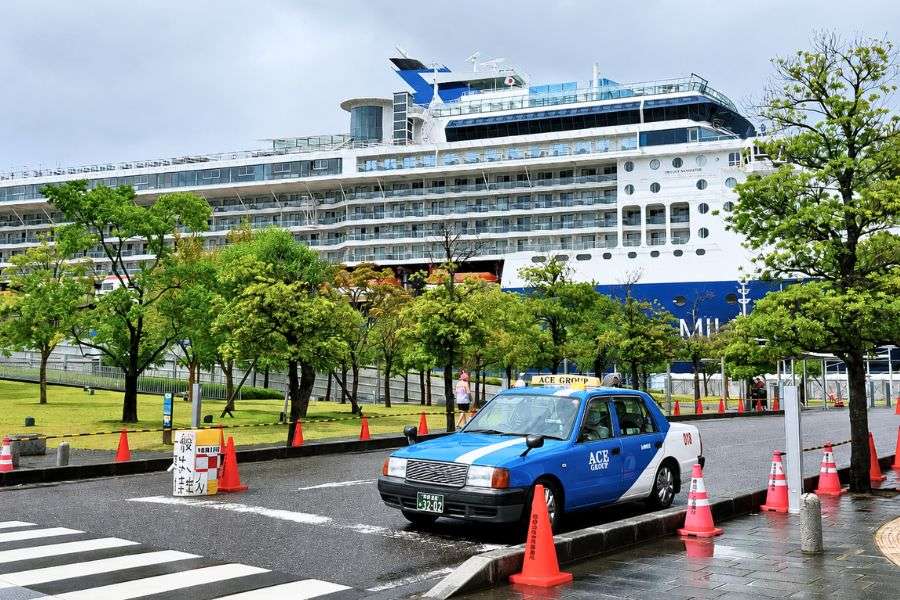
Walking
Walking is particularly practical around the Matsugae Terminal, Minamiyamate, Glover Garden and Oura Cathedral.
Central areas such as Chinatown and Dejima can also be reached as part of a longer walk, but Nagasaki’s hills mean distances can feel more demanding than they appear on a map.
If you want to visit Peace Park as well, combining walking with the tram or taxi is usually more comfortable.
Nagasaki Tram
The electric tram is one of the most useful options for independent cruise passengers.
The Oura Kaigan Dori stop is close to the cruise terminal. From here, passengers can connect through central Nagasaki toward Peace Park, Dejima, Chinatown, Megane Bridge and other parts of the city.
English signage and announcements make the system relatively manageable for international visitors.
A tram day pass can also be useful if you intend to make several journeys, although current pricing and availability should be confirmed on the day.
Taxi
Taxis are a simple way to save time, especially if you are traveling between Peace Park and the southern port district.
They are also useful for passengers who do not want to manage tram transfers or walk long distances between stops.
Keep the name Nagasaki Port Matsugae International Terminal available when returning to the ship so there is no confusion about your destination.
Private Vehicle and Guide
A private vehicle becomes particularly useful when your day combines attractions on opposite sides of Nagasaki.
Instead of repeatedly changing trams or finding new taxis, the route can be arranged around your ship’s actual schedule.
It is also easier to adapt the day if disembarkation takes longer than expected or someone in the group prefers a slower pace.
Can You Explore Nagasaki Independently?
Yes. Nagasaki is one of the more manageable Japanese cruise ports for independent visitors.
If your plan is limited to Glover Garden, Oura Cathedral, Chinatown and Dejima, walking and tram travel can work very well.
Independent sightseeing is also possible to Peace Park and the Atomic Bomb Museum, although it requires more travel across the city.
A shore excursion becomes more useful when:
- you want to combine Peace Park with Glover Garden and other southern attractions;
- your ship has a relatively short call;
- you prefer transportation waiting between stops;
- you want historical interpretation from a licensed guide;
- you are traveling with passengers who prefer less walking;
- you want return timing planned around your ship schedule.
You can compare several options on our Nagasaki shore excursions page.
Walking and Mobility Considerations in Nagasaki
Nagasaki’s main challenge for some travelers is its hilly geography.
The city developed around a natural harbor surrounded by slopes, so walking conditions vary significantly between attractions.
Peace Park and the Atomic Bomb Museum can generally be handled at a moderate pace, although there may still be slopes, ramps and periods of standing.
Glover Garden sits on a hillside. Moving walkways and escalators assist with parts of the route, but passengers should still expect some walking and changes in elevation.
Using trams, taxis or a private vehicle between major districts can make Nagasaki considerably more comfortable for senior cruise passengers.
Our Nagasaki History Tour is listed as easy to moderate walking and uses a chartered vehicle between the major attractions.
What to Eat During a Nagasaki Port Day
Nagasaki’s food reflects the same mixture of Japanese, Chinese and Western influences seen throughout the city.
Nagasaki Champon
Champon is one of the city’s signature dishes, combining noodles with vegetables, seafood and other ingredients in a rich soup.
It is a practical lunch choice during a cruise visit because restaurants serving champon can be found around central Nagasaki and Chinatown.
Sara Udon
Sara udon is another Nagasaki specialty, often served with crispy noodles topped with a thick mixture of vegetables, seafood and meat.
Passengers exploring Chinatown can easily combine sightseeing with a local lunch rather than making a separate food trip across the city.
Castella
Nagasaki castella is a sponge cake associated with the city’s centuries of contact with Portuguese traders.
It is easy to find around tourist districts and can make a convenient local souvenir for passengers returning to the ship.
Peace Park or Glover Garden: Which Should You Prioritize?
If your call is very short and you can visit only one major area, the choice depends on what you want from Nagasaki.
Choose Peace Park and the Atomic Bomb Museum if understanding Nagasaki’s twentieth-century history is your main priority.
Choose Glover Garden and Minamiyamate if you prefer historic architecture, harbor views and the city’s international trading heritage.
For most first-time visitors with at least five to six usable sightseeing hours, it is possible to experience both areas with efficient transport.
That combination provides a much fuller understanding of Nagasaki than focusing exclusively on one period of its history.
How Much Time Do You Need in Nagasaki?
Because the cruise terminal is close to the city, Nagasaki can work well even with a shorter port call.
- Around 3–4 usable hours: focus on Glover Garden, Oura Cathedral and the southern historic area, or choose Peace Park and the Atomic Bomb Museum.
- Around 4–5 usable hours: combine one major northern historical area with selected central sights.
- Around 5–6 usable hours: Peace Park, Atomic Bomb Museum, Dejima and Glover Garden form a strong first-time route.
- Around 6–7+ usable hours: additional viewpoints, temples, museums or a more relaxed lunch can be included.
These are general planning examples. Your usable time depends on disembarkation, traffic, attraction access and your ship’s all-aboard schedule.
How Early Should You Return to Nagasaki Cruise Port?
Always follow the all-aboard time provided by your cruise line and plan to return to Matsugae Terminal comfortably before the deadline.
Nagasaki has an advantage over more remote cruise ports because many attractions remain relatively close to the ship. If your final stop is around Glover Garden, Oura or the southern waterfront, the return journey can be comparatively short.
More caution is needed if you are finishing the day around Peace Park, Mt. Inasa or another area farther from the terminal.
If the schedule begins running late, remove the final sightseeing stop rather than reducing the return buffer.
Selected Shore Excursions Asia Nagasaki tours include port pickup, licensed guides and Back-to-Ship planning so the sightseeing route is structured around the ship schedule.
Is Nagasaki Worth Visiting on a Cruise?
Yes. Nagasaki is particularly well suited to a cruise day because many of its most important attractions lie within a relatively compact city.
Within one call, passengers can experience Japanese, Chinese and European influences, learn about centuries of international trade, visit places connected with the atomic bombing and enjoy harbor views from historic hillside neighborhoods.
The best approach is not to rush through every attraction. Choose a route that connects related areas and leaves enough time to understand what you are seeing.
For first-time visitors, the combination of Peace Park, the Atomic Bomb Museum, Dejima and Glover Garden provides one of the most complete introductions to Nagasaki.
If you prefer transportation and timing arranged in advance, browse our Nagasaki shore excursions for cruise passengers. You can also create your own private shore excursion based on your ship schedule, interests and walking preference.
Frequently Asked Questions About Nagasaki Cruise Port
Where do cruise ships dock in Nagasaki?
International cruise ships commonly use the Nagasaki Port Matsugae International Terminal. The terminal is close to Glover Garden, Oura Cathedral and the Minamiyamate historic area.
Can you walk from Nagasaki cruise port to attractions?
Yes. Glover Garden, Oura Cathedral and the surrounding southern historic district are close to the cruise terminal. Dejima and Chinatown can also form part of a longer walking route, while Peace Park is better reached by tram, taxi or vehicle.
What are the best things to do from Nagasaki cruise port?
Popular first-time attractions include Peace Park, the Atomic Bomb Museum, the hypocenter, Glover Garden, Oura Cathedral, Dejima, Chinatown and Mt. Inasa.
How far is Peace Park from Nagasaki cruise port?
Peace Park is located north of the cruise terminal and is not the best attraction to reach entirely on foot during a limited port day. Cruise passengers can use Nagasaki’s tram network, taxi or arranged transport to travel between Matsugae Terminal and the Peace Park area.
Can I visit Peace Park and Glover Garden in one cruise day?
Yes. They are in different parts of Nagasaki, but both can fit comfortably into many five- to six-hour sightseeing itineraries when transportation is planned efficiently.
Is Glover Garden close to the cruise terminal?
Yes. Glover Garden is one of the closest major attractions to Matsugae International Terminal, making it particularly convenient for cruise passengers with limited time.
Can I use the tram from Nagasaki cruise port?
Yes. The Oura Kaigan Dori tram stop is close to the cruise terminal, and Nagasaki’s tram system connects the port area with central districts and attractions farther north, including the Peace Park area with a transfer.
Is Nagasaki good for independent cruise passengers?
Yes. The city’s compact layout, tram network and proximity of several major sights to the port make Nagasaki relatively easy to explore independently. A guided excursion becomes more useful when you want to cover attractions across different parts of the city efficiently.
Is Nagasaki suitable for senior cruise passengers?
Yes, provided the itinerary takes the city’s hills into account. Using taxis or a private vehicle between districts can reduce walking, while attractions such as Peace Park, Dejima and Glover Garden can be visited at a slower pace.
How many hours do you need in Nagasaki?
Around three to four usable hours can be enough for one major sightseeing area, while five to six hours allows many passengers to combine Peace Park, the Atomic Bomb Museum, Dejima and Glover Garden. Longer calls allow a more relaxed pace or additional sights.
Port assignments, attraction access, transport schedules and cruise timings can change. Always reconfirm your ship’s berth and all-aboard time before finalizing your Nagasaki cruise day.


 Send Inquiry