
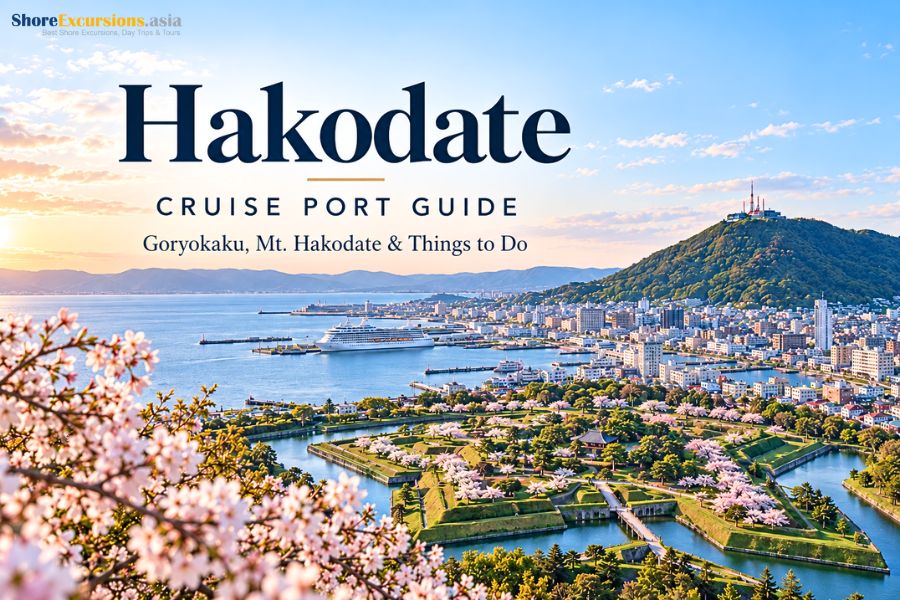
Hakodate is one of Hokkaido’s most enjoyable cruise ports for a single day ashore. The city is compact enough to combine a star-shaped historic fort, a lively seafood market, old Western-style neighborhoods, red-brick warehouses and panoramic views from Mt. Hakodate without spending most of the day on long transfers.
The key is knowing where your ship docks and choosing attractions that work together. Some cruise berths place passengers close to Hakodate Station and the Morning Market, while other berths require additional transportation before sightseeing begins. Once in the city, trams, taxis and arranged vehicles make it relatively easy to move between the waterfront, Motomachi, Goryokaku and Mt. Hakodate.
This Hakodate Cruise Port Guide explains the main cruise berths, the best things to do, how to get around and what can realistically fit into one port day. If you prefer transportation and sightseeing arranged around your ship schedule, Shore Excursions Asia offers private and selected small-group experiences designed for cruise passengers. Browse our Hakodate shore excursions or explore more Japan shore excursions.
Where Do Cruise Ships Dock in Hakodate?
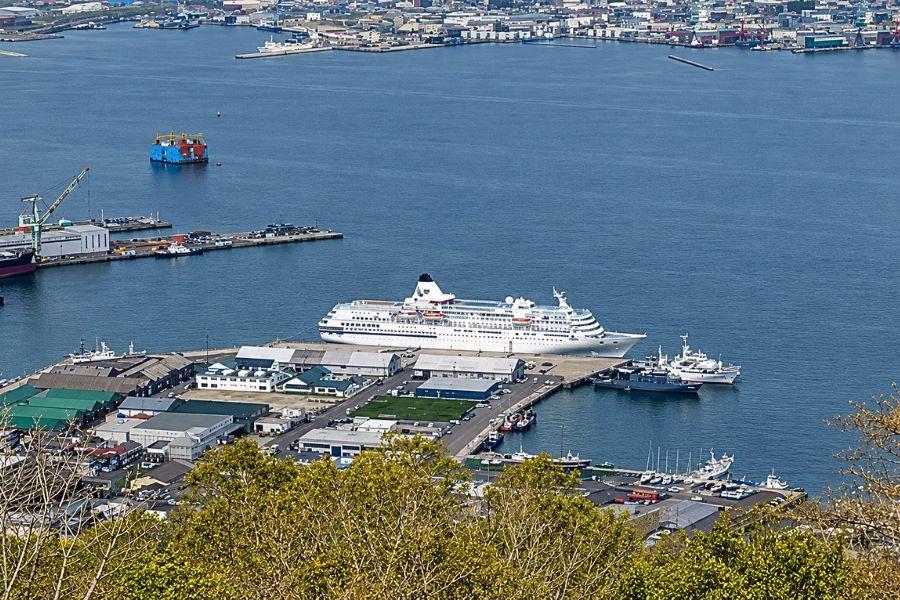
Hakodate Port has more than one berth used by cruise ships. Depending on the vessel and port schedule, passengers may see locations such as Wakamatsu Wharf, Minato-cho Wharf or Nishi Wharf listed in their cruise information. This matters because the distance to central Hakodate changes according to your berth.
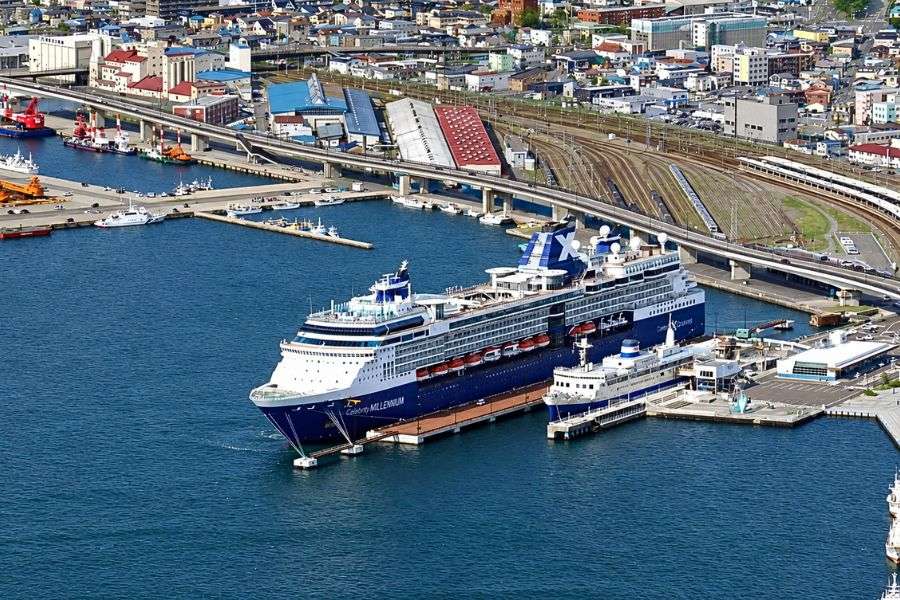
Wakamatsu Wharf
Wakamatsu Wharf is particularly convenient for cruise visitors because it is close to JR Hakodate Station and the central waterfront area.
From this side of the port, attractions such as Hakodate Morning Market are relatively easy to reach, while the Bay Area, Kanemori Red Brick Warehouses and Motomachi are also convenient by taxi, tram or a combination of walking and public transport.
If your ship uses Wakamatsu Wharf, Hakodate can feel much closer to a walk-off port than many other Japanese cruise destinations.
Minato-cho Wharf
Minato-cho Wharf lies farther from the main sightseeing districts. Passengers arriving here should allow additional time for transportation into central Hakodate.
A taxi, cruise shuttle or arranged vehicle is generally more useful than trying to begin a sightseeing itinerary entirely on foot.
Nishi Wharf
Nishi Wharf is another berth that may be used by visiting ships. Its location and access differ from Wakamatsu, so independent passengers should not arrange a meeting point based only on the words “Hakodate Port.”
Always check the exact berth shown by your cruise line before making transport arrangements.
Hakodate Cruise Port at a Glance
- Destination: Hakodate, southern Hokkaido
- Possible cruise berths: Wakamatsu Wharf, Minato-cho Wharf and Nishi Wharf
- Closest major transport hub: JR Hakodate Station
- Best-known attractions: Goryokaku, Mt. Hakodate, Morning Market, Motomachi and the Bay Area
- Useful local transport: Tram, bus, taxi and private vehicle
- Good for independent sightseeing: Yes, particularly from a central berth
- Longer excursion option: Onuma Park and surrounding countryside
Is Hakodate Cruise Port Close to the City?
Hakodate can be one of the more convenient Japanese cruise destinations, but the answer depends on your berth.
If you arrive near Wakamatsu Wharf, JR Hakodate Station and the Morning Market are close enough that sightseeing can begin quickly.
If your ship uses a more distant port facility, the first step should usually be a taxi, shuttle or arranged transfer into central Hakodate.
Once you reach the central area, the city is relatively compact. Morning Market, the Bay Area and Motomachi sit within the same broad part of town, while Goryokaku lies farther inland and requires additional transport.
Mt. Hakodate is close geographically to Motomachi, but reaching the summit requires the ropeway, bus, taxi or another permitted form of transport depending on seasonal operating conditions.
Best Things to Do from Hakodate Cruise Port
See Goryokaku from Goryokaku Tower
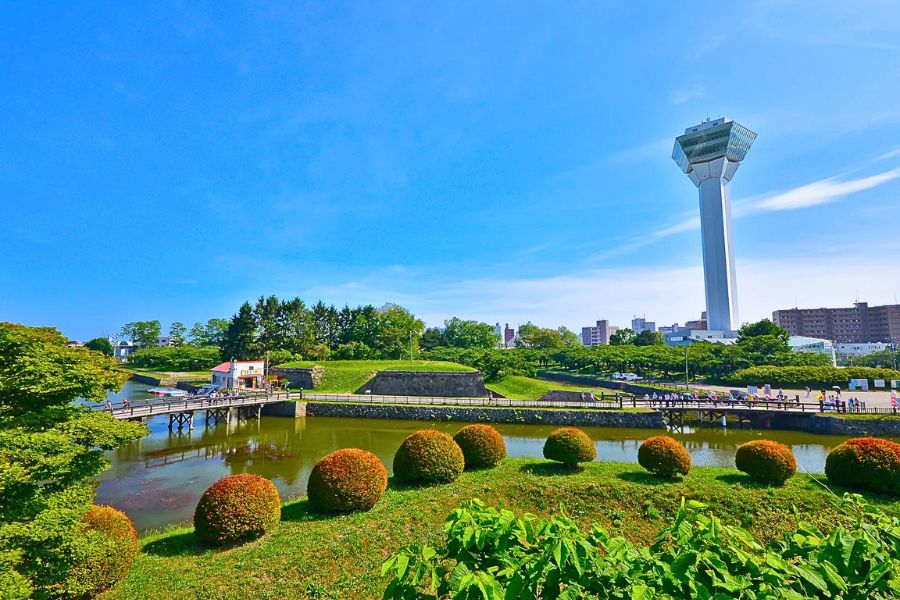
Goryokaku is one of Hakodate’s defining landmarks and one of the most unusual historic sites in Japan.
The fort was built in a Western-style star shape during the final years of the Tokugawa shogunate. It later became associated with the Battle of Hakodate, one of the final conflicts of the Boshin War.
The shape is difficult to appreciate fully from ground level, which is why Goryokaku Tower is such an important part of the visit.
The observation decks overlook the entire star-shaped fort and surrounding city. From above, the geometry of the moat and defensive walls becomes immediately clear.
The view also changes dramatically with the seasons. Cherry blossoms surround the fort in spring, dense green foliage fills the park in summer, autumn brings changing leaves and winter can cover the star-shaped grounds in snow.
Our six-hour Hakodate City & Scenic View Tour combines Goryokaku with Morning Market, the Bay Area and Mt. Hakodate in a route planned around cruise schedules.
Walk Through Goryokaku Park
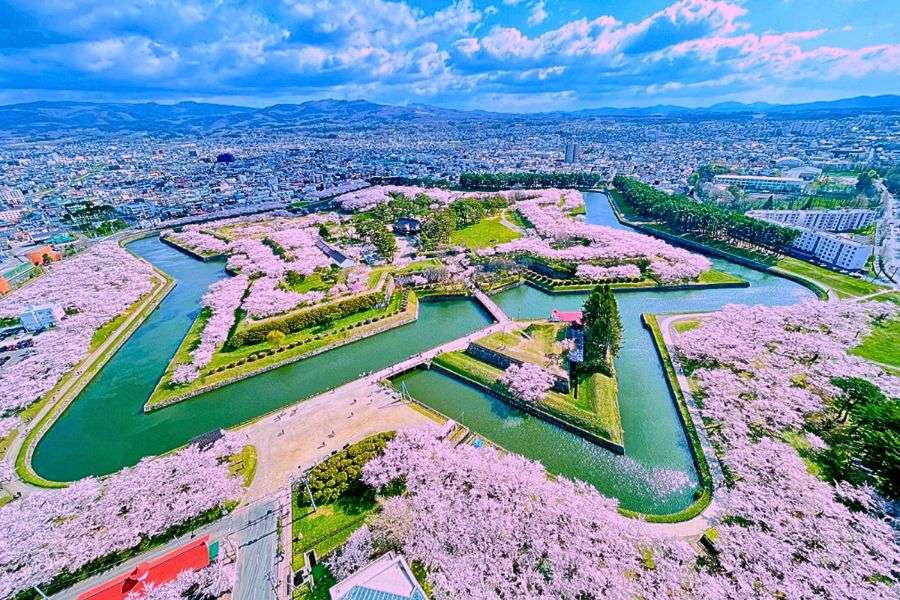
After viewing the fort from above, passengers with enough time can walk through Goryokaku Park itself.
The grounds allow you to see sections of the moat, reconstructed historical buildings and seasonal landscapes at a slower pace.
If your port call is short, however, visiting the tower alone may provide a better balance between historical context and sightseeing time.
Passengers with limited mobility can also enjoy much of the Goryokaku experience from the tower without needing to walk extensively through the full park.
Visit Hakodate Morning Market
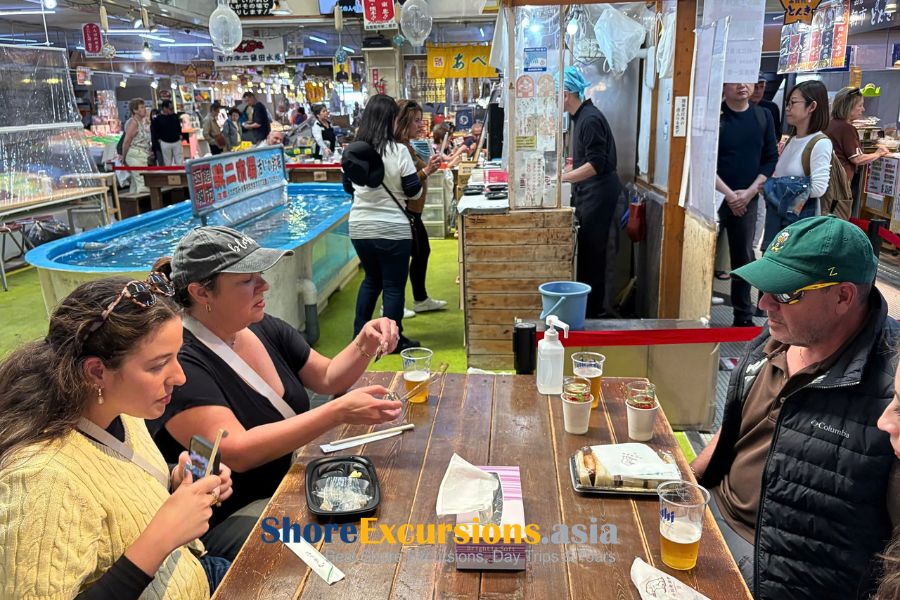
Hakodate Morning Market is one of the easiest places to experience Hokkaido’s seafood culture during a cruise visit.
Located beside Hakodate Station, the market contains hundreds of shops and stalls selling fresh seafood, vegetables, fruit, dried products and local specialties.
It is particularly known for seafood rice bowls, squid, crab, scallops and sea urchin.
The word “morning” matters. Many stores begin operating very early and close during the afternoon, so passengers whose ship arrives in the morning should consider visiting before moving to attractions that remain open later in the day.
This is also why Morning Market can work better as the first stop rather than something left until the end of a full sightseeing itinerary.
Explore Kanemori Red Brick Warehouses
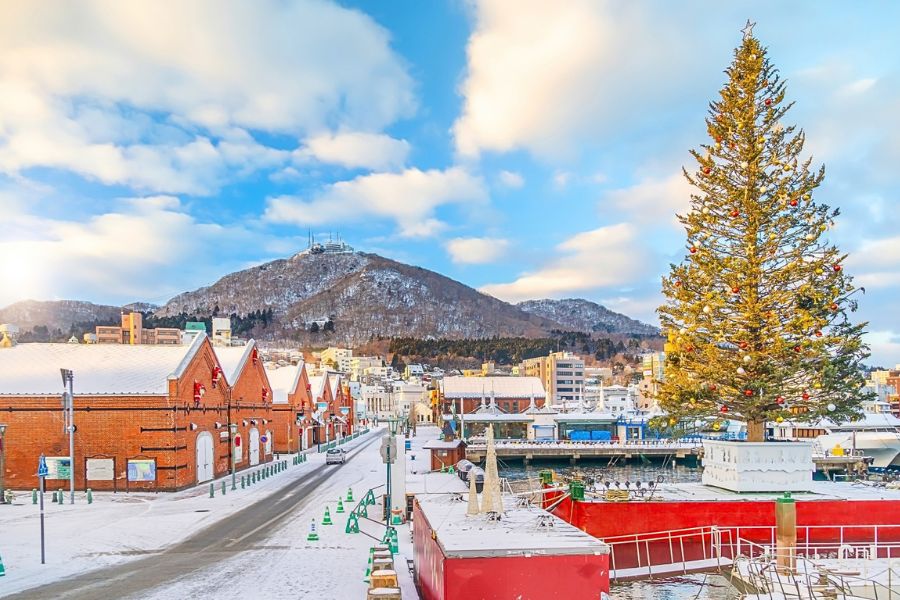
The Kanemori Red Brick Warehouses are among Hakodate’s most recognizable waterfront landmarks.
The historic warehouse buildings date from Hakodate’s development as an international trading port and have since been converted into shops, restaurants and visitor facilities.
The surrounding harbor promenade is relatively easy to explore and works well for cruise passengers who want some free time for shopping or photography without adding another major transport leg.
Because the warehouses sit close to Motomachi, they can be combined naturally into a walking-focused western Hakodate itinerary.
Walk Through Motomachi
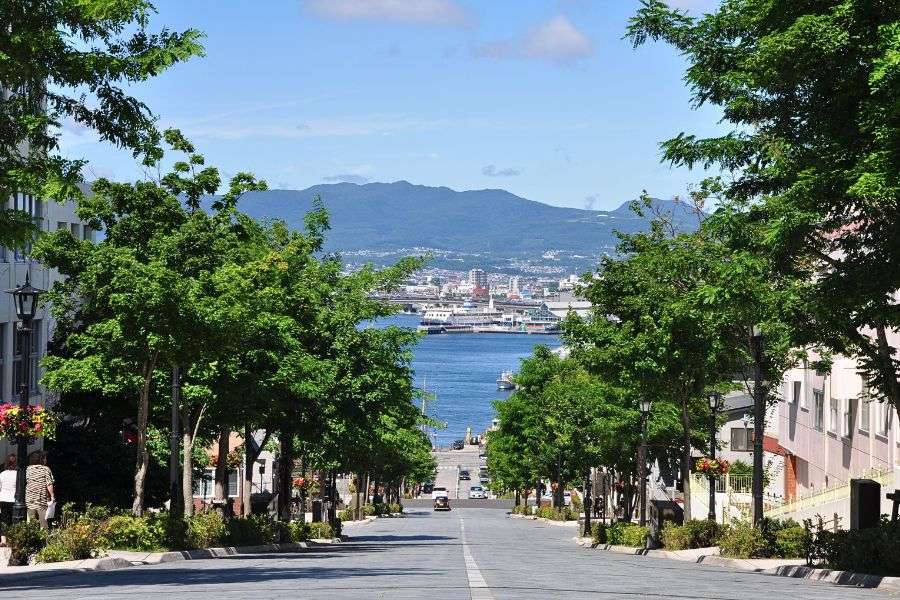
Motomachi reflects the period when Hakodate became one of Japan’s first international treaty ports.
Foreign merchants, diplomats and religious communities established themselves around the hillside above the harbor, leaving a distinctive collection of churches, Western-style buildings and stone-paved streets.
The result feels noticeably different from many Japanese port cities.
Rather than rushing between individual buildings, allow some time to experience the neighborhood itself. Sloping streets frame views down toward the harbor, while churches and historic residences appear between more traditional Japanese architecture.
See Hachiman-zaka Slope
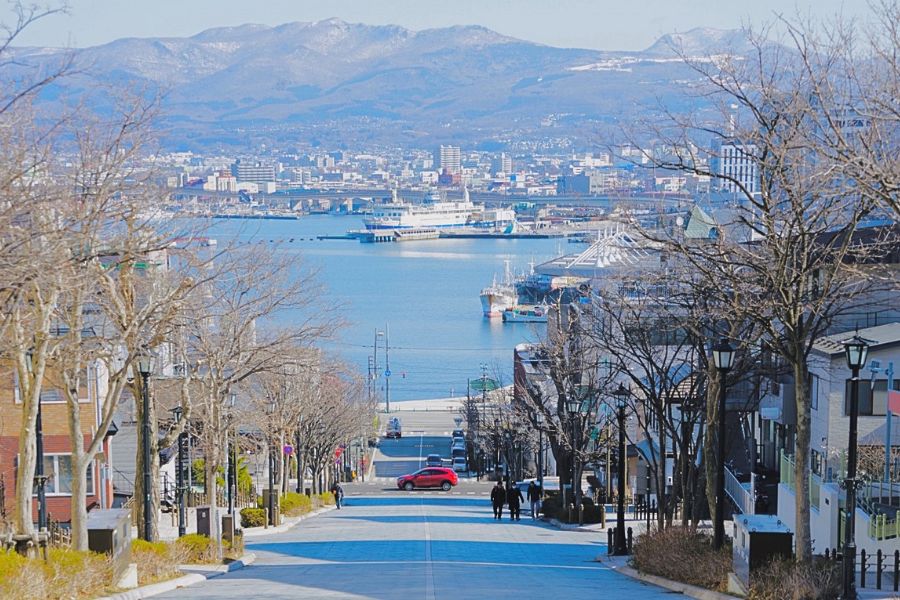
Hachiman-zaka is one of Hakodate’s most photographed streets.
The broad road runs downhill toward the harbor, creating a strong view of the waterfront framed by trees and historic buildings.
It is easy to combine with Motomachi and the Red Brick Warehouses, but the slope is steep enough to deserve consideration for senior passengers or travelers with mobility limitations.
A vehicle can drop passengers near the upper part of Motomachi, reducing the amount of uphill walking required.
Visit the Historic Churches of Motomachi
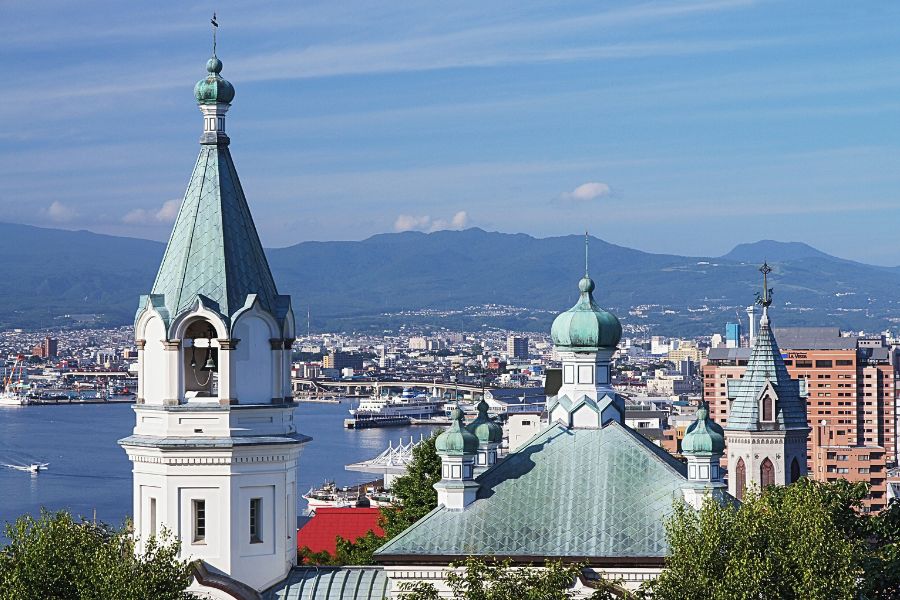
Hakodate’s international history is particularly visible in its religious architecture.
Several churches and religious buildings stand within a relatively compact part of Motomachi, reflecting Russian Orthodox, Catholic and Protestant influences associated with the city’s nineteenth-century opening to foreign trade.
You do not need to visit every interior for the area to be worthwhile. Walking between the buildings and surrounding historic streets already provides a strong sense of Hakodate’s international character.
See Hakodate from Mt. Hakodate
Mt. Hakodate provides the city’s most famous panorama.
From the summit, visitors can see Hakodate spreading across the narrow land between two bodies of water, with the distinctive shape of the city becoming clear from above.
The view is internationally known after dark, but cruise passengers do not need an evening call for the mountain to be worthwhile. Daytime views show the harbor, city streets, coastline and surrounding mountains in much greater detail.
For many cruise passengers, Mt. Hakodate is the natural final scenic highlight after exploring the Bay Area and Motomachi.
How Do You Get to Mt. Hakodate?
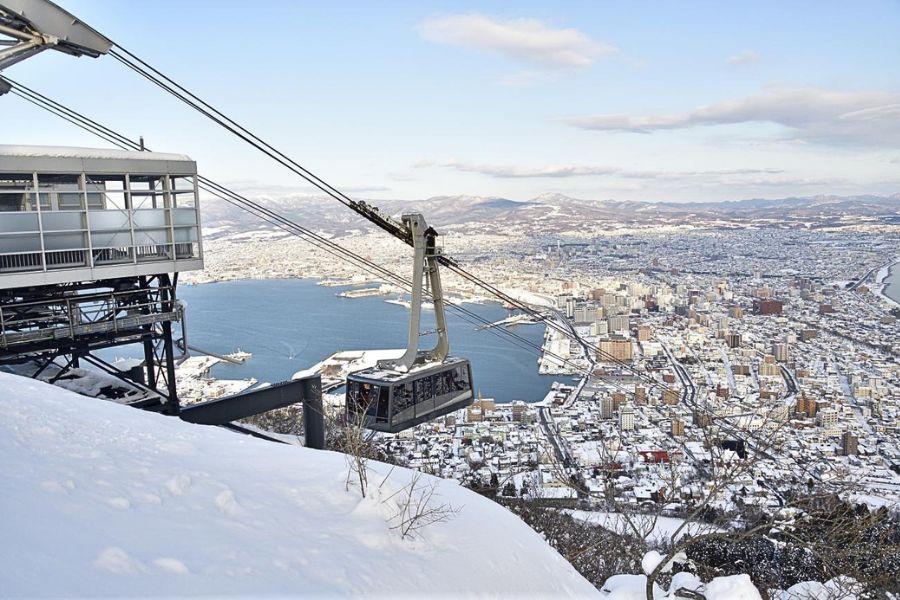
The most famous way to reach the summit is the Mt. Hakodate Ropeway.
The ropeway connects the lower station near Motomachi with the summit in only a few minutes, making it efficient for a cruise day.
However, seasonal maintenance, winter road closures and traffic regulations can affect access.
This is particularly important in autumn. The ropeway normally has a maintenance closure period, so a cruise passenger should not assume it operates every day of the cruise season.
When the ropeway is unavailable, buses or taxis may sometimes provide alternatives depending on road conditions and seasonal restrictions.
Always check the current transport situation for your actual cruise date before building the entire itinerary around a summit visit.
Is Mt. Hakodate Better During the Day or at Night?
The famous night view is spectacular, but for most cruise passengers the ship schedule determines the answer.
Visit during the day if your ship departs in the afternoon or early evening. The panorama is still excellent, queues may be easier to manage and you do not need to risk a late return simply to see the lights.
Consider sunset or evening only if your cruise schedule gives a genuinely comfortable late departure and you have checked current transport and congestion conditions.
Do not compromise your return-to-ship margin for the night view. Hakodate is worth seeing from the mountain in daylight as well.
Can You Visit Goryokaku and Mt. Hakodate in One Cruise Day?
Yes. This is one of the strongest first-time Hakodate itineraries.
The two attractions sit in different parts of the city, but the distances are manageable with efficient transportation.
A practical route can combine:
Hakodate Port → Morning Market → Goryokaku → Bay Area → Motomachi → Mt. Hakodate → Port
The order should change according to your arrival time, Morning Market operating hours, Mt. Hakodate access and the ship’s departure.
Our Hakodate City & Scenic View Tour currently follows this broad approach in approximately six hours, combining Goryokaku, Morning Market, Kanemori Red Brick Warehouses and Mt. Hakodate.
How to Spend One Day from Hakodate Cruise Port
Option 1: Short Hakodate Waterfront Day
Port → Morning Market → Kanemori Red Brick Warehouses → Motomachi → Port
This is the easiest option when your usable sightseeing window is limited.
The attractions remain within the central and western parts of Hakodate, minimizing transportation time.
You can also shorten the route easily if disembarkation takes longer than expected.
Option 2: Classic Hakodate Highlights
Port → Morning Market → Goryokaku Tower → Kanemori Red Brick Warehouses → Motomachi → Mt. Hakodate → Port
This is my preferred route for first-time cruise passengers with around six usable sightseeing hours.
It combines Hakodate’s food culture, history, port heritage and two very different panoramic views.
The main risk is trying to spend too long at every stop. Morning Market and the Bay Area can be kept relatively flexible so that Goryokaku and Mt. Hakodate remain the anchors of the day.
Option 3: History and Bay Area at a Relaxed Pace
Port → Goryokaku → Motomachi → Hachiman-zaka → Red Brick Warehouses → Local Lunch → Port
This route removes Mt. Hakodate and leaves more time for walking, photography and local food.
It is a good alternative when the ropeway is closed, the summit is covered in cloud or your group prefers fewer transport stages.
Option 4: Mt. Hakodate and Old Port Hakodate
Port → Morning Market → Motomachi → Red Brick Warehouses → Mt. Hakodate → Port
This route works particularly well for a shorter call where Goryokaku would create too much backtracking.
The focus stays on the historic port side of Hakodate and its most famous panorama.
Option 5: Onuma Park Scenic Day
Hakodate Port → Onuma Park → Scenic Viewpoints → Lake Experience → Hakodate Port
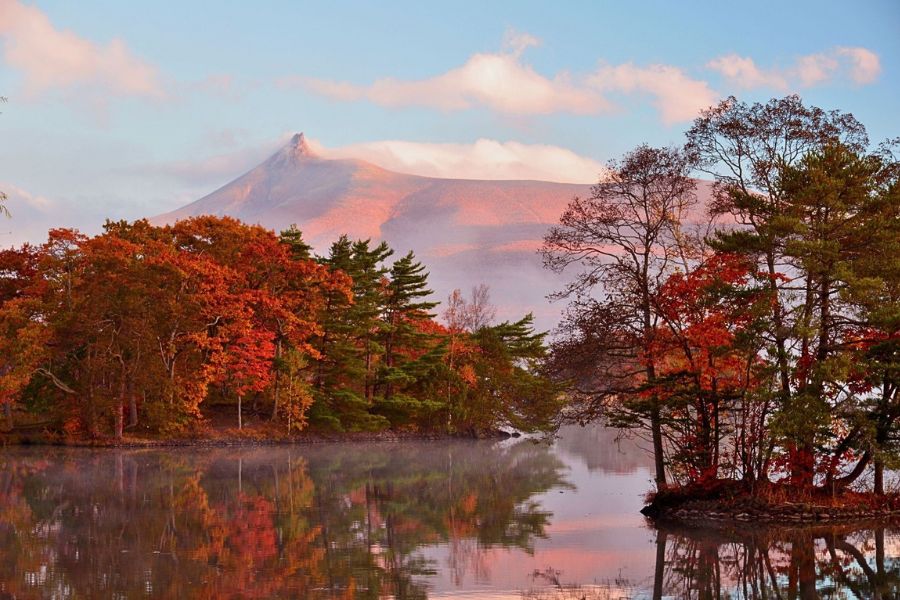
Onuma Quasi-National Park lies outside Hakodate and offers a completely different type of port day.
Lakes, small islands, forest and views toward volcanic mountains replace city sightseeing and historic neighborhoods.
This is a strong option for repeat visitors or passengers whose priority is Hokkaido scenery rather than urban attractions.
Our five-hour Onuma Lake Cruise & Scenic Park Tour combines Mt. Higurashi Observatory, Onuma Park and a lake cruise with port pickup and return.
Should You Stay in Hakodate or Visit Onuma Park?
For a first visit, I would generally recommend staying in Hakodate.
Goryokaku, Morning Market, Motomachi, the Red Brick Warehouses and Mt. Hakodate provide enough variety for a complete port day and help you understand the character of the city itself.
Choose Onuma Park if:
- you have already visited Hakodate before;
- natural scenery is more important to you than city history;
- you prefer a quieter excursion;
- your ship schedule comfortably supports the journey outside the city.
Onuma is particularly attractive during seasonal foliage periods, but weather conditions should always be considered when selecting an outdoor-focused excursion.
Getting Around from Hakodate Cruise Port
Hakodate Tram
Hakodate’s streetcar network is one of the most useful ways for independent passengers to explore the city.
Trams connect areas around Hakodate Station with the Bay Area, Motomachi and Goryokaku.
They are inexpensive and relatively straightforward, making them particularly useful for passengers whose ship docks near central Hakodate.
Goryokaku Tower still requires a walk from the nearest tram stop, so passengers with limited mobility may prefer a taxi for that part of the day.
Local Bus
Hakodate buses connect the station with several major visitor areas, including Mt. Hakodate and attractions farther from the tram lines.
A sightseeing loop around Motomachi and the Bay Area can also be useful for travelers who prefer less walking.
Schedules and seasonal operations should be checked before relying on a specific bus for your return journey.
Taxi
Taxis are particularly useful in Hakodate because the major sightseeing districts are close enough that road transfers do not necessarily consume a large part of the day.
A taxi can save time between Goryokaku and the Bay Area or reduce uphill walking around Motomachi.
When returning to your ship, show the driver your exact berth rather than simply saying “Hakodate Port.”
Private Vehicle and Guide
A private vehicle offers the most flexibility when you want to combine Goryokaku, Motomachi, the waterfront and Mt. Hakodate in a limited port window.
It is also useful when your ship docks away from the most central berth or when your group includes senior travelers who prefer less walking between transport connections.
The itinerary can be adjusted if the ropeway closes, Mt. Hakodate becomes cloudy or the Morning Market needs to be visited earlier than planned.
Can You Explore Hakodate Independently?
Yes. Hakodate is one of the easier Japanese cruise cities for independent sightseeing.
A passenger comfortable with trams and walking can combine Morning Market, the Bay Area and Motomachi without a private excursion.
Goryokaku is also accessible independently, although it adds another transport stage.
A shore excursion becomes more useful when:
- your ship uses a berth farther from central Hakodate;
- you want to combine Goryokaku and Mt. Hakodate efficiently;
- your port call is relatively short;
- you want to visit Onuma Park or another destination outside the city;
- you prefer less walking and fewer transport changes;
- you are traveling with senior family members;
- you want return timing managed around your ship schedule.
You can compare the available options on our Hakodate shore excursions page.
Walking and Mobility Considerations in Hakodate
Hakodate can be very comfortable for senior cruise passengers when the route is planned carefully.
Morning Market and the Red Brick Warehouse area are relatively easy to explore at your own pace.
Goryokaku Tower provides the important aerial view using elevators, so you do not need a strenuous climb to appreciate the star-shaped fort.
Motomachi deserves more attention. The neighborhood is built on the slopes below Mt. Hakodate, and streets such as Hachiman-zaka can be steep.
Passengers who prefer easier walking can use a vehicle to reach the upper Motomachi area and then explore selected sights rather than walking uphill from the waterfront.
Mt. Hakodate itself is also relatively accessible when the ropeway is operating because the summit can be reached without a long hike.
Our Hakodate City & Scenic View Tour currently uses vehicle transfers between the major attractions and is designed specifically around cruise schedules.
What to Eat During a Hakodate Port Day
Fresh Seafood Donburi
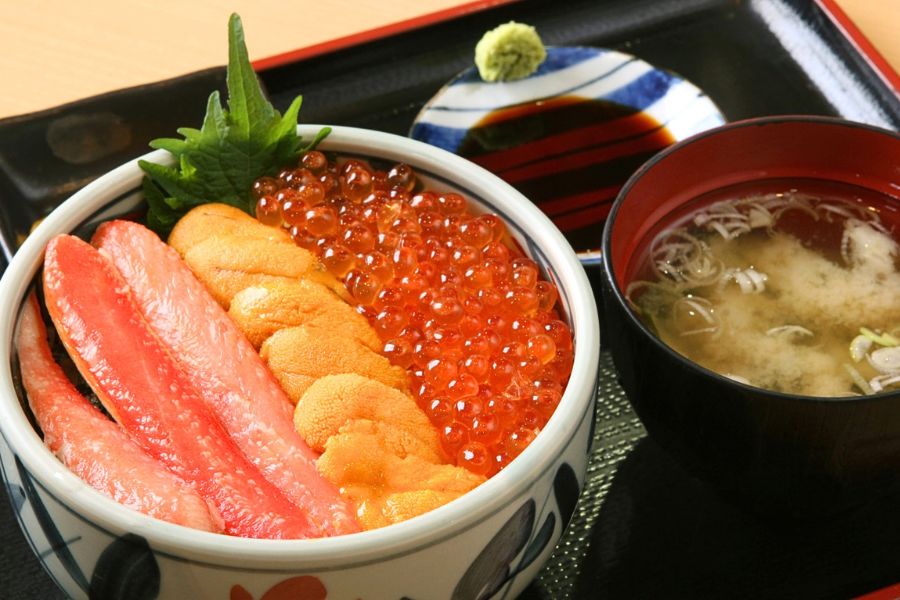
A seafood rice bowl is one of the most natural meals to try in Hakodate.
Morning Market restaurants offer combinations of salmon roe, crab, tuna, scallops, sea urchin and other seasonal seafood over rice.
Because the market operates early, this can work as breakfast or an early lunch before sightseeing.
Hakodate Squid
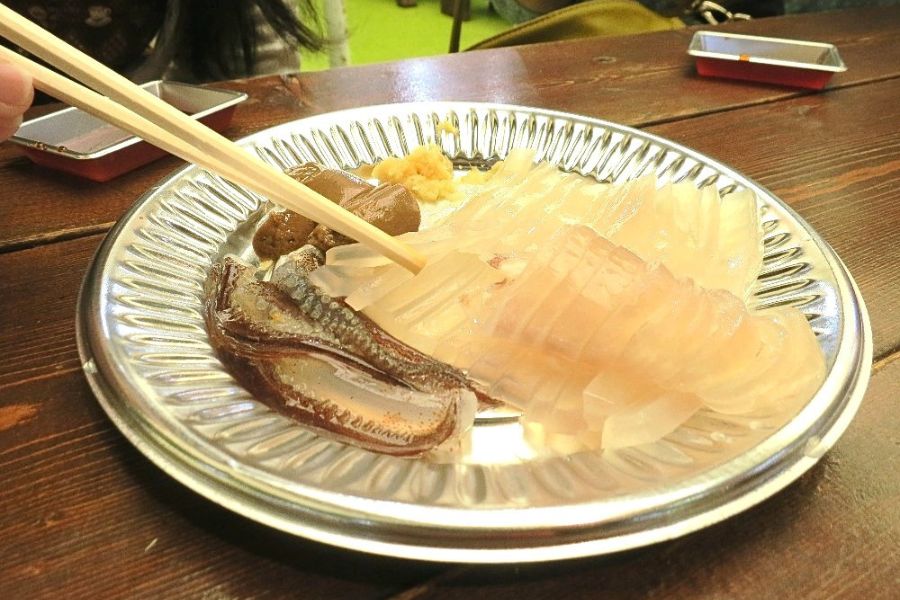
Squid is particularly associated with Hakodate and appears throughout the city’s seafood culture.
Fresh squid dishes are common around Morning Market and local seafood restaurants.
Hokkaido Dairy and Sweets
Hokkaido is famous across Japan for dairy products, and Hakodate offers plenty of opportunities to try ice cream, desserts and regional sweets.
The Bay Area is an easy place to add a short café or dessert stop without changing the main sightseeing route.
Local Hokkaido Produce
Morning Market is not limited to seafood. Fruit, vegetables, dried products and packaged Hokkaido foods also make useful cruise-day snacks or souvenirs.
When Should You Visit Hakodate Morning Market?
Visit as early in the day as your ship schedule allows.
The market begins operating from early morning, but many individual stalls finish during the early afternoon.
If your cruise ship arrives around breakfast or morning time, the market is an ideal first stop.
Passengers arriving later should check whether the specific restaurants or stalls they want to visit will still be operating rather than assuming the entire market remains open until evening.
What If Mt. Hakodate Is Cloudy?
Do not let poor summit visibility ruin the port day.
Hakodate has enough strong attractions that Mt. Hakodate should be treated as one highlight rather than the sole purpose of the visit.
If the summit is covered by low cloud, spend more time at:
- Goryokaku Tower;
- Motomachi;
- Kanemori Red Brick Warehouses;
- Hakodate Morning Market;
- the waterfront and historic port district.
Goryokaku Tower provides an excellent city panorama from another part of Hakodate and can sometimes offer worthwhile views even when the mountain summit is less clear.
How Much Time Do You Need in Hakodate?
Hakodate is compact enough to provide a worthwhile experience during both short and long cruise calls.
- Around 3–4 usable hours: focus on Morning Market, the Bay Area and Motomachi, or choose Goryokaku plus one central district.
- Around 4–5 usable hours: combine Goryokaku with the waterfront and Motomachi.
- Around 5–6 usable hours: Morning Market, Goryokaku, Red Brick Warehouses and Mt. Hakodate become realistic with efficient transportation.
- Around 6–7+ usable hours: explore the city at a more relaxed pace or consider an excursion outside Hakodate.
These are planning examples rather than guarantees. Your exact berth, traffic, attraction queues, weather and seasonal Mt. Hakodate access can all affect the itinerary.
Which Hakodate Itinerary Is Best for Senior Cruise Passengers?
For a comfortable first visit, I would suggest:
Morning Market → Goryokaku Tower → Red Brick Warehouses → selected Motomachi viewpoints → Mt. Hakodate if conditions allow.
The route provides the main Hakodate experiences while allowing vehicle transfers between districts.
You do not need to walk the full Goryokaku Park, climb Motomachi’s steepest streets or hike Mt. Hakodate to enjoy the city.
If natural scenery is the priority, the Onuma Lake Cruise & Scenic Park Tour is currently listed with an easy-to-moderate walking level, although boarding conditions and park surfaces should still be considered for passengers with specific mobility needs.
How Early Should You Return to Hakodate Cruise Port?
Always follow your cruise line’s all-aboard time and plan to reach the correct Hakodate berth comfortably before that deadline.
A city itinerary is relatively easy to shorten. If sightseeing runs late, reduce shopping time around the Red Brick Warehouses or remove a secondary Motomachi stop.
More caution is required when visiting Onuma Park or another destination outside the city because the final road journey back to Hakodate cannot be shortened in the same way.
Passengers visiting Mt. Hakodate should also allow for queues at the ropeway or traffic around the summit access area, particularly during popular viewing periods.
If the day begins running late, remove the final attraction instead of reducing your return-to-ship margin.
Selected Shore Excursions Asia Hakodate tours include licensed guides, port pickup and Back-to-Ship planning for cruise passengers.
Is Hakodate Worth Visiting on a Cruise?
Absolutely. Hakodate is particularly well suited to a cruise call because its major experiences are varied but relatively close together.
Within one day you can look down over Goryokaku’s star-shaped fort, eat fresh Hokkaido seafood at Morning Market, walk through a former international trading district and see the city from Mt. Hakodate.
Passengers who prefer nature can instead travel toward Onuma Park without needing to turn the day into a very long-distance excursion.
For first-time visitors, I would prioritize Goryokaku, Morning Market, Motomachi, the Red Brick Warehouses and Mt. Hakodate. Together they explain why Hakodate feels different from many other Japanese cruise ports.
To compare the available options, browse our Hakodate shore excursions for cruise passengers. If you want a private itinerary based on your ship schedule, interests and walking preference, you can also create your own shore excursion.
Frequently Asked Questions About Hakodate Cruise Port
Where do cruise ships dock in Hakodate?
Hakodate has several berths that may be used by cruise ships, including Wakamatsu Wharf, Minato-cho Wharf and Nishi Wharf. Always check your cruise documents because the distance to central Hakodate differs according to the berth.
Is Hakodate cruise port close to the city center?
It can be. Wakamatsu Wharf is particularly convenient for JR Hakodate Station and the Morning Market, while passengers arriving at other berths may need a longer taxi, shuttle or arranged transfer into central Hakodate.
Can you walk from Hakodate cruise port to attractions?
From a central berth, some passengers can walk to Hakodate Station, Morning Market and nearby waterfront areas. Goryokaku and Mt. Hakodate require additional transport, and passengers arriving at more distant berths should generally begin with a transfer into the city.
What are the best things to do from Hakodate cruise port?
For first-time visitors, Goryokaku Tower, Hakodate Morning Market, Kanemori Red Brick Warehouses, Motomachi and Mt. Hakodate create one of the strongest one-day itineraries.
How far is Goryokaku from Hakodate Station?
Goryokaku lies inland from the station area. Hakodate’s tram system can take passengers toward Goryokaku-koen-mae, followed by an additional walk to Goryokaku Tower. Taxi or arranged vehicle is faster when port time is limited.
Can I visit Goryokaku and Mt. Hakodate in one day?
Yes. Both attractions fit comfortably into many five- to six-hour Hakodate sightseeing itineraries when transportation is arranged efficiently. Morning Market, Motomachi or the Red Brick Warehouses can also be added depending on the ship schedule.
Is Mt. Hakodate Ropeway always open?
No. The ropeway can close for scheduled maintenance or because of operating conditions. Road access also changes seasonally, particularly in winter. Always check current access information for your cruise date before relying on the summit as the final stop of the day.
Is Hakodate Morning Market open in the afternoon?
Some shops operate into the early afternoon, but opening hours vary and many businesses finish earlier than other city attractions. Cruise passengers should visit the market relatively early whenever their ship schedule allows.
Can you visit Onuma Park from Hakodate cruise port?
Yes. Onuma Park is a realistic half-day excursion from Hakodate for passengers who prefer lakes, forests and Hokkaido scenery. A dedicated vehicle or organized excursion makes return-to-ship timing easier to manage.
Can you explore Hakodate independently?
Yes. Hakodate’s tram, buses and compact central districts make independent sightseeing relatively straightforward. A guided excursion becomes more useful when you want to combine several areas efficiently or travel outside the city.
Is Hakodate suitable for senior cruise passengers?
Yes. Many attractions can be experienced with easy-to-moderate walking when vehicle transfers are used. Motomachi has steep slopes, so senior travelers may prefer being dropped near the upper historic district rather than walking uphill from the waterfront.
How many hours do you need in Hakodate?
Three to four usable hours are enough for a focused central Hakodate visit. Around five to six hours allows Goryokaku, Morning Market, the Bay Area and Mt. Hakodate to be combined, while longer calls provide a more relaxed pace or the option of visiting Onuma Park.
Cruise berths, attraction hours, Mt. Hakodate access and transport conditions can change. Always reconfirm your ship’s exact Hakodate berth and all-aboard time before finalizing your port-day plans.


 Contact Us via Messenger
 Send Inquiry