
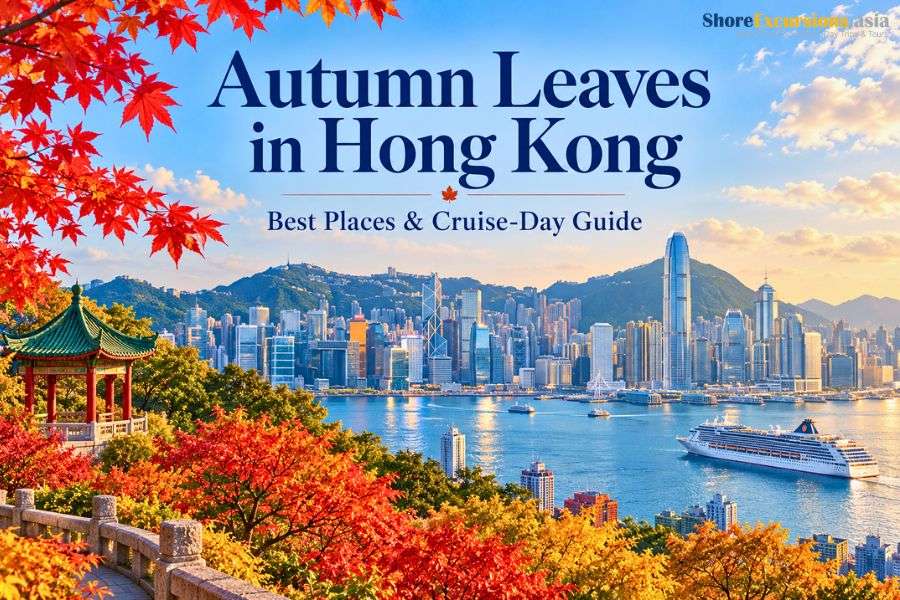
Autumn leaves in Hong Kong arrive much later than many travelers expect. While Japan and South Korea are already showing strong red and gold foliage in October and November, Hong Kong’s subtropical climate means the best seasonal colors often develop closer to December and can continue into early January.
For cruise passengers, timing is only half of the decision. Hong Kong’s most famous red-leaf destination, Tai Tong Sweet Gum Woods, sits deep in the New Territories and requires considerably more travel and walking than a typical city sightseeing stop. Other locations are easier to combine with Victoria Peak, Central, Tsim Sha Tsui and Hong Kong’s classic highlights.
This guide from Shore Excursions Asia focuses specifically on how to experience Hong Kong autumn leaves during a cruise call: when the foliage is likely to change, which locations fit different port-day lengths, how Kai Tak and Ocean Terminal affect your route and when it makes sense to choose seasonal scenery over Hong Kong’s famous city attractions.
If Hong Kong is one of your upcoming ports, browse our Hong Kong shore excursions or first check our Hong Kong Cruise Port Guide to confirm how Kai Tak and Ocean Terminal change the logistics of your day ashore.
Autumn Leaves in Hong Kong: What Cruise Passengers Need to Know First
Before building a port-day itinerary around foliage, answer three questions:
- When is your ship arriving? October is usually too early for reliable red leaves, while December is far more promising.
- Which cruise terminal are you using? Kai Tak and Ocean Terminal create very different starting points.
- How important are autumn leaves compared with Hong Kong’s classic sights? A first-time visitor may value Victoria Peak and Victoria Harbour more than spending most of the day travelling to one remote foliage spot.
Hong Kong’s best autumn experience is therefore not automatically the place with the reddest trees. The right location depends on your date, ship schedule, walking ability and whether this is your first or repeat visit.
When Is the Best Time to See Autumn Leaves in Hong Kong?
Hong Kong’s seasonal foliage develops later than autumn colors in most of Japan, Korea and northern China.
A realistic planning guide is:
| Period | What to Expect |
|---|---|
| October | Mostly green vegetation; generally too early for reliable foliage-focused sightseeing |
| November | Some trees may begin changing as temperatures cool, but conditions remain inconsistent |
| December | A much stronger period for yellow, orange and red foliage, especially sweet gum |
| Late December to Early January | Often one of the best windows for mature red-leaf displays |
| January | Color may remain in some locations, but leaves gradually become sparse |
These periods are guidelines rather than fixed peak dates.
Hong Kong foliage depends on cooler temperatures, dry weather, sunlight and the timing of individual trees. A location that was bright red on December 20 one year may still be yellow or partly green on the same date another year.
For cruise travelers, the best strategy is to build a flexible itinerary rather than committing months in advance to a foliage-only route.
Why Do Hong Kong Autumn Leaves Arrive So Late?
Hong Kong has a subtropical climate.
Even after October begins, daytime conditions can remain relatively warm, and much of the landscape stays green throughout the year.
Seasonal deciduous trees respond when temperatures fall and daylight conditions change later in the year.
This is why Hong Kong’s famous red-leaf season often overlaps with what visitors from Europe or North America would consider early winter rather than classic autumn.
The most recognizable species at Tai Tong is Chinese sweet gum rather than Japanese maple.
Its leaves can progress from green to yellow, orange and red, meaning a forest does not necessarily become one uniform color at the same time.
This mixed palette against Hong Kong’s evergreen vegetation is part of what makes the landscape distinctive.
Best Places to See Autumn Leaves in Hong Kong
For cruise passengers, I would divide Hong Kong foliage locations into three groups:
- Dedicated foliage destinations – worth most of the day if autumn leaves are the main priority;
- Urban seasonal stops – easier to combine with classic Hong Kong sightseeing;
- Nature-focused alternatives – better for returning visitors and active travelers.
Tai Tong Sweet Gum Woods: Best for a Dedicated Foliage Day
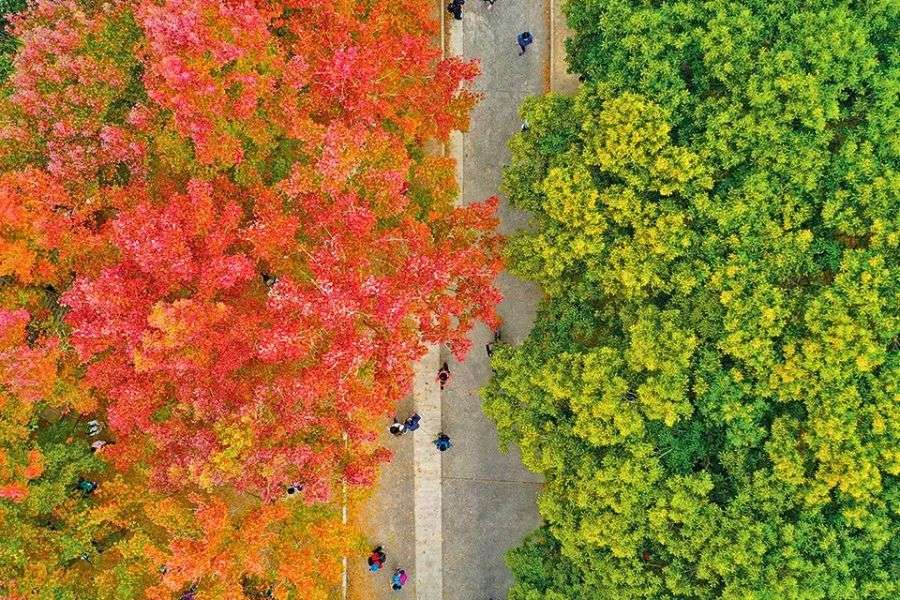
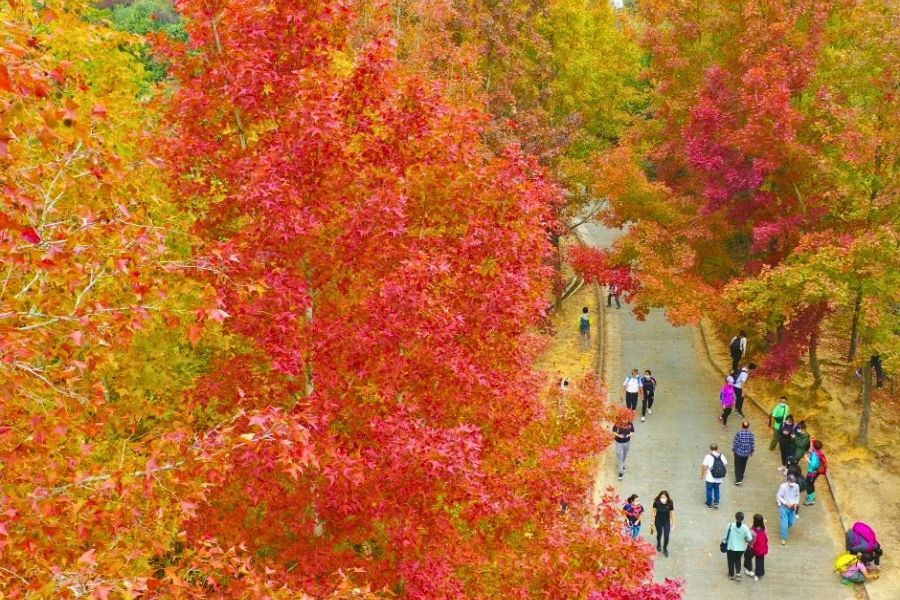
Tai Tong Sweet Gum Woods in Tai Lam Country Park is the place most strongly associated with red leaves in Hong Kong.
Chinese sweet gum trees line sections of the country-park road and can develop striking combinations of yellow, orange and red during the cooler months.
When conditions are good, this is the closest Hong Kong comes to a destination specifically worth visiting for autumn foliage alone.
However, cruise passengers should understand the logistics before choosing it.
Tai Tong is located in the western New Territories rather than close to Victoria Harbour, Central or Tsim Sha Tsui.
Reaching the Sweet Gum Woods also involves walking. During the official seasonal period, road restrictions may prevent vehicles from approaching the foliage area directly, particularly on busy weekends and public holidays.
Public-transport guidance from the country-park authorities involves an uphill walk of roughly an hour from the Tai Tong Shan Road bus stop to the Sweet Gum Woods.
A private vehicle can simplify the first part of the journey, but it does not turn Tai Tong into a roadside photo stop.
Best for: photographers, active travelers, repeat Hong Kong visitors and guests whose main priority is seasonal foliage.
Less suitable for: short port calls, limited mobility or first-time visitors who also want Victoria Peak, harbour views, temples and multiple city highlights.
Hong Kong Zoological and Botanical Gardens: Best for First-Time Cruise Visitors

For many cruise passengers, the Hong Kong Zoological and Botanical Gardens provide a more practical seasonal experience.
The gardens sit in Central on Hong Kong Island and can be combined with Victoria Peak, the Central district and other classic city attractions.
This means you do not need to sacrifice most of your sightseeing day simply to look for seasonal color.
The gardens include deciduous trees that can develop warm yellow, orange, copper and reddish tones as the weather cools.
The experience is much smaller in scale than Tai Tong, but that is not necessarily a disadvantage during a cruise call.
A first-time visitor can enjoy Hong Kong’s skyline and urban culture while still adding a seasonal stop if the leaves are worthwhile on the day.
Best for: first-time passengers, shorter port calls, travelers who want autumn foliage as part of a broader city itinerary and guests who prefer less strenuous walking.
Tsing Yi Park: A More Relaxed Urban Autumn Stop
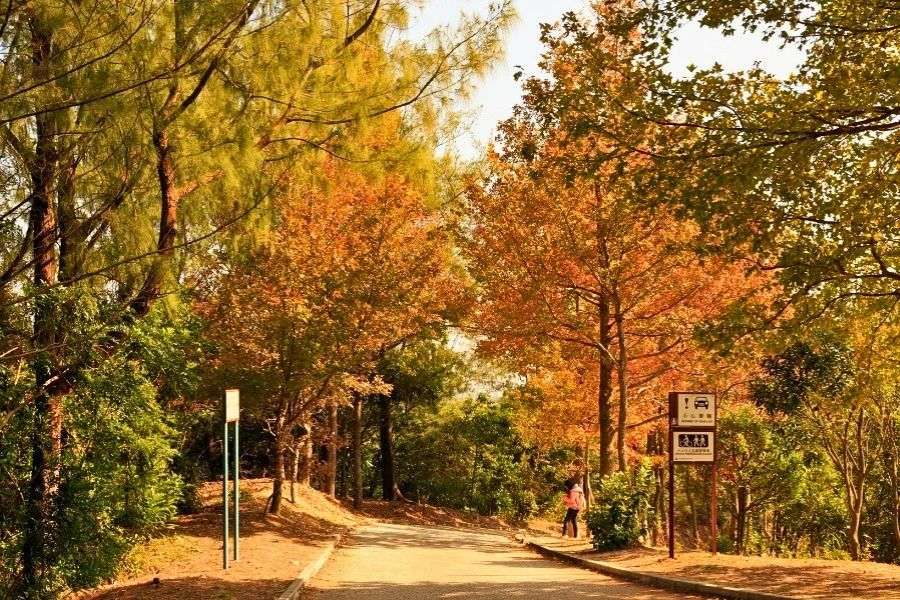
Tsing Yi Park offers another alternative for passengers who want seasonal scenery without committing to a long country-park hike.
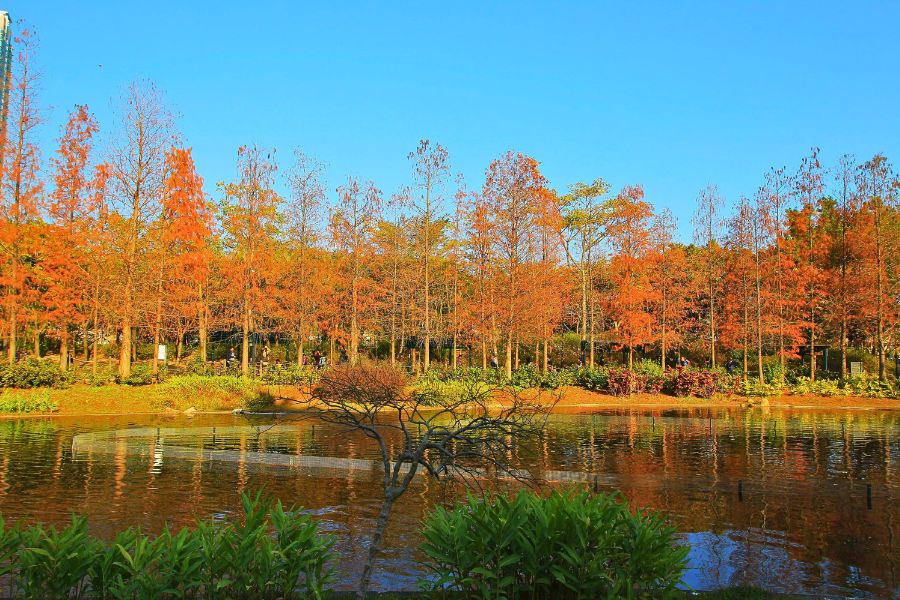
The landscaped park includes water, mature trees and walking paths that can develop yellow, copper and reddish-brown tones during cooler weather.
It does not have the same red-leaf reputation as Tai Tong, but it provides a calmer and generally easier experience.
Tsing Yi can be especially useful for travelers who care more about an enjoyable seasonal setting than finding the most famous Instagram viewpoint.
Best for: relaxed photography, easier walking and repeat visitors looking for something outside Hong Kong’s standard sightseeing circuit.
Lau Shui Heung Reservoir: Best for Nature and Photography
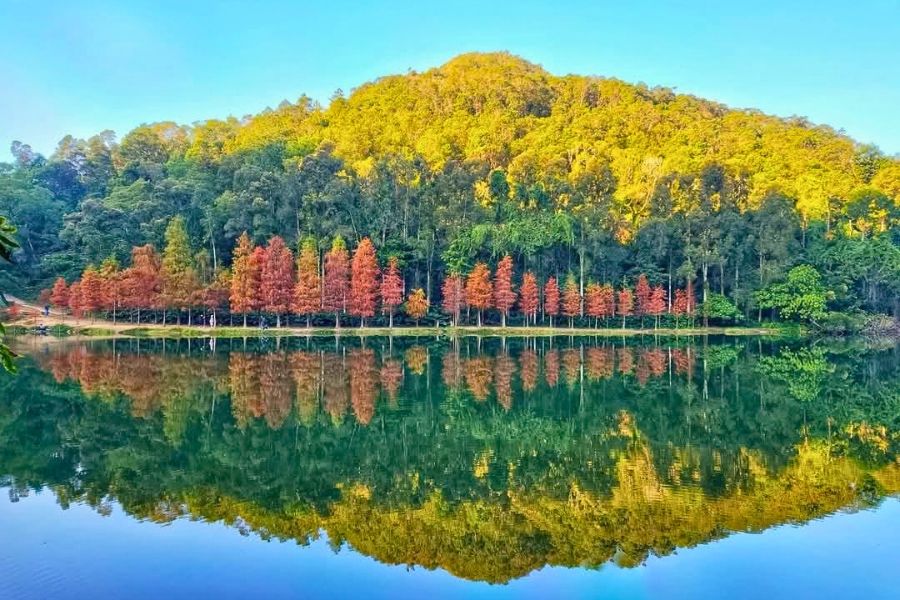
Lau Shui Heung Reservoir in the northern New Territories offers a completely different style of autumn experience.
Here the appeal comes from the combination of woodland, seasonal trees and water reflections rather than a single avenue of red foliage.
When conditions align, orange and reddish tones reflected across the reservoir can create some of Hong Kong’s most atmospheric cooler-season scenery.
This is a stronger choice for nature lovers than for passengers trying to cover Hong Kong’s headline attractions in the same day.
Travel and walking requirements also make it much better suited to a long port call.
Best for: photographers, nature-focused travelers and returning visitors.
Shing Mun Reservoir: Woodland Autumn Scenery
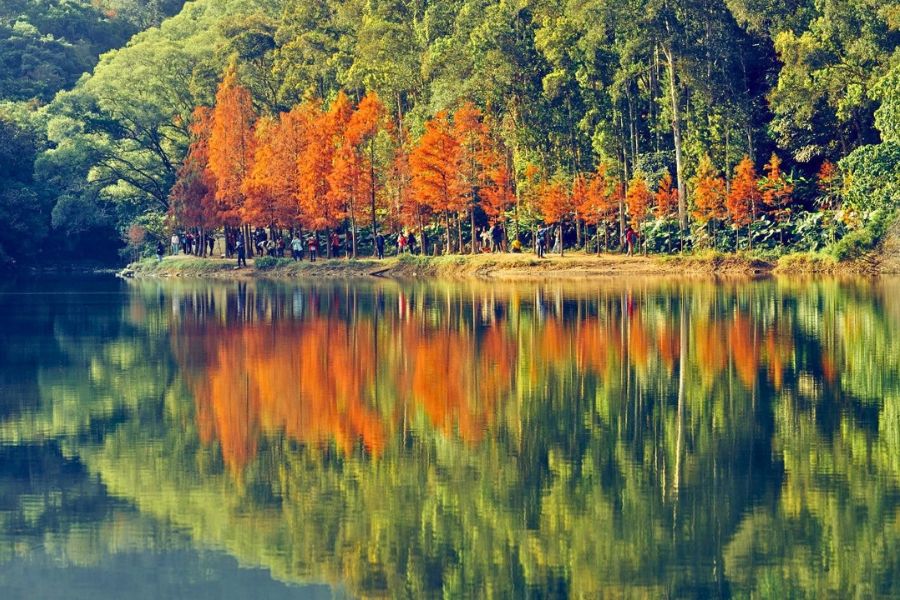
Shing Mun Reservoir combines forest paths, water scenery and seasonal color in the New Territories.
This is not a place where every tree suddenly becomes bright red. The attraction is the broader woodland environment, with occasional warm foliage mixed among Hong Kong’s evergreen vegetation.
The setting works particularly well for travelers who enjoy walking and want to experience the less urban side of Hong Kong.
For cruise passengers, however, it should normally be treated as the main nature component of the day rather than one of many quick stops.
Which Hong Kong Autumn Foliage Spot Is Best for a Cruise Day?
| Location | Best For | Walking | Good for First-Time Cruise Visitors? |
|---|---|---|---|
| Tai Tong Sweet Gum Woods | Strong foliage focus | Considerable, including uphill walking | Only with a long call and foliage as a main priority |
| Hong Kong Zoological and Botanical Gardens | City sightseeing + seasonal color | Manageable for many visitors | Yes |
| Tsing Yi Park | Relaxed urban foliage | Easy to moderate | Possible, but better for repeat visitors |
| Lau Shui Heung Reservoir | Nature and photography | Moderate outdoor walking | Better for returning visitors |
| Shing Mun Reservoir | Woodland scenery | Moderate to active | Better for nature-focused travelers |
Is Tai Tong Worth Visiting from a Cruise Ship?
Yes, but only when three conditions are met:
- the foliage condition is actually good;
- your ship provides enough time ashore;
- and everyone in your group is comfortable with the walking involved.
The biggest mistake is treating Tai Tong as though it were a quick suburban park.
Once road travel, seasonal access restrictions, uphill walking and photography time are included, the experience can occupy a substantial part of your port day.
For a passenger visiting Hong Kong for the first time, I would not normally recommend skipping Victoria Peak, Victoria Harbour and the city’s cultural highlights merely because Tai Tong appears on a list of Hong Kong’s best autumn spots.
For a returning visitor who has already explored the city, Tai Tong becomes far more attractive.
Autumn Leaves from Kai Tak Cruise Terminal
Kai Tak Cruise Terminal sits in eastern Kowloon on the former airport runway.
It is a modern cruise facility, but passengers need transportation before reaching most major sightseeing districts.
This matters when planning a foliage day because every route already begins with a road transfer.
If your ship docks at Kai Tak and this is your first visit to Hong Kong, a practical seasonal strategy is to travel toward Hong Kong Island and combine:
Kai Tak → Victoria Peak → Central → Zoological and Botanical Gardens → Victoria Harbour → Kai Tak
This preserves Hong Kong’s signature experiences while allowing seasonal foliage to become part of the day rather than the entire purpose of the excursion.
Another possibility is to remain largely on the Kowloon side and combine cultural attractions such as Wong Tai Sin Temple and Nan Lian Garden with the harbourfront.
Our Cultural & Scenic Hong Kong Highlights itinerary follows this broader city approach, combining Kowloon culture with Victoria Peak, Repulse Bay and other Hong Kong landmarks.
If foliage conditions are especially strong and your group wants a dedicated nature experience, Tai Tong can replace much of the standard city sightseeing rather than being added on top of it.
Autumn Leaves from Ocean Terminal
Ocean Terminal is much more central.
Passengers arrive directly in Tsim Sha Tsui within the Harbour City complex, close to Victoria Harbour, the Star Ferry and the waterfront.
This makes a mixed city-and-foliage itinerary easier.
A first-time passenger can begin with the harbourfront, cross toward Central and continue to Victoria Peak and the Zoological and Botanical Gardens before returning to Tsim Sha Tsui.
The terminal’s location also means less time is lost reaching a principal sightseeing district.
However, Tai Tong remains far enough from central Hong Kong that it should still be treated as a dedicated excursion rather than a small addition to a conventional city tour.
If you are not certain where your ship will berth, read our Hong Kong Cruise Port Guide before finalizing your itinerary.
Planning Autumn Leaves by Time in Port
Four to Five Usable Hours Ashore
Do not travel to Tai Tong.
A short port call should remain geographically focused.
From Ocean Terminal, consider:
Tsim Sha Tsui Waterfront → Star Ferry / Central → one focused Hong Kong Island attraction → return
If seasonal foliage in an accessible urban garden is worthwhile, include it only when it fits naturally into the route.
From Kai Tak, choose one side of the harbour and avoid spending the day crossing back and forth.
Around Six Hours Ashore
A six-hour window works well for a Hong Kong Island route.
A practical itinerary might be:
Port → Victoria Peak → Hong Kong Zoological and Botanical Gardens → Central → harbour viewpoint → Port
Another option is to focus entirely on classic Hong Kong sightseeing and treat foliage as a bonus rather than an obligation.
SEA’s Hong Kong Island Tour is currently planned as a six-hour experience covering Victoria Peak, Repulse Bay, Stanley and Aberdeen. If seasonal scenery is more important than one of those stops, a private route can be adjusted accordingly.
Seven to Eight Hours Ashore
This is the most flexible duration for a first-time Hong Kong cruise visit.
You can combine:
- Victoria Peak;
- one or two cultural or waterfront attractions;
- an accessible seasonal foliage stop;
- and a comfortable return to the ship.
The existing Hong Kong Highlights tour is eight hours and combines Victoria Peak, Repulse Bay, Tsim Sha Tsui Waterfront, Avenue of Stars, Wong Tai Sin Temple and Nan Lian Garden.
For a private seasonal itinerary, one standard attraction could be replaced with an autumn foliage stop if current leaf conditions justify the change.
Nine to Ten Hours Ashore
A long port day creates a realistic opportunity for a foliage-first itinerary.
For returning visitors, a route could be:
Port → Tai Tong / New Territories foliage → local lunch → selected Hong Kong city or harbour stop → Port
The goal should not be to visit Tai Tong and then squeeze an entire eight-hour Hong Kong city tour into the remaining time.
A long call provides flexibility, but distances, walking and the return margin still matter.
First-Time Visitor or Returning Visitor: Which Autumn Route Makes More Sense?
First-Time Hong Kong Cruise Passenger
Prioritize Hong Kong itself.
A good first visit normally includes some combination of:
- Victoria Peak;
- Victoria Harbour;
- Tsim Sha Tsui;
- a temple or traditional garden;
- Hong Kong Island;
- and local neighborhoods.
Seasonal foliage should enhance that experience rather than replace everything else.
For this traveler, an urban garden or accessible seasonal stop is normally more sensible than Tai Tong.
Returning Hong Kong Cruise Passenger
If you have already visited the Peak, Repulse Bay, Central and Tsim Sha Tsui, the New Territories become much more attractive.
A dedicated autumn trip to Tai Tong, a reservoir area or another countryside landscape can reveal a side of Hong Kong that many cruise visitors never experience.
This is also where a customized itinerary becomes especially useful because standard first-time sightseeing routes may no longer match your interests.
What If the Autumn Leaves Are Still Green?
This is one of the most important questions for cruise planning.
You should not spend most of a limited port call travelling to a foliage destination simply because the calendar says “December.”
If current conditions are poor, switch the itinerary.
Hong Kong has enough attractions that a failed foliage forecast does not need to create a disappointing day.
Strong alternatives include:
- Victoria Peak;
- Wong Tai Sin Temple;
- Nan Lian Garden and Chi Lin Nunnery;
- Repulse Bay;
- Stanley;
- Aberdeen;
- Tsim Sha Tsui Waterfront;
- Avenue of Stars;
- Central and Sheung Wan.
The seven-hour Hong Kong Sightseeing Tour, for example, combines Victoria Peak, Repulse Bay, Aberdeen, Avenue of Stars and Chi Lin Nunnery and remains worthwhile regardless of leaf color.
Autumn Leaves in Hong Kong for Senior Cruise Travelers
Hong Kong can provide a comfortable seasonal port day for senior travelers, but the most famous foliage spot is not always the best choice.
Tai Tong requires more walking than many photographs suggest.
The official approach from public transport involves a substantial uphill walk, and seasonal road controls may limit vehicle access closer to the Sweet Gum Woods.
For passengers with knee, balance or stamina concerns, I would prioritize:
- urban gardens;
- landscaped parks;
- vehicle-based sightseeing;
- shorter walks with frequent rest opportunities;
- and locations that remain worthwhile even if foliage is limited.
SEA currently labels tours such as Cultural & Scenic Hong Kong Highlights and the Hong Kong Sightseeing Tour as Easy–Moderate walking, making them useful foundations for a more comfortable seasonal route.
If mobility is limited, tell the tour planner before the itinerary is finalized rather than trying to shorten a demanding route after arrival.
How to Check Hong Kong Autumn Leaf Conditions Before Your Cruise
Do not rely only on photographs from previous years.
For Tai Tong, the Agriculture, Fisheries and Conservation Department publishes seasonal updates through its Red Leaf information system.
The condition is commonly described through stages such as:
- Green – little meaningful seasonal color;
- Yellow – foliage is beginning to change;
- Turning Red – red tones are developing;
- Red – one of the stronger viewing periods;
- Sparse Leaves – many leaves have already fallen.
The most recent condition is far more useful than a fixed “best date.”
Check again shortly before your ship reaches Hong Kong, particularly if you are considering dedicating most of the day to Tai Tong.
Should You Visit Tai Tong on a Weekend?
Weekend planning requires extra care during the main red-leaf period.
Tai Tong becomes popular with local visitors when foliage conditions are strong.
Authorities may introduce seasonal traffic controls, and the walking approach can become busier.
For cruise passengers, this creates two additional considerations:
- vehicle access may be more restricted than expected;
- crowds can increase the time required for walking and photography.
A weekday port call may therefore provide a more relaxed foliage experience.
If your ship arrives on a busy weekend, protect a larger return-to-port buffer.
What to Wear for Hong Kong Autumn Foliage
Hong Kong’s cooler-season weather is generally milder than Japan or South Korea, but countryside walks can still feel cool, especially in shaded areas or when wind picks up.
For a foliage-focused port day, bring:
- comfortable walking shoes with grip;
- light layers;
- a light jacket;
- water;
- sun protection;
- and a compact rain layer if the forecast suggests showers.
Passengers visiting Tai Tong should prioritize footwear over style. The day involves much more walking than a typical vehicle-based Hong Kong highlights tour.
Hong Kong Autumn Leaves vs Japan and South Korea
Hong Kong should not be evaluated using the same foliage expectations as Japan or Korea.
In Japan and South Korea, entire mountains, temple districts or urban avenues may turn dramatically red and gold during October and November.
Hong Kong remains much greener because of its subtropical vegetation.
The seasonal appeal is more selective:
- red sweet gum against evergreen woodland;
- yellow and orange trees around landscaped parks;
- copper foliage reflected in reservoirs;
- and pockets of autumn color inside an otherwise green city.
It is a different type of seasonal landscape.
Travelers who understand that distinction are less likely to arrive expecting Kyoto-style maple forests and more likely to appreciate what Hong Kong actually offers.
Three Practical Autumn Cruise-Day Plans
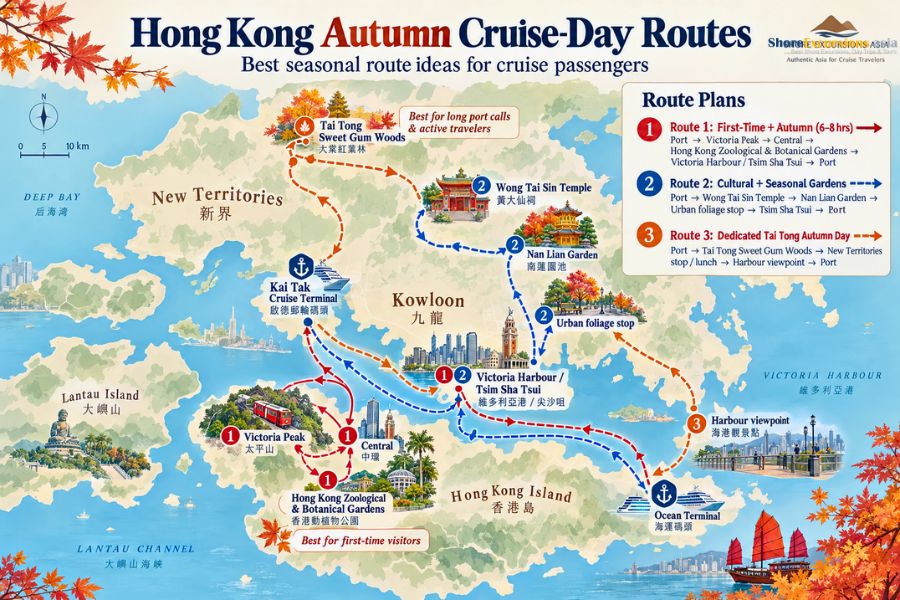
Plan 1: First-Time Hong Kong with a Touch of Autumn
Best for: first-time passengers, approximately 6–8 usable hours.
Route: Port → Victoria Peak → Central → seasonal urban garden stop → Victoria Harbour / Tsim Sha Tsui → Port.
This is the most balanced choice.
You still experience Hong Kong’s defining skyline and harbour while adding autumn color if conditions are suitable.
Plan 2: Cultural Hong Kong with Seasonal Gardens
Best for: senior travelers and passengers who prefer lighter walking.
Route: Port → Wong Tai Sin Temple → Nan Lian Garden → selected urban foliage stop → Tsim Sha Tsui → Port.
This works particularly well from Kai Tak because the Kowloon attractions can be connected more efficiently.
Plan 3: Dedicated Tai Tong Autumn Day
Best for: returning visitors, photographers and active passengers with a long call.
Route: Port → Tai Tong → Sweet Gum Woods → lunch / selected New Territories stop → harbour viewpoint if time remains → Port.
This route should only be confirmed when current foliage conditions justify the journey.
Can Shore Excursions Asia Add Autumn Leaves to an Existing Hong Kong Tour?
For private itineraries, seasonal stops can be considered according to your ship schedule, terminal, date and current foliage conditions.
The best approach is not always to create an entirely separate “autumn tour.”
Sometimes it is more efficient to adapt a proven Hong Kong route.
For example:
- replace one standard city stop with an accessible foliage location;
- reduce shopping time to allow a garden visit;
- build a New Territories itinerary for repeat visitors;
- or choose a completely different route if Tai Tong conditions are exceptionally good.
Current SEA options include:
- Hong Kong Highlights - 8 hours;
- Cultural & Scenic Hong Kong Highlights - 8 hours;
- Hong Kong Sightseeing Tour - 7 hours;
- Hong Kong Island Tour - 6 hours.
For a foliage-focused private route that does not fit these standard itineraries, you can create your own Hong Kong shore excursion around your ship, terminal, walking preferences and seasonal conditions.
How Much Time Should You Keep for Returning to the Ship?
Always follow the all-aboard time provided by your cruise line.
Hong Kong’s road traffic, cross-harbour travel and the distance between New Territories foliage locations and the cruise terminals can all affect return timing.
Passengers visiting Tai Tong, Lau Shui Heung or another remote nature area need a larger buffer than travelers sightseeing around Tsim Sha Tsui.
Kai Tak also requires more terminal-access time than Ocean Terminal because passengers must travel back to the former airport runway rather than simply walking into Harbour City.
For long-distance seasonal excursions, visit the farthest attraction first where practical and gradually work back toward the harbour.
If the schedule begins running behind, remove the final optional stop rather than reducing the return margin.
Are Autumn Leaves in Hong Kong Worth Seeing?
Yes, but they are most rewarding when they fit naturally into your trip.
Hong Kong does not offer the same large-scale autumn landscapes as Hokkaido, Kyoto or Korea’s national parks.
Its seasonal scenery is more subtle and often arrives much later.
That can actually make it interesting for cruise travelers visiting Asia in December, when famous foliage seasons farther north may already be over.
For a first-time Hong Kong visitor, combine seasonal color with the city’s iconic sights.
For a repeat visitor, a foliage-focused journey into the New Territories can reveal a completely different side of the destination.
The key is flexibility: check the leaves first, then build the port day around what is actually worth seeing.
Plan Your Hong Kong Autumn Shore Excursion
Hong Kong autumn leaves can turn a normal port call into a memorable seasonal experience, but only when timing, location and cruise logistics work together.
Tai Tong is the strongest choice for dedicated foliage viewing, while urban gardens and parks are often more sensible for first-time passengers or shorter calls.
Before committing to a route, confirm your cruise terminal, check current foliage conditions and decide how much of the day you genuinely want to dedicate to autumn scenery.
Shore Excursions Asia plans private and selected small-group excursions around ship schedules, walking preferences and safe return timing.
Browse our Hong Kong shore excursions, read the Hong Kong Cruise Port Guide, or design a private Hong Kong port day around the seasonal scenery you want to experience.
Frequently Asked Questions About Autumn Leaves in Hong Kong
Does Hong Kong have autumn leaves?
Yes. Hong Kong has several deciduous tree species that develop yellow, orange, copper and red foliage when cooler conditions arrive. Chinese sweet gum is particularly associated with the famous seasonal display at Tai Tong.
What month is best for autumn leaves in Hong Kong?
December is generally more reliable than October or early November. Strong color can sometimes continue into late December and early January, depending on the year.
Can you see autumn leaves in Hong Kong in October?
October is usually too early for reliable red-leaf viewing. Most landscapes remain predominantly green, although weather conditions vary each year.
Can you see autumn leaves in Hong Kong in November?
Some seasonal color may begin during November as temperatures fall, but stronger displays are generally more likely later in the year.
Where is the most famous place to see red leaves in Hong Kong?
Tai Tong Sweet Gum Woods in Tai Lam Country Park is Hong Kong’s best-known red-leaf destination.
Are the red leaves at Tai Tong maple leaves?
No. The famous foliage at Tai Tong is primarily associated with Chinese sweet gum. The leaves can change from green to yellow, orange and red as cooler weather develops.
How much walking is required at Tai Tong?
Visitors should expect substantial walking. Official public-transport guidance involves an uphill walk of around one hour from the Tai Tong Shan Road bus stop to the Sweet Gum Woods, and seasonal road controls can limit closer vehicle access.
Is Tai Tong suitable for senior cruise passengers?
It depends on mobility. Active seniors may enjoy the route, but passengers who prefer limited walking are usually better served by an urban garden, landscaped park or vehicle-based Hong Kong itinerary.
Can I visit Tai Tong during a six-hour cruise call?
It is generally not the best use of a short six-hour sightseeing window, especially for first-time visitors. A city-focused route with an accessible seasonal stop will normally provide a more balanced experience.
Can I combine autumn leaves with Victoria Peak?
Yes. The easiest approach is to choose an urban foliage location on Hong Kong Island rather than Tai Tong. That allows Victoria Peak, Central and seasonal scenery to fit within the same route.
Which cruise terminal is better for an autumn foliage day?
Ocean Terminal offers faster access to Tsim Sha Tsui and the Star Ferry, making a mixed city-and-seasonal itinerary easier. Kai Tak requires an initial road transfer but can still work well with a carefully planned route.
How do I know whether Tai Tong leaves have turned red?
Hong Kong’s Agriculture, Fisheries and Conservation Department publishes seasonal Red Leaf information for Tai Tong. Check the latest condition shortly before your arrival rather than relying on a fixed date from a previous year.
What if the leaves are still green when my cruise arrives?
Switch to a standard Hong Kong sightseeing itinerary rather than forcing a foliage trip. Victoria Peak, Wong Tai Sin Temple, Nan Lian Garden, Victoria Harbour, Repulse Bay and Tsim Sha Tsui remain worthwhile regardless of seasonal leaf conditions.
Is December a good month for a Hong Kong cruise?
December can be very attractive because cooler and generally more comfortable conditions support outdoor sightseeing, while seasonal foliage has a greater chance of developing than in October.
Are Hong Kong autumn leaves as dramatic as Japan or Korea?
The scenery is different. Hong Kong remains largely green because of its subtropical vegetation, so autumn color tends to appear in selected woods, gardens, parks and reservoir landscapes rather than covering entire mountains or cities.
Can Shore Excursions Asia arrange a private autumn foliage itinerary?
Yes. Private Hong Kong itineraries can be adjusted according to your ship, cruise terminal, port hours, walking ability and current foliage conditions. If Tai Tong is not worthwhile on the day, the route can focus instead on Hong Kong’s city, harbour and cultural highlights.
Hong Kong foliage timing changes from year to year. Sweet gum and other seasonal trees respond to temperature, sunlight and weather conditions, so fixed calendar dates cannot guarantee red leaves. Check current leaf conditions and your cruise line’s confirmed berth and all-aboard time before finalizing a foliage-focused port day.


 Contact Us via Messenger
 Send Inquiry