
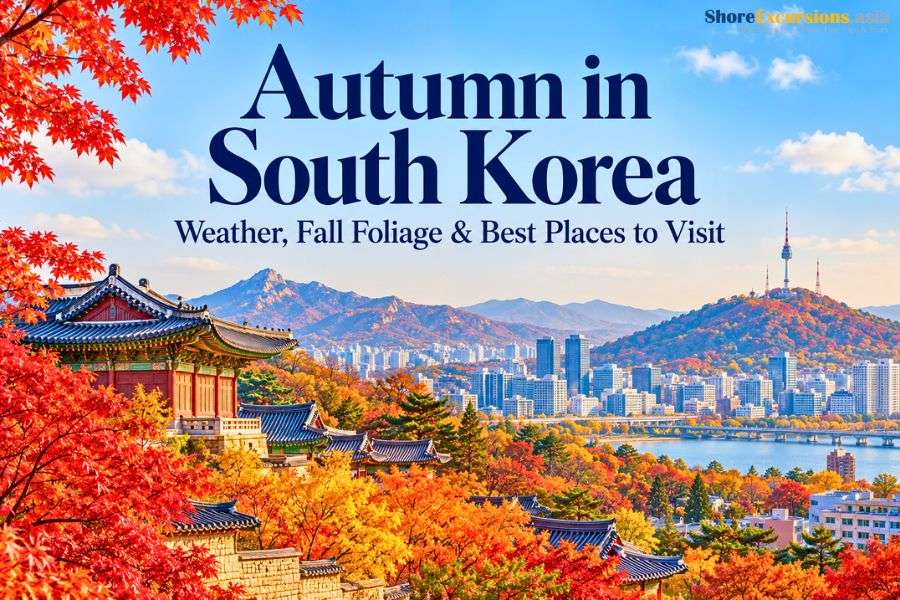
Autumn in South Korea is one of the most rewarding times to explore the country. Summer heat and humidity gradually give way to cooler days, mountain forests turn red and gold, palace grounds fill with colorful foliage, and seasonal food and festivals bring a different atmosphere to cities from Seoul to Busan and Jeju.
But Korea autumn does not arrive everywhere at the same time. The first colors normally appear in northern mountains such as Seoraksan before moving toward Seoul, central Korea, the southern provinces and eventually Jeju. A traveler arriving in early October may need to head into the mountains for strong foliage, while late October and early November can bring much more color into cities and historic destinations.
This guide from Shore Excursions Asia explains when autumn begins in South Korea, what the weather is like, the 2026 fall foliage forecast, the best places to visit and how cruise passengers can make the most of seasonal calls in Seoul, Busan and Jeju.
If you are arriving by cruise ship, browse our Korea shore excursions for port-based experiences designed around real ship schedules and comfortable sightseeing times.
Is Autumn a Good Time to Visit South Korea?
Yes. For many travelers, autumn is one of the best seasons to visit South Korea.
The Korean fall season generally runs from September through November. Compared with midsummer, temperatures become milder, humidity decreases and outdoor sightseeing becomes more comfortable.
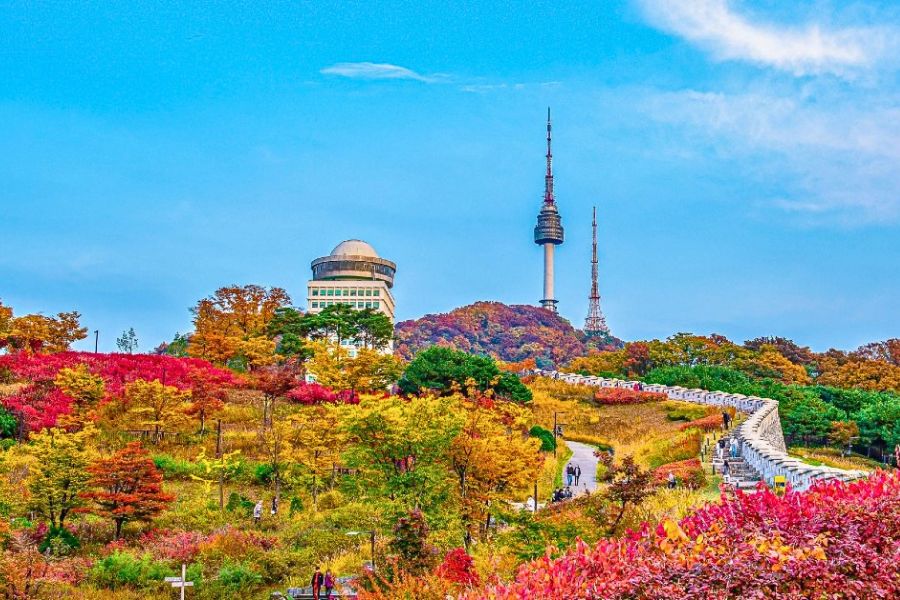
Autumn is particularly appealing if you want to experience:
- red maple and golden ginkgo foliage;
- comfortable palace and temple sightseeing;
- mountain landscapes;
- historic cities such as Gyeongju;
- seasonal festivals;
- harvest foods;
- scenic drives;
- and long walking days without peak summer heat.
However, travelers should not assume that every destination reaches peak foliage during the same week. Korea’s autumn colors move gradually from north to south and from high elevations toward lower city areas.
When Is Autumn in South Korea?
Autumn in South Korea generally covers September, October and November, but each month feels quite different.
September: The Transition from Summer
September is the beginning of autumn on the calendar, but early September can still feel very warm.
In Seoul, the average daytime high is around 26°C, while Busan is similarly warm. Trees in major cities are normally still green for much of the month.
September works best for travelers who want:
- warmer sightseeing weather;
- early harvest-season experiences;
- fewer expectations of peak foliage;
- and the beginning of autumn festivals.
By late September, temperatures become more comfortable, especially in northern and mountain regions.
October: The Heart of Korea Autumn Travel
October is one of the strongest months for autumn travel in South Korea.
Seoul typically has average daytime highs around 20°C and cooler evenings, while Busan remains somewhat warmer with average highs around 22–23°C.
This is when foliage begins spreading rapidly across the country.
Early October favors high mountains and northern Korea. By late October, many famous mountain destinations are near or at their peak, while color begins strengthening around Seoul and central regions.
November: Peak Color Moves South
November becomes considerably cooler, particularly in Seoul.
Average daytime highs in Seoul fall to around 12°C, while Busan remains milder at around 17°C.
For autumn foliage, however, November can be excellent.
Seoul city parks, historic palaces, southern temples and destinations such as Naejangsan and Jeju may reach strong seasonal color after some northern mountain areas have already passed peak.
South Korea Autumn Weather
South Korea has four distinct seasons, and autumn is generally clearer and more comfortable than summer.
The following temperature ranges are useful for travel planning:
| Destination | September | October | November |
|---|---|---|---|
| Seoul | About 26°C / 18°C | About 20°C / 11°C | About 12°C / 4°C |
| Busan | About 26°C / 20°C | About 23°C / 15°C | About 17°C / 8°C |
| Southern Korea | Warm | Mild | Cool but generally milder than Seoul |
| Mountain regions | Cooler than cities | Cold mornings possible | Much colder, especially at elevation |
These are general climate averages rather than forecasts for a specific year.
Mountain temperatures can be significantly lower than conditions at the coast or in city centers, so a comfortable afternoon in Seoul does not mean the same clothing will be sufficient for Seoraksan.
When Do Autumn Leaves Change Color in South Korea?
Korea’s autumn foliage normally begins in cooler northern mountains before gradually moving south.
The typical progression is:
Northern mountains → Seoul and central Korea → southern mainland → Jeju
Elevation also matters. A mountain slope can reach peak autumn color weeks before nearby urban streets.
A useful general guide is:
| Period | Where to Look for Fall Colors |
|---|---|
| Early October | Seoraksan and higher northern mountains |
| Mid October | Northern and high-elevation mountain regions |
| Late October | Seoraksan peak, central mountains, Nami Island and early Seoul color |
| Early November | Seoul, Bukhansan, Gyeongju, central and southern Korea |
| Mid November | Naejangsan, southern regions and Jeju |
The exact timing changes each year according to temperature, rainfall and local conditions.
South Korea Autumn Foliage 2026 Forecast
The official 2026 forecast published by VISITKOREA expects the autumn foliage season to begin at Seoraksan on October 3 before progressing toward central and southern Korea.
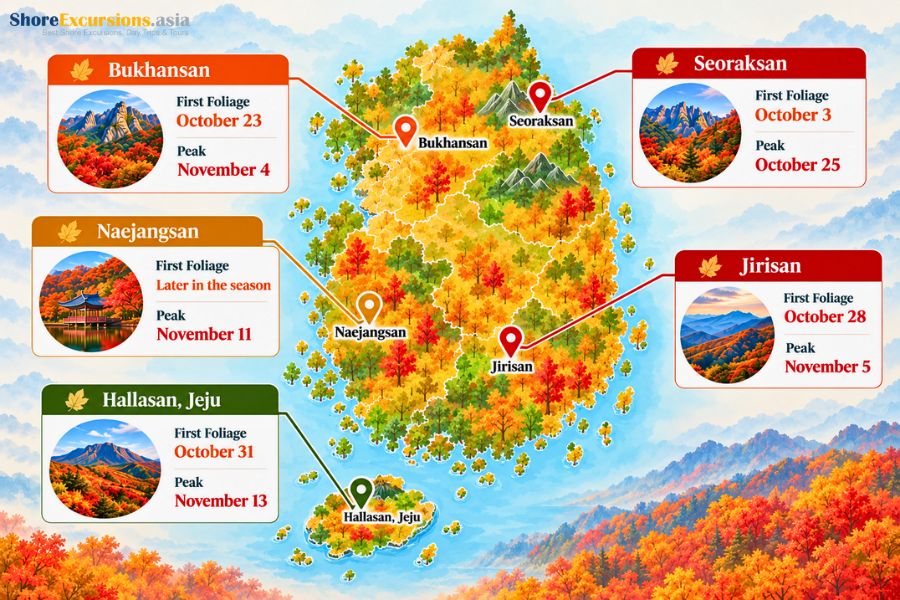
The forecast currently lists:
| Destination | First Foliage 2026 | Expected Peak 2026 |
|---|---|---|
| Seoraksan | October 3 | October 25 |
| Bukhansan | October 23 | November 4 |
| Jirisan | October 28 | November 5 |
| Naejangsan | Later in the season | November 11 |
| Hallasan, Jeju | October 31 | November 13 |
This creates a useful strategy for travelers:
- Early October: prioritize northern mountains.
- Late October: Seoraksan and other mountain areas become especially strong.
- Early November: Seoul and central Korea become more reliable.
- Mid November: look toward southern Korea and Jeju.
These dates are forecasts rather than guarantees. Always check current foliage reports close to your arrival date.
Best Places to Visit in South Korea in Autumn
Seoraksan National Park: Korea’s Early Autumn Headliner
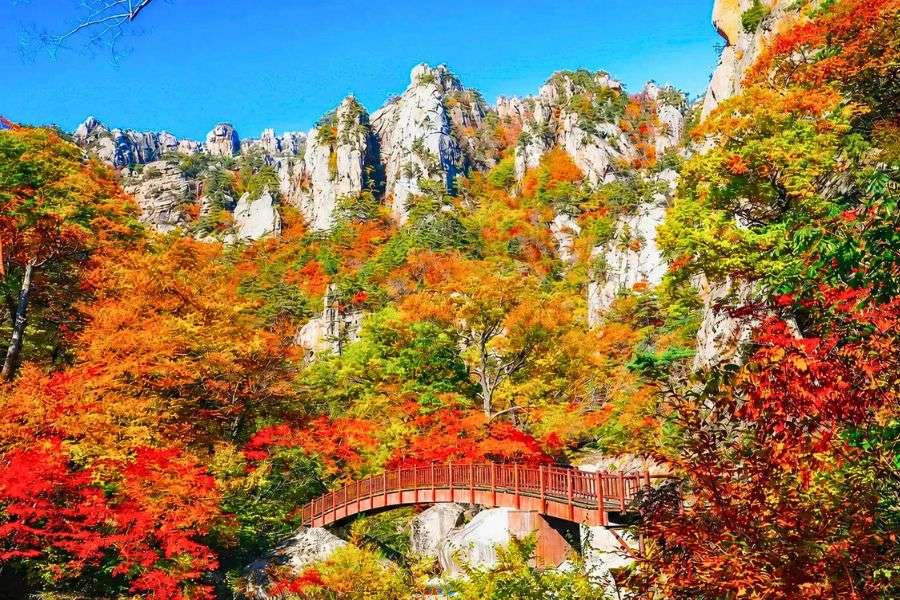
Seoraksan is one of South Korea’s most famous autumn destinations and one of the first major areas to change color each year.
Rocky peaks rise above forests filled with maples and other deciduous trees, creating dramatic combinations of red, orange and gold against pale granite mountains.
The season begins earlier here because of both northern latitude and elevation.
In 2026, first foliage is forecast around October 3, with peak conditions expected around October 25.
Seoraksan is particularly suitable for travelers who visit Korea in October before Seoul itself reaches strong autumn color.
Visitors do not necessarily need to undertake a demanding mountain hike. Scenic areas, temples, shorter trails and cable-car viewpoints can provide autumn scenery at a more manageable pace.
Seoul: Palaces, Parks and Golden Ginkgo
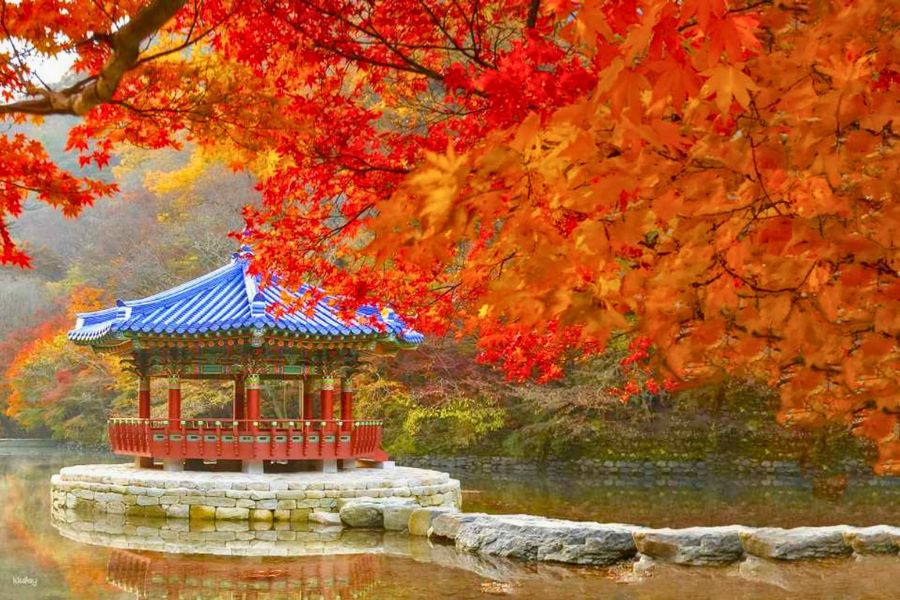
Autumn in Seoul combines city sightseeing with seasonal scenery rather than requiring a separate nature trip.
Some of the most attractive places include:
- Gyeongbokgung Palace;
- Changdeokgung Palace;
- Deoksugung Stone Wall Road;
- Seoul Forest;
- Olympic Park;
- Namsan and N Seoul Tower;
- Bukhansan National Park;
- and university neighborhoods with mature ginkgo trees.
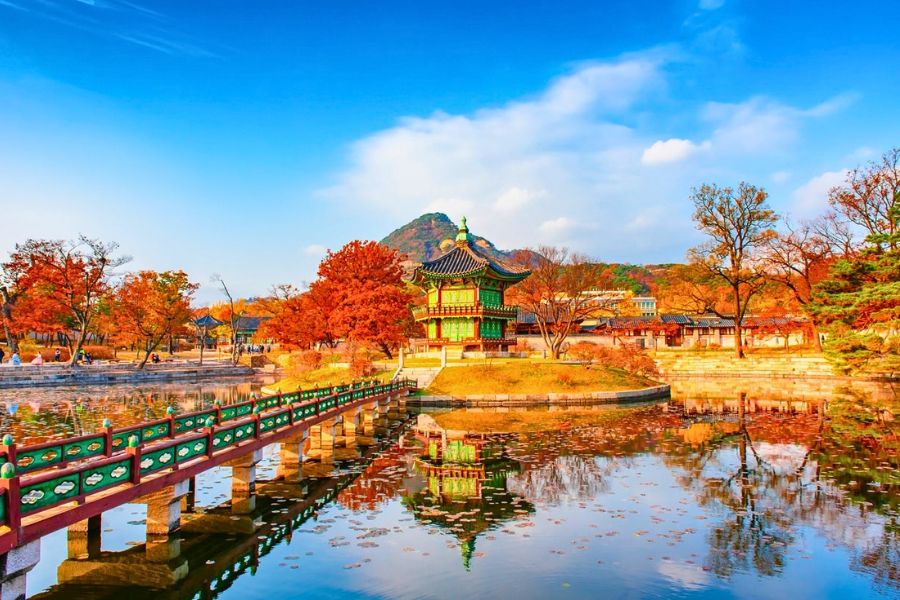
The historic palaces are particularly useful for first-time visitors because the foliage enhances attractions that are already worth seeing even if the leaves are slightly early or late.
For cruise passengers arriving through Incheon, our Seoul shore excursions provide port-based routes into the capital.
The current Seoul Discover Tour includes Gyeongbokgung Palace, a hanok village, Insadong, the National Folk Museum and N Seoul Tower, making it suitable for an autumn city day without depending entirely on foliage conditions.
Autumn in Seoul: When Is the Best Time?
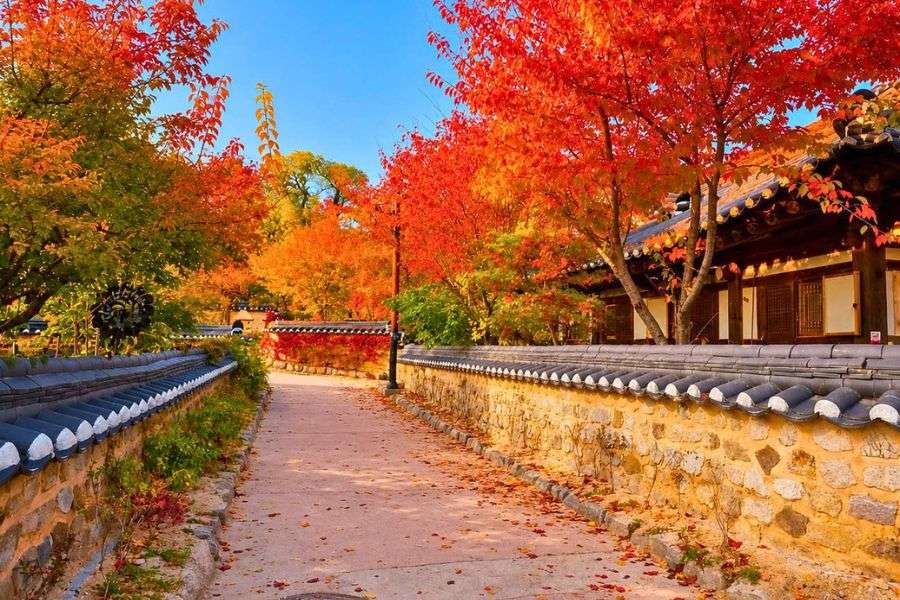
For strong city foliage, late October through early November is generally more promising than early October.
In the 2026 forecast, Bukhansan is expected to begin changing around October 23 and reach peak foliage around November 4.
City-center trees can follow somewhat different timing, but this gives travelers a useful reference point.
If you visit Seoul in early October, focus on:
- palaces;
- traditional neighborhoods;
- markets;
- N Seoul Tower;
- and cultural sightseeing.
If you arrive around late October or early November, seasonal color becomes a much stronger part of the city experience.
Nami Island: One of Korea’s Most Photographed Autumn Walks
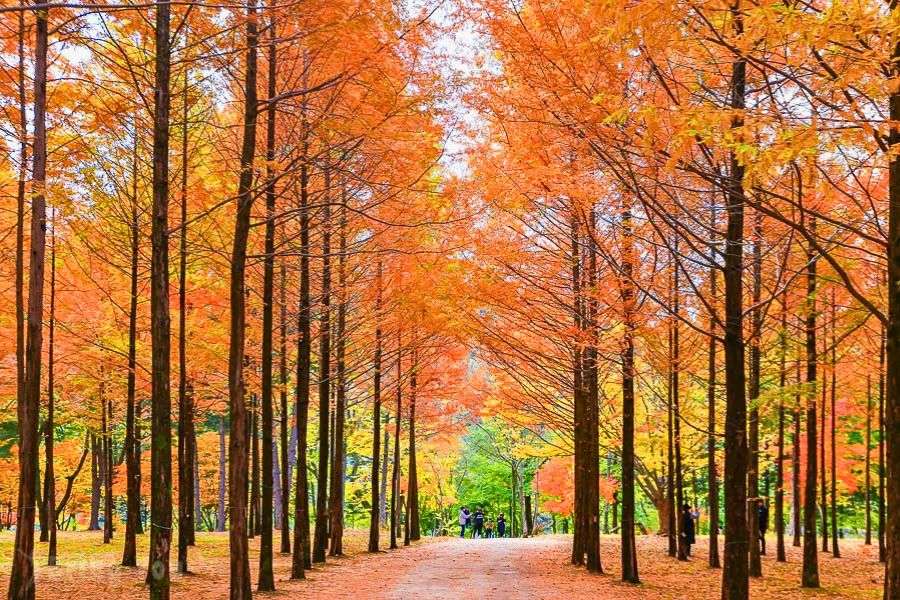
Nami Island is famous for long tree-lined paths that change dramatically through the seasons.
Autumn brings combinations of yellow ginkgo and warm-toned foliage across the island.
The destination is particularly popular among travelers who want easy walking and photography rather than mountain hiking.
However, Nami Island is outside central Seoul and requires substantial transfer time from the Incheon cruise area.
It is therefore most realistic on a long port call.
SEA currently offers a dedicated Nami Island and Petite France itinerary from the Seoul cruise terminal, planned as a long full-day excursion.
Gyeongju: Autumn Colors with Silla Heritage
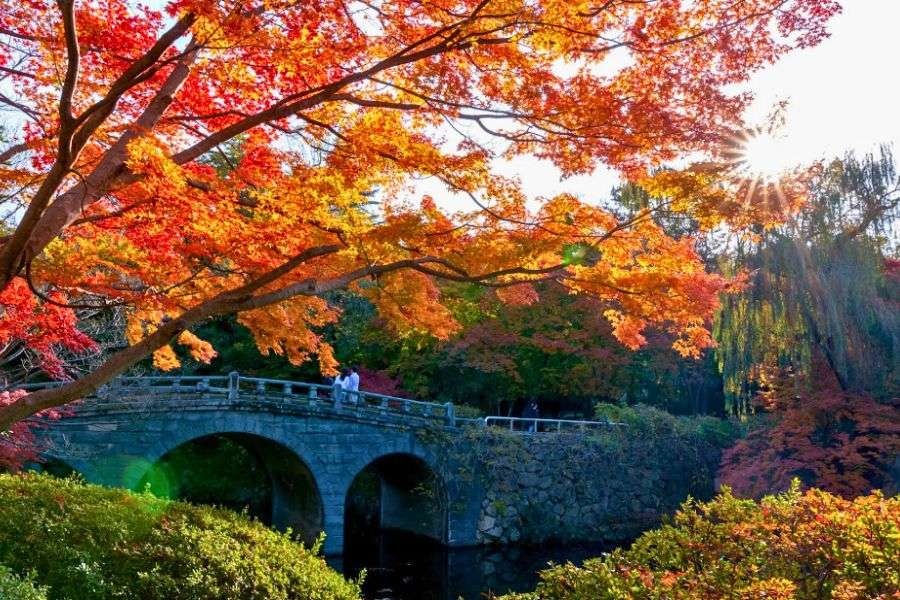
Gyeongju is one of South Korea’s strongest autumn destinations for travelers who want cultural sightseeing as well as fall foliage.
The former capital of the Silla Kingdom contains royal tombs, temples, historic architecture and landscaped areas that become especially atmospheric during autumn.
Highlights include:
- Bulguksa Temple;
- Daereungwon Tomb Complex;
- Donggung Palace and Wolji Pond;
- Cheomseongdae;
- and tree-lined countryside around the historic city.
Bulguksa is especially attractive when red and orange foliage surrounds its traditional temple architecture.
For cruise passengers, Gyeongju is accessible from Busan but requires a longer excursion because of the road distance.
Our Busan – The Land of History and World Heritage excursion connects Busan Port with major Gyeongju attractions on a long full-day route.
Naejangsan National Park: Late-Season Maple Color
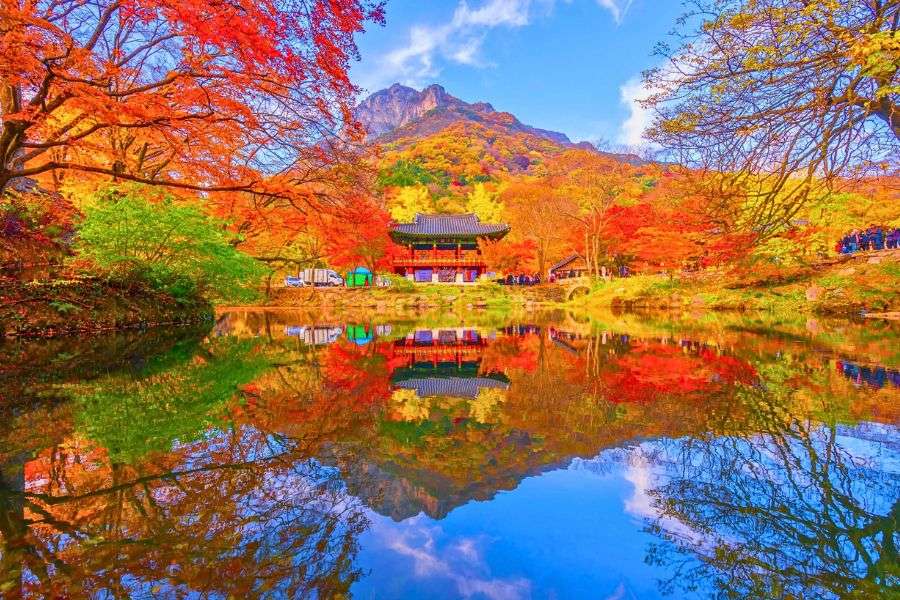
Naejangsan is one of South Korea’s classic autumn foliage destinations, particularly for travelers visiting later in the season.
Dense maple forests, mountain scenery and temple architecture create some of the country’s most recognizable fall landscapes.
For 2026, peak foliage is forecast around November 11.
This makes Naejangsan especially useful for travelers who arrive after northern mountain foliage has already begun to fade.
It is not an easy cruise-port add-on from Seoul or Busan, so it is better suited to a land itinerary or dedicated regional trip.
Jirisan: Mountain Autumn in Southern Korea
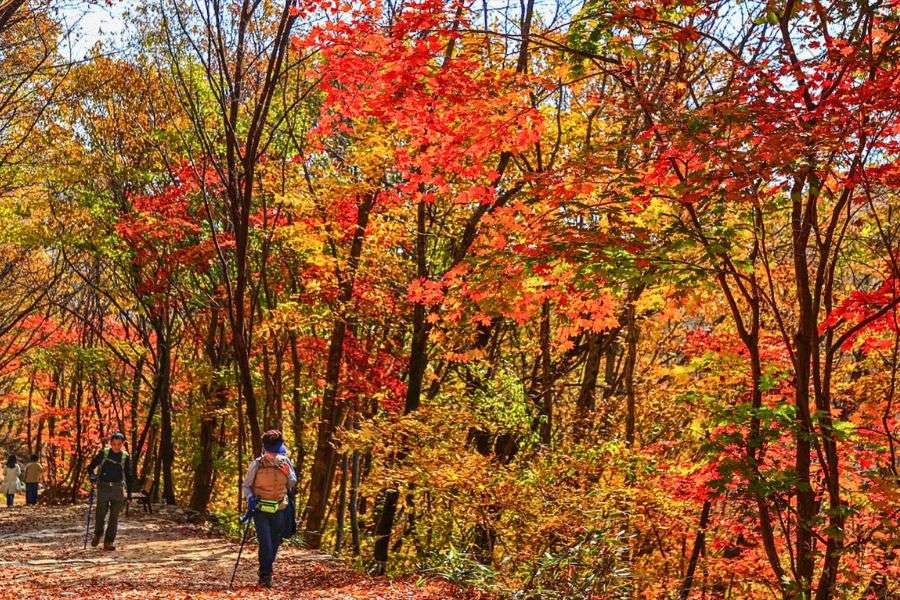
Jirisan spans a large mountainous area across southern Korea.
Its elevation means the autumn season begins earlier than many surrounding lowland cities.
In 2026, the first foliage is forecast around October 28, with peak color around November 5.
This makes Jirisan one of the bridges between northern October foliage and the later season farther south.
Busan: Mild Weather and Coastal Autumn
Busan has a different autumn character from Seoul or Seoraksan.
The city remains relatively mild, with average October daytime highs around 22–23°C.
Rather than planning the entire trip around mountain foliage, autumn in Busan works particularly well for:
- temple visits;
- coastal walks;
- city viewpoints;
- traditional markets;
- historic neighborhoods;
- and day trips to Gyeongju.
Beomeosa Temple is one of the more natural choices for combining Busan sightseeing with seasonal forest scenery.
Travelers can also visit Haeundae, Gamcheon Culture Village, Yongdusan Park and Haedong Yonggungsa in much more comfortable conditions than during midsummer.
Browse our Busan shore excursions for current port-based itineraries.
Autumn in Busan: When Should You Visit?
Busan usually experiences autumn later than northern Korea.
October is excellent for comfortable sightseeing, but the strongest foliage around southern Korea generally becomes more reliable from late October into November.
This distinction matters for cruise passengers:
October Busan = excellent weather and early seasonal atmosphere.
November Busan = greater likelihood of stronger fall color.
If foliage is your main priority, consider using Busan as the gateway to Gyeongju or another inland destination rather than expecting dramatic mountain-style autumn scenery throughout the city.
Jeju Island: Autumn Comes Later
Jeju has one of the latest major autumn foliage seasons in South Korea.
The island’s southern location and maritime climate mean temperatures remain relatively mild while mainland mountains are already deep into fall.
For 2026, Hallasan is forecast to show its first foliage around October 31 and peak around November 13.
This makes Jeju particularly interesting for travelers visiting Korea after Seoul’s early-November foliage period.
Autumn on Jeju is also about more than colored leaves.
The island is known for:
- silver grass;
- volcanic landscapes;
- coastal scenery;
- oreum volcanic cones;
- stone culture;
- and cooler hiking conditions.
Autumn in Jeju Island
October in Jeju is generally better for comfortable outdoor sightseeing than for peak maple foliage.
Travelers can explore coastal viewpoints, traditional villages, volcanic formations and walking trails without the heavy midsummer heat.
By November, Hallasan and higher areas become more important for fall color.
Cruise passengers should remember that Hallasan is not a simple photo stop. Reaching mountain trail areas and completing substantial hikes can consume much of a port day.
For a more balanced cruise itinerary, consider volcanic landscapes and cultural attractions closer to the port.
Browse our Jeju shore excursions for current port-day options.
Our Jeju Island Eco Tour, for example, focuses on Seongsan Ilchulbong, Seopjikoji and Jeju Stone Park rather than requiring a long mountain hike.
Best South Korea Autumn Destinations by Travel Date
If You Visit in Early October
Prioritize:
- Seoraksan;
- higher mountain areas;
- cultural sightseeing in Seoul;
- and comfortable city travel.
Do not expect peak foliage in central Seoul, Busan or Jeju yet.
If You Visit in Mid October
Northern mountain destinations become increasingly colorful.
This is a particularly strong period for travelers who combine Seoul with an overnight or full-day mountain trip.
If You Visit in Late October
This is one of the most flexible periods for autumn travel.
Consider:
- Seoraksan near peak;
- Nami Island;
- early color around Seoul;
- Gyeongju;
- and inland mountain areas.
If You Visit in Early November
Seoul and central Korea become particularly attractive.
Bukhansan is forecast to peak around November 4 in 2026, while Jirisan is expected around November 5.
This period can also be excellent for historic palaces and urban ginkgo trees.
If You Visit in Mid November
Look farther south.
Naejangsan and Hallasan become more relevant, while some northern areas may already have passed their strongest color.
South Korea in Autumn for Cruise Passengers
Autumn works especially well for Korea cruises because several major ports provide access to very different seasonal experiences.
Incheon Port: Seoul and Nami Island
Incheon is the main cruise gateway to Seoul.
Passengers can spend the day exploring palaces and neighborhoods in the capital or, with a sufficiently long port call, consider destinations such as Nami Island.
For most first-time visitors, Seoul itself provides the more balanced port day because travel from Incheon already consumes part of the available time.
Explore our Seoul shore excursions from Incheon Port for current options.
Busan Port: City Sightseeing or Gyeongju
Busan offers two strong autumn approaches.
Stay in the city for coastal views, markets, temples and neighborhoods, or dedicate a long port call to Gyeongju for deeper Korean history and potentially stronger inland foliage.
The choice should depend on ship hours rather than trying to combine a complete Busan city tour with a complete Gyeongju tour in the same limited day.
See our Busan shore excursions.
Jeju and Seogwipo: Later Autumn Landscapes
Jeju’s autumn season arrives later than much of mainland Korea.
October cruise passengers can enjoy mild outdoor conditions and island scenery, while November travelers have a greater chance of seeing autumn color in higher areas.
Port location matters because Jeju City and Seogwipo are on different sides of the island.
Choose an itinerary based on your actual arrival port rather than treating Jeju as one compact sightseeing area.
What to Wear in South Korea in Autumn
Layering is the easiest strategy because temperatures change considerably from September to November.
September
Bring:
- light shirts;
- breathable trousers;
- comfortable walking shoes;
- a light outer layer for evenings;
- and rain protection.
October
For Seoul and central Korea, consider:
- long-sleeved tops;
- light sweaters;
- a jacket;
- long trousers;
- and comfortable shoes.
Mountain excursions require warmer layers than city sightseeing.
November
Bring a warmer jacket, particularly for Seoul and northern Korea.
Mornings and evenings can become cold, and mountain areas may feel significantly colder than the city.
Does It Rain in South Korea in Autumn?
Autumn is generally less humid than summer and is often considered one of Korea’s more comfortable sightseeing seasons.
Rain is still possible, and the early part of fall can occasionally be affected by tropical weather systems.
A compact umbrella or lightweight waterproof jacket remains useful.
For cruise passengers, check weather conditions shortly before the port call because mountain and coastal weather can change quickly.
Are Typhoons Possible in Korea in Autumn?
Yes, especially during the earlier part of the season.
Korea’s broader typhoon period can extend into October, although risk decreases as autumn progresses.
A significant storm can affect:
- cruise itineraries;
- port operations;
- road travel;
- ferries;
- mountain access;
- and outdoor attractions.
Do not avoid autumn travel because of this alone, but follow current forecasts when your departure date approaches.
What to Eat in South Korea in Autumn
Autumn is also harvest season, making food an important part of the experience.
Depending on the region, travelers may encounter:
- freshly harvested rice;
- persimmons;
- chestnuts;
- sweet potatoes;
- apples and pears;
- mushrooms;
- grilled seafood;
- and seasonal rice cakes.
Coastal destinations such as Busan offer a particularly strong seafood culture, while Seoul markets make it easy to sample several dishes within one sightseeing day.
Autumn Festivals in South Korea
Fall is one of Korea’s major festival seasons.
Festivals can include:
- traditional cultural celebrations;
- food festivals;
- performing arts;
- fireworks;
- film and music events;
- and harvest-related regional celebrations.
In 2026, autumn events are scheduled across Seoul, Busan and several regional cities, with many taking place during October.
Festival dates change each year, so confirm the official schedule before building a cruise excursion around a particular event.
Is October or November Better for South Korea?
Both are excellent, but they serve slightly different travelers.
| October | November |
|---|---|
| Warmer overall | Cooler, especially in Seoul |
| Better for Seoraksan and northern mountain foliage | Better for Seoul and southern foliage |
| Comfortable for long outdoor days | Stronger city-level autumn scenery |
| Good for festivals and mountain trips | Good for palaces, temples and late foliage |
| Jeju usually before peak Hallasan foliage | Better timing for Jeju mountain color |
Choose October if you prefer milder weather and northern mountain scenery.
Choose early November if your priority is Seoul foliage or historic sites surrounded by stronger autumn color.
Is Autumn in South Korea Suitable for Senior Travelers?
Yes. The milder weather can make autumn particularly comfortable for senior visitors.
However, not every famous foliage destination is equally accessible.
Mountain attractions can involve:
- steep trails;
- uneven surfaces;
- stairs;
- longer vehicle transfers;
- and crowded pathways during peak weekends.
Senior travelers do not need to climb a mountain to enjoy Korean autumn.
Good alternatives include:
- Gyeongbokgung Palace;
- Deoksugung Stone Wall Road;
- Seoul Forest;
- Nami Island;
- historic Gyeongju;
- Beomeosa Temple;
- and scenic vehicle-based itineraries.
For cruise travelers, choose a route that balances foliage with attractions that remain worthwhile even if seasonal color is not exactly at peak.
How to Plan a South Korea Autumn Trip
Choose Your Destination Based on the Date
Do not choose a foliage destination first and then assume your travel date will match it.
Start with your actual dates, then identify which part of the country is most likely to be changing color.
Check Elevation
Mountain foliage arrives earlier than city foliage.
This is why Seoraksan can be near peak while Seoul is still only beginning to change.
Avoid Building the Entire Trip Around One Forecast Date
Peak foliage forecasts can shift.
Choose destinations that also offer temples, palaces, history, markets or scenery so the day remains worthwhile regardless of exact color.
Expect Crowds at Famous Autumn Spots
Places such as Seoraksan, Nami Island and major palace gardens can become busy during peak weekends.
Early starts can improve both photography and comfort.
For Cruise Travelers, Protect the Return-to-Ship Buffer
Long-distance foliage destinations may look attractive on a map but consume substantial road time.
A nearby palace or historic city can provide a much better shore day than spending most of your call traveling toward a distant mountain.
Explore Autumn in South Korea with Shore Excursions Asia
Autumn in South Korea offers much more than fall foliage alone.
It is a season of cooler weather, historic palaces framed by colorful trees, mountain landscapes, harvest food, cultural festivals and some of the year’s most comfortable sightseeing conditions.
The key is matching your location to the timing of the season.
October travelers may find their strongest colors in Seoraksan and northern mountains, early-November visitors can experience Seoul near its seasonal best, while later travelers can look toward southern Korea and Jeju.
Shore Excursions Asia offers private and small-group experiences from Korea’s major cruise ports, with sightseeing planned around ship schedules and realistic travel distances.
Explore our Seoul shore excursions, Busan shore excursions and Jeju shore excursions, or browse all South Korea shore excursions for your next port call.
Frequently Asked Questions About Autumn in South Korea
When is autumn in South Korea?
Autumn generally runs from September through November. September begins relatively warm, October is mild and increasingly colorful, and November brings cooler weather and later foliage to Seoul, southern Korea and Jeju.
What month is best for autumn in South Korea?
October and early November are the strongest overall periods. October is better for northern mountain foliage, while early November is often more suitable for Seoul and central Korea.
When is peak fall foliage in South Korea in 2026?
The 2026 forecast expects Seoraksan to peak around October 25, Bukhansan around November 4, Jirisan around November 5, Naejangsan around November 11 and Hallasan around November 13. Actual dates can change with weather.
Is October a good time to visit South Korea?
Yes. October offers mild weather, lower humidity and excellent opportunities for autumn scenery, particularly in northern and mountain regions.
Is November too late for autumn in Korea?
No. November can be excellent for Seoul, central and southern Korea, and Jeju. Northern mountain destinations may already be past peak while southern regions are still developing color.
What is the weather like in South Korea in autumn?
September is generally warm, October is mild and November becomes cool. Seoul is colder than Busan and Jeju, while mountain areas are cooler than nearby cities.
Where is the best place to see autumn leaves in South Korea?
Popular choices include Seoraksan, Bukhansan, Nami Island, Gyeongju, Naejangsan, Jirisan and Hallasan. The best choice depends on your travel date.
When is autumn in Seoul?
Seoul begins cooling in September, but stronger city foliage usually develops from late October into early November. In 2026, Bukhansan is forecast to peak around November 4.
Is Busan good in autumn?
Yes. Busan remains relatively mild and is excellent for temples, coastal sightseeing, markets and excursions to Gyeongju. Strong foliage generally appears later than in northern Korea.
Is Jeju worth visiting in autumn?
Yes. Jeju offers mild weather, volcanic landscapes, silver grass and later-season foliage. Hallasan is forecast to peak around November 13 in 2026.
What should I wear in Korea in October?
Long trousers, a light sweater or jacket and comfortable walking shoes work well for many city days. Bring warmer layers for mountain trips and cooler evenings.
What should I wear in Korea in November?
A warmer jacket is advisable, especially in Seoul and northern Korea. Layers remain useful because daytime sunshine can feel much warmer than mornings and evenings.
Can cruise passengers see autumn foliage in South Korea?
Yes. Incheon provides access to Seoul and longer excursions such as Nami Island, Busan can connect with Gyeongju, and Jeju offers later autumn landscapes. The best route depends on your ship date and port hours.
Is Nami Island possible from Incheon cruise port?
It can be possible during a sufficiently long call, but travel time is substantial. For shorter calls, central Seoul generally provides a more realistic port-day itinerary.
Can you visit Gyeongju from Busan cruise port?
Yes. Gyeongju is a popular full-day excursion from Busan and combines Silla heritage with seasonal landscapes, but the road distance makes it better suited to longer port calls.
Autumn foliage timing varies each year according to temperature, rainfall and elevation. The 2026 dates in this guide are forecasts and may change. Check updated local conditions shortly before travel and always confirm your cruise ship’s port schedule and all-aboard time before planning a long-distance shore excursion.


 Contact Us via Messenger
 Send Inquiry