
Celukan Bawang introduces cruise passengers to a side of Bali that feels noticeably different from the busy southern resorts. The port lies on the island’s northern coast, within reach of forested highlands, Buddhist architecture, waterfalls, crater lakes and quieter Balinese communities.
The port itself is primarily a working harbour rather than a walkable tourism district. Its real value lies in its location as a gateway to North Bali, where the pace is calmer and the surrounding landscape becomes part of the experience.
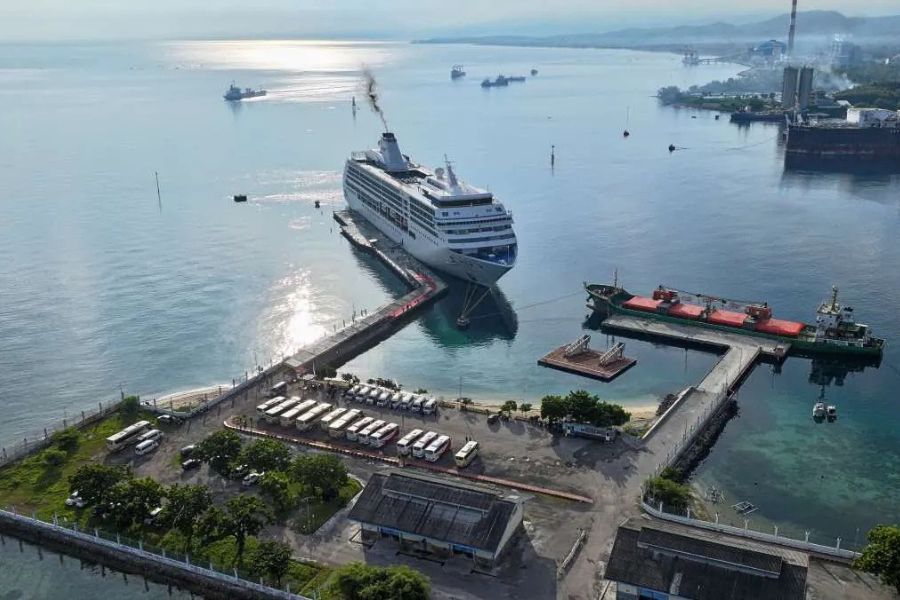
How your day begins may depend on the ship. Some cruise vessels can berth directly at Celukan Bawang, while other calls may use tender boats according to vessel size, berth allocation and operating conditions.
This Celukan Bawang Cruise Port Guide from Shore Excursions Asia explains port arrival, meeting arrangements, local transport and the most practical ways to explore North Bali during one cruise call.
Passengers looking for private port pickup and return timing arranged around their ship can also compare our Bali shore excursions.
Celukan Bawang Cruise Port at a Glance
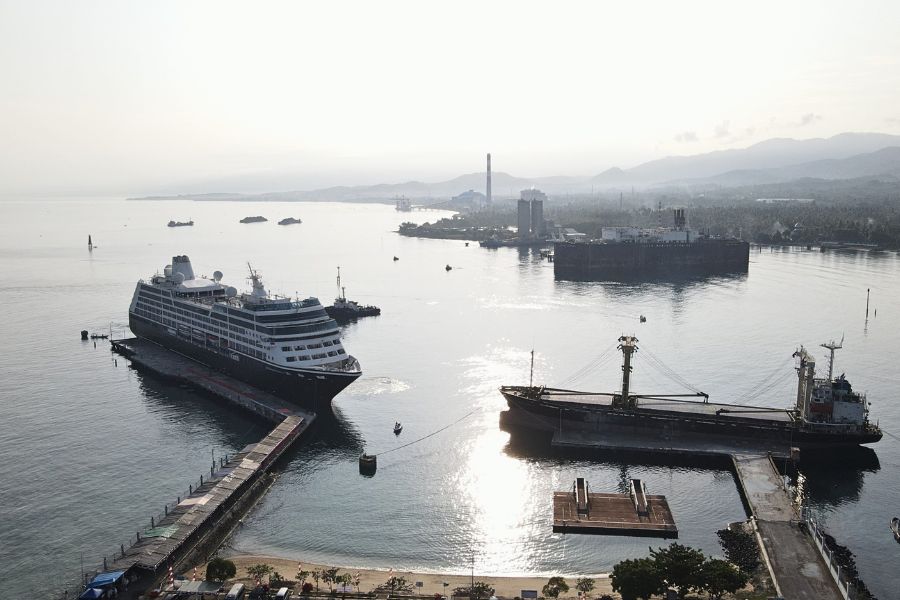
Celukan Bawang is a commercial and cruise port in Buleleng Regency on the north coast of Bali. It sits approximately 40 kilometres west of Singaraja, the principal city of North Bali.
This location makes the port very different from Benoa in southern Bali. Passengers do not arrive beside the resort districts of Kuta, Nusa Dua or Seminyak. Instead, the most suitable port-day routes lead inland towards the northern highlands or east along the coast towards Lovina and Singaraja.
Celukan Bawang is best understood as a starting point rather than an attraction in itself. The immediate port surroundings provide limited sightseeing, and the most rewarding experiences require pre-arranged road transport.
For cruise passengers, this creates both an advantage and a responsibility. North Bali is quieter and less affected by the heavy tourism traffic of the south, but the itinerary still needs to account for mountain roads, attraction access and the ship’s final boarding time.
Do Cruise Ships Dock or Tender at Celukan Bawang?
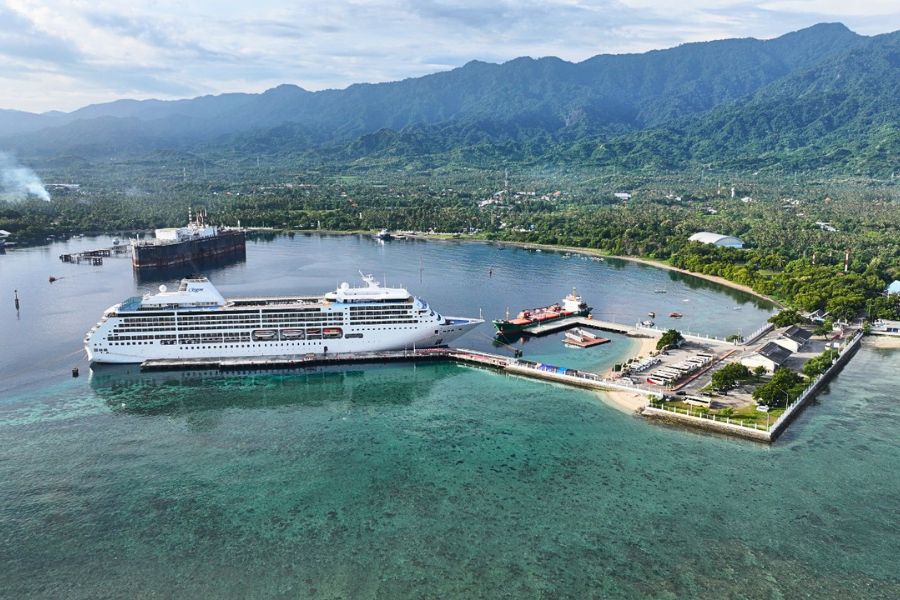
Both arrival arrangements may occur at Celukan Bawang.
Some vessels can berth directly alongside the port. In this case, passengers leave the ship by gangway and proceed through the designated port area before meeting their guide or driver.
Other cruise calls may use tender boats. Passengers are transferred from the anchored ship to a landing point inside the harbour before continuing through the port.
The correct arrangement depends on the vessel, berth availability and port operations on the day. Do not rely only on photographs from a previous sailing or information written for another cruise line.
The ship’s daily programme and onboard announcements should be treated as the final authority.
If your ship docks directly
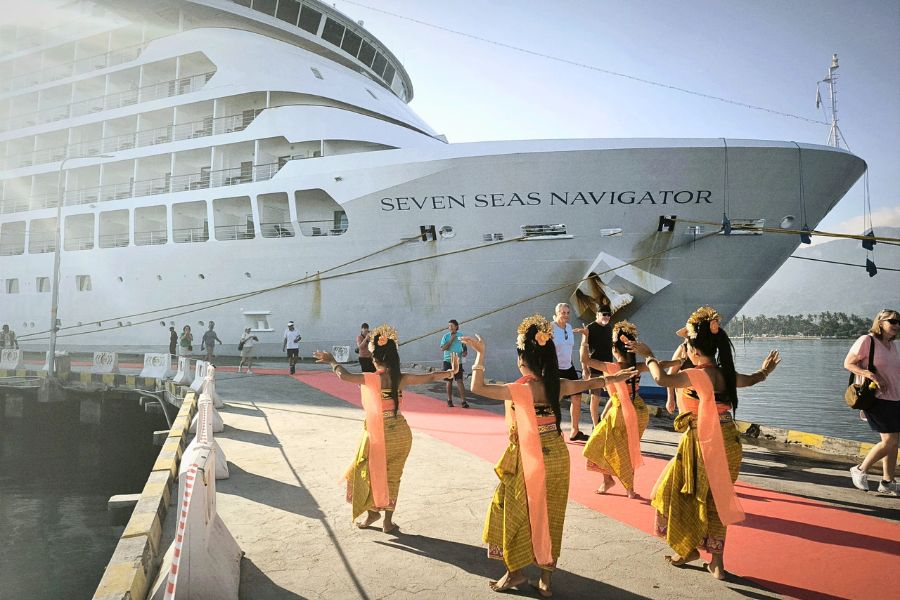
Even with a direct berth, passengers should not assume that they can meet a guide at the moment shown as the ship’s arrival time.
The vessel still needs to complete docking procedures, position the gangway and receive clearance before guests can leave. Walking through the port area may also add time before passengers reach the public meeting point.
If your ship uses tender boats
Tendering creates an additional stage at both the beginning and end of the day.
Passengers may need to collect a tender ticket, wait for their assigned boat and allow time for the transfer to shore. Sea conditions and the number of passengers leaving at the same time can influence the schedule.
The final tender is also earlier than the vessel’s published departure time. Independent plans must therefore be built around the ship’s stated tender deadline rather than the general port schedule.
Meeting Your Guide at Celukan Bawang Port
A confirmed guide should provide the meeting instructions before the ship arrives.
When the vessel is alongside, the meeting point will normally be near the authorised passenger exit after guests have cleared the port area. When tendering is used, the guide will generally meet passengers after they leave the tender landing and pass through the designated arrival area.
The guide should carry a clearly visible name sign. Passengers should also save the local contact number, tour confirmation and meeting instructions offline before leaving the ship.
Do not walk away from the agreed meeting area in search of a taxi or local market without first contacting the operator. Celukan Bawang is a working port, and access routes may be controlled differently for each ship call.
Celukan Bawang Port Facilities
Celukan Bawang should not be approached like a large purpose-built cruise terminal with extensive shopping, dining and passenger lounges.
Facilities available to cruise guests can vary according to the ship call and the area assigned for passenger processing. Small local stalls, transport representatives or basic services may be present, but passengers should not depend on a full range of port amenities.
Use the restroom onboard before disembarking, carry drinking water and bring any medication or personal items needed for the day.
Passengers should also carry some Indonesian rupiah for small purchases. Card acceptance and access to cash machines should not be assumed at every stop in rural North Bali.
Transit passengers normally do not need luggage storage because unnecessary belongings can remain in the cabin. Guests beginning or ending a cruise should confirm baggage arrangements directly with the cruise line or transfer provider.
Can You Walk from Celukan Bawang Cruise Port?
Walking outside the port is not the most useful way to spend a cruise call.
Celukan Bawang is not surrounded by a compact heritage centre, major shopping district or organised waterfront promenade. The nearby community provides a view of everyday North Bali, but most recognised attractions are reached by road.
The port area also operates as a commercial harbour. Pedestrian routes may not be designed around sightseeing, and access can be affected by port security or vehicle movements.
Passengers with only a few hours ashore should therefore arrange transport rather than expecting to find North Bali’s principal attractions on foot.
Transport from Celukan Bawang Cruise Port
Private vehicle with port pickup
A pre-arranged private vehicle is the most practical choice for cruise passengers.
The driver and guide can meet at the confirmed port exit, store small bags and organise the route around the actual disembarkation time.
Private transport also allows the order of attractions to change according to weather, road conditions and the pace of the group.
This flexibility is particularly important in North Bali, where the journey may involve coastal roads, mountain bends and attractions separated by substantial driving time.
Local taxis and independent drivers
Independent transport may sometimes be available near the port, but supply, vehicle quality and English communication can vary.
Passengers should not rely on finding a suitable driver after disembarkation, particularly when a large ship releases several hundred guests at the same time.
Before entering a vehicle, confirm the total duration, itinerary, price, included parking and the exact time the driver will return you to the port.
App-based transport
Transport applications may not provide the same availability around Celukan Bawang as they do in southern Bali.
Even when a vehicle can be requested for the outward journey, finding another driver near a waterfall, monastery or mountain viewpoint may be difficult.
For a cruise port day, a vehicle that remains with the group is safer and more efficient than arranging separate rides between attractions.
Is Celukan Bawang Close to South Bali?
Celukan Bawang is located on the opposite side of the island from Kuta, Seminyak, Nusa Dua and the main southern resort districts.
Travelling between North and South Bali requires crossing the island by roads that may pass through mountain areas and busy urban sections.
Although a destination may appear possible on a map, the return journey can consume a large part of the port day and expose passengers to traffic delays far from the ship.
Kuta and Seminyak are therefore not sensible default choices for a standard Celukan Bawang cruise call.
Ubud also requires a substantial inland journey. It may only suit an unusually long port stay with carefully controlled transport and a limited number of stops.
The strongest use of Celukan Bawang is to explore North Bali rather than trying to recreate an itinerary designed for Benoa Port.
Things to Do from Celukan Bawang Cruise Port
Brahma Vihara Arama

Brahma Vihara Arama is Bali’s largest Buddhist monastery and one of the most practical cultural visits from Celukan Bawang.
The complex includes meditation spaces, garden terraces, Buddhist statues and architecture influenced by different traditions. Its elevated setting also provides views across the surrounding landscape.
The monastery offers a quieter experience than many of Bali’s heavily visited southern temples. Modest clothing is required, and a sarong may be provided or requested according to local practice.
Paths and steps are present within the complex, so passengers with limited mobility may prefer a shorter visit focused on the more accessible areas.
Banjar Hot Springs
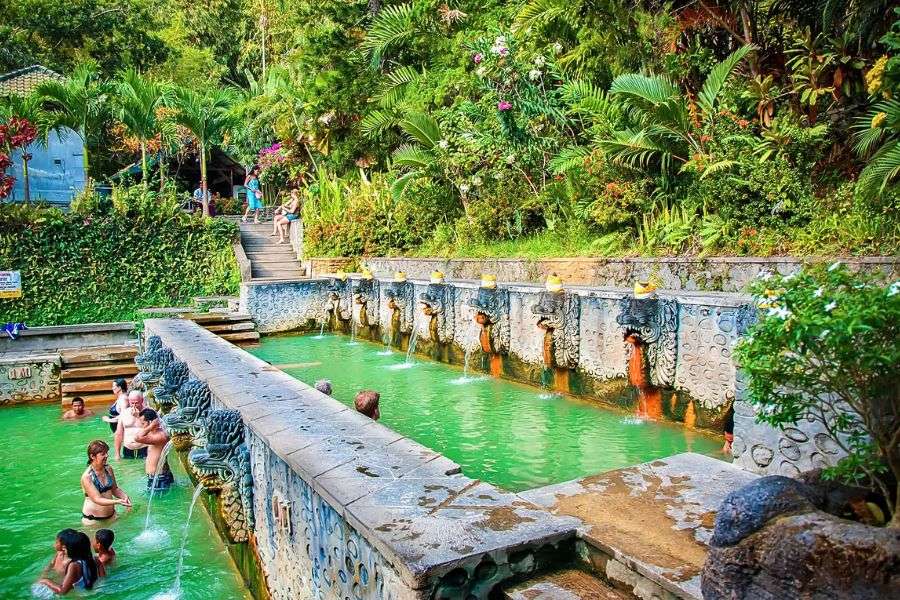
Banjar Hot Springs lies within the same general area as Brahma Vihara Arama and can be included in a relaxed coastal itinerary.
Warm water flows through carved stone spouts into pools surrounded by tropical vegetation.
This stop suits travellers who want a slower experience, but changing facilities, wet surfaces and steps should be considered before visiting.
Passengers should confirm whether they want to swim before the day begins so the itinerary can include time for changing and drying off.
Lovina
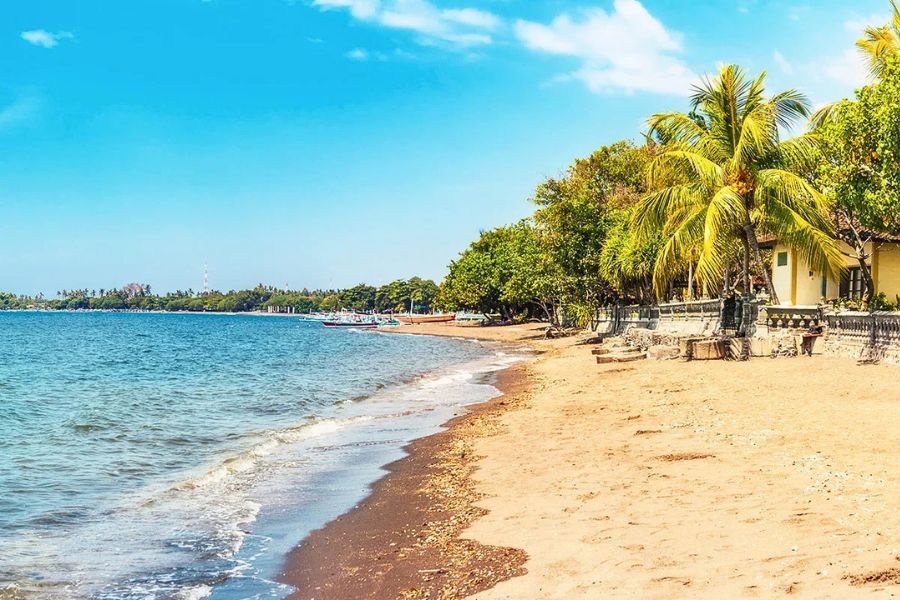
Lovina is known for its quieter coastline and dark volcanic sand.
The area is more relaxed than Bali’s southern beaches and can be combined with Banjar, Brahma Vihara Arama or Singaraja during a shorter route.
Lovina’s famous dolphin trips normally operate early in the morning. They may not match a standard cruise disembarkation time, so passengers should not assume that dolphin watching can be added after arriving in port.
A daytime visit is better suited to coastal scenery, a relaxed meal or a brief walk near the waterfront.
Singaraja
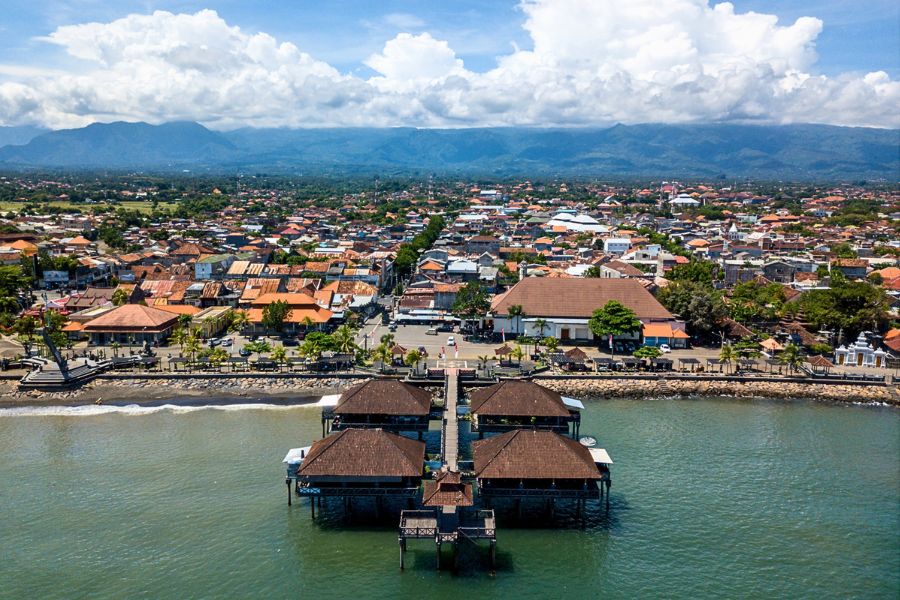
Singaraja is North Bali’s principal urban centre and offers a different perspective from the island’s resort areas.
The city retains traces of its earlier administrative importance, together with local markets, temples and neighbourhood life.
A Singaraja route can suit passengers who prefer culture and local history over waterfalls or mountain roads.
The experience is less polished than a purpose-built tourism district, but it gives visitors a closer look at everyday life in northern Bali.
Munduk Waterfall
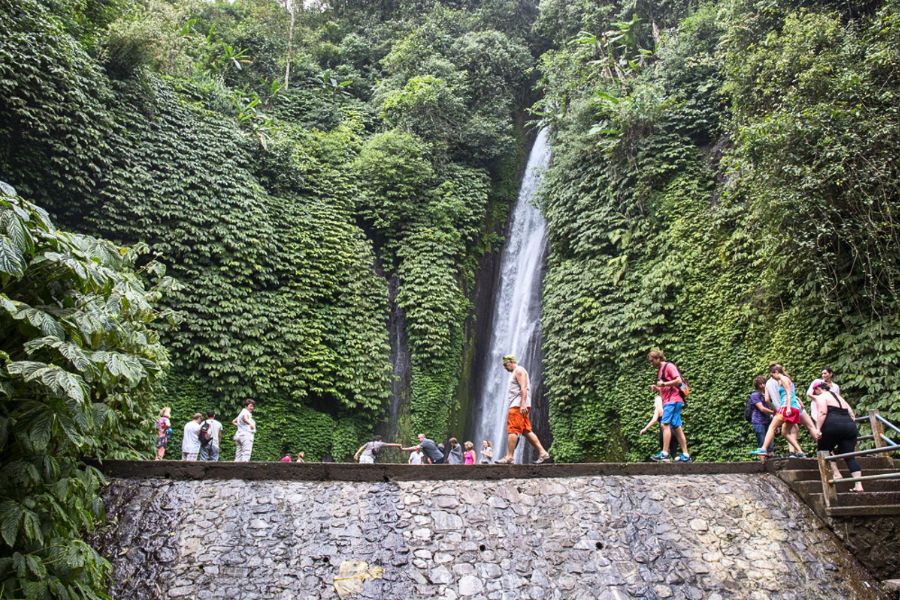
Munduk Waterfall introduces passengers to the greener and cooler highlands of North Bali.
The journey inland passes villages, plantations and forested slopes before reaching the waterfall area.
Access normally includes a walk on an inclined or uneven path. Conditions can become slippery after rain, so secure footwear is important.
Older travellers or guests with restricted mobility should confirm the walking distance and gradient before including the waterfall.
A viewpoint, plantation stop or additional temple visit may be substituted when the waterfall trail is not suitable.
Asah Gobleg Twin Lake Viewpoint

The Twin Lake viewpoint looks across Lake Buyan and Lake Tamblingan within Bali’s central highlands.
The cooler air and broad landscape provide a strong contrast to the working harbour at Celukan Bawang.
Cloud and mist can move quickly across the mountains, changing the view during the day. This is part of the character of the highlands rather than necessarily a reason to remove the stop.
The viewpoint is generally easier to manage than a waterfall trail and can suit passengers who prefer scenic stops with less walking.
Ulun Danu Beratan Temple

Ulun Danu Beratan Temple stands beside Lake Beratan and is one of Bali’s most recognisable highland landmarks.
The temple complex, gardens and mountain backdrop create a calm setting, particularly when visitors arrive outside the busiest periods.
It lies farther inland than the coastal attractions near Celukan Bawang, so the visit needs to be part of a full-day route rather than treated as a quick addition.
Traffic and weather in the Bedugul area should be considered before the guide confirms the final order of the day.
A Balanced North Bali Route from Celukan Bawang
For passengers with a full port day, a balanced inland route can combine Buddhist culture, rainforest scenery, mountain lakes and a Hindu water temple.
The North Bali Highlights Tour from Celukan Bawang includes Brahma Vihara Arama, Munduk Waterfall, the Asah Gobleg Twin Lake Viewpoint and Ulun Danu Beratan Temple.
The route is arranged as an eight-hour private excursion with pickup and drop-off at Celukan Bawang Cruise Port.
The visit order may be adjusted according to the ship’s arrival, weather, road conditions and the walking ability of the group.
This itinerary works best for passengers who want to understand North Bali as a complete landscape rather than visiting only one nearby beach or town.
Choosing an Itinerary by Time in Port
Four to five hours ashore
Choose a coastal or lower-elevation route with no more than two principal stops.
Brahma Vihara Arama may be combined with Banjar Hot Springs or a brief visit towards Lovina.
A shorter Singaraja and coastal route may also suit passengers who prefer local culture without travelling deep into the highlands.
Do not attempt Ulun Danu Beratan Temple together with several other distant attractions during a short call.
Six hours ashore
A six-hour window allows passengers to reach part of the North Bali highlands, but the itinerary should remain selective.
Brahma Vihara Arama, a mountain viewpoint and one carefully chosen nature stop may create a more comfortable day than trying to include every major landmark.
The route should also account for the time needed to leave the port and return through security.
Seven to eight hours ashore
A longer call provides the best opportunity to combine the monastery, waterfall, Twin Lakes and Ulun Danu Beratan Temple.
Even with eight hours, the day should not be filled without a return margin. Mountain weather, road traffic and time spent walking between parking areas and attractions can all affect the schedule.
The guide should monitor progress throughout the day and shorten the final visit when necessary rather than reducing the return allowance.
Celukan Bawang Tips for Older Cruise Travellers
North Bali can provide a comfortable and rewarding port day, but the itinerary should reflect the complete journey rather than only the headline attractions.
If the ship uses tenders, passengers may need to transfer between moving vessels and manage steps before reaching the port.
A direct berth can be easier, although the gangway angle and distance through the port may still vary.
Mountain roads around Munduk and Bedugul contain bends. Guests sensitive to motion should sit towards the front of the vehicle and discuss suitable medication with a healthcare professional before travelling.
Waterfall paths may include slopes, steps and wet surfaces. A temple and viewpoint route can provide a more comfortable alternative without losing the character of North Bali.
Ask in advance about air conditioning, vehicle step height, restroom stops and the amount of walking at each attraction.
A private itinerary should allow regular pauses rather than treating the full eight hours as continuous sightseeing.
Weather and What to Bring
Celukan Bawang and the northern coast are generally warm and tropical. Lightweight, breathable clothing is suitable for the port and lower coastal areas.
The inland highlands can feel cooler, particularly around Munduk, the Twin Lakes and Lake Beratan. A light layer may be useful inside an air-conditioned vehicle or during cloudy mountain weather.
Rain showers can occur, and highland paths may remain wet after the rain stops. Carry a compact rain layer and wear shoes with a secure sole.
Temple visits require respectful clothing. Shoulders and knees should be covered, and visitors should follow local instructions regarding sarongs or restricted areas.
Bring sunscreen, a hat, drinking water and a waterproof pouch for phones and travel documents.
Returning to the Ship on Time
Plan the day backwards from the ship’s all-aboard time or final tender.
When the vessel is docked, allow time to enter the controlled port area, complete security and walk back to the gangway.
When tendering is used, passengers must return before the final boat leaves the shore. Reaching the port at the ship’s departure time is already too late.
Mountain routes should include a larger margin than short coastal visits. Road conditions, rain and slower traffic can affect the return journey.
A responsible guide may shorten the final stop when the ship begins disembarkation late or the inland journey takes longer than expected.
Passengers should not ask the driver to add an unplanned distant attraction near the end of the day.
Frequently Asked Questions about Celukan Bawang Cruise Port
Where is Celukan Bawang Cruise Port?
Celukan Bawang Cruise Port is located on the north coast of Bali in Buleleng Regency, approximately 40 kilometres west of Singaraja.
Do cruise ships dock at Celukan Bawang?
Some ships can berth directly at the port, while other calls may use tender boats. The arrival arrangement depends on the vessel, berth assignment and port operations.
Is Celukan Bawang a tender port?
It can operate as a tender port for selected calls, but it should not be described as exclusively tender. Follow the information provided by your cruise ship.
Can I walk into town from the port?
The immediate area is not a major sightseeing district. Pre-arranged transport is recommended for reaching North Bali’s temples, waterfalls, lakes and coastal communities.
Are taxis available at Celukan Bawang Port?
Independent drivers may be available during cruise calls, but passengers should not rely on finding a suitable vehicle after arrival. A reserved driver is more dependable.
Is Celukan Bawang near Lovina?
Lovina lies east of Celukan Bawang along Bali’s northern coast and can be included in a coastal port-day itinerary.
Can cruise passengers visit Ubud from Celukan Bawang?
It may be possible during an unusually long call, but the cross-island journey requires significant driving. North Bali attractions are generally better suited to a standard port day.
Can I visit Kuta or Seminyak?
These southern resort districts are far from Celukan Bawang and require a long return journey. They are not recommended for most cruise calls.
What are the best things to do from Celukan Bawang?
Popular options include Brahma Vihara Arama, Munduk Waterfall, the Twin Lakes viewpoint, Ulun Danu Beratan Temple, Banjar Hot Springs, Lovina and Singaraja.
Is Celukan Bawang suitable for senior travellers?
Yes, when the route is adapted to the passenger’s mobility. Viewpoints and temples may be more suitable than waterfall trails for guests who want to limit slopes and uneven walking.
How long should a shore excursion be?
A six- to eight-hour call allows a more complete North Bali route. Shorter visits should focus on one area and avoid combining distant attractions.
What should I wear?
Wear lightweight clothing that covers the shoulders and knees for temple visits. Comfortable non-slip footwear and a light rain layer are also useful.
Plan Your Celukan Bawang Port Day around North Bali
Celukan Bawang is not a cruise port designed around shopping streets or attractions beside the ship. Its strength is the access it provides to a quieter and more scenic part of Bali.
A well-planned day can connect Buddhist gardens, rainforest paths, volcanic lakes and sacred architecture without travelling into the congested southern districts.
The most suitable itinerary depends on whether the ship docks or tenders, the time genuinely available ashore and the amount of mountain travel and walking the group finds comfortable.
Shore Excursions Asia arranges private North Bali experiences with clear port meeting instructions, air-conditioned transport, personal pacing, no compulsory shopping and return timing planned around the ship.


 Send Inquiry