

The Maldives remains warm throughout the year, but the experience of visiting can change noticeably from one month to another. A clear morning may bring calm lagoon water and brilliant aerial views, while stronger wind or passing rain can influence tender operations, speedboat journeys and time spent on a resort island.
Unlike destinations with four sharply defined seasons, the Maldives is shaped mainly by two monsoons and two shorter transitional periods. Temperatures remain tropical, while rainfall, sunshine, wind and sea conditions create the most meaningful seasonal differences.
Understanding Maldives weather by month is therefore particularly useful for cruise passengers. Your ship’s tender, a resort transfer or a scenic flight may depend more on conditions over the water than on the temperature displayed in a forecast.
This guide from Shore Excursions Asia takes you through the Maldives climate from January to December, with practical guidance for beaches, island experiences and days ashore from Malé.
Travellers arriving by cruise ship can also explore our Maldives shore excursions, with timing planned around tender operations and the ship’s official all-aboard schedule.
Understanding the Climate of the Maldives
The Maldives has a warm and humid tropical climate moderated by the Indian Ocean. Temperatures generally remain between approximately 25°C and 32°C throughout the year, so there is no genuinely cold season.
The most noticeable change from month to month is not temperature alone. Rainfall, cloud cover, wind and sea movement have a greater influence on how a beach day, boat journey or outdoor experience feels.
The Maldives Meteorological Service divides the year into two principal monsoon seasons. The northeast monsoon generally brings the drier period from January to March, while the southwest monsoon usually brings wetter and more changeable conditions from mid-May through November.
April and December are regarded as transitional months. Conditions during these periods can move between the characteristics of the two monsoons, which means neither month should be described as completely dry or predictably wet.
Official guidance on the climate of the Maldives also notes that rainfall varies across the length of the country. The southern atolls generally receive more annual rain than the central and northern regions.
For Shore Excursions Asia guests arriving around Malé, the conditions in the central Maldives are the most relevant. Weather at distant northern or southern atolls may differ from what passengers experience during the same day in the capital region.
Dry Season and Wet Season in the Maldives
The Northeast Monsoon from January to March
January through March generally offers the most dependable combination of sunshine, lower rainfall and calmer conditions. The Maldives Meteorological Service reports that these months commonly receive around 10 to 11 hours of sunlight, compared with approximately 7 to 9 hours during much of the rest of the year.
This is the period many travellers associate with the classic Maldives image: bright skies, pale sand and lagoons reflecting strong shades of turquoise.
Conditions are often favourable for resort-island visits, swimming, snorkeling and scenic flights. Cruise passengers may also find tender and speedboat journeys more comfortable when winds and sea movement are lighter.
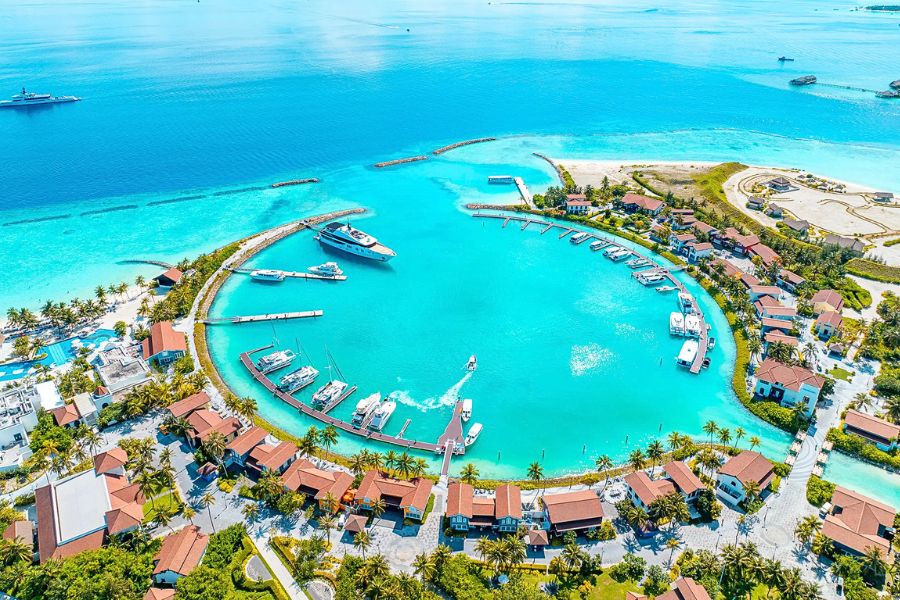
Nevertheless, a dry-season visit does not guarantee a cloudless day. Tropical showers can occur in any month, and local sea conditions can change even when the wider forecast appears settled.
The Southwest Monsoon from Mid-May to November
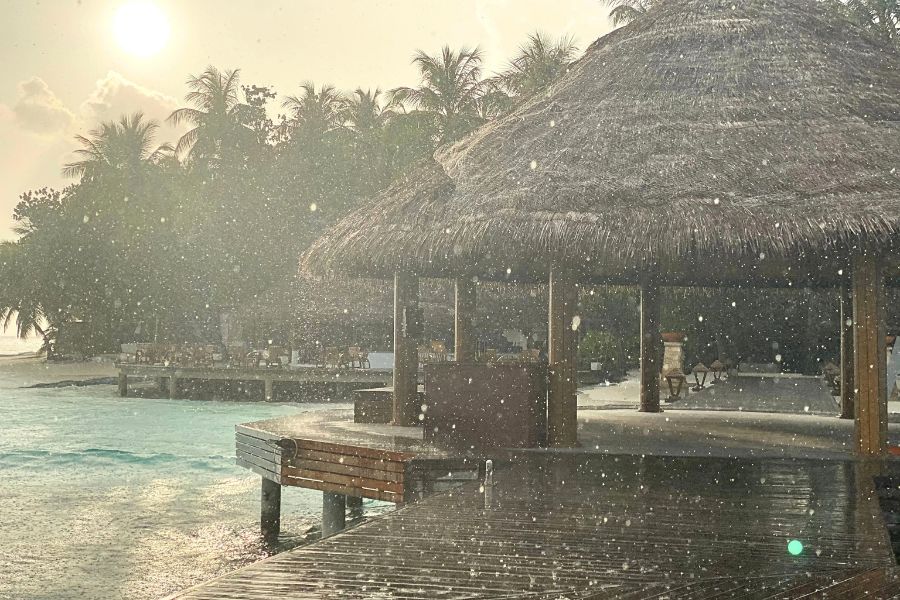
The southwest monsoon brings a greater likelihood of showers, stronger wind and changing sea conditions. Rain may arrive quickly, followed by brighter intervals rather than continuing steadily throughout the entire day.
The islands remain warm, green and visually beautiful during this period. Travellers may still enjoy long periods of usable weather, but port-day planning needs greater flexibility.
Stronger wind or swell can affect tender boats, resort transfers and smaller activity vessels. A city-based experience in Malé is usually easier to adjust than an itinerary requiring several separate journeys over the water.
The Transitional Months of April and December
April and December sit between the main monsoon periods. Both months can offer excellent travel conditions, but they may also bring a mixture of sunshine, humidity, cloud and short showers.
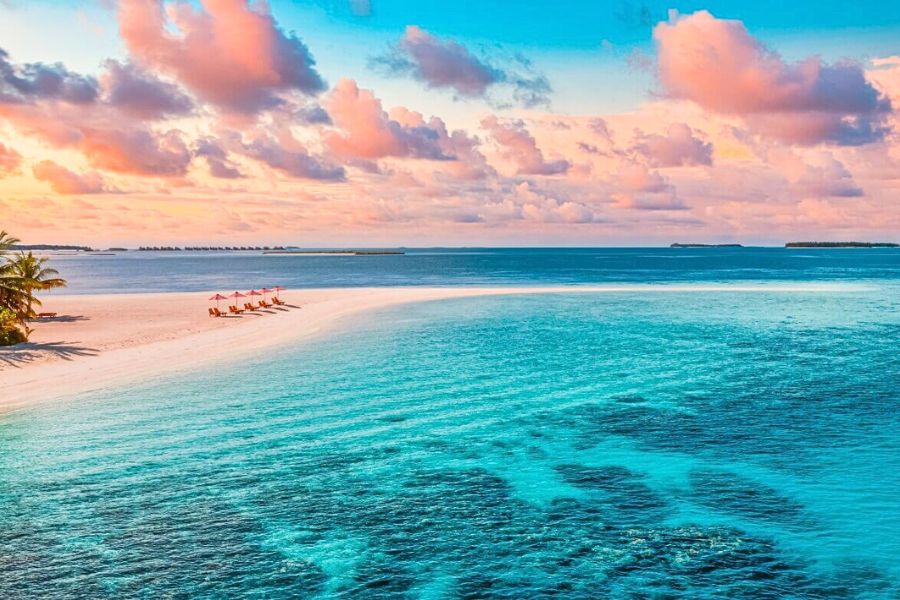
April is typically among the warmer periods of the year. December often begins with more variable weather before conditions gradually settle as the northeast monsoon develops.
These months can suit passengers who want a balance between favourable weather and seasonal transition, provided that their itinerary retains enough flexibility for changes in sea or aviation conditions.
Maldives Weather by Month
Maldives Weather in January
January falls within the northeast monsoon and is generally one of the more dependable months for sunshine and lower rainfall.
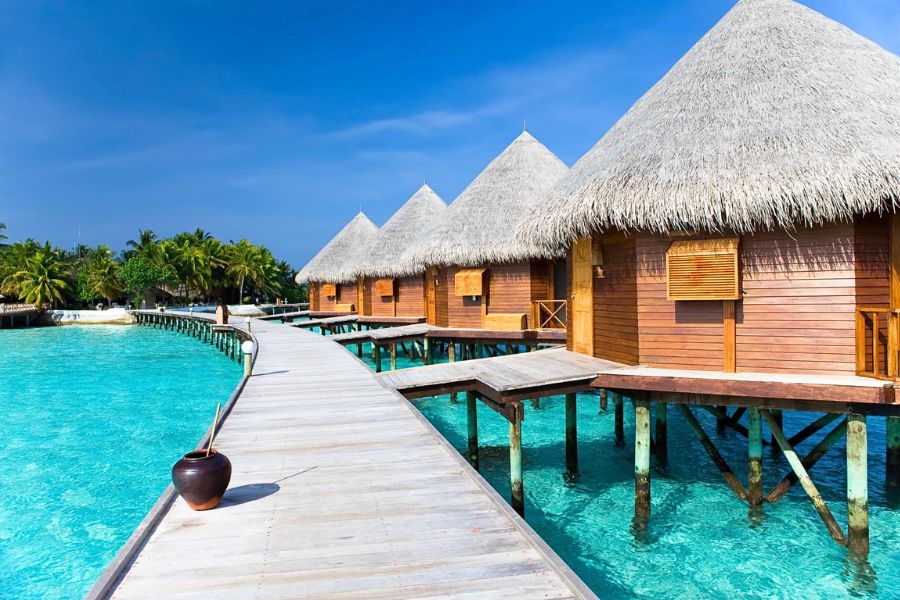
Temperatures remain comfortably tropical, with warm days and evenings rather than a pronounced difference between daytime and nighttime conditions. Humidity is still present, but outdoor sightseeing can feel more manageable than during the hotter transitional period later in the season.
Calmer conditions often make January attractive for resort-island visits, beach time and speedboat transfers. The bright weather can also improve the experience of seeing coral reefs and atolls from the air.
January is a popular travel month, so resorts and organised experiences may be busier. Cruise passengers should confirm activities in advance rather than relying on last-minute availability after reaching Malé.
Maldives Weather in February
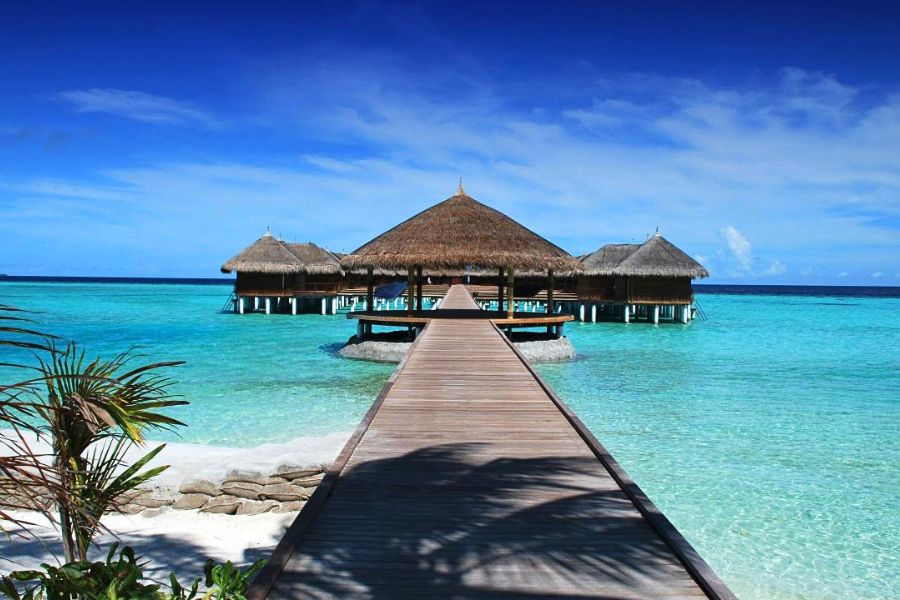
February usually continues the dry-season pattern, bringing generous sunshine and a relatively low chance of prolonged rain.
It is often considered one of the most appealing months for travellers who place clear skies and comfortable sea journeys above all other factors. Lagoons can appear especially bright under the strong equatorial sun.
February suits beach relaxation, swimming, snorkeling, submarine experiences and aerial sightseeing. Sea conditions still need to be checked on the day, but scheduled boat activities are generally easier to plan than during the southwest monsoon.
Sun protection remains essential. The sea breeze can make the temperature feel comfortable while the intensity of the sunlight remains high.
Maldives Weather in March
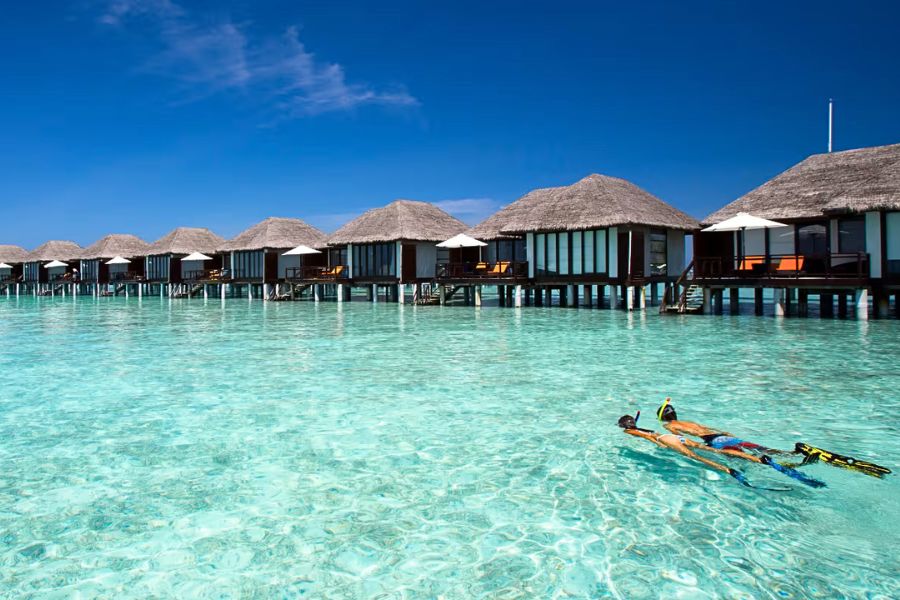
March remains within the northeast monsoon, although temperatures begin moving towards the warmest period of the year.
Days are often sunny, warm and increasingly humid. Rain is still less dominant than during the southwest monsoon, making March another strong month for outdoor and water-based experiences.
Passengers who are sensitive to heat may prefer an earlier city walk, an air-conditioned transfer or an experience that includes shaded seating. The warmth can become more noticeable around midday, particularly on the densely developed streets of Malé.
For a resort day, the combination of sunshine and warm lagoon water can be highly appealing. A relaxed pace and regular hydration are especially important for older cruise travellers.
Maldives Weather in April
April is a transitional month and forms part of the warmest period in the Maldives. Higher humidity can make the temperature feel more intense, even when the numerical difference from other months appears small.
Sunny conditions remain possible, but cloud and passing showers may become more frequent as the country moves towards the southwest monsoon.
April can still be rewarding for beaches, resort visits and marine experiences. Travellers should avoid treating it as a completely predictable extension of the dry season.
A port-day itinerary should leave room for adjustments, particularly when it includes a scenic flight or more than one boat connection.
Maldives Weather in May
May marks the beginning of a more noticeable seasonal change. The southwest monsoon generally develops around the middle of the month, bringing an increased likelihood of rain, wind and movement across the lagoon.
Conditions may differ between the first and second halves of May. One port call may receive bright sunshine, while another may experience short heavy showers and a less comfortable speedboat journey.
Rain does not necessarily continue all day. Tropical showers are often followed by usable periods of brighter weather, although their timing cannot be predicted reliably from monthly averages.
Travellers visiting a resort island should protect the return schedule carefully. A shorter Malé city route can provide a more flexible alternative when the tender operation begins later than planned.
Maldives Weather in June
June falls firmly within the southwest monsoon. Warm temperatures continue, while rain, cloud and wind become more influential in daily planning.
The islands remain lush, and brighter intervals can still create beautiful beach and lagoon conditions. The main difference is that travellers need to accept a greater level of unpredictability.
Sea movement may be more noticeable aboard tenders and speedboats. Guests who are sensitive to motion should prepare accordingly and consider the number of separate vessel transfers involved in their chosen experience.
A city-focused day in Malé is easier to shorten or rearrange if weather affects the ship’s tender schedule. Resort and marine activities require a larger protected margin before the final boat back to the ship.
Maldives Weather in July
July remains part of the southwest monsoon and can bring a mixture of sunshine, tropical showers and breezier conditions.
The weather may change quickly over the water. A morning that begins grey can become bright later, while apparently clear conditions may be interrupted by a short but intense shower.
Visitors should not assume that a wet-season forecast means continuous rain. Equally, a sunny image in a general forecast does not guarantee calm water throughout the day.
July can still suit Malé sightseeing, submarine experiences and carefully planned island visits. The selected operator should be prepared to adjust timing when sea conditions require a slower journey.
Maldives Weather in August
August continues the warm and humid southwest-monsoon pattern. Rainfall is more likely than during the opening months of the year, but sunny intervals remain part of the tropical rhythm.
Cloud cover can provide some relief during a walking route through Malé, although humidity may still make the city feel warm and demanding.
Resort visits remain possible, but comfort depends on the vessel, the length of the transfer and conditions across the lagoon. An enclosed or well-shaded speedboat may suit older passengers better than a small exposed vessel.
Scenic flights are particularly dependent on visibility and aviation arrangements. Travellers should avoid placing a weather-sensitive activity too close to the ship’s final tender.
Maldives Weather in September
September is typically warm, humid and changeable. Passing rain, cloud and stronger wind can occur, while periods of sunshine still illuminate the lagoons between showers.
This is not necessarily an unsuitable month to visit, but it rewards flexible expectations. A well-planned day should have one clear priority rather than several tightly connected activities.
A Malé city visit can continue during light rain with minor adjustments. A resort island or marine experience depends more heavily on sea conditions and the operator’s assessment.
Cruise passengers should check ship announcements before leaving their cabin, as tender procedures may be revised when wind or swell affects the transfer area.
Maldives Weather in October
October remains within the wetter southwest-monsoon period. Rainfall and wind can be more noticeable, although conditions may still alternate between showers and bright tropical sunshine.
The islands appear green, and the contrast between dark clouds and turquoise water can be visually striking. However, travellers should not plan a complicated itinerary based only on the fastest advertised transfer times.
A speedboat journey may take longer in unsettled water, and the ship’s own tender operation may reduce the practical time available ashore.
October cruise passengers should prioritise a flexible return plan. A resort visit can still be enjoyable when conditions are suitable, but the final decision should be based on the forecast and local operating advice close to arrival.
Maldives Weather in November
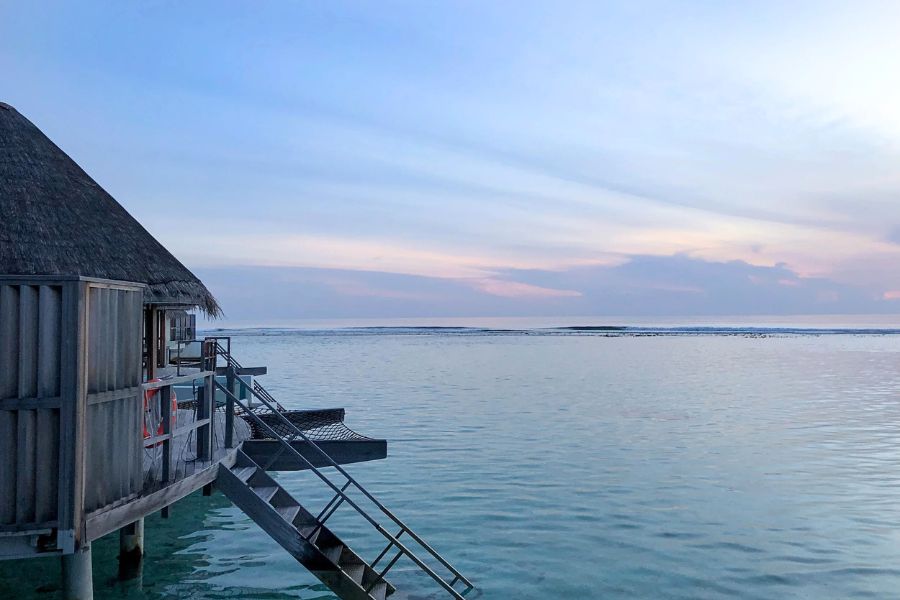
November sits near the end of the southwest monsoon. Conditions can begin moving towards the drier part of the year, but the transition is not always immediate or consistent.
Warm temperatures continue, while the likelihood of showers and changing seas remains higher than during January, February or March.
Some November days bring long periods of sunshine, while others retain a distinctly wet-season character. This variation is why monthly climate guidance should be used for planning rather than as a promise of exact daily weather.
For cruise visitors, November can support city sightseeing, submarine experiences and resort visits when sea conditions are suitable. The itinerary should still retain a comfortable margin before the final tender.
Maldives Weather in December
December is one of the most searched months for Maldives weather, but it should not be described as uniformly dry from the first day of the month.
The Maldives Meteorological Service classifies December as a monsoon-transition period. The earlier part of the month may retain showers and changing conditions before the northeast monsoon becomes more established.
Temperatures remain warm, and December can deliver beautiful sunshine, beach conditions and clear lagoon views. The festive travel period also brings increased demand for resort stays and organised experiences.
Cruise passengers should continue checking the forecast and tender instructions close to arrival. A December itinerary can be highly rewarding, but weather-sensitive transfers still need a realistic return margin.
How Much Does the Maldives Temperature Change through the Year?
The Maldives temperature by month changes less dramatically than the rainfall pattern. Official climate guidance places the general annual range at approximately 25°C to 32°C.
This means travellers can expect warmth in every month. Even during the wet season, rain does not create the kind of cool conditions associated with a temperate winter.
March, April and the period leading towards the southwest monsoon in mid-May are generally among the warmest times of the year. Higher humidity can make these months feel hotter than the temperature alone suggests.
January and February may feel more comfortable because of the drier pattern and greater likelihood of settled conditions. Nights remain warm, so passengers rarely need heavy clothing.
Air conditioning, shade, drinking water and a measured walking pace are more relevant to comfort than packing for a large drop in temperature.
Rainfall across the Maldives
Rainfall does not fall evenly across the entire country. The Maldives stretches across a substantial distance from north to south, and southern atolls generally receive more annual rain than the central and northern regions.
The Maldives Meteorological Service reports average annual rainfall of approximately 1,779 mm in the northern atolls, 1,966 mm in the central atolls and 2,218 mm in the southern atolls.
This regional difference is important when reading general weather articles. Conditions reported for a southern resort may not represent what a cruise passenger experiences around Malé on the same date.
Rain in the Maldives often arrives in showers rather than continuing at a fixed intensity throughout the day. Sunny periods can appear between showers, particularly when weather systems move quickly across the islands.
Monthly averages indicate seasonal tendencies, but they cannot identify the exact hour when rain will begin or whether it will affect a particular port call.
Sunshine in the Maldives
The Maldives receives abundant sunshine because of its position close to the equator.
January, February and March generally receive the greatest amount of sunlight, with official climate information indicating approximately 10 to 11 hours of sunlight during these months.
Other months commonly receive around 7 to 9 hours. This does not necessarily mean seven to nine hours of uninterrupted clear sky, as sunshine can occur between cloud and tropical showers.
The strength of the equatorial sun should not be underestimated. Cloud cover and sea breeze may make the temperature feel softer while ultraviolet exposure remains significant.
A hat, lightweight clothing, sunscreen and regular hydration are useful throughout the year, including on overcast days.
How Weather Affects Tender Boats in Malé
For cruise passengers, the condition of the sea can matter more than whether rain appears in the forecast.
Many large cruise ships visiting Malé remain offshore and transfer passengers to the city by tender boat. Wind and swell can influence when the tender operation begins, how comfortable the journey feels and whether guests with limited mobility are permitted to board.
A short tropical shower may have little effect on the day. Stronger sea movement, however, can delay boarding or reduce the practical time available ashore.
Passengers should use the cruise line’s daily programme and onboard announcements as the final authority for tender arrangements. Our Malé Cruise Port Guide explains the arrival process, city access and final-tender planning in greater detail.
How Weather Affects Resort-Island Transfers
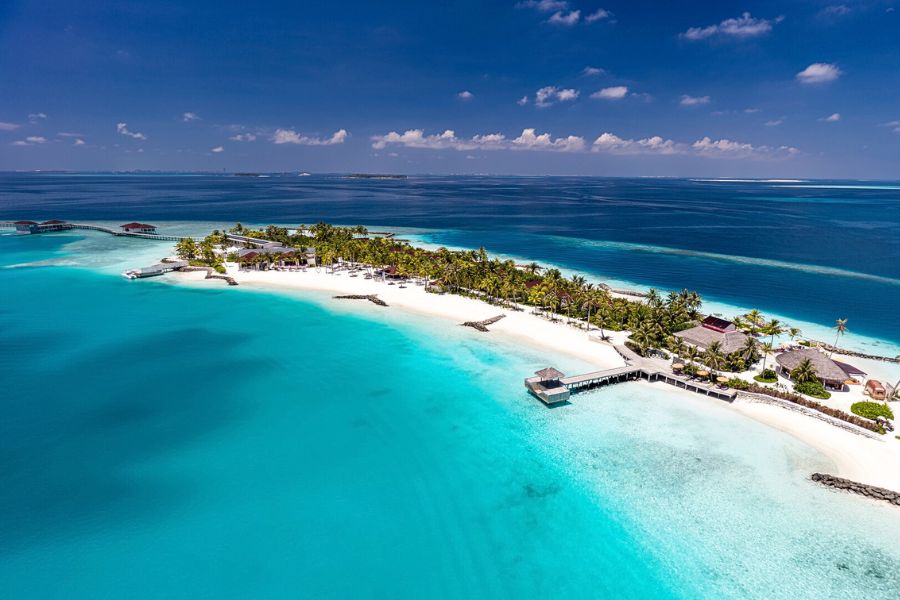
Visiting a resort island normally requires a separate speedboat journey after passengers have tendered ashore in Malé.
During settled weather, this transfer can feel like an enjoyable part of the experience. Brighter skies reveal the colour changes between shallow lagoon water, reef edges and the deeper ocean.
During windier periods, the same journey may involve more noticeable motion and a longer transfer time. Passengers sensitive to boat movement should confirm the vessel type and expected journey length before booking.
Our Sunset & Beach BBQ at Adaaran Vadoo experience is arranged with return timing coordinated around the ship’s port schedule. The operating decision must still reflect sea conditions on the day.
How Weather Affects Underwater and Aerial Experiences
Submarine Experiences
A submarine experience allows passengers to see beneath the lagoon without swimming or snorkeling. However, the complete activity still involves transferring by boat to the submarine platform.
Sea conditions can therefore affect passenger comfort and boarding even when the underwater portion takes place inside an enclosed vessel.
The Maldives Underwater Submarine Experience may appeal to non-swimmers and older travellers, but guests should confirm their ability to manage the boarding stages before arrival.
Scenic Flights
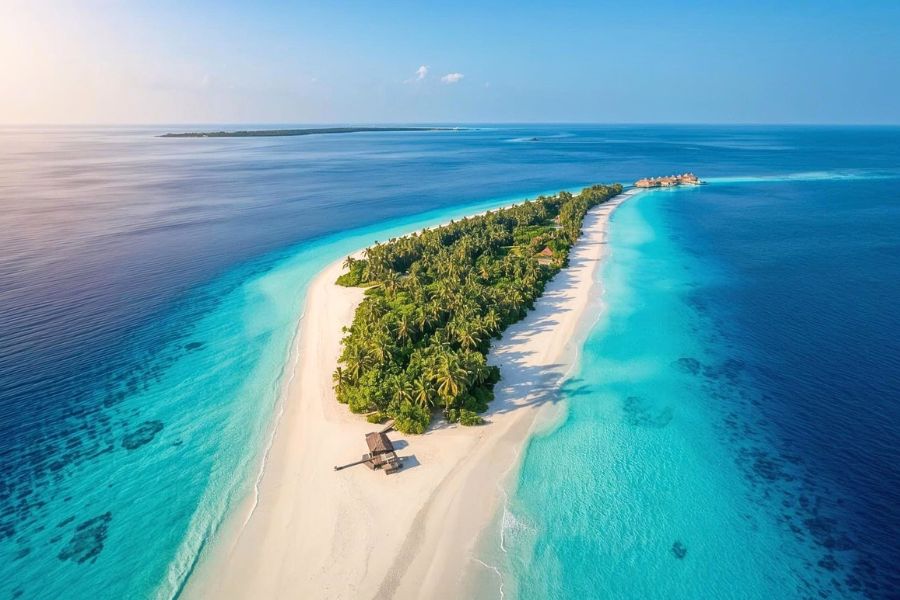
A scenic flight depends on visibility, wind and aviation operations. Clearer skies can reveal the extraordinary structure of the atolls, including reef rings, sandbanks and channels through the lagoon.
Cloud, rain or changing visibility may affect the departure time or the views available during the flight.
The Scenic Maldives with Photo Flight should be scheduled with enough time for check-in, transfers and any operational adjustment before passengers need to return to the tender landing.
What Is the Best Time to Visit the Maldives?
For travellers seeking the most dependable combination of sunshine, lower rainfall and calmer sea conditions, January through March is generally the strongest period.
These months particularly suit resort-island visits, beach relaxation, snorkeling and scenic flights. They are also popular, so availability and pricing may reflect higher demand.
April and December can offer excellent conditions while retaining some transitional uncertainty. They should be evaluated through current forecasts rather than described as completely predictable dry-season months.
May through November brings a greater likelihood of rain and changing sea conditions. This period can still reward travellers with warm temperatures, green islands, sunny intervals and a quieter atmosphere.
There is no single best month for every visitor. A cruise passenger who wants a cultural route through Malé has more weather flexibility than someone planning several boat transfers or an aerial experience.
Best Months for a Malé City Visit
Malé can be explored throughout the year because its principal landmarks do not require a long journey across open water.
January through March offers more comfortable conditions for walking, although shade and hydration remain important. During warmer or wetter months, the route can be shortened and adjusted around passing showers.
A city visit is also the most practical alternative when tender operations begin late or when weather makes an additional speedboat journey less appealing.
Republic Square, the Islamic Centre, Hukuru Miskiy, Sultan Park and the waterfront can be connected within a focused route without committing the full port day to marine transfers.
Best Months for a Resort Island Visit
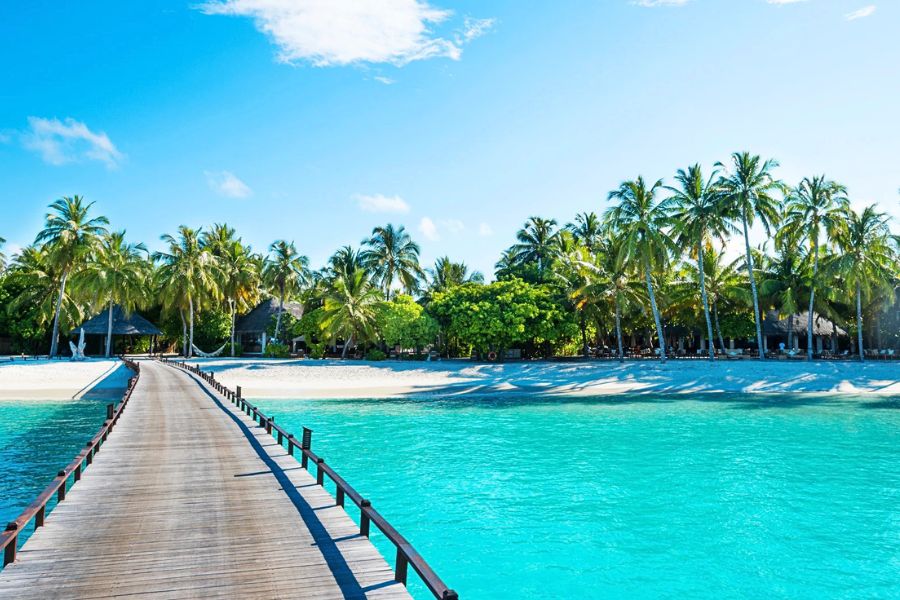
January through March generally provides the most favourable conditions for a resort-island day, particularly when passengers value bright skies, beach time and a more comfortable speedboat transfer.
April and December may also offer rewarding resort conditions, but their transitional nature should be acknowledged.
Resort visits remain possible during the southwest monsoon when local operators consider the journey suitable. Passengers should expect greater flexibility around rain and sea movement.
The best resort day is not necessarily the one with the longest list of inclusions. For cruise travellers, a nearby island with reliable return timing may be more suitable than a distant resort requiring several hours of travel.
Comfort Tips for Cruise Passengers
Lightweight, breathable clothing is suitable throughout the year. Passengers exploring Malé should choose modest clothing that covers the shoulders and knees, particularly near mosques and religious areas.
Comfortable, non-slip footwear is useful for tender boarding, speedboat transfers and walking on wet surfaces after a shower.
A lightweight rain layer can be helpful from May through November, but it should remain breathable in the tropical humidity. Heavy jackets are rarely necessary.
Older travellers should ask about shade, air conditioning, boarding steps and restroom access before confirming an island or marine experience.
Medication for motion sensitivity should be discussed with a healthcare professional before travelling. It is more effective to plan for comfort in advance than to discover the effects of boat movement after leaving the tender landing.
Frequently Asked Questions about Maldives Weather
What is the best month to visit the Maldives?
January through March generally offers the most dependable combination of sunshine, lower rainfall and calmer conditions. The most suitable month still depends on availability, price and the experience you want to prioritise.
What is the rainy season in the Maldives?
The southwest monsoon, commonly associated with the wetter season, normally extends from mid-May through November. Rain can occur in showers with sunny periods between them rather than continuing throughout every day.
What is the dry season in the Maldives?
The northeast monsoon generally brings the drier period from January to March. April and December are transitional months rather than being part of a completely fixed dry season.
What is the hottest month in the Maldives?
Temperatures remain warm throughout the year. The warmest period generally develops during March and April and continues towards the onset of the southwest monsoon in mid-May.
Does it rain all day during the Maldives wet season?
Not necessarily. Rain often arrives in tropical showers, and sunny periods may appear between them. Some weather systems can still produce longer or heavier rainfall, so each day needs to be assessed individually.
Is December a good time to visit the Maldives?
December can offer warm temperatures, sunshine and attractive island conditions. It is officially a transitional month, so some showers and changing weather remain possible, particularly before the northeast monsoon becomes established.
Is November a good time to visit the Maldives?
November can bring a mixture of wet-season conditions and improving weather towards the end of the southwest monsoon. It can be rewarding, but it is less predictable than January, February or March.
Can bad weather cancel a Maldives shore excursion?
Strong wind, swell, reduced visibility or unsafe boarding conditions may affect tender boats, speedboats, submarine transfers and scenic flights. Licensed operators may delay, adjust or cancel an activity when safety requires it.
Can cruise ships still visit Malé during the rainy season?
Cruise calls can take place during the wetter months, but the ship controls whether tender operations can proceed safely. Passengers should follow onboard announcements and avoid relying only on a general monthly weather guide.
Does the Maldives have cold weather?
No. The climate remains tropical throughout the year, with temperatures generally ranging from approximately 25°C to 32°C.
Plan Your Maldives Port Day around the Sea
The Maldives remains warm and inviting in every month, but the character of a port day changes with the monsoon, the wind and the condition of the lagoon.
January through March offers the most dependable weather for travellers who prioritise sunshine and smoother sea journeys. The transitional and wetter months can still be beautiful, provided that the itinerary allows room for passing rain and operational changes.
For cruise passengers, the right question is not simply whether it may rain. It is whether the tender, speedboat, submarine transfer or flight can fit comfortably within the time genuinely available ashore.
Shore Excursions Asia arranges private Maldives experiences with clear meeting instructions, personal pacing, no compulsory shopping and timing planned around the ship’s tender and all-aboard schedule.


 Send Inquiry