
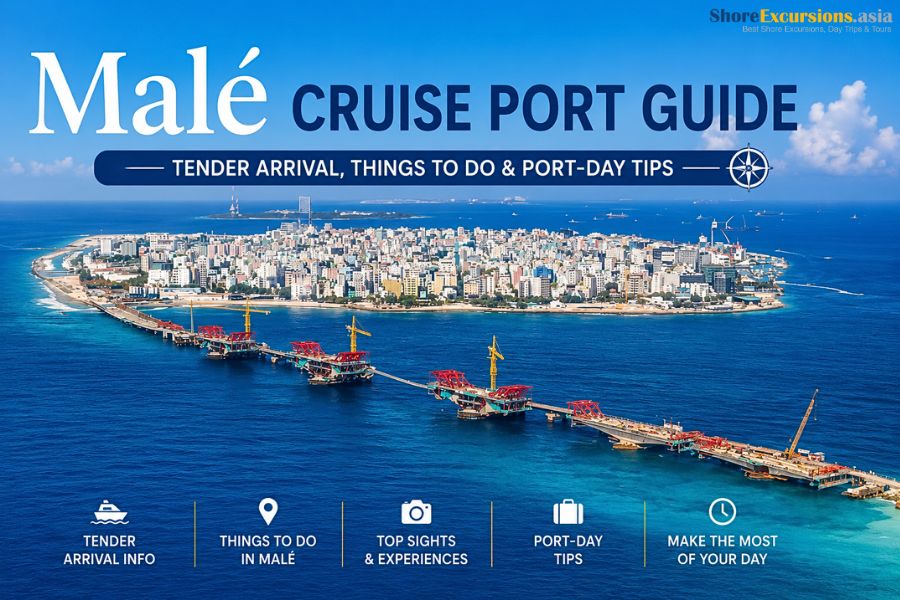
Arriving in the Maldives by cruise ship feels very different from entering a conventional city port. Instead of sailing directly towards a large passenger terminal, your first view of Malé may be from across the lagoon, with the capital rising densely from a small island surrounded by intensely blue water.
Many large cruise ships remain offshore and bring passengers ashore by tender boat. This makes the journey from ship to city part of the experience, but it also introduces details that need to be planned carefully, including tender queues, sea conditions, the landing point and the time of the final boat back to the ship.
Once ashore, Malé is compact enough for many of its central landmarks to be explored on foot. Resort islands, beaches and marine experiences, however, require a further boat transfer and a more carefully protected return schedule.
This cruise port guide to Malé, Maldives, from Shore Excursions Asia explains how tender arrivals work, how to reach the city centre, which city and island experiences may suit your schedule, and how to plan a relaxed return to the ship.
Travellers who prefer a private arrangement can also explore our Maldives shore excursions, planned around the ship’s arrival, tender operation and official all-aboard time.
Tender Arrival in Malé: What Cruise Passengers Should Know
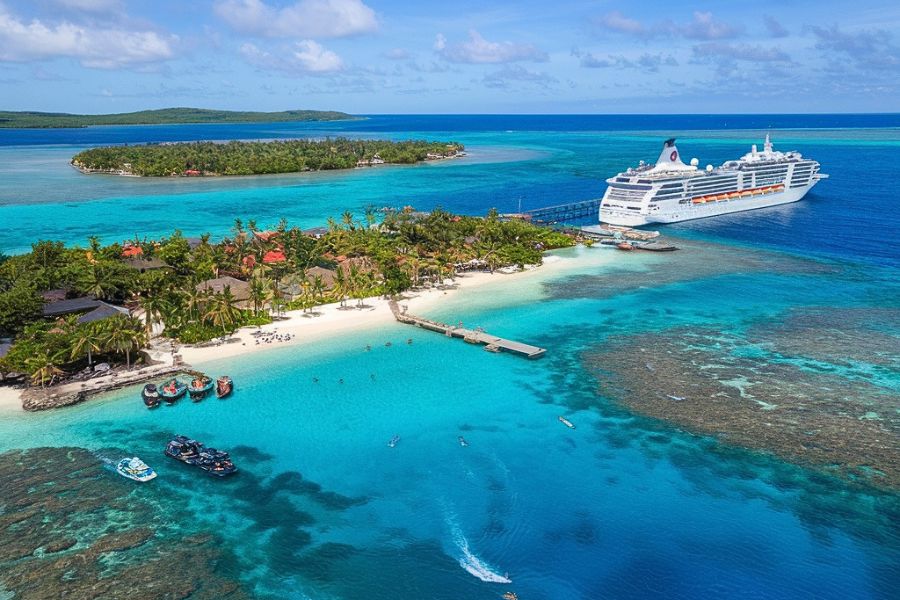
Malé Commercial Harbour is the Maldives’ principal international maritime gateway and is located on the north-western side of the capital island. It is primarily a working commercial port rather than a purpose-built cruise terminal.
Because of the harbour environment, water depth and the size of modern cruise vessels, many cruise ships visiting Malé remain at anchor offshore. Passengers are then transported ashore using the ship’s own tender boats or locally arranged vessels.
The precise arrival arrangement can vary between cruise calls. One ship may use a designated jetty close to central Malé, while another may operate tenders to a different approved landing point according to port instructions, weather and maritime traffic.
Your cruise line’s daily programme should therefore be treated as the most reliable source for the confirmed tender landing, operating hours and return arrangements. Information from a previous visit should not be assumed to apply automatically to your own arrival.
How Does the Tender Process Work?
A tender port requires more planning than a destination where passengers simply walk down the gangway into a terminal.
After the ship is cleared by local authorities, tender boats begin transporting guests between the vessel and shore. Cruise lines may distribute numbered tender tickets, give priority to passengers joining organised excursions or invite guests to wait in designated onboard areas.
The journey across the lagoon may be relatively short, but the complete process often takes longer once waiting, boarding and disembarkation are included. During busy periods, several tender rotations may be required before all independent passengers can go ashore.
Passengers should not calculate their usable time in Malé from the ship’s published arrival and departure alone. The practical time ashore begins only after reaching the landing point and ends before the final tender departs.
What Can Affect the Tender Journey?
Sea conditions can influence both comfort and timing. Even when the weather over Malé appears bright, wind and movement in the lagoon may make stepping between the ship and tender more demanding.
The crew may need to pause or slow tender operations when conditions are unsuitable. Although these changes are made for passenger safety, they can shorten the time available for sightseeing, resort visits or marine experiences.
Guests with limited mobility should speak with the cruise line before arrival. The ability to use the tender may depend on whether a passenger can walk independently, manage steps and transfer between moving vessels with limited assistance.
Where Will the Tender Bring You Ashore?
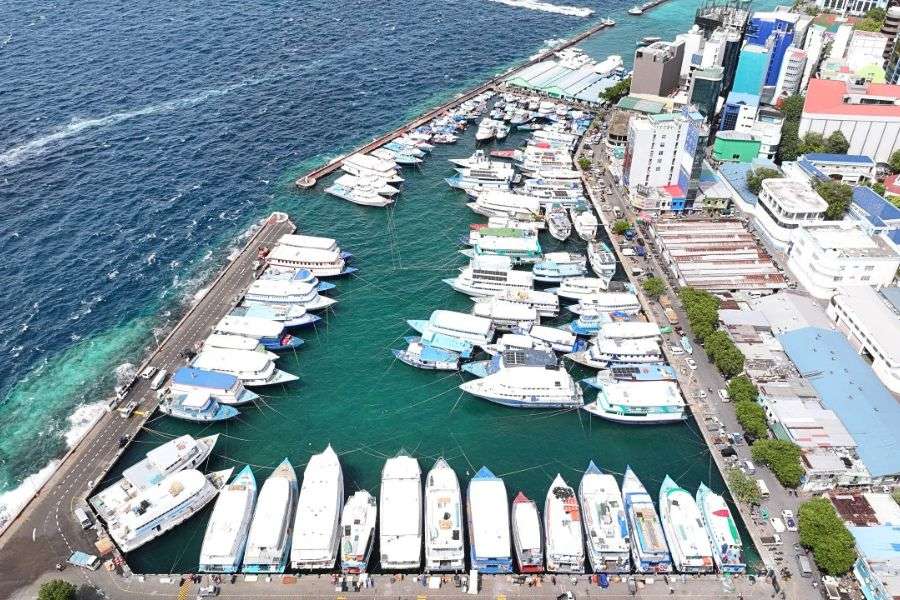
The designated landing point is usually positioned within or close to Malé’s waterfront area, placing passengers near the compact centre of the capital. The exact jetty can still vary, so meeting instructions should identify a specific location rather than simply stating “Malé Port.”
Once ashore, the city feels immediately active. Fishing boats, ferries, motorcycles, taxis and local pedestrians share a limited amount of space along the waterfront and narrow city streets.
This is not the quiet resort-island image that many travellers initially associate with the Maldives. Malé is the political, commercial and cultural centre of the country, offering a much closer view of everyday Maldivian life.
Getting from the Tender Landing into Malé
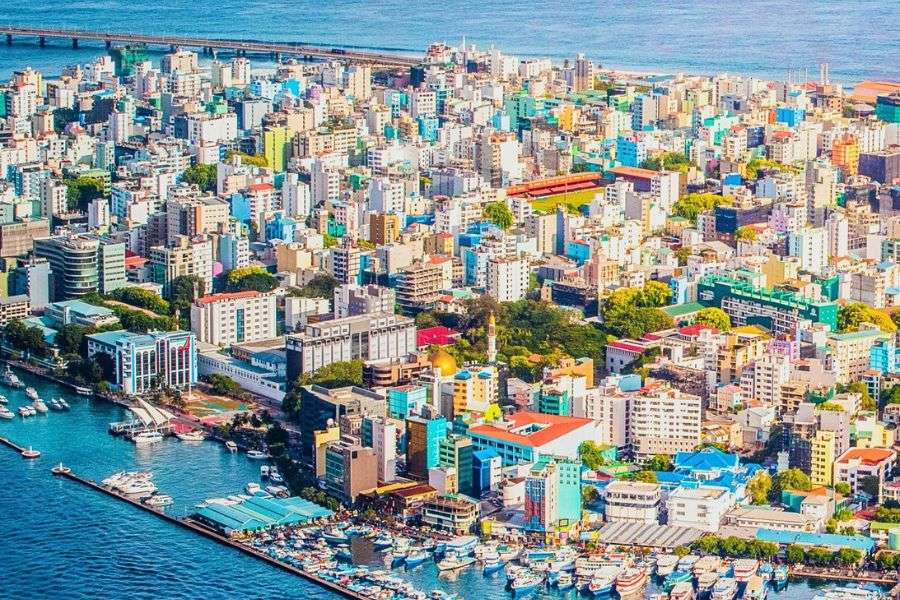
Central Malé begins almost immediately beyond the waterfront. Unlike destinations where a long transfer is required before sightseeing can begin, many of the capital’s historic and cultural landmarks are positioned within a relatively compact area.
Republic Square, the Islamic Centre, Sultan Park and the National Museum can often be connected within a focused city route. Local streets, cafés and markets add further character between the principal attractions.
Although the distances appear short on a map, Malé’s climate and street conditions can influence walking comfort. Tropical heat, humidity, busy pavements and frequent motorcycles may make the city feel more demanding than the distance alone suggests.
Older travellers may find a guided route particularly useful. A local guide can choose a sensible order for the attractions, avoid unnecessary backtracking and explain the cultural significance of places that might otherwise be passed without context.
Walking around Central Malé
Walking is often the most practical way to explore the central area. The island is densely developed, so many attractions are closer together than they would be in a larger capital.
A walking route also provides the clearest view of local life, from fishing activity along the waterfront to mosques, shops, cafés and residential streets.
However, visitors should not expect a calm pedestrian promenade. Roads can be busy, motorcycles are common and some pavements are narrow, uneven or interrupted. Shade is not continuous, and the tropical sun can become tiring around midday.
A shorter guided walk with regular pauses may be more enjoyable than attempting to cross the entire island independently. Passengers should also preserve enough energy for the return to the tender landing and the process of reboarding the ship.
Taxis and Private Transport
Taxis are available in Malé and may be useful for passengers who want to reduce walking or reach a location on the opposite side of the island.
Vehicles are generally compact, and space for wheelchairs, walking frames or large mobility equipment may be limited. Passengers with specific access requirements should arrange transport in advance rather than assuming that a suitable vehicle will be available beside the tender landing.
Traffic can become congested, particularly around busy junctions and waterfront areas. A taxi should therefore be chosen for comfort rather than as a guarantee of moving quickly through the city.
A private guide and vehicle may be more reassuring for passengers who value a personal pace, clear meeting instructions and an itinerary adjusted to the time genuinely available after tendering ashore.
Ferries and Speedboat Transfers
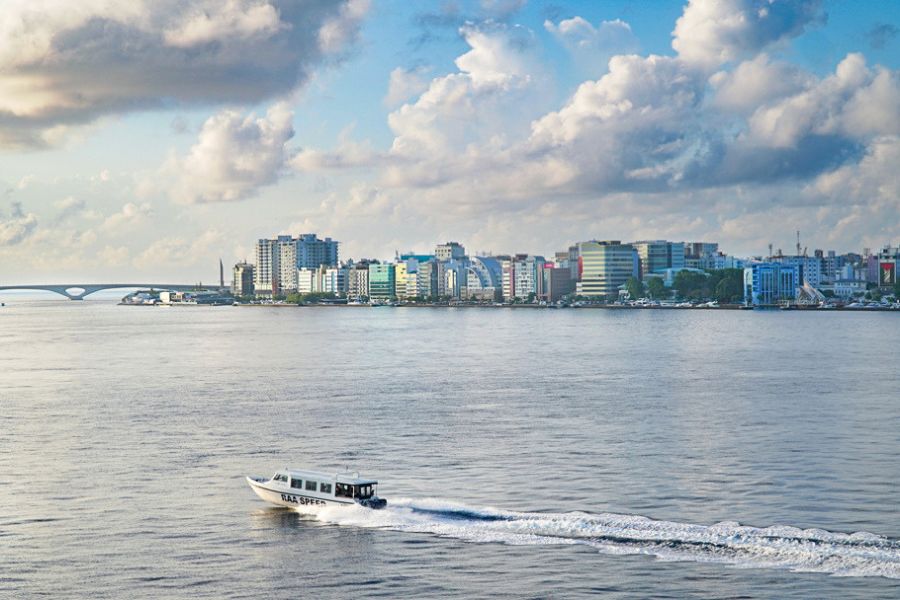
Scheduled public ferries connect Malé with parts of the Greater Malé area and numerous inhabited islands. These services are primarily designed for local transport rather than cruise sightseeing.
Although public ferries may appear inexpensive and convenient, departure times, terminals and routes need to be understood clearly. A missed or delayed return becomes a serious concern when the cruise ship operates a fixed final tender.
Speedboats provide the principal connection between Malé and many nearby resort islands, sandbanks and marine activity locations. Unlike a public ferry, a private or pre-arranged speedboat can be coordinated more closely around the cruise schedule.
The return journey should always be confirmed before leaving Malé. Weather, lagoon traffic and changes to the ship’s tender operation can affect the amount of time safely available away from the capital.
Where Will Your Private Guide Meet You?
The ship, tender boat and shore meeting point form three separate stages of arrival. A private operator cannot normally meet passengers beside the cruise ship itself.
The guide will usually wait at or near the approved tender landing after passengers have completed the journey ashore. Your booking confirmation should provide the jetty name or a recognisable nearby landmark, the guide’s telephone number and an explanation of how the guide will be identified.
Before leaving the ship, save a screenshot of these instructions. Mobile internet may not connect immediately after reaching shore, and walking away from the landing point can make it more difficult for the guide to locate you.
If tender operations begin later than expected, inform the operator as soon as possible. The route may need to be shortened, particularly when the experience includes an additional boat or flight transfer beyond Malé.
Things to Do from Malé Cruise Port
Malé Cruise Port gives passengers several very different ways to experience the Maldives. A shorter visit can remain within the capital and focus on culture, history and local life. A longer port call may allow time to continue towards a resort island, descend beneath the lagoon by submarine or view the atolls from the air.
The most suitable choice depends on the time genuinely available after tendering ashore, the number of additional transfers involved and how much flexibility you want to preserve before returning to the ship.
Explore Malé City and Its Historic Landmarks
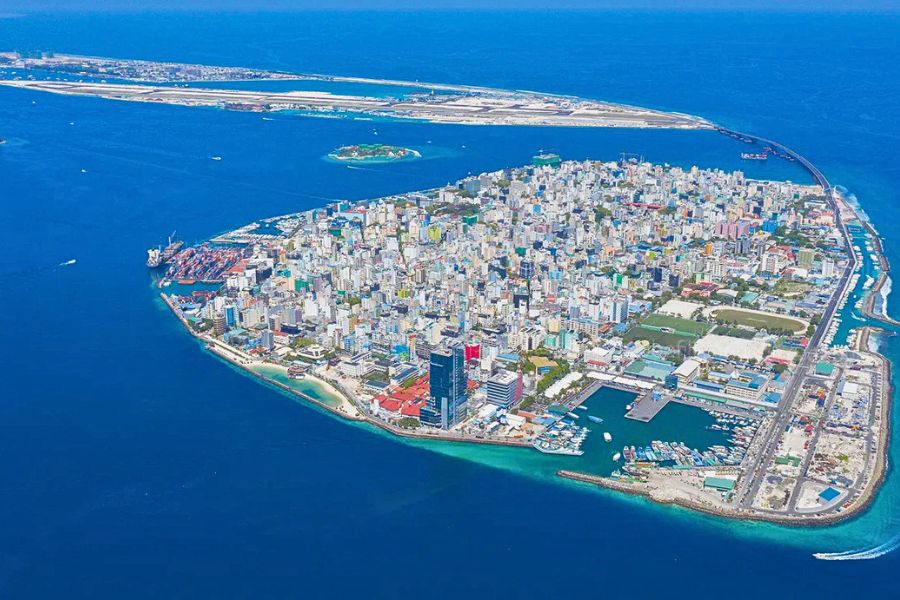
Malé is not a resort island, but it offers a concentrated introduction to the history, religion and everyday life of the Maldives. Several important landmarks can be included without travelling far from the waterfront.
Republic Square lies close to Malé’s northern waterfront and is recognised by the large Maldivian flag rising above the open space. The surrounding district includes important government and national institutions, making the square a useful starting point for understanding the capital.
The golden dome of the Islamic Centre is one of the most recognisable features of the Malé skyline. The complex combines Maldivian and Islamic architectural influences and contains the country’s largest mosque. Access may depend on prayer times, religious observance and local arrangements, so visitors should follow the guidance of their local host.
Hukuru Miskiy, the Old Friday Mosque, is one of Malé’s most historically significant buildings. Constructed from carved coral stone, the mosque preserves traditional Maldivian craftsmanship through detailed stonework, wood carving and lacquer decoration.
A historic cemetery and coral-stone minaret stand beside the mosque. Even when interior access is unavailable, the exterior remains meaningful, particularly when its architectural details are interpreted by a knowledgeable guide.
Sultan Park offers a greener pause within the densely built capital. The site once formed part of the former royal palace grounds and now sits beside the National Museum.
The National Museum presents objects connected with Maldivian royalty, craftsmanship and the country’s pre-Islamic and Islamic history. Opening hours should be checked before building a short cruise itinerary around an interior visit.
Malé’s waterfront and market streets reveal a more active side of the capital. Fishing remains central to Maldivian life, and passengers may see boats unloading their catch alongside stalls selling produce and everyday goods.
The atmosphere is busier and less polished than a private resort island, but that contrast is precisely what makes a Malé city visit valuable for travellers who want to understand the country beyond its beaches.
Spend Time on a Nearby Resort Island
Passengers should not expect to step from the tender directly onto the broad white-sand beach often seen in Maldives resort photography. Malé is a densely populated capital island, and its waterfront is shaped by harbours, seawalls, jetties and urban development.
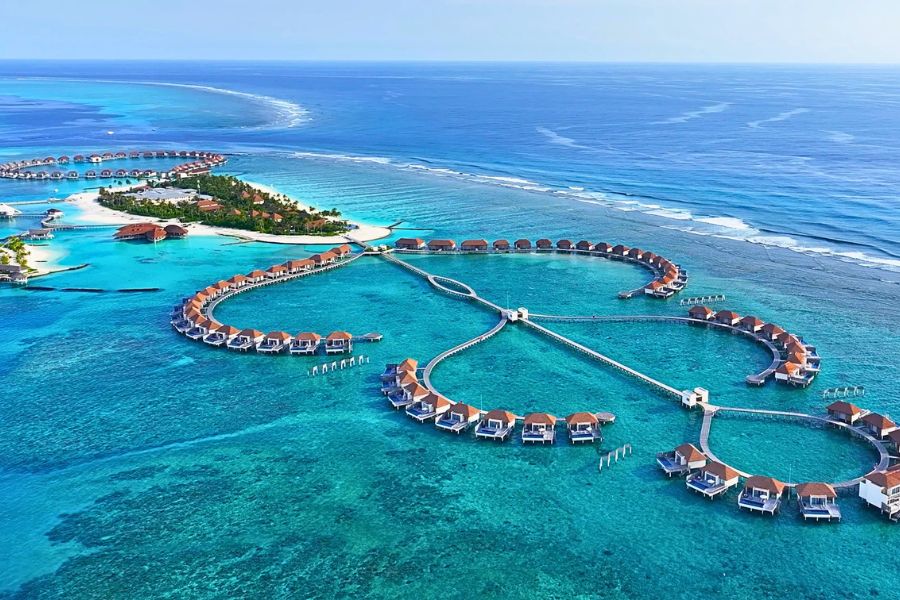
Travellers seeking the classic Maldives setting usually need to leave Malé by speedboat. Nearby resort islands provide more space for swimming, beach relaxation and views across a clear tropical lagoon.
A resort island visit can be one of the most appealing ways to spend a longer port call. It exchanges the density of the capital for palm-fringed beaches, resort facilities and a more leisurely island atmosphere.
Resort access is generally controlled, so visitors normally require a confirmed day arrangement rather than arriving independently without advance permission.
A day visit may include speedboat transfers, beach access, selected resort facilities and food or refreshments. The exact inclusions vary, so passengers should confirm whether swimming areas, pools, meals, towels and changing facilities are included.
Our Sunset & Beach BBQ at Adaaran Vadoo experience is designed for cruise visitors who want to reach a nearby resort island with transfers coordinated from and back to Malé Port.
Sea conditions remain an important consideration. A resort experience should only be selected when the ship provides enough time for both speedboat journeys and a comfortable margin before the final tender.
Discover the Lagoon by Submarine
Not every passenger wants to snorkel or swim. Malé also offers an opportunity to experience the surrounding marine environment while remaining inside a vessel.
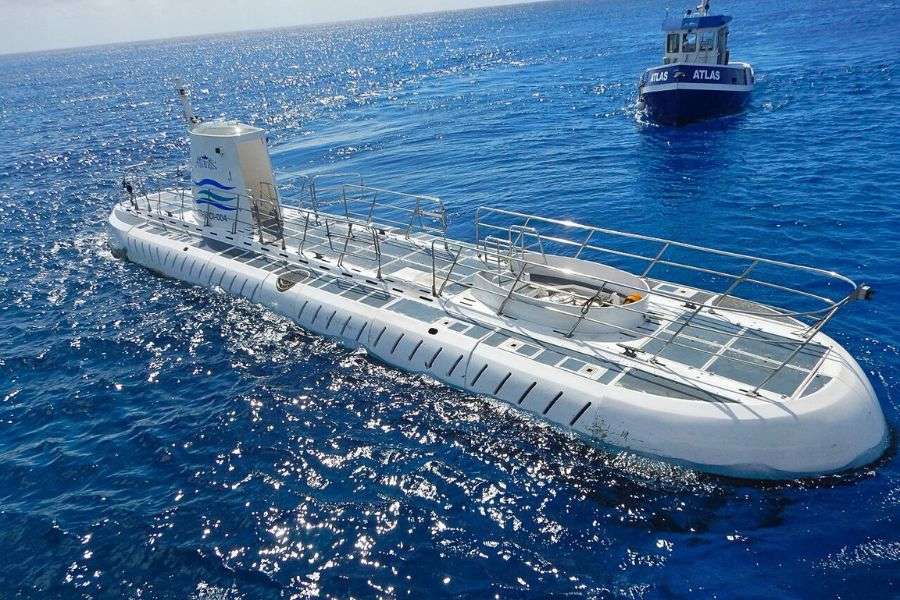
The Maldives Underwater Submarine Experience uses a dhoni transfer to reach the sightseeing submarine before descending beneath the lagoon surface.
Large viewing windows provide underwater views without requiring guests to enter the sea. This may appeal to older travellers, non-swimmers and passengers who want to observe reef life without wearing snorkeling equipment.
The experience still involves boarding several vessels, including the transfer boat and submarine. Guests should confirm the number of steps and whether they can move between the different boarding points with limited assistance.
Because the experience is relatively focused, it may be suitable for passengers who want a memorable marine activity without committing most of the day to a distant island.
See the Maldives from a Seaplane
For travellers drawn to the geography of the Maldives, an aerial experience provides an entirely different perspective.
From above, the atolls appear as rings and fragments of white sand surrounded by changing shades of turquoise. Resort islands, reef edges and channels become easier to understand as parts of a much larger ocean landscape.
The Scenic Maldives with Photo Flight is designed as a focused experience from Malé Port, allowing cruise passengers to see the atolls without spending most of the day travelling to a distant island.
Flight schedules remain dependent on aviation operations and weather. Passengers should choose a departure with sufficient time for check-in, transfers and possible adjustments to the operating schedule.
Choose between Malé City and an Island Experience
Malé City and the surrounding islands reveal two very different versions of the Maldives.
A city visit is the stronger choice when the port call is short, cultural understanding is the priority or the tender operation has already reduced the usable time ashore. Historic mosques, civic landmarks and local streets can be experienced without adding another sea transfer.
A resort or marine experience is more suitable when the ship provides a longer port stay and the turquoise-water image of the Maldives is the main priority. These experiences feel more visually dramatic, but they require tighter coordination between tenders, speedboats and activity schedules.
The decision should be made according to the time genuinely available after tendering ashore, not merely the arrival and departure times printed on the cruise itinerary.
Which Experience Suits Your Time in Port?
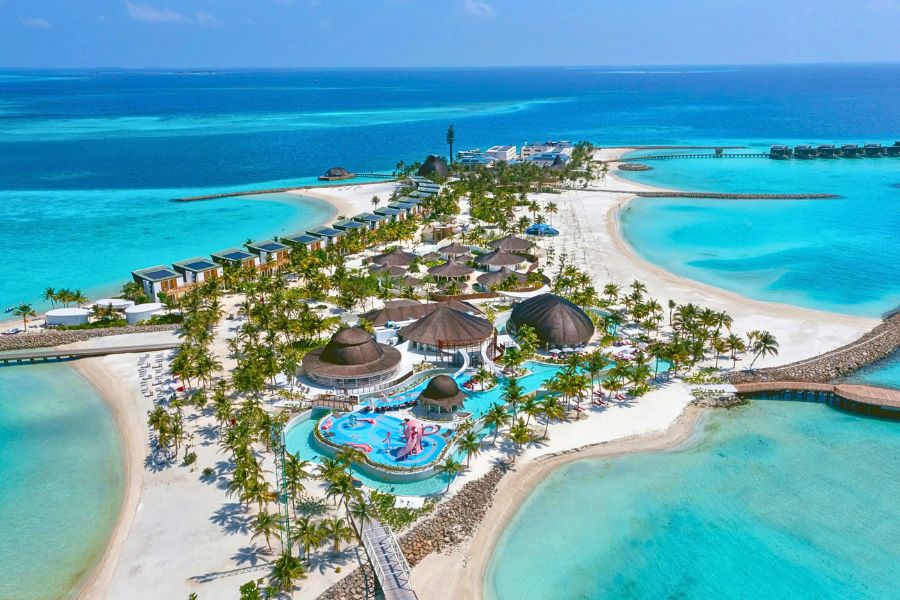
When the practical time ashore is limited, a focused Malé city visit is usually the most reliable choice. Central landmarks can be reached without adding another boat transfer, and the route can be shortened if tender operations begin later than expected.
A port call offering several comfortable hours ashore may allow time for the submarine experience, a scenic flight or a more leisurely city visit. The operating schedule of the selected activity should still leave sufficient time to return to the correct tender landing.
A longer port call creates the possibility of visiting a resort island. This option requires the greatest degree of coordination because passengers must complete the tender journey, meet the local operator, travel by speedboat and return to Malé before the ship’s final tender.
Trying to combine a detailed city tour, resort visit and marine activity within one cruise call is rarely the most comfortable approach. Choosing one principal experience usually creates a more relaxed day and protects the return to the ship.
Practical Tips for a Relaxed Malé Port Day
A successful Malé port day depends on more than choosing an attraction. Tender arrangements, local customs, weather and the number of water transfers can all influence how comfortably the day unfolds.
Facilities near the Tender Landing
Facilities depend on the jetty selected for the individual cruise call. Passengers should not expect a large air-conditioned cruise terminal with extensive dedicated visitor services.
Central Malé has cafés, restaurants, shops, pharmacies, banks and other everyday city services. Their distance from the landing point will depend on where the tender is directed that day.
Public restrooms may be more limited than cruise passengers expect, particularly outside restaurants, museums or organised activity venues. Using the ship’s facilities before boarding the tender can make the beginning of the day more comfortable.
Cash machines and currency services may be available in the city, but many pre-arranged experiences are confirmed and paid before arrival. Passengers should avoid spending valuable port time searching for banking services unless necessary.
Accessibility and Tender Boarding
The most important accessibility issue in Malé is often the tender rather than the city itself.
Passengers may need to step from the cruise ship onto a smaller boat while both vessels are moving. The tender crew will provide assistance, but cruise lines may restrict boarding when a guest cannot walk or transfer safely under the day’s sea conditions.
Mobility-equipment policies vary. Some tenders can carry folding wheelchairs, while powered chairs or scooters may not be accepted because of their size, weight or battery type.
Once ashore, Malé’s narrow streets, busy traffic and interrupted pavements can create additional challenges. A private vehicle may reduce walking, although the city’s compact taxis may not accommodate large mobility devices.
Passengers should provide precise information before booking, including whether they can manage steps, whether the wheelchair folds and how much assistance is required when boarding a boat or vehicle.
Clothing and Local Customs
Malé is an inhabited Muslim city rather than a private resort island. Visitors are expected to dress more modestly than they might on a resort beach.
Lightweight clothing remains suitable for the tropical climate, but shoulders and knees should generally be covered when walking around the city or visiting religious areas. Swimwear should be kept for designated beaches, boats or resort settings.
Alcohol is not available in Malé or on local inhabited islands in the same way it is at licensed resort properties. Passengers should not attempt to bring alcohol ashore from the cruise ship.
Friday prayer times and religious observances may affect mosque access, museum hours and the availability of some local businesses. A flexible itinerary is useful when visiting on a Friday or during Ramadan.
Weather and Sea Conditions
The Maldives remains warm throughout the year, but sunshine alone does not determine whether a tender or island transfer will feel comfortable.
Wind, swell and tropical showers can affect the movement of tender boats and speedboats. Weather may also influence submarine operations, scenic flights and resort transfers.
The drier period generally falls between November and April, while the southwest monsoon from May to October brings a greater likelihood of rain and changing sea conditions. Neither period guarantees a completely calm or stormy day.
Passengers should check the ship’s updates close to arrival. When conditions shorten tender operations, a city-based itinerary is usually easier to adjust than an experience requiring several separate boat journeys.
Protect the Final Tender Time
The final tender is one of the most important times in any Malé port call.
Your cruise line will confirm when passengers must be back at the landing point. This may be substantially earlier than the ship’s published departure time.
Do not plan for a speedboat, ferry or taxi to reach the waterfront at the exact final-tender time. Passengers may still need to walk to the correct jetty, pass local controls, join a queue and board the tender.
A private operator should design the return backwards from the confirmed final tender, allowing for sea conditions and possible delays rather than relying only on the fastest advertised transfer time.
Passengers exploring independently should identify the landing point before leaving it. Several jetties and ferry terminals may appear similar, and returning to the wrong waterfront location can waste valuable time.
Comfort Tips for Older Cruise Travellers
Malé can be rewarding for older cruise passengers when the day is kept focused and unnecessary transfers are avoided.
Confirm first whether the tender operation is manageable for your mobility. Once ashore, choose one principal direction rather than attempting to combine a detailed city walk, resort island and marine activity within the same day.
For a Malé city visit, a local guide can reduce time spent navigating busy streets and help identify suitable places to pause. A shorter route around Republic Square, the Islamic Centre and Sultan Park may be more comfortable than attempting to walk across the whole island.
For a resort or marine experience, ask about every boarding stage. The speedboat, dhoni, submarine platform or seaplane transfer may each involve different steps and surfaces.
Shade, air conditioning and restroom access should be considered before confirming the itinerary. A day that feels spacious and well coordinated is likely to be more memorable than one spent repeatedly watching the time.
Frequently Asked Questions about Malé Cruise Port
Do cruise ships dock directly in Malé?
Many large cruise ships remain offshore and operate tender boats to an approved landing point in or near central Malé. The exact arrangement can vary by ship and cruise call.
How long does the tender take in Malé?
The journey itself may be relatively short, but the complete process includes waiting, boarding and disembarkation. Passengers should allow considerably more time than the boat journey alone.
Is Malé easy to explore on foot?
Many central attractions are located within a compact area, making a guided walking route practical for passengers with comfortable mobility. Heat, busy roads and narrow pavements can still make the experience tiring.
Can cruise passengers visit a beach from Malé?
Yes, but the classic Maldives beach experience usually requires a speedboat transfer to a resort or another island. Malé itself is an urban capital rather than a beach resort.
Can cruise passengers visit a resort island for the day?
Yes, when a confirmed day arrangement and return transfer have been organised. The ship must provide enough time for tendering, speedboat travel and a protected return margin.
Are taxis available in Malé?
Taxis operate within the capital and can reduce walking. Vehicles may be compact, and traffic can limit the amount of time saved on short city journeys.
Is Malé Cruise Port suitable for wheelchair users?
Suitability depends first on the cruise line’s tender policy and the sea conditions on the day. Malé’s pavements and transport can also present challenges, so requirements should be discussed before booking.
What should cruise passengers wear in Malé?
Lightweight, modest clothing is recommended on the inhabited capital island. Shoulders and knees should be covered, particularly near mosques and religious areas.
What happens if tender operations are delayed?
The time ashore may be shortened, and experiences requiring an additional boat or flight transfer may need to be adjusted. Remain in contact with the operator and continue to follow the final-tender time supplied by the cruise line.
Plan a Malé Port Day around the Water
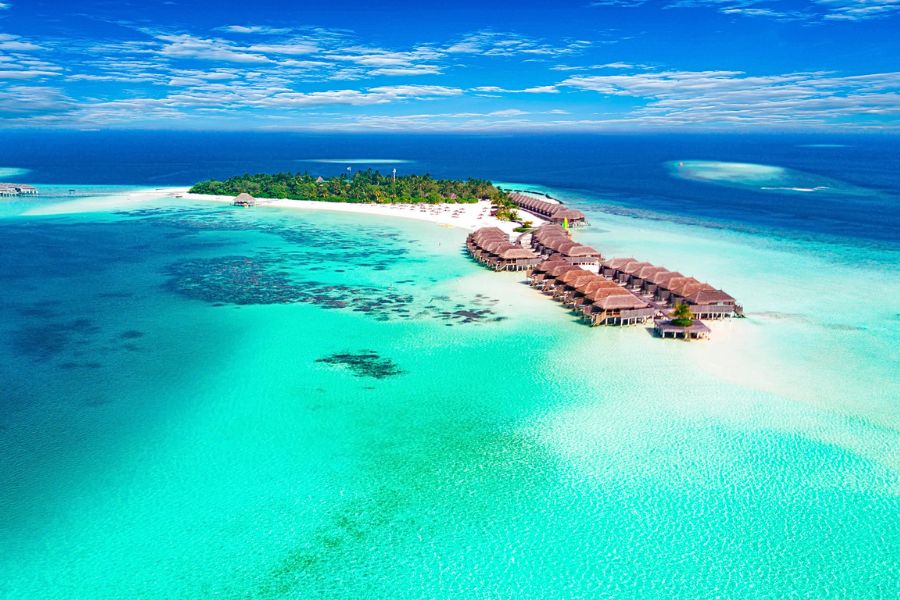
Malé Cruise Port offers more than one way to experience the Maldives. Passengers can walk through the compact capital, descend beneath the lagoon by submarine, view coral atolls from the air or continue by speedboat towards a resort island.
The most suitable choice depends on the time available after tendering ashore and the number of further transfers required. A successful port day should feel relaxed enough to enjoy the destination while keeping the final tender comfortably protected.
Shore Excursions Asia arranges private Maldives experiences with clear meeting instructions, personal pacing, no compulsory shopping and timing planned around the ship’s tender and all-aboard schedule.


 Send Inquiry