
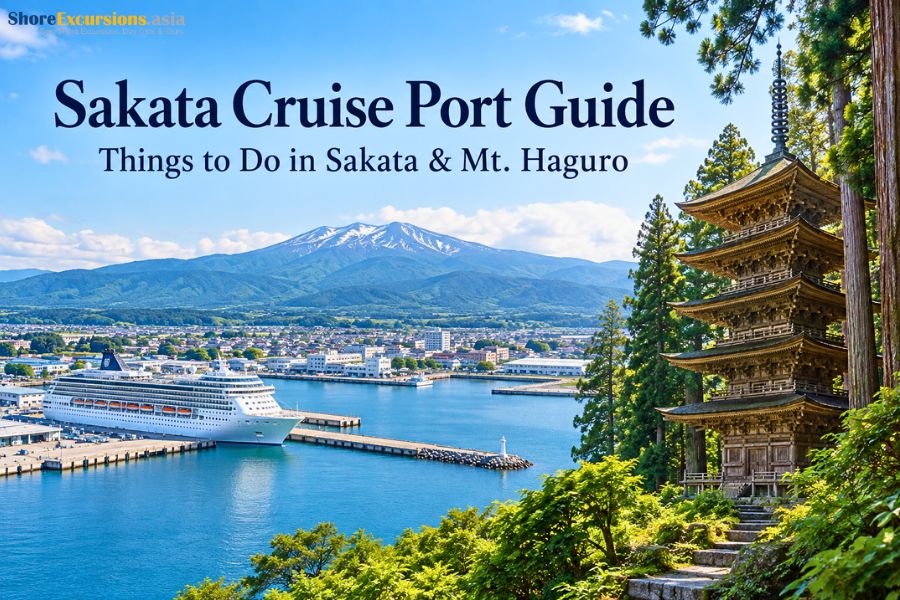
Sakata is one of northern Japan’s most rewarding cruise ports for travelers who want to experience a quieter side of the country. Once an important Sea of Japan trading port, Sakata grew wealthy through rice, shipping and the influence of powerful merchant families. Today, that history survives in old warehouses, merchant residences, temples and traditional cultural spaces across the city.
For cruise passengers, Sakata also offers two very different ways to spend a day ashore. You can stay relatively close to the port and explore Sakata city, including the Sankyo Warehouses, Former Honma Family Residence, Kaikoji Temple and Hiyoriyama Park. Or, with a longer call, travel through the Shonai region toward Mt. Haguro and Tsuruoka for sacred cedar forests, the Five-Story Pagoda and samurai heritage.
This Sakata Cruise Port Guide from Shore Excursions Asia explains where cruise ships dock, how far the port is from the city, the best things to do and which itinerary makes sense for your available time ashore.
If you prefer a port-day itinerary arranged around your ship schedule, browse our Sakata shore excursions or explore more Japan shore excursions across the country.
Where Do Cruise Ships Dock in Sakata?
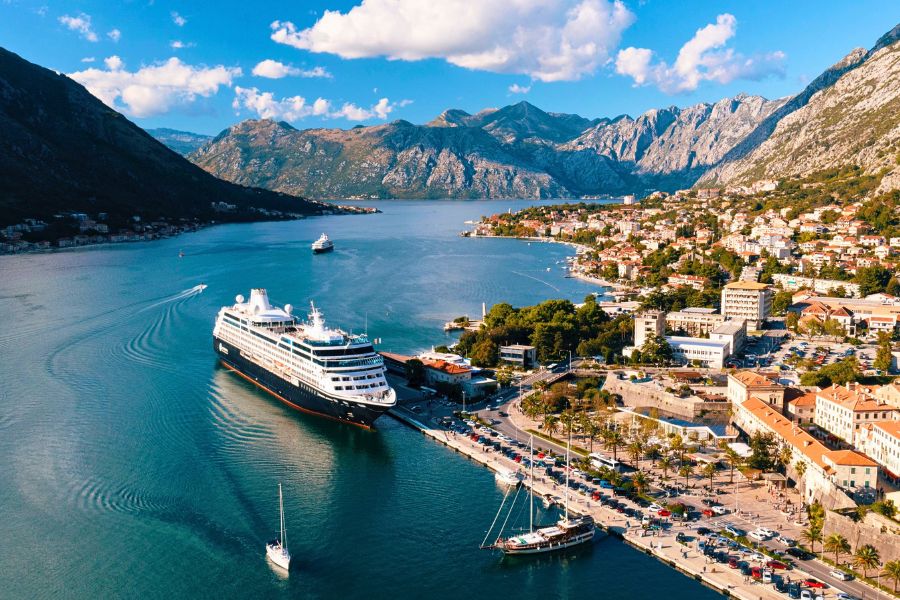
Cruise ships visiting Sakata use Kominato Wharf at Sakata Port, on the Sea of Japan side of Yamagata Prefecture.
The port has several cruise-capable berths at Kominato Wharf. Passengers should check the exact berth for their individual sailing, as ships may not always use the same quay.
One important difference from some Japanese cruise ports is that Sakata Port does not function like a downtown passenger terminal where travelers can simply walk outside and begin sightseeing.
The current port facility information lists no permanent cruise terminal building at the wharf. Temporary facilities may be provided during cruise calls, while transfers are needed to reach the main sightseeing area.
Downtown Sakata is approximately 6 km from the port, or around 15 minutes by car under normal conditions.
Sakata Cruise Port at a Glance
- Main cruise berth: Kominato Wharf, Sakata Port
- Berths: Kominato Wharf No. 1, No. 2 and No. 3
- Distance to downtown: Approximately 6 km
- Typical drive to downtown: Around 15 minutes
- Drive to JR Sakata Station: Around 10–15 minutes
- Sankyo Warehouses: Around 14 minutes by car from the berth
- Mt. Haguro / Dewa Sanzan area: Approximately 40 km or around 60 minutes by road
- Best for: History, traditional culture, sacred landscapes and regional Japan
Can You Walk from Sakata Cruise Port to the City?
Technically it is possible to cover the distance on foot, but it is not a sensible use of a limited cruise call.
The main attractions are several kilometers from Kominato Wharf, and the route from the working port is not designed as a sightseeing walk.
Cruise passengers should normally use a ship shuttle where provided, taxi, private vehicle or organized shore excursion to reach central Sakata.
Once you arrive in the city, several attractions can be combined much more efficiently with short vehicle transfers and selected walking.
Shuttle arrangements can vary by ship, so confirm the drop-off point, frequency and final return service before leaving the vessel.
Should You Stay in Sakata or Visit Mt. Haguro?
This is the main decision for a first-time visitor.
Sakata city works best if you want merchant history, traditional architecture, local food and a relatively relaxed port day with limited road travel.
Mt. Haguro and Tsuruoka are better for passengers who want sacred landscapes, temples, cedar forests and deeper regional history and are comfortable spending more time on the road.
A normal cruise call does not require you to do both.
For many passengers, trying to cover every Sakata attraction and a substantial Mt. Haguro visit would make the day unnecessarily rushed.
Best Things to Do from Sakata Cruise Port
Explore the Sankyo Warehouses
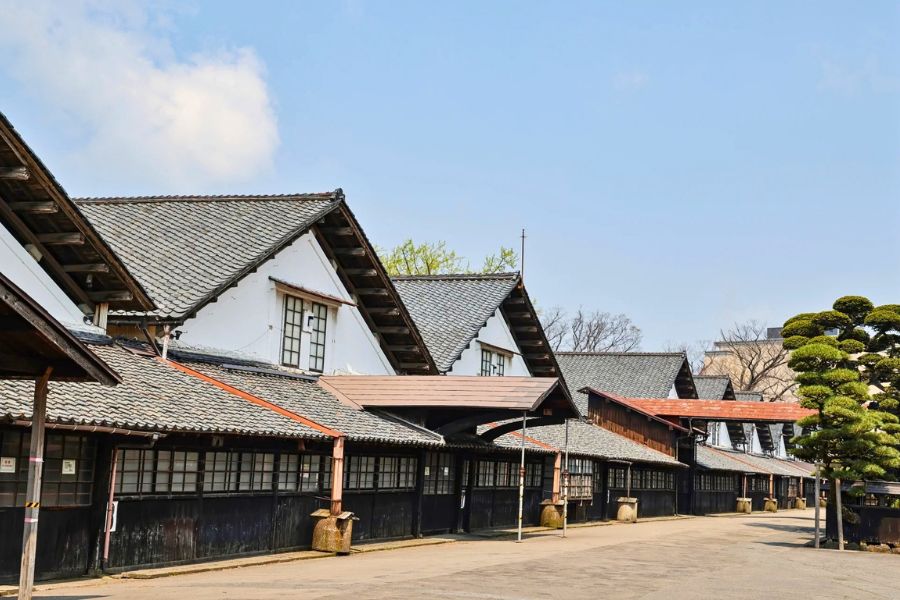
The Sankyo Warehouses are one of Sakata’s most recognizable landmarks and one of the easiest places to understand why the city once became so prosperous.
The warehouse complex was constructed in 1893 for storing and distributing rice from the Shonai region.
A row of traditional warehouses stands beside old zelkova trees that helped protect the buildings from heat and wind. The repeating dark wooden façades and tree-lined path have become one of Sakata’s classic views.
The site was designated a national historic site in 2021 and remains closely connected with the region’s rice-trading history.
For cruise passengers, Sankyo is particularly convenient because it sits only around 6.5 km from the berth and can be incorporated naturally into almost any city itinerary.
Our six-hour Sakata Highlights excursion includes the Sankyo Warehouses together with Hiyoriyama Park, Kaikoji Temple, the Honma Residence and other local heritage sites.
Visit the Former Honma Family Residence
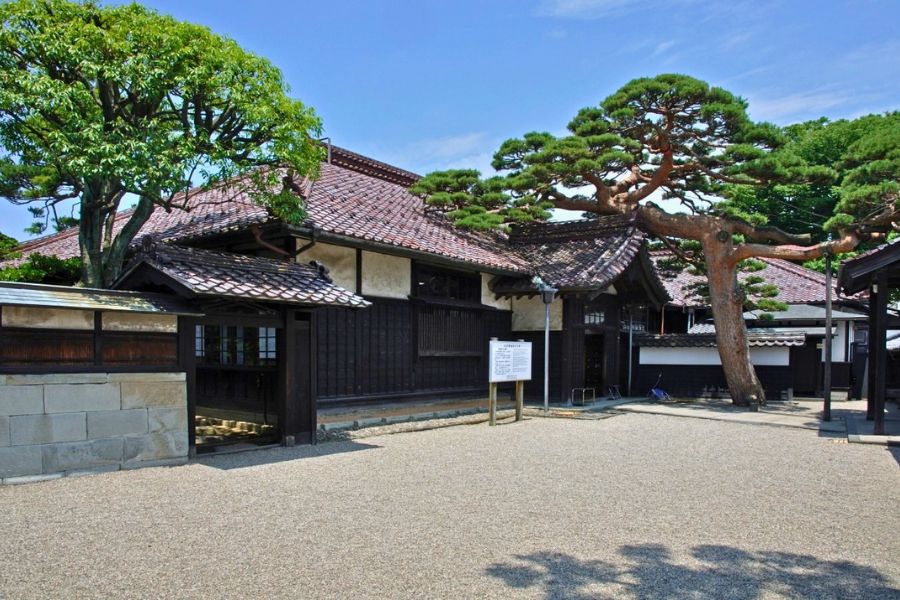
The history of Sakata cannot really be understood without the Honma family.
The Honmas became one of Japan’s most influential merchant families and built wealth through commerce, finance and landholding.
The Former Honma Family Residence dates from the eighteenth century and is particularly interesting because its architecture combines characteristics of both a samurai residence and a merchant house.
Rather than visiting another reconstructed museum, passengers can walk through rooms and architectural details directly connected with the family that helped shape Sakata’s economic and civic development.
The residence pairs especially well with the Sankyo Warehouses because together they explain two sides of the city’s history: the rice trade itself and the wealthy merchant society it supported.
See Hiyoriyama Park and Sakata’s Maritime Heritage
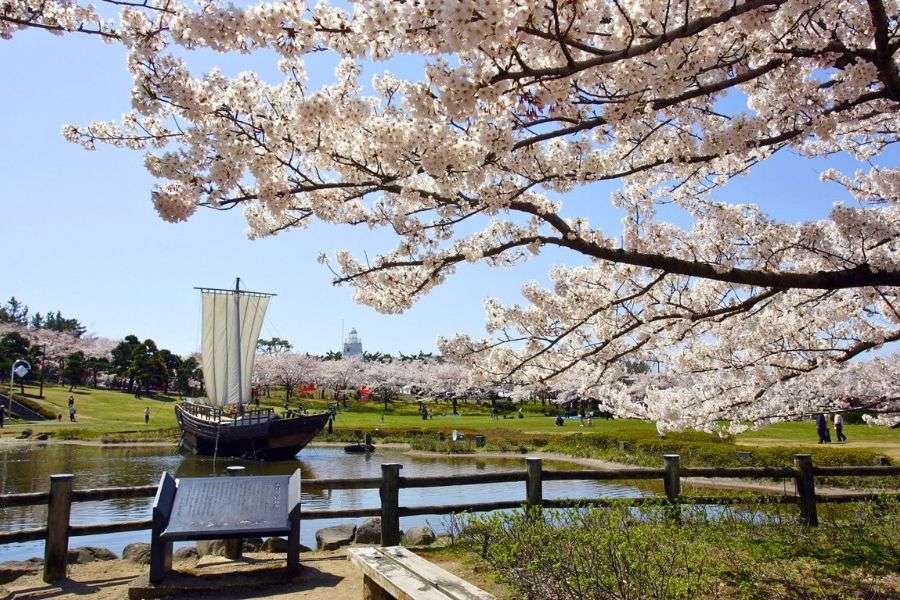
Hiyoriyama Park occupies a historic lookout above the old port area.
From the park, visitors can look toward Sakata Port and the mouth of the Mogami River while learning about the city’s long relationship with maritime trade.
One of the park’s distinctive landmarks is its old wooden hexagonal lighthouse.
The park is also known locally for cherry blossoms in spring and views toward the Sea of Japan.
For cruise passengers, Hiyoriyama is better treated as part of a broader Sakata heritage route rather than a standalone attraction requiring a large amount of time.
Visit Kaikoji Temple and Learn About Sokushinbutsu
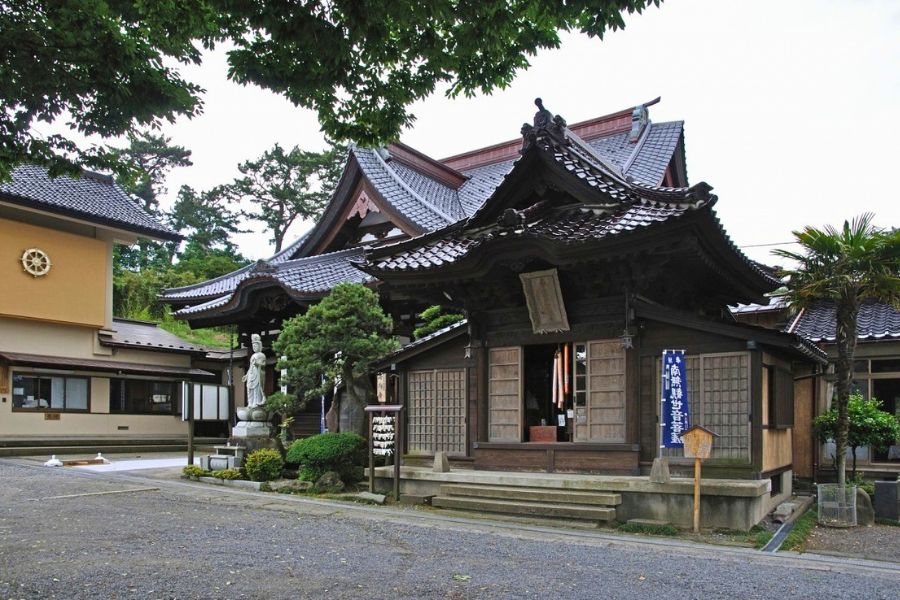
Kaikoji is one of Sakata’s most unusual cultural sites.
The temple enshrines two sokushinbutsu, Buddhist ascetics whose remains were preserved following extreme religious practices associated with the Dewa Sanzan tradition.
It is considered the only temple in Japan where two sokushinbutsu are enshrined together.
The visit provides important context for the religious culture of the Shonai region and creates a natural thematic link between Sakata and the sacred mountains farther inland.
For visitors unfamiliar with the tradition, this is not simply a curiosity attraction. The sokushinbutsu are objects of religious reverence, and the site should be approached respectfully.
Discover Sanno Club and Sakata’s Kasafuku Tradition
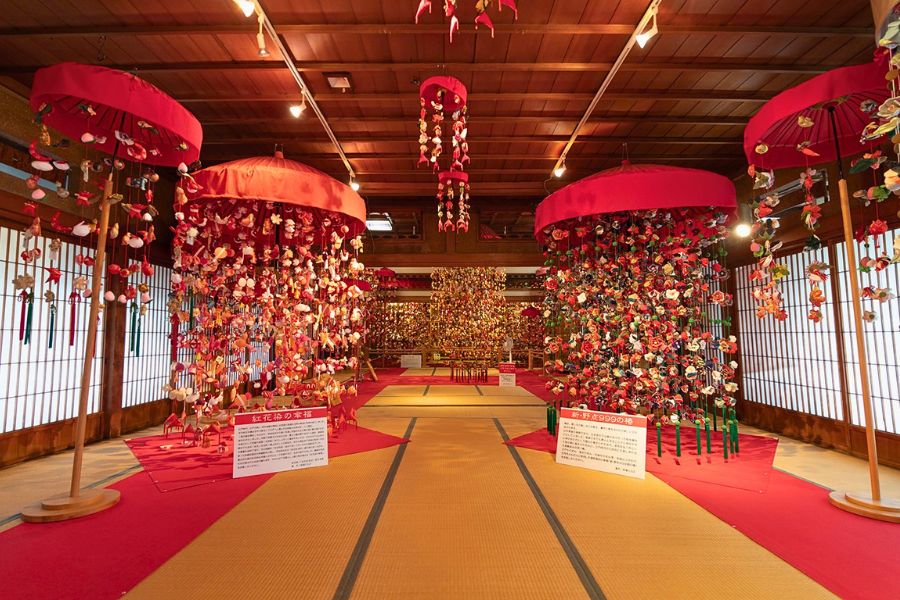
Sanno Club was built in 1895 and operated for many years as an important high-class restaurant in Sakata.
Today, the restored building introduces visitors to the city’s history as a prosperous Kitamaebune trading port as well as traditional arts and crafts.
One of its most visually distinctive displays is kasafuku, Sakata’s colorful hanging ornaments arranged beneath decorative umbrellas.
The building itself, former restaurant culture and craft displays make Sanno Club particularly suitable for travelers who prefer traditional interiors and local culture to conventional museums.
It is included in the current Sakata Highlights itinerary.
Experience Sakata’s Traditional Entertainment Culture
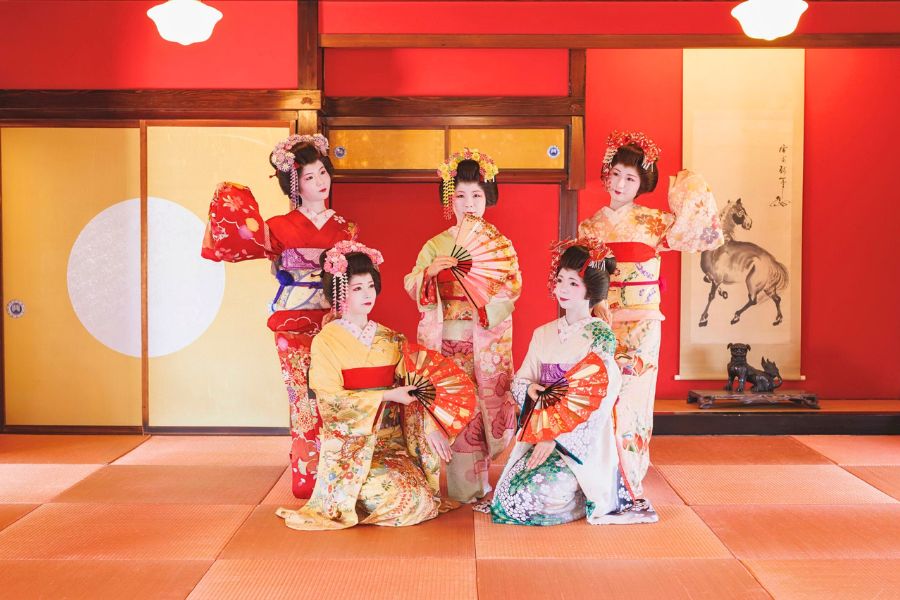
Sakata’s wealth as a trading port supported an active restaurant and entertainment culture.
Travelers interested in this side of the city can consider a cultural visit that includes traditional performance rather than focusing entirely on monuments and museums.
Our Sakata Cultural Heritage & Maiko Performance excursion combines the Honma heritage, the Ken Domon Museum of Photography and a traditional performance experience.
The performance requires advance arrangements and availability can be limited, so it should not be treated as a spontaneous walk-in activity during a cruise call.
Visit the Ken Domon Museum of Photography
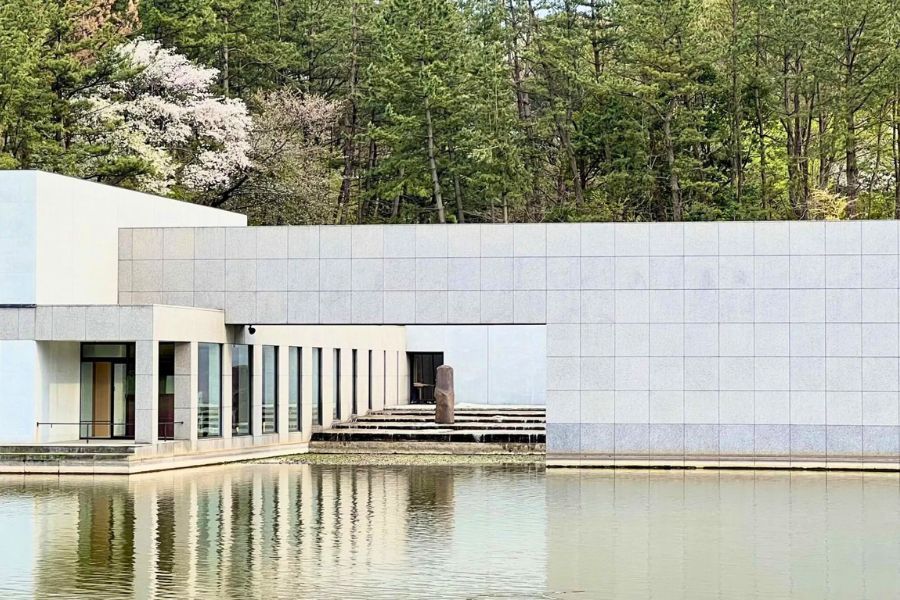
The Ken Domon Museum of Photography offers a very different experience from Sakata’s merchant houses and temples.
Dedicated to photographer Ken Domon, the museum introduces documentary photography that captured Japanese society, people and cultural heritage during the twentieth century.
It is particularly suitable for repeat visitors to Japan or travelers whose interests lean more toward art and photography than shopping.
Because a museum visit requires time indoors, first-time visitors with a shorter call may prefer to prioritize Sakata’s historic districts and architecture instead.
Visiting Mt. Haguro from Sakata Cruise Port
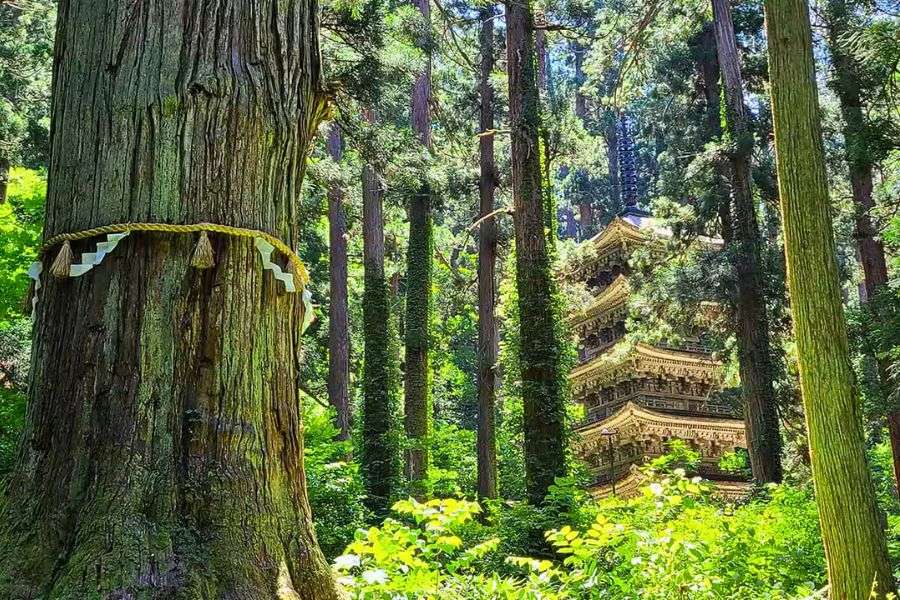
Mt. Haguro is part of the sacred Dewa Sanzan, the Three Mountains of Dewa, and is one of the most meaningful longer excursions available from Sakata Port.
The mountain lies inland from the cruise port in the Tsuruoka area. Official port information places the wider Dewa Sanzan sightseeing area at approximately 40 km or around one hour from Sakata Port by road.
This means Mt. Haguro is entirely realistic during a sufficiently long port call, but it should be planned as a substantial excursion rather than a quick side trip.
Walk to the Hagurosan Five-Story Pagoda
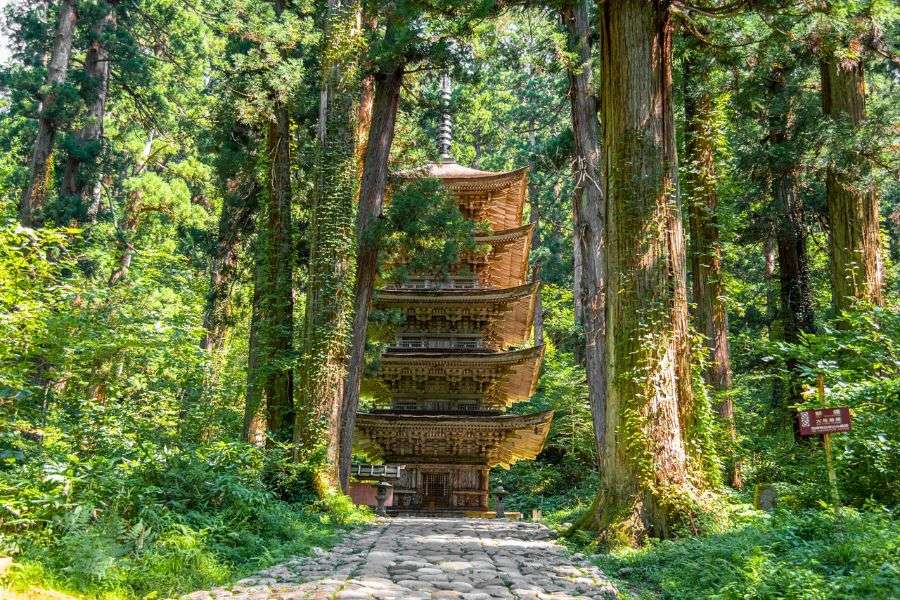
The Five-Story Pagoda stands among towering cedar trees near the lower approach to Mt. Haguro.
The current wooden pagoda is believed to have been rebuilt around 600 years ago and is designated a National Treasure of Japan.
From Zuishinmon Gate, reaching the pagoda takes roughly 10–15 minutes on foot in normal spring-to-autumn conditions.
The path includes stone steps and uneven forest surfaces, so supportive footwear is important.
The pagoda underwent a major roof restoration during 2023–2024. That work has been completed, and the restored structure is again visible to visitors.
Our current Sakata & Mt. Haguro Heritage Shore Excursion includes the Five-Story Pagoda together with Tsuruoka and Sakata heritage sites.
Do You Need to Climb All 2,446 Steps of Mt. Haguro?
No.
This distinction is particularly important for cruise passengers and senior travelers.
The traditional approach from the foot of Mt. Haguro to the summit contains 2,446 stone steps and can take around 60–90 minutes one way simply for the climb.
However, the Five-Story Pagoda is located much closer to the lower entrance.
You can visit the pagoda without completing the full mountain ascent.
The summit can also be reached separately by road, which means an itinerary can be adapted according to walking ability and available time.
Visit Tsuruoka’s Samurai Heritage
Tsuruoka developed as the castle town of the former Shonai domain and adds another historical layer to a Mt. Haguro excursion.
Tsurugaoka Castle itself no longer survives as a standing keep, but the former castle grounds remain as a historic park.
The area works well as a gentler cultural stop after the forest paths at Mt. Haguro.
SEA’s six-hour Sakata & Mt. Haguro Heritage Shore Excursion combines the pagoda with Matsugaoka Silk Farms Memorial Hall, Tsurugaoka Castle Ruins Park and the Sankyo Warehouses.
Learn About Shonai’s Samurai Silk at Matsugaoka
Matsugaoka offers a less familiar story from the early modern period.
After the end of the samurai era, former warriors of the Shonai domain became involved in developing silk production in the region.
The preserved buildings provide insight into how local society adapted during the Meiji period and add variety to an excursion that might otherwise focus entirely on temples and castle history.
For travelers who have already visited many Japanese castles and shrines, this industrial and social-history element can make the Shonai region particularly interesting.
Mt. Haguro or Sakata City: Which Is Better for Cruise Passengers?
For a first visit with a relatively short call, I would normally stay in Sakata city.
The Sankyo Warehouses, Honma Residence, Kaikoji, Sanno Club and Hiyoriyama provide enough material for a culturally rich day without spending two hours of the port call traveling to and from the mountains.
Choose Mt. Haguro when sacred landscapes, forest scenery and regional spiritual culture are more important to you than seeing every city attraction.
It is also a strong choice for repeat Japan visitors who have already experienced many major urban destinations.
Can You Visit Kamo Aquarium from Sakata Port?
Yes, although it lies significantly farther from the port than Sakata city.
Official port information places Kamo Aquarium at approximately 35 km or around 45 minutes by car from the berth.
The aquarium is particularly known for its jellyfish collection and can be a worthwhile alternative for travelers who prefer marine life to temples or merchant history.
However, it should be treated as a dedicated regional attraction rather than casually added to an already full city-and-Mt.-Haguro itinerary.
How to Spend One Day from Sakata Cruise Port
Option 1: Sakata Essentials for a Shorter Call
Port → Sankyo Warehouses → Former Honma Family Residence → Hiyoriyama Park → Port
This route gives visitors a strong introduction to Sakata’s trading and merchant history with relatively limited driving.
If time permits, Kaikoji or Sanno Club can be added.
Option 2: Classic Sakata Heritage
Port → Hiyoriyama Park → Kaikoji Temple → Sanno Club → Honma Residence → Sankyo Warehouses → Port
This is the strongest first-time itinerary for passengers with around five to six usable sightseeing hours.
It closely matches the scope of our six-hour Sakata Highlights excursion.
Option 3: Sakata Art and Traditional Culture
Port → Honma Museum / Honma Heritage → Ken Domon Museum → Former Honma Residence → Traditional Cultural Performance → Port
This itinerary is better suited to travelers interested in art, architecture and performing culture than temples.
See our Sakata Cultural Heritage & Maiko Performance tour for this style of port day.
Option 4: Sakata and Mt. Haguro Heritage
Port → Mt. Haguro Five-Story Pagoda → Matsugaoka → Tsurugaoka Castle Ruins Park → Sankyo Warehouses → Port
This is a stronger choice for passengers who want both sacred and secular Shonai history.
The current Sakata & Mt. Haguro Heritage Shore Excursion is planned as approximately six hours and uses vehicle transportation between the main areas.
Option 5: Deeper Mt. Haguro Experience
Port → Mt. Haguro → Zuishinmon → Five-Story Pagoda → selected mountain religious sites → regional stop → Port
This works best for travelers whose main interest is the spiritual landscape rather than checking off Sakata city attractions.
SEA also offers a dedicated Mount Haguro Discovery excursion for a more focused mountain experience.
Getting Around from Sakata Cruise Port
Cruise Shuttle
Current official port information indicates that a shuttle into the city is needed, and shuttle arrangements may be provided for cruise calls.
The exact service depends on the individual ship and sailing.
Check the drop-off point and final return time before leaving the port.
Taxi
Taxis can be useful for passengers who want to explore central Sakata independently.
The city is only around 15 minutes from the berth by road, so a taxi may be practical for a simple port-to-city transfer.
For a multi-stop itinerary or a trip toward Mt. Haguro, pre-arranged transportation is usually easier.
Private Car or Coach
A private vehicle is the most flexible option for connecting Sakata city attractions and is particularly useful for longer regional excursions.
It becomes much more valuable when visiting:
- Mt. Haguro;
- Tsuruoka;
- Kamo Aquarium;
- or multiple attractions spread across the Shonai region.
Public Transportation
Local transportation exists within Sakata and the wider region, but a cruise passenger should not assume that ordinary bus schedules will align conveniently with a fixed ship call.
If traveling independently, allow additional time for connections and always maintain a conservative return buffer.
Can You Explore Sakata Independently?
Yes, particularly if your ship provides a reliable shuttle into town.
Sakata itself is smaller and less complicated than Tokyo, Osaka or Kyoto, and independent travelers can visit several central attractions without difficulty once they leave the port area.
An organized shore excursion becomes more useful when you want to combine multiple cultural sites efficiently, visit Mt. Haguro, reduce walking, or avoid coordinating taxis and regional transport.
You can compare current options on our Sakata shore excursions page.
Walking and Mobility in Sakata
Sakata city is generally manageable for older cruise travelers when transportation is used between attractions.
The Sakata Highlights tour is currently categorized as Easy–Moderate walking, which reflects the relatively comfortable nature of a city-focused route.
Mt. Haguro requires more consideration.
The walk from Zuishinmon to the Five-Story Pagoda is short compared with the full mountain pilgrimage, but it still includes stone steps and uneven forest paths.
The full 2,446-step ascent should not be assumed to be part of a standard senior-friendly cruise excursion.
Passengers with limited mobility should confirm exactly how much of the mountain route is included before booking.
Is Mt. Haguro Suitable for Senior Cruise Passengers?
It can be, provided the itinerary is designed around the passenger rather than around the full traditional pilgrimage route.
A visit to the Five-Story Pagoda involves roughly 10–15 minutes of walking from the lower entrance under normal conditions, including steps and uneven surfaces.
Travelers do not need to climb the entire mountain.
Passengers with significant balance or knee concerns may prefer a Sakata city itinerary, where vehicle access between attractions is much easier.
Our Sakata & Mt. Haguro Heritage excursion is currently classified as Moderate walking.
What to Eat in Sakata
Seafood from the Sea of Japan
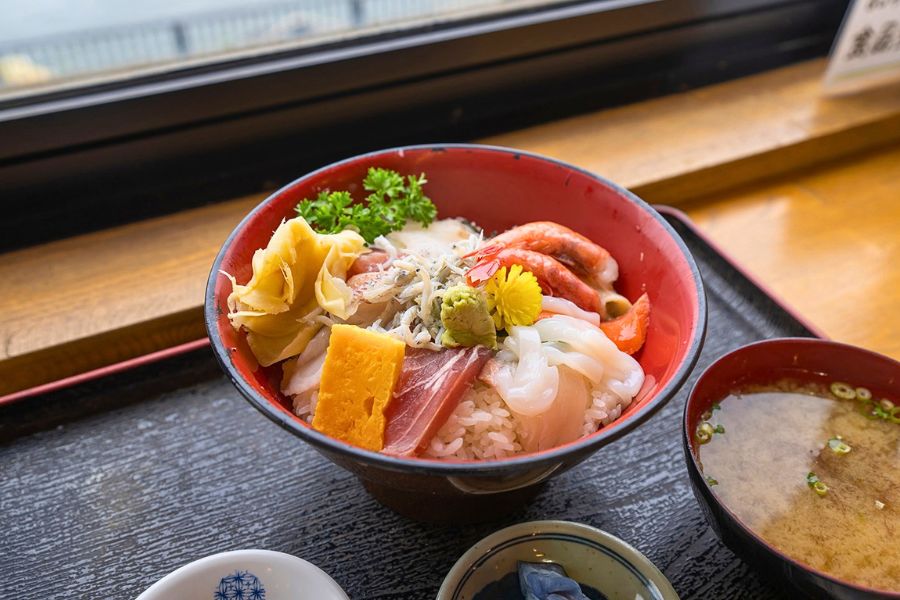
Sakata’s location on the Sea of Japan makes seafood an obvious choice during a port day.
Seasonal fish and shellfish vary through the year, so local restaurants often reflect what is available from the Shonai coast.
Shonai Rice
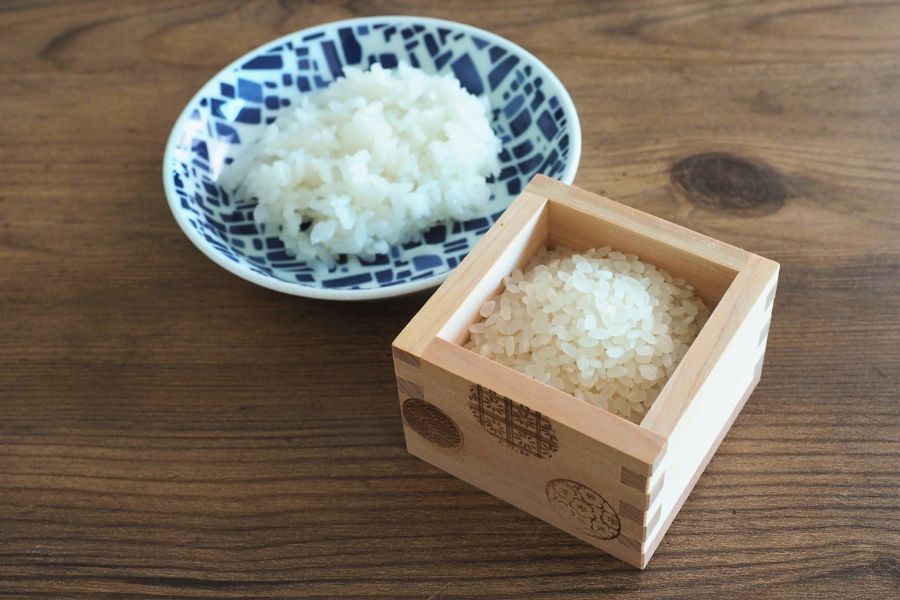
Rice is central to Sakata’s history rather than simply a side dish.
The surrounding Shonai Plain became one of Japan’s important rice-growing regions, and the city’s historic prosperity was closely linked to storing and shipping that rice.
A meal using local Shonai rice fits naturally with a visit to the Sankyo Warehouses.
Local Sake
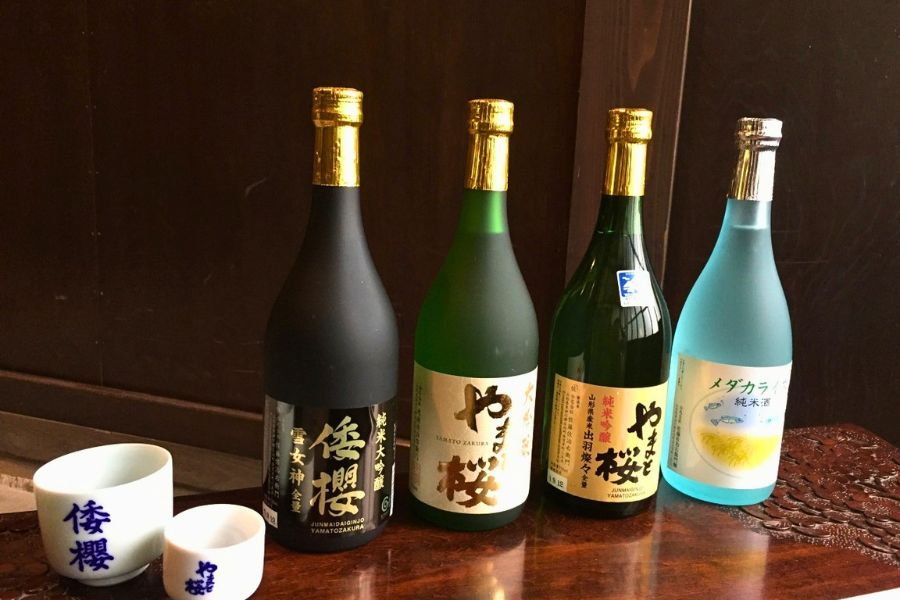
Where rice flourishes, sake culture is never far away.
Local breweries use regional rice and water to produce a variety of sake styles.
Our Sakata Highlights route currently includes a sake-brewery component on selected itineraries.
Sakata in Spring
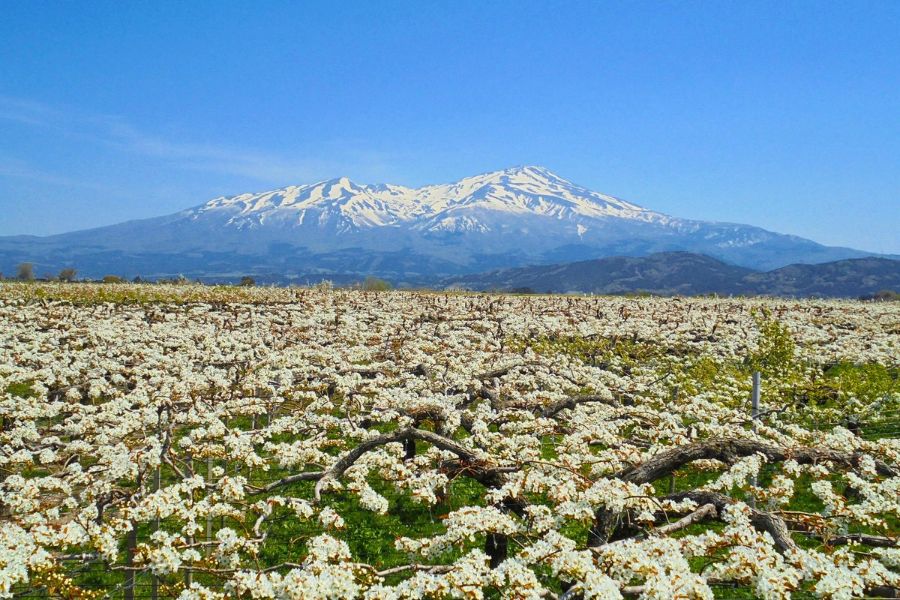
Spring is one of the most attractive times to visit Sakata.
Hiyoriyama Park is known for cherry blossoms, while the surrounding Shonai countryside gradually turns green as temperatures rise.
Mt. Haguro can still feel cooler than coastal Sakata, so travelers should bring an additional layer even when the city feels mild.
Sakata in Summer
Summer brings lush greenery to Mt. Haguro’s cedar forest and a very different atmosphere from the snow landscapes associated with northern Japan.
Humidity and heat can make long walks more tiring, so cruise passengers should carry water and avoid treating the full mountain stair route as an obligatory part of the visit.
Sakata in Autumn
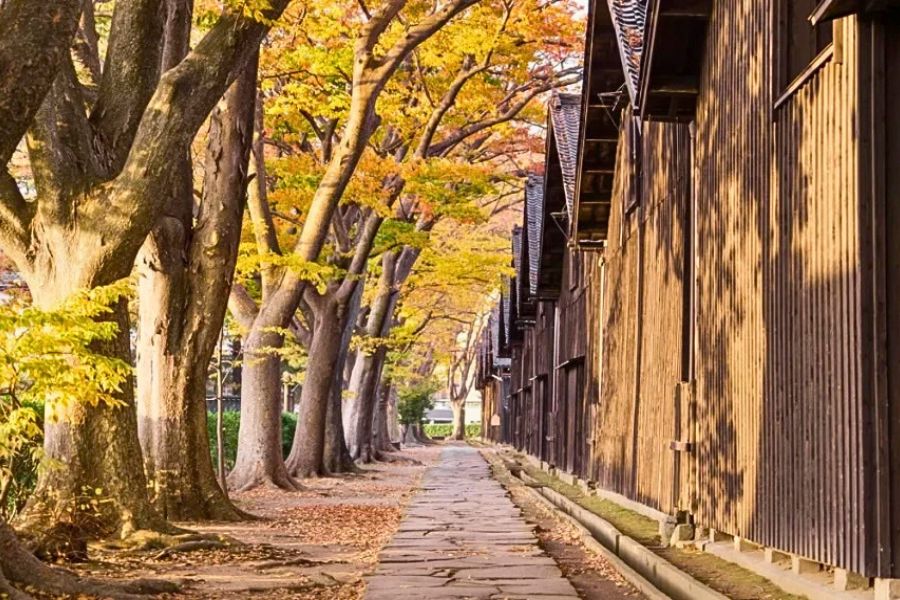
Autumn is particularly attractive for regional excursions, with seasonal color developing across the Shonai landscape and mountain areas.
Temperatures are generally more comfortable for walking than midsummer, although conditions on Mt. Haguro can be noticeably cooler than at the coast.
Sakata in Winter
Winter travel requires significantly more caution around Mt. Haguro.
Snow and ice can cover the stone approach, and the official shrine guidance specifically warns that the traditional stairway can become dangerous in winter conditions.
Cruise passengers visiting during cold weather should not assume that a spring or autumn walking route will operate in exactly the same way.
City sightseeing in Sakata can be the more comfortable option when mountain conditions are poor.
How Much Time Do You Need in Sakata?
Around 3–4 usable sightseeing hours: focus on Sankyo Warehouses, the Honma heritage and one additional city attraction.
Around 5–6 hours: a complete Sakata heritage itinerary becomes realistic, including several city highlights.
Around 6 hours with efficient transportation: selected Mt. Haguro and Tsuruoka highlights can be combined with one Sakata stop.
Longer port call: consider a deeper Mt. Haguro experience or another regional destination.
Always calculate usable sightseeing time from actual disembarkation to the point when you need to begin returning to the ship, rather than using the published port-call duration as sightseeing time.
Which Sakata Itinerary Is Best for Senior Cruise Passengers?
For most senior first-time visitors, I would recommend:
Port → Hiyoriyama Park → Kaikoji Temple → Former Honma Family Residence → Sankyo Warehouses → Port
This route provides the strongest cultural themes of Sakata while avoiding the more demanding forest steps of Mt. Haguro.
Passengers who are confident on uneven paths can substitute one city attraction for the Mt. Haguro Five-Story Pagoda, provided the ship schedule allows the additional road travel.
How Early Should You Return to Sakata Cruise Port?
Always follow the all-aboard time provided by your cruise line.
City sightseeing is relatively forgiving because central Sakata lies only around 15 minutes by car from the berth under normal conditions.
Mt. Haguro and other regional destinations require a much larger road-time buffer.
For longer excursions, the safest itinerary design is usually to visit the farthest destination first and finish closer to Sakata Port.
If the schedule begins running behind, remove the final optional attraction rather than reducing the return margin.
Is Sakata Worth Visiting on a Cruise?
Yes, particularly for travelers who have already visited Japan’s largest cities and want something more regional.
Sakata does not rely on one blockbuster attraction.
Its appeal comes from the way several experiences connect together: the rice trade at Sankyo Warehouses, the power of the Honma merchants, the spirituality of Kaikoji and Mt. Haguro, the city’s former port culture and the wider landscape of Shonai.
That makes Sakata especially suitable for cruise passengers interested in Japanese history and culture rather than shopping or big-city sightseeing.
For a first visit, a Sakata city route provides the most relaxed introduction. For travelers looking for a deeper regional experience, Mt. Haguro adds one of northern Japan’s most atmospheric sacred landscapes.
Browse all Sakata shore excursions, or create your own private excursion around your cruise schedule, interests and preferred walking pace.
Frequently Asked Questions About Sakata Cruise Port
Where do cruise ships dock in Sakata?
Cruise ships use Kominato Wharf at Sakata Port in Yamagata Prefecture. The port has several cruise-capable berths, so the exact quay can vary by ship.
Is there a cruise terminal in Sakata?
The current official port facility specification lists no permanent cruise terminal building at Kominato Wharf. Temporary passenger facilities and services may be arranged during cruise calls.
How far is Sakata Port from the city center?
Central Sakata is approximately 6 km from the cruise berth, or around 15 minutes by car under normal traffic conditions.
Can you walk from Sakata Cruise Port to downtown?
It is not recommended for most cruise passengers. The main attractions are several kilometers from the port, so a shuttle, taxi or arranged vehicle is a much better use of limited time ashore.
What are the best things to do from Sakata Cruise Port?
For a first visit, the Sankyo Warehouses, Former Honma Family Residence, Hiyoriyama Park, Kaikoji Temple and Sanno Club provide an excellent introduction to Sakata’s history and culture.
How far is the Sankyo Warehouse from Sakata Port?
Official cruise-port information places Sankyo Soko about 6.5 km from the berth, or approximately 14 minutes by car under normal conditions.
Can you visit Mt. Haguro from Sakata Cruise Port?
Yes. The Dewa Sanzan area is approximately 40 km from the port and around one hour away by road. It works best as part of a planned half- or full-day excursion.
How difficult is the walk to the Mt. Haguro Five-Story Pagoda?
The pagoda is around 10–15 minutes on foot from Zuishinmon Gate under normal spring-to-autumn conditions. The route includes stone steps and uneven forest paths.
Do you have to climb 2,446 steps to see the Five-Story Pagoda?
No. The pagoda is close to the lower section of the traditional route. The full 2,446-step climb continues toward the summit and is not required simply to see the pagoda.
Is Mt. Haguro suitable for seniors?
It depends on mobility. The Five-Story Pagoda can be visited without climbing the whole mountain, but even the shorter approach includes stairs and uneven surfaces. Travelers who prefer minimal walking may be more comfortable staying in Sakata city.
Can you visit Kamo Aquarium from Sakata Port?
Yes. It is approximately 35 km or around 45 minutes by car from the port according to official port information. It is best treated as a substantial regional excursion rather than a quick addition to a full city itinerary.
How many hours do you need in Sakata?
Three to four usable sightseeing hours can cover several key city attractions. Five to six hours allows a more complete Sakata heritage route. Mt. Haguro becomes realistic when the ship schedule provides enough time for roughly an hour of road travel each way plus sightseeing.
Can I explore Sakata independently?
Yes, especially if your ship provides a confirmed shuttle into the city. For Mt. Haguro or a multi-stop regional itinerary, arranged transportation is considerably easier.
Is Sakata suitable for senior cruise passengers?
Yes. A city-focused itinerary can be arranged at an easy-to-moderate pace with vehicle transfers between attractions. Mt. Haguro requires more careful consideration because of stone steps and uneven walking surfaces.
Berth assignments, shuttle arrangements, attraction access, mountain conditions and cruise schedules can change. Confirm your ship’s Sakata port information and all-aboard time before finalizing your sightseeing plans.


 Contact Us via Messenger
 Send Inquiry