
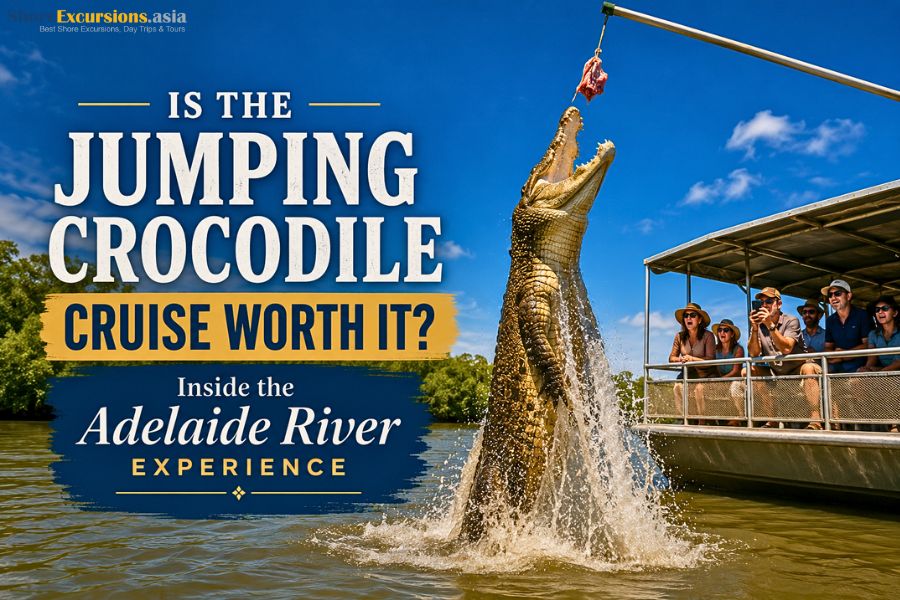
At first, the Adelaide River appears remarkably still. The water is broad and opaque, the mangroves sit quietly along the banks, and there may be little to suggest that one of Australia’s most powerful predators is waiting just beneath the surface.
Then a pair of eyes appears. A crocodile begins moving towards the boat, almost without disturbing the water. Moments later, it drives its body upwards with a speed and force that feels entirely unexpected for an animal of its size.
This is the moment most visitors imagine when considering a Jumping Crocodile Cruise from Darwin. Yet the experience is about more than seeing a crocodile rise from the river. It also includes the journey into the wetlands beyond the city, the atmosphere of the Adelaide River, the type of boat you travel on and the understanding that these are still wild animals whose behaviour cannot be completely scripted.
So, is the Jumping Crocodile Cruise worth it? For travellers fascinated by wildlife and looking for an experience that feels distinctly connected to Australia’s Top End, it can be one of the most memorable ways to spend part of a Darwin port day. It may be less suitable for visitors who prefer city history, dislike wildlife feeding demonstrations or have too little time ashore to enjoy the journey without rushing.
This guide from Shore Excursions Asia takes you inside the Adelaide River experience, from the drive out of Darwin to the moment a saltwater crocodile approaches the boat. Cruise passengers can also explore our Darwin shore excursions when comparing experiences for their time in port.
What Is the Adelaide River Jumping Crocodile Cruise?
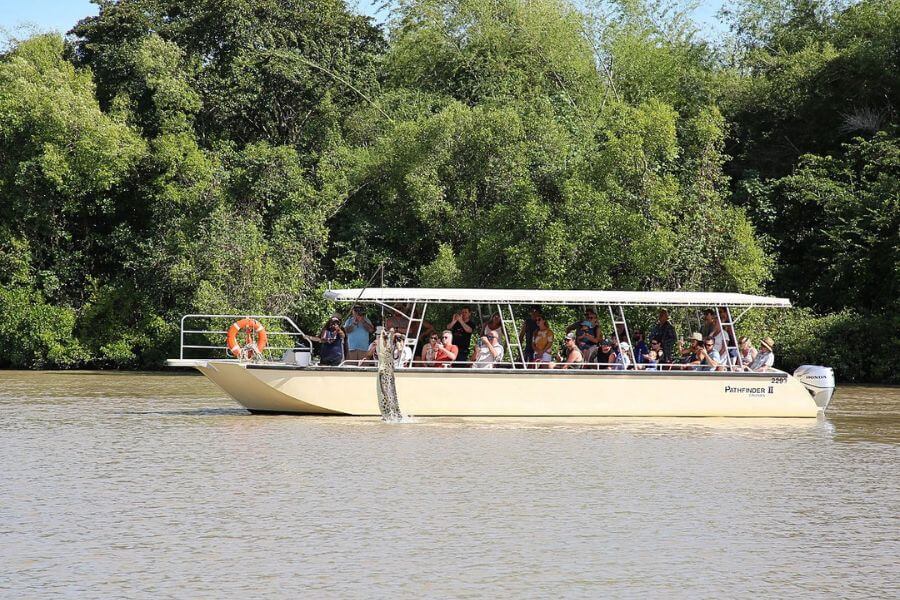
The Jumping Crocodile Cruise takes place on the Adelaide River, approximately an hour’s drive from Darwin. The journey leaves the city behind and follows the Arnhem Highway towards the wetlands and waterways of the Northern Territory.
Saltwater crocodiles live naturally along the river. During the cruise, experienced crew members present food above the water to encourage the animals to approach the vessel and lift themselves upwards. Commentary usually accompanies the encounter, explaining crocodile behaviour, territorial patterns and the ecosystem surrounding the Adelaide River.
The name can make the experience sound like a carefully rehearsed wildlife show. In reality, the crocodiles are not trained to perform a fixed sequence. They remain wild animals moving freely through the river, which means the number of sightings, the size of the crocodiles and the way each animal responds can vary between departures.
The dramatic movement is encouraged through feeding, but it still reveals the extraordinary strength and precision of a saltwater crocodile. Watching a large animal rise almost vertically from water that appeared empty only moments earlier gives visitors a very different impression from seeing the same species resting inside an enclosure.
The Journey from Darwin into the Adelaide River Wetlands
The experience begins before passengers board the boat. Travelling east from Darwin gradually changes the character of the day, moving from the city and harbour into a landscape of tropical woodland, floodplains and wetlands.
For cruise passengers, this transition is part of what makes the outing worthwhile. The Adelaide River Cruise provides an opportunity to leave central Darwin without requiring the full-day commitment of a journey to Litchfield National Park or Kakadu.
The drive usually takes around an hour in each direction, depending on the pickup point, traffic and the cruise operator. This means the river cruise itself represents only one part of the complete outing. Travellers should consider whether they are comfortable spending approximately two hours in a vehicle as part of their day ashore.
A private transfer can make the journey feel more relaxed, particularly for older travellers or small groups. Air conditioning, comfortable seating and the ability to adapt the departure time around the ship can be just as important as the experience on the river.
What Happens Once You Reach the Adelaide River?
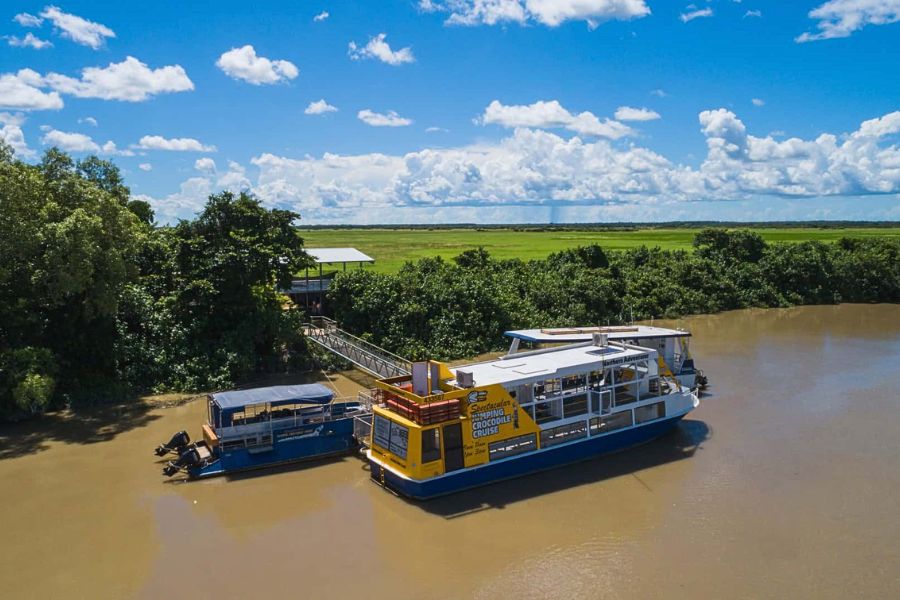
After arriving at the river, passengers usually have time to complete check-in and prepare for boarding. The departure area may include seating, refreshments and restroom facilities, although the exact arrangements depend on the operator selected.
The cruise itself commonly lasts about one hour. Once the boat leaves the jetty, the crew begins watching the banks and water for crocodiles that regularly inhabit different sections of the river.
At first, spotting them can be surprisingly difficult. A crocodile may remain almost completely hidden, with only its eyes, nostrils and the upper surface of its head visible. Its colour blends naturally with the muddy water and shaded riverbank.
As the animal approaches the vessel, its true size becomes easier to understand. The guide may explain whether it is a known territorial male, a smaller female or a younger crocodile moving through the area.
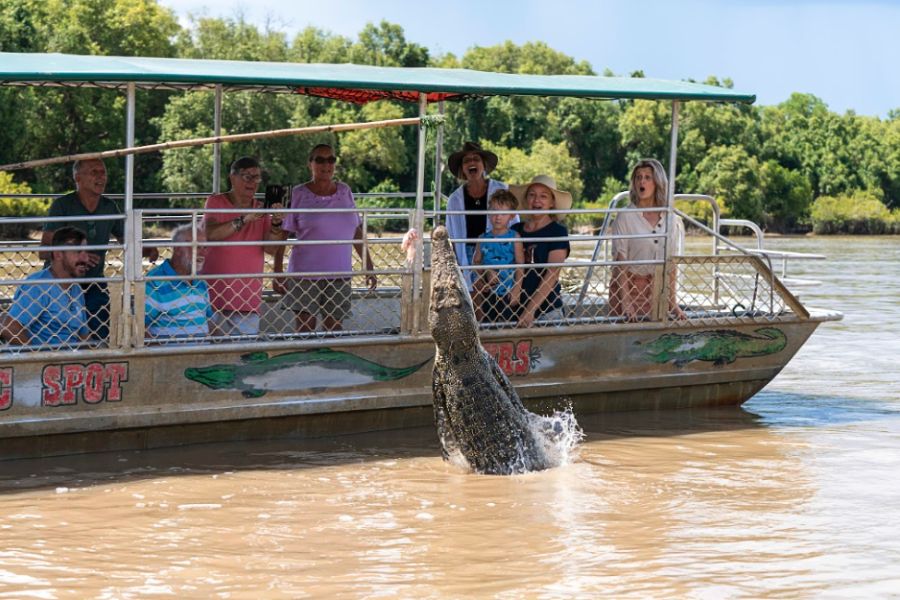
Food is then held above the water from a controlled position on the boat. The crocodile follows it, lifts its head and propels part of its body upwards using the strength of its tail. Larger crocodiles create a sense of immense weight and power, while younger animals can appear faster and more agile.
No two departures unfold in exactly the same way. One crocodile may approach slowly and remain beside the vessel, while another may respond quickly and disappear back into the river almost immediately.
Are the Crocodiles Really Wild?
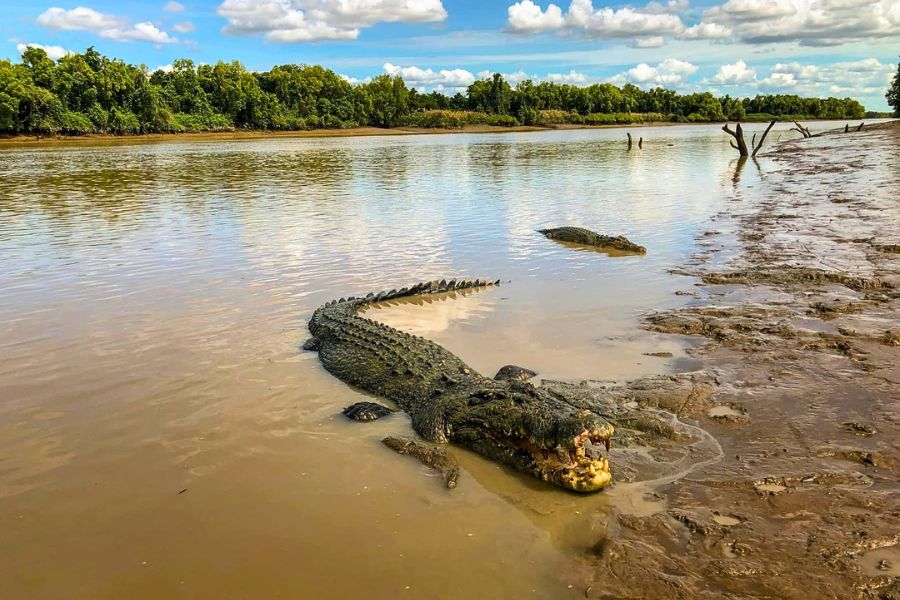
The saltwater crocodiles encountered on the Adelaide River are wild animals living within their natural river environment. They are not kept inside the attraction and are free to move along the waterway.
Some crocodiles become familiar to the operators because they maintain territories along frequently travelled sections of the river. Guides may recognise individual animals by their size, markings or behaviour, but this does not make them domesticated or predictable.
The feeding demonstration encourages crocodiles to approach the vessel, so the experience should not be described as completely passive wildlife observation. It is an organised interaction designed to allow passengers to witness feeding movement at close range.
This distinction matters. Some visitors value the opportunity to observe the physical strength and hunting response of a saltwater crocodile in its river habitat. Others may prefer a wildlife experience that does not use food to attract animals.
Neither reaction is unreasonable. Travellers should understand how the encounter is created before deciding whether the experience aligns with their own expectations.
What Makes the Adelaide River Experience Memorable?
The most powerful part of the experience is often the contrast between stillness and sudden movement. Saltwater crocodiles can remain almost invisible beside the boat before revealing the scale of their bodies within seconds.
The proximity also changes how visitors perceive them. From a distance, a crocodile can appear slow and heavy. At close range, its awareness, speed and control become far more apparent.
The river setting adds another layer to the encounter. Mangroves, muddy banks, tropical birds and wide views across the wetlands place the crocodiles within a broader environment rather than isolating them as a single attraction.
Passengers who have never travelled through Australia’s tropical north may find the Adelaide River landscape almost as memorable as the crocodiles themselves. It offers a glimpse of the waterways that shape life throughout the Top End.
The cruise is also focused enough to retain its impact. Instead of moving quickly between a large number of unrelated stops, the experience concentrates on one river, one ecosystem and one of the region’s most recognisable animals.
Is the Jumping Crocodile Cruise Worth the Drive from Darwin?
For wildlife enthusiasts and first-time visitors to the Northern Territory, the drive is usually worthwhile. The experience feels genuinely different from ordinary city sightseeing and provides a reason to travel beyond Darwin’s urban area.
It is particularly well suited to travellers who want to see more of the Top End but do not have enough time for a full-day national park journey. A complete crocodile cruise outing can generally fit within approximately half a day, provided the ship offers a suitable window ashore.
The drive may feel less worthwhile when museums, military history, Aboriginal art or the Darwin Waterfront are higher priorities. In that case, spending two hours travelling to and from the Adelaide River may take time away from the places that interest you more.
The decision therefore depends on what you hope to remember from Darwin. Travellers seeking a distinctive wildlife encounter are likely to value the journey. Those seeking a broader introduction to the city may prefer to remain closer to the cruise port.
Different Boats Create Different Experiences
Not every Adelaide River cruise uses the same type of vessel. Some operators use larger boats with enclosed cabins, wide viewing windows and air conditioning. Others use smaller open-air vessels that bring passengers closer to the water and surrounding environment.
Larger Enclosed Boats
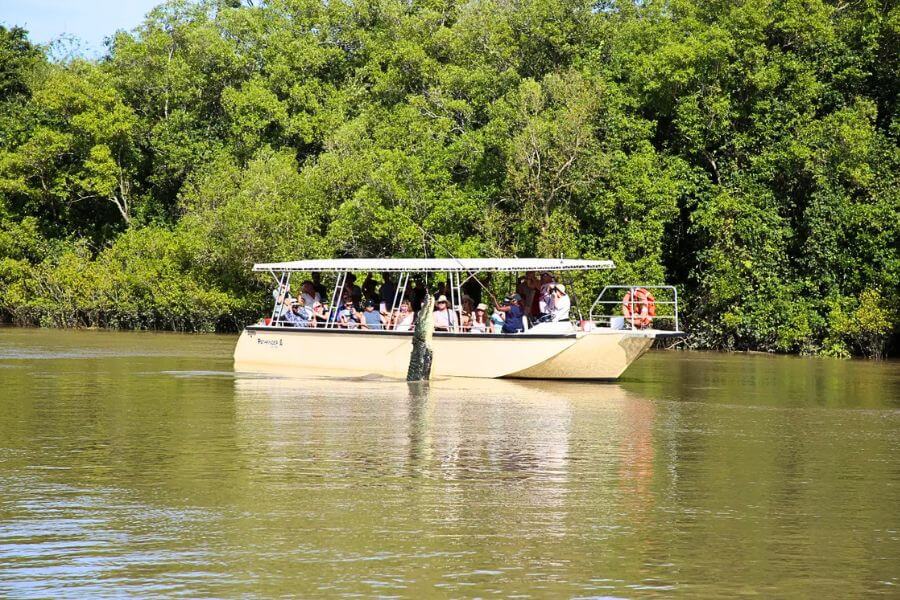
A larger vessel may feel more comfortable for passengers who prefer stable seating, protection from direct sunlight and a cooler interior. Wide windows can still provide close views while creating a greater sense of separation from the animals.
This style of boat may suit older travellers, families or anyone who is sensitive to heat. It can also provide more protection during periods of tropical rain.
Photography through windows may involve reflections, but the more controlled environment can make the overall experience easier and less physically demanding.
Smaller Open-Air Boats
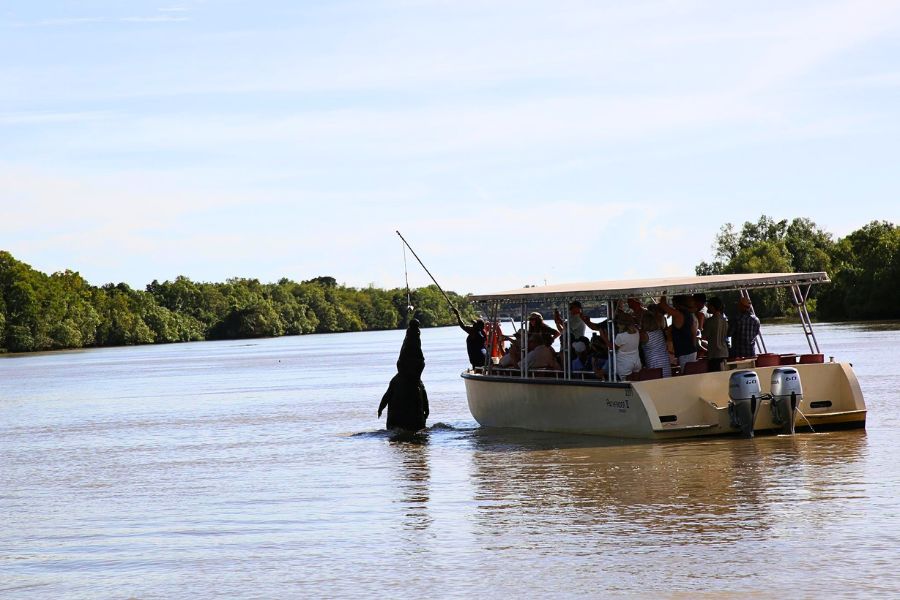
A smaller vessel usually creates a more immediate connection with the river. Passengers sit closer to the water, hear more of the surrounding environment and may have fewer physical barriers between themselves and the view.
The experience can feel more adventurous, although exposure to heat, sun and boat movement may be greater. Boarding may also involve more steps or a steeper transition from the jetty.
Neither vessel type is automatically better. The right choice depends on whether you value open-air proximity or greater comfort and protection.
Is the Jumping Crocodile Cruise Suitable for Older Travellers?
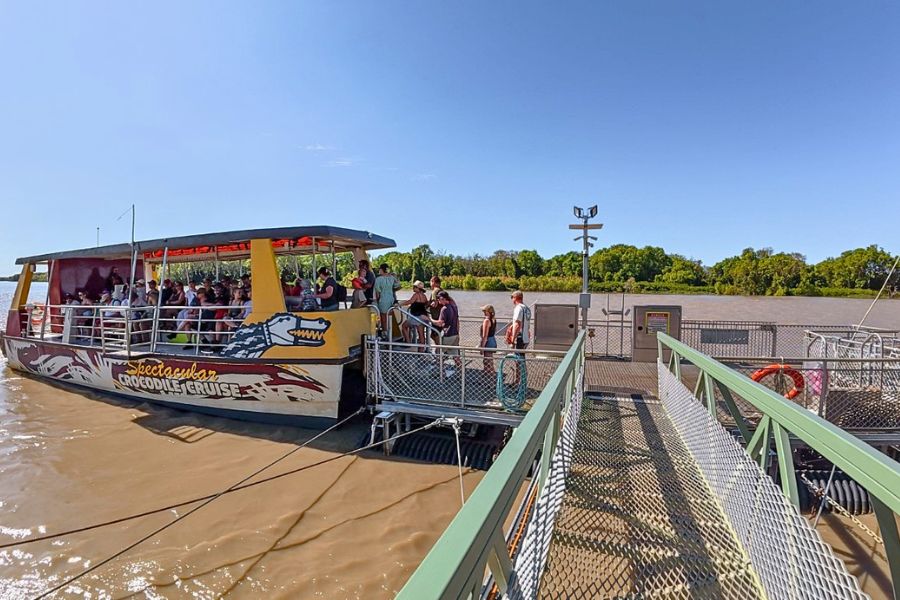
The experience can suit many older cruise passengers because it does not require a long walking route. Most of the outing is spent seated in a private vehicle or aboard the riverboat.
However, relatively little walking does not mean there are no mobility considerations. Travellers should ask about the distance between the vehicle and jetty, the stability of the boarding surface and the number of steps needed to enter the boat.
The height of the road vehicle should also be considered. Entering a high coach or four-wheel-drive vehicle may be more challenging than the river cruise itself for some passengers.
An enclosed, air-conditioned vessel may be more comfortable for travellers sensitive to heat and humidity. An open boat can still be enjoyable, but adequate sun protection and the ability to remain comfortable in warm conditions are important.
Passengers using a wheelchair, mobility scooter or walking frame should provide detailed information before booking. Accessibility varies between vessels, and not every boat can accommodate a passenger who cannot transfer into a standard seat.
Toilet availability should also be confirmed. Facilities are generally available around the departure area, but onboard arrangements may differ between boats.
Is the Jumping Crocodile Cruise Safe?
Commercial Adelaide River cruises use purpose-built vessels and operate under established passenger procedures. Experienced crew members control the feeding demonstration while passengers remain within the designated viewing areas.
Guests must still follow all instructions carefully. Hands, cameras and mobile phones should remain inside the boat unless the crew clearly advises otherwise. Passengers should not lean across railings or move suddenly between viewing positions.
The animals remain wild, and their proximity should never be mistaken for familiarity. The safety of the experience depends on maintaining the barrier between passengers and the river.
The organised cruise also should not encourage visitors to approach crocodile habitats independently. Riverbanks, boat ramps and waterways throughout the Top End can contain crocodiles even when no animal is visible.
Will You Definitely See Crocodiles?
The Adelaide River supports a significant saltwater crocodile population, and cruise operators travel through areas where particular animals are regularly observed.
Nevertheless, the crocodiles are free-moving wildlife. The number of animals seen, how closely they approach and whether every crocodile responds to the feeding demonstration can vary.
Weather, temperature, water level, tide and the movements of individual animals may all influence a departure. One cruise may encounter several active crocodiles, while another may offer fewer but longer sightings.
Travellers should be cautious of any description promising an exact number of crocodiles or an identical sequence of jumps. The unpredictability is part of encountering animals in a functioning river system.
Jumping Crocodile Cruise or Crocosaurus Cove?
Both experiences provide opportunities to see saltwater crocodiles, but they suit very different Darwin port days.
Choose the Adelaide River for the Landscape and Journey
The Jumping Crocodile Cruise is the stronger choice when you want to leave the city and experience crocodiles within a river setting. The wetlands, road journey and boat cruise create a greater sense of travelling into the Northern Territory.
It is more immersive but also requires considerably more time. Cruise passengers need to protect enough of the port day for the drive in both directions.
Choose Crocosaurus Cove for Convenience
Crocosaurus Cove is located in central Darwin and can be reached much more easily from the cruise terminal. It can be combined with the Waterfront, Smith Street or other city attractions.
This makes it more suitable for passengers with a shorter port call or those who prefer not to spend around two hours travelling outside Darwin.
The experience takes place in a city wildlife attraction rather than a natural river, but it provides greater predictability and more flexibility within a wider Darwin itinerary.
How Much Time Do Cruise Passengers Need?
The river cruise may last approximately one hour, but passengers must plan for the complete journey from Darwin Cruise Port.
Time is needed to leave the ship, meet the driver, travel to the Adelaide River, complete check-in, board the vessel, enjoy the cruise and return through the passenger terminal before the ship’s official all-aboard time.
The Jumping Crocodile Cruise Tour offered by Shore Excursions Asia is arranged as an approximately four-hour experience with pickup and drop-off at Darwin Cruise Port.
A four-hour tour should not be selected for a ship that provides only four hours between arrival and departure. The usable time ashore is always shorter than the published port stay once disembarkation, meeting time, security and reboarding are included.
Passengers should choose a departure that leaves a comfortable margin rather than planning to arrive back at the terminal at the exact all-aboard time.
Our Darwin Cruise Port Guide provides further information about Fort Hill Wharf, guide meeting points and returning to the ship.
What Is the Experience Like in Different Seasons?
Darwin’s tropical seasons change the appearance and atmosphere of the Adelaide River.
During the dry season, lower humidity and more predictable weather generally make the road journey and time outdoors more comfortable. Clearer conditions may also make photography and viewing easier.
The wet season creates a greener and more dramatic landscape. Tropical cloud, fuller waterways and dense vegetation can give the river a completely different character, although higher humidity and rain may affect comfort.
The crocodiles remain part of the river ecosystem throughout the year, but no season can guarantee identical wildlife behaviour. Temperature and water conditions may influence where individual animals are found.
Passengers travelling during warmer months may place greater value on air-conditioned transport and an enclosed vessel. Current forecasts should always be checked close to the ship’s arrival.
Further seasonal guidance is available in our article about the best time to visit Darwin.
Photography on the Adelaide River
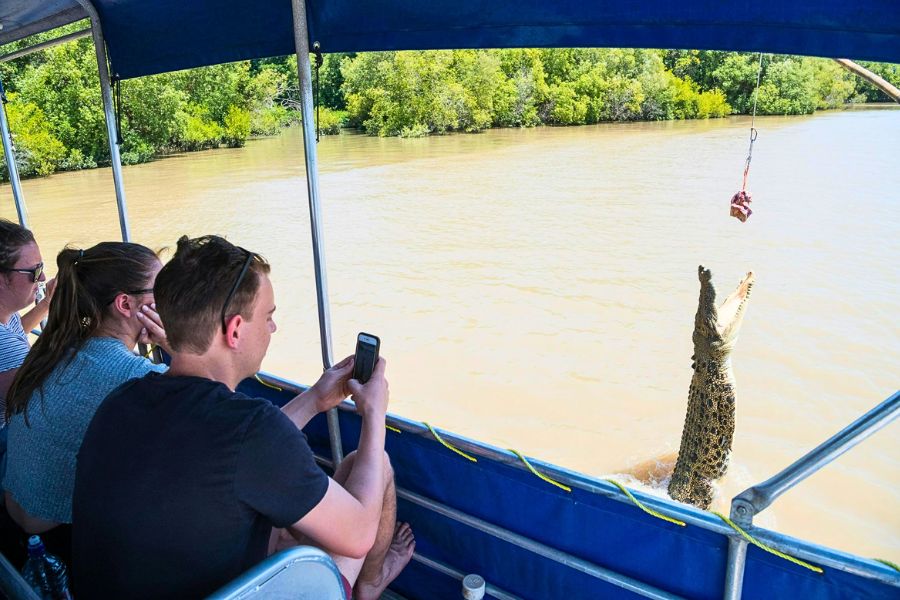
A crocodile can rise and return to the water within seconds, so preparing the camera before the animal approaches is more useful than reacting after the movement begins.
A fast shutter speed or burst setting can help capture the motion. A moderate zoom is usually safer and more effective than leaning towards the edge of the vessel.
Passengers travelling on an enclosed boat may need to manage reflections from the windows. Holding the camera close to the glass without touching it can reduce glare, particularly when bright clothing or lights are reflected behind the photographer.
The guide’s commentary can provide clues about which side of the boat may offer the next view, but crocodiles can change direction quickly. Staying aware of the river rather than concentrating only on the camera often leads to a more rewarding experience.
It is also worth putting the camera down occasionally. The sound of the water, the sudden movement beside the boat and the scale of the animal are difficult to appreciate entirely through a screen.
Who Will Find the Jumping Crocodile Cruise Worthwhile?
The experience is most likely to appeal to wildlife enthusiasts, photographers and first-time visitors seeking something strongly associated with the Northern Territory.
It also suits cruise passengers who want to leave Darwin but do not have enough time for a full-day national park journey. The outing feels distinct from the city while remaining achievable within a suitable half-day schedule.
Older travellers may appreciate the limited walking, provided that the vehicle and boat are appropriate for their mobility needs. Families and multigenerational groups can share the same experience without following a long trail.
The cruise may be less suitable for visitors who are uncomfortable with feeding demonstrations, sensitive to boat movement or more interested in museums, Aboriginal art and military history.
Travellers who prefer a flexible city day may gain more from remaining in Darwin, where several attractions can be combined without committing to the Adelaide River drive.
Is the Jumping Crocodile Cruise Worth It for a Darwin Port Day?
For the right traveller, the answer is yes. The Adelaide River Cruise offers a close and memorable encounter with one of northern Australia’s most recognisable animals while revealing a landscape that cruise passengers would not experience by remaining in central Darwin.
Its strongest quality is not simply the moment a crocodile rises from the water. It is the complete transition from city to wetland, the quiet search along the river and the sudden awareness that a powerful wild animal has been present beside the boat all along.
The experience is worth choosing when wildlife is a genuine priority, the ship provides enough time and the selected vessel suits your comfort. It becomes less rewarding when the schedule is too tight or when the road journey takes time away from attractions you would value more.
A good Darwin port day does not need to include the greatest number of stops. It needs to offer one or two experiences that feel meaningful while allowing passengers to return to the ship calmly and comfortably.
Frequently Asked Questions
How long does the Jumping Crocodile Cruise take?
The river cruise itself commonly lasts around one hour. A complete outing from Darwin requires additional time for road transport, check-in, boarding and the return journey.
How far is the Adelaide River from Darwin?
The main jumping crocodile cruise departure areas are approximately an hour’s drive from Darwin, although travel time varies according to the pickup location and traffic.
Are the crocodiles trained?
No. They are wild saltwater crocodiles living freely in the Adelaide River. Some animals are regularly recognised within their territories, but their appearance and behaviour are not completely predictable.
Why do the crocodiles jump?
Crew members present food above the water, encouraging the crocodiles to use their tails and bodies to rise towards it. The demonstration reveals their feeding movement, strength and agility.
Is the Jumping Crocodile Cruise suitable for seniors?
It can suit many older travellers because walking is limited. Vehicle height, boat access, seating, air conditioning and restroom availability should still be confirmed before booking.
Can wheelchair users join the cruise?
Accessibility varies between vessels and operators. Passengers should explain whether they can transfer into a standard seat and provide the dimensions of any wheelchair or mobility scooter before confirming the experience.
Will crocodiles be seen on every departure?
Crocodiles inhabit the Adelaide River and operators travel through areas where they are regularly observed. They remain wild animals, so an exact number of sightings or identical behaviour cannot be guaranteed.
What should passengers wear?
Lightweight clothing, comfortable footwear, sunscreen and a hat are suitable for most departures. A light rain layer may be helpful during wetter periods, particularly when travelling on an open vessel.
Experience the Adelaide River at a Comfortable Pace
The Jumping Crocodile Cruise is at its most memorable when there is enough time to enjoy the journey rather than treating it as a race away from and back to the port.
Comfortable transport, a suitable boat and a clear return plan allow passengers to focus on the changing wetland landscape and the extraordinary animals moving through it.
Shore Excursions Asia arranges private Darwin experiences around cruise arrival and all-aboard times, with personal pacing, no compulsory shopping and pickup and drop-off at Darwin Cruise Port.


 Send Inquiry