
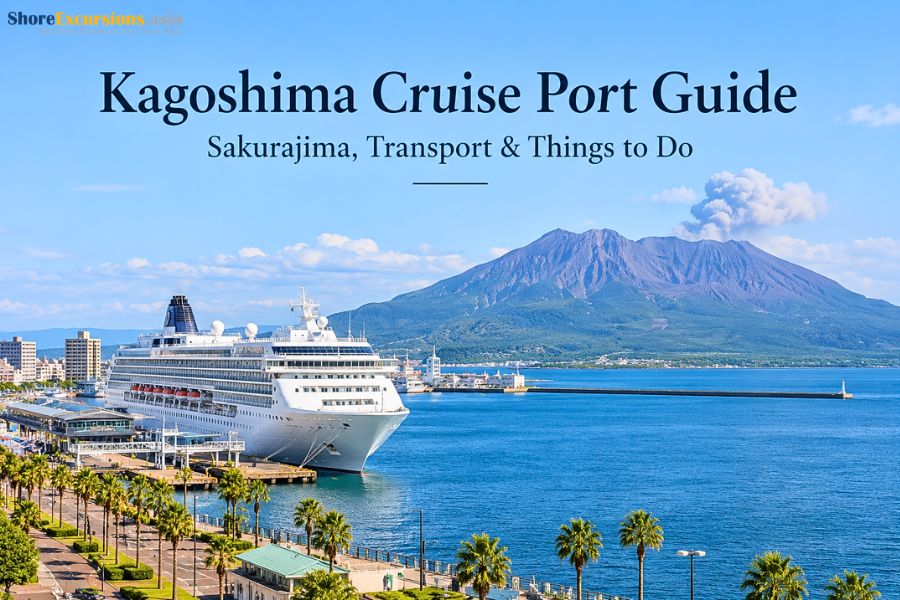
Kagoshima is one of Japan’s most distinctive cruise ports, with the active volcano Sakurajima rising across Kinko Bay almost everywhere you look. A port day here can combine volcanic landscapes, traditional Japanese gardens, samurai history, panoramic viewpoints and some of southern Japan’s best-known local food.
For cruise passengers, the main decision is whether to cross the bay and explore Sakurajima itself or stay on the Kagoshima side for places such as Sengan-en, Shiroyama Observatory and Tenmonkan. With a longer call, it is also possible to travel farther toward Chiran or Ibusuki, but these routes require more careful planning.
This Kagoshima Cruise Port Guide explains where ships dock, how to reach Sakurajima, what to see in the city and which itineraries make sense for different port schedules. If you prefer transportation and sightseeing arranged around your ship time, Shore Excursions Asia offers private and selected small-group experiences designed for cruise passengers. Browse our Kagoshima shore excursions or explore more Japan shore excursions.
Where Do Cruise Ships Dock in Kagoshima?
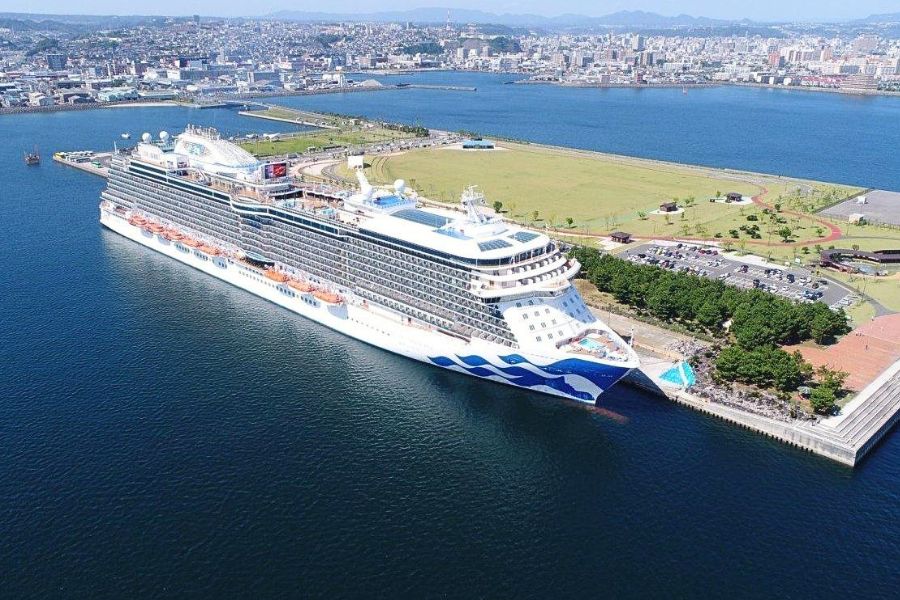
Many international cruise ships visiting Kagoshima use Marine Port Kagoshima, a dedicated cruise facility on the southern side of Kagoshima City overlooking Kinko Bay and Sakurajima.
The port can accommodate large international cruise ships and includes passenger processing facilities. Its waterfront setting also gives arriving passengers one of the first views that makes Kagoshima memorable: the broad bay with Sakurajima beyond it.
Marine Port Kagoshima is not directly in the central shopping and sightseeing district. Passengers who want to reach Tenmonkan, Shiroyama, the Sakurajima Ferry Terminal or Sengan-en will normally need a taxi, shuttle, arranged vehicle or a combination of walking and public transport.
Berth assignments can change according to ship and operating conditions, so always confirm the port information supplied by your cruise line before arranging an independent meeting point.
Kagoshima Cruise Port at a Glance
- Main cruise facility: Marine Port Kagoshima
- Location: Southern Kagoshima City on Kinko Bay
- Port type: Direct-docking cruise port
- Main natural landmark: Sakurajima
- Major cultural attraction: Sengan-en
- Main downtown area: Tenmonkan
- Useful transport: Taxi, tram, bus, ferry and private vehicle
- Good for independent sightseeing: Yes, particularly for a simple city or Sakurajima route
Is Kagoshima Cruise Port Close to the City Center?
Marine Port Kagoshima is outside the heart of downtown, so it is not a classic walk-off port where passengers step directly into the main sightseeing streets.
The nearest tram and rail connections also require a walk from the cruise facility. For a limited cruise day, taking a taxi, shuttle or pre-arranged vehicle at the beginning of the day can save valuable sightseeing time.
Once you reach central Kagoshima, moving between Tenmonkan, the Sakurajima Ferry Terminal and nearby city attractions becomes much easier.
This distinction is important because Kagoshima Port can refer to a wider group of waterfront facilities. The cruise terminal at Marine Port Kagoshima and the Sakurajima Ferry Terminal are not the same place.
Can You Visit Sakurajima from Kagoshima Cruise Port?
Yes. Sakurajima is one of the most popular shore excursions from Kagoshima and is realistic during many standard cruise calls.
The regular Sakurajima Ferry connects Kagoshima Port with Sakurajima Port across Kinko Bay. The crossing itself takes approximately 15 minutes, making the ferry part of the sightseeing experience rather than simply transportation.
The bigger time consideration is getting from your cruise berth to the city-side ferry terminal and then moving around Sakurajima after you arrive.
Passengers who want to see more than the area immediately around Sakurajima Port should plan onward transport by sightseeing bus, taxi or arranged vehicle.
What Is Sakurajima?
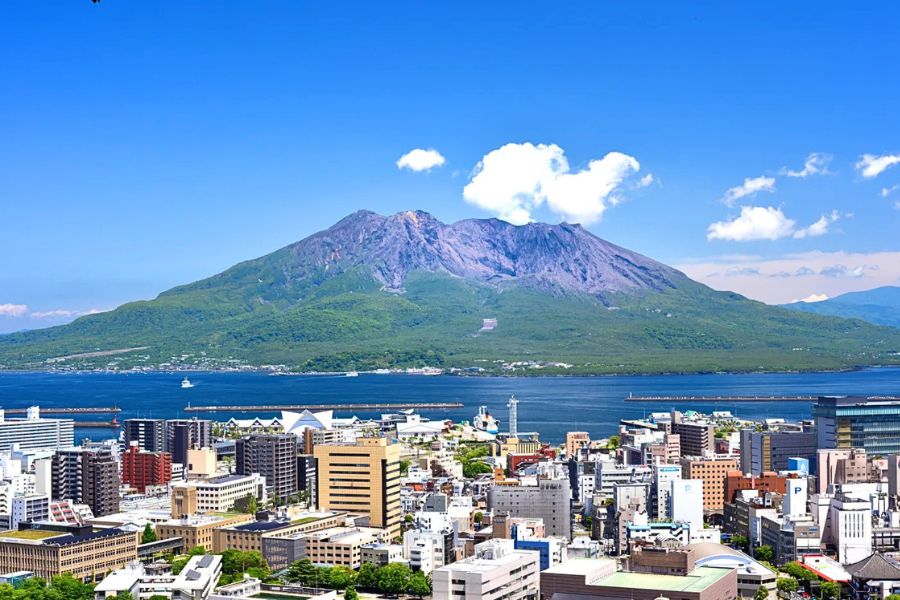
Sakurajima is the volcanic landmark that defines Kagoshima’s landscape. Although its name means “Cherry Blossom Island,” volcanic activity connected it to the Osumi Peninsula after the major eruption of 1914, so it is no longer technically an island.
The volcano remains active today, and visitors may sometimes see smoke or ash rising from its peaks.
For cruise passengers, Sakurajima offers more than a distant volcano view. The landscape includes old lava fields, volcanic observatories, hot spring footbaths, visitor centers and communities that have adapted to life beside an active volcano.
Best Things to Do on Sakurajima
Start at the Sakurajima Visitor Center
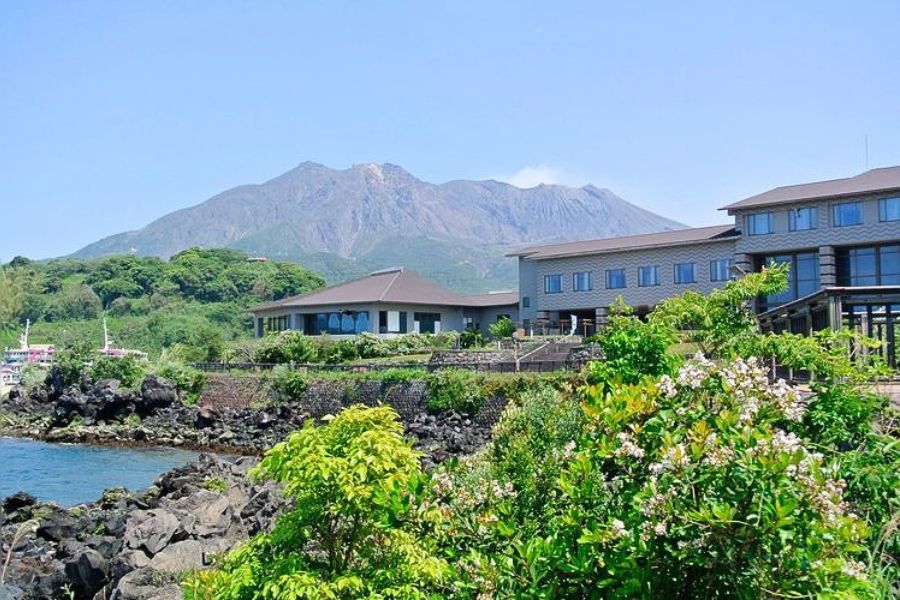
The Sakurajima Visitor Center is one of the best first stops after crossing the bay.
Exhibitions explain the volcano’s eruptions, geology, vegetation and the way residents live alongside continuing volcanic activity. This context makes the lava fields and observatories you see later much more meaningful.
The center is also relatively convenient from Sakurajima Port, making it practical even during a shorter excursion.
Relax at Lava Nagisa Park Footbath
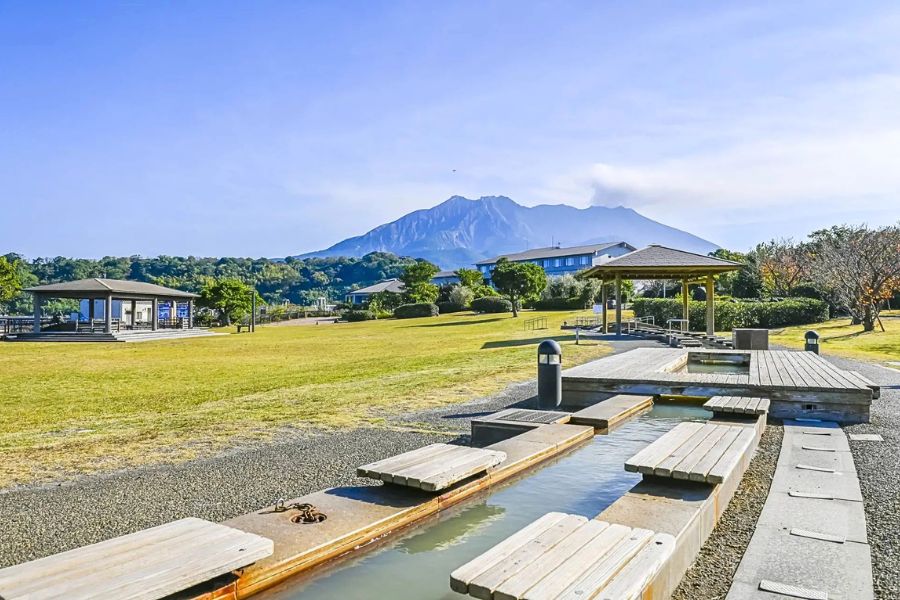
Lava Nagisa Park sits near the waterfront and is known for its long natural hot spring footbath.
For cruise passengers, this is an unusual but easy experience to include between sightseeing stops. You can sit beside the bay, rest your feet in the warm water and look back toward Kagoshima City.
The footbath is particularly appealing for senior travelers because it adds a relaxing break to an otherwise active sightseeing day.
Our six-hour Sakurajima & Tenmonkan excursion combines the ferry, Visitor Center, Lava Nagisa Park and volcanic viewpoints with time back in Kagoshima City.
Visit Arimura Lava Observatory
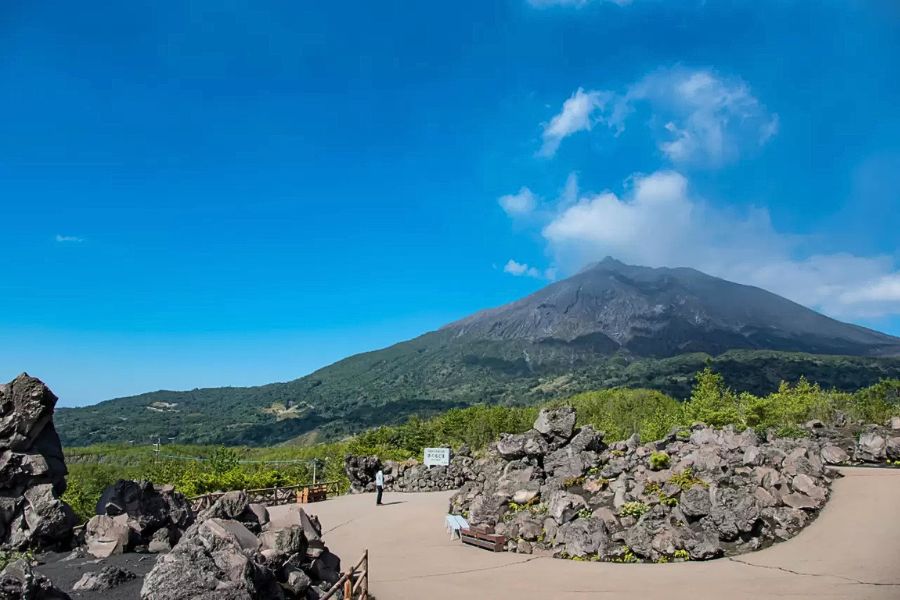
Arimura Lava Observatory provides one of the strongest close-up experiences of Sakurajima’s volcanic landscape.
The observation area lies on an old lava field on the southern side of the volcano and offers views toward the peaks, hardened lava and Kinko Bay.
Paths around the observation area allow visitors to see how volcanic activity has shaped the surrounding landscape.
For first-time visitors, Arimura is particularly worthwhile because it feels very different from simply viewing Sakurajima from across the bay.
See Yunohira Observatory
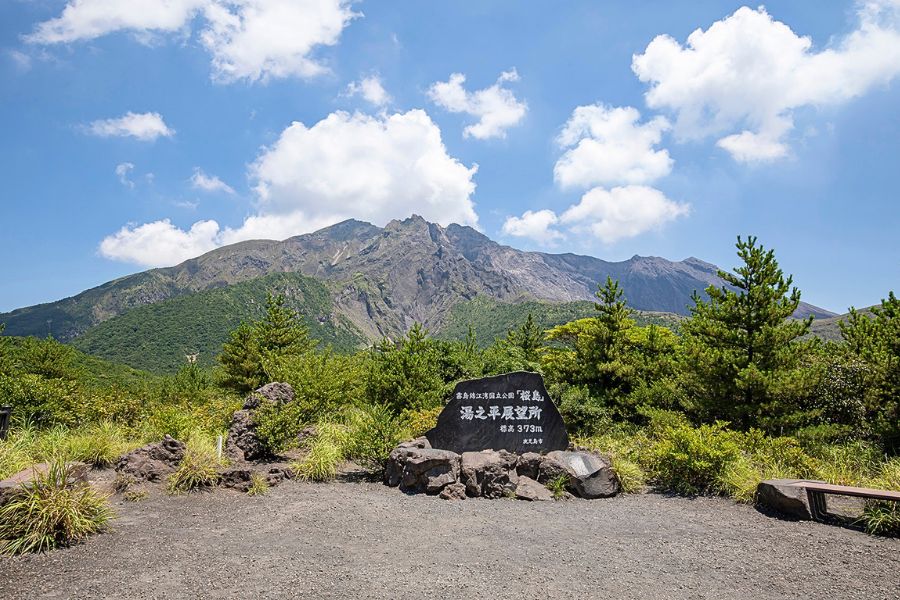
Yunohira Observatory sits at approximately 373 meters on Sakurajima’s North Peak and is the highest point of the volcano accessible to the general public.
From here, visitors can look toward the rugged volcanic slopes while also enjoying wide views across Kinko Bay and Kagoshima City.
The observatory is an excellent option for passengers whose priority is scenery and photography.
Reaching it independently normally requires the Sakurajima Island View sightseeing bus or another vehicle, so it should be planned as part of a wider Sakurajima route rather than an improvised walk from the ferry terminal.
See the Lava Landscape
One of the most interesting aspects of Sakurajima is seeing how previous eruptions have changed the land.
Roads and observation points around the volcano pass areas of hardened lava and vegetation gradually reclaiming older flows.
This landscape also helps explain why a visit to Sakurajima is more rewarding than viewing the volcano only from Kagoshima City.
Best Things to Do in Kagoshima City
Explore Sengan-en
Sengan-en is one of Kagoshima’s most important cultural attractions and one of the strongest alternatives for passengers who do not want to cross to Sakurajima.
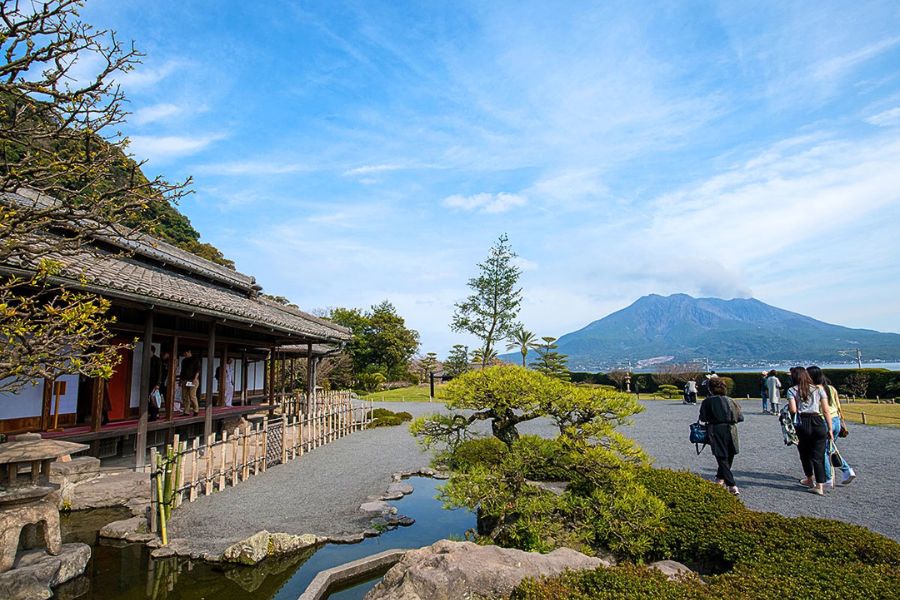
The landscaped garden and former residence belonged to the powerful Shimadzu clan, who ruled the Satsuma domain for centuries.
What makes Sengan-en especially distinctive is the way the garden incorporates the surrounding landscape. Sakurajima appears beyond Kinko Bay as if the volcano itself were part of the garden design.
The area also played an important role in Japan’s early industrial modernization and forms part of the UNESCO-listed Sites of Japan’s Meiji Industrial Revolution.
For passengers interested in history and traditional Japanese scenery, Sengan-en can easily justify a significant part of the port day.
Our five-hour Kagoshima & Chiran Highlights excursion includes Sengan-en together with the preserved samurai district and Chiran.
See Sakurajima from Shiroyama Observatory
Shiroyama Observatory is one of the best viewpoints on the Kagoshima city side of the bay.
From the hillside, visitors can see central Kagoshima, Kinko Bay and Sakurajima rising beyond the city.
The area is also historically significant because Shiroyama was connected with the final fighting of the Satsuma Rebellion in 1877.
For cruise passengers who want a strong Sakurajima view without taking the ferry, Shiroyama is one of the most practical choices.
Explore Tenmonkan
Tenmonkan is Kagoshima’s main downtown shopping, dining and entertainment district.
Covered arcades, restaurants, cafés and shops make it useful near the end of a port day when you want time for lunch, souvenirs or local food without committing to another major attraction.
Tenmonkan is also particularly flexible. If earlier sightseeing takes longer than expected, shopping time can simply be shortened while keeping the core itinerary intact.
Visit the Kagoshima City Aquarium Area
The waterfront around the Kagoshima City Aquarium and Sakurajima Ferry Terminal can be useful for passengers exploring independently.
Even if you do not visit the aquarium itself, the area connects naturally with the ferry terminal, central Kagoshima and waterfront sightseeing.
This makes it a convenient transition point between a Sakurajima excursion and a city stop.
Sakurajima or Sengan-en: Which Should Cruise Passengers Choose?
If your time is limited, choosing between Sakurajima and Sengan-en may create a better experience than trying to rush through both.
Choose Sakurajima if volcanic landscapes are your main reason for visiting Kagoshima and you want to experience the volcano at close range.
Choose Sengan-en if you prefer Japanese history, traditional gardens and scenic views of Sakurajima without spending additional time on ferry transport.
Combine both when your ship provides a longer port call and your transfers are arranged efficiently.
For first-time visitors, I would prioritize Sakurajima if geology and scenery are the main interests. For passengers who have already seen volcanic landscapes elsewhere in Japan, Sengan-en provides more historical depth.
Can You Visit Sakurajima and Kagoshima City in One Day?
Yes. This is one of the most realistic and rewarding full-day cruise itineraries in Kagoshima.
A practical route might include:
Marine Port Kagoshima → Sakurajima Ferry → Visitor Center → Lava Nagisa Park → Arimura or Yunohira Observatory → Ferry → Tenmonkan → Cruise Port
The main requirement is keeping the Sakurajima portion focused rather than trying to circle the entire volcanic area.
Our Sakurajima & Tenmonkan tour currently follows this general approach in approximately six hours, combining volcanic scenery with a central Kagoshima stop.
How to Spend One Day from Kagoshima Cruise Port
Option 1 Kagoshima City Highlights
Port → Sengan-en → Shiroyama Observatory → Tenmonkan → Port
This is one of the most comfortable routes for passengers who want to avoid ferry connections.
Sengan-en provides history and a classic Sakurajima view, Shiroyama adds a city panorama and Tenmonkan leaves flexible time for lunch or shopping.
The route is particularly suitable for a shorter call or passengers who prefer moderate walking and less transport complexity.
Option 2 Sakurajima Volcano Day
Port → Kagoshima Ferry Terminal → Sakurajima → Visitor Center → Lava Nagisa Park → Volcanic Observatory → Ferry → Port
This route gives Sakurajima the attention it deserves rather than treating it as one quick stop in a crowded itinerary.
It is the best option for passengers interested in volcanoes, geology and natural landscapes.
Option 3 Sakurajima and Tenmonkan
Port → Sakurajima Ferry → Visitor Center → Lava Nagisa Park → Arimura Observatory → Ferry → Tenmonkan → Port
This is my preferred first-time itinerary for a standard six-hour sightseeing window.
It combines Kagoshima’s defining natural landmark with enough city time to experience local food and atmosphere.
You can compare this route with our six-hour Sakurajima & Tenmonkan shore excursion, which includes cruise-port pickup and return.
Option 4 Sengan-en and Chiran
Port → Chiran Samurai District → Chiran Peace Museum → Sengan-en → Port
This route is stronger for passengers interested in Japanese history than volcanic sightseeing.
Chiran is farther from central Kagoshima, so it requires dedicated road transport and should be treated as the main destination of the day rather than a small addition.
The Kagoshima & Chiran Highlights tour currently combines these areas in around five hours.
Option 5 Chiran and Sakurajima
Port → Chiran Samurai District → Chiran Peace Museum → Sakurajima Ferry → Visitor Center → Arimura Observatory → Port
This is a much more ambitious route and is best suited to a long port call with private transportation.
It offers very strong contrast between samurai heritage, wartime history and volcanic scenery, but the day involves considerably more driving and transport coordination.
Our seven-hour Chiran Highlights & Sakurajima Island Excursion is structured around this combination.
Can You Visit Chiran from Kagoshima Cruise Port?
Yes. Chiran is a popular longer-distance excursion from Kagoshima.
The preserved Samurai Residence District is known for traditional homes, stone walls, hedges and carefully designed gardens associated with samurai families of the former Satsuma domain.
The nearby Chiran Peace Museum presents a very different part of twentieth-century Japanese history.
Because Chiran is outside central Kagoshima, passengers should use efficient road transport and avoid combining it with too many city attractions.
What About Ibusuki and the Sand Baths?
Ibusuki lies south of Kagoshima and is famous for geothermal sand bathing, where visitors are covered in naturally heated volcanic sand.
It can create a memorable shore excursion for passengers who want something different from traditional sightseeing.
However, Ibusuki requires more travel from the cruise port than central Kagoshima or Sakurajima.
For that reason, the sand bath should be treated as the main experience of the day rather than combined with a long list of city attractions.
Longer Kagoshima calls can also combine Ibusuki with selected viewpoints or cultural stops, but return timing needs to be planned carefully.
Getting Around from Kagoshima Cruise Port
Taxi
A taxi is one of the easiest ways to leave Marine Port Kagoshima quickly.
It works particularly well for small groups traveling directly toward central Kagoshima, Tenmonkan, Sengan-en or the Sakurajima Ferry Terminal.
For multiple attractions, keeping one vehicle or arranging transport in advance is generally more efficient than finding a new taxi after every stop.
Kagoshima City Tram
Kagoshima’s tram network is useful once you reach the nearest urban stops.
Trams connect areas such as Tenmonkan and central Kagoshima with the waterfront around the Sakurajima Ferry Terminal.
The disadvantage for cruise passengers is that Marine Port Kagoshima itself is not directly beside a tram stop. Reaching the nearest station requires additional walking or transfer time.
Sakurajima Ferry
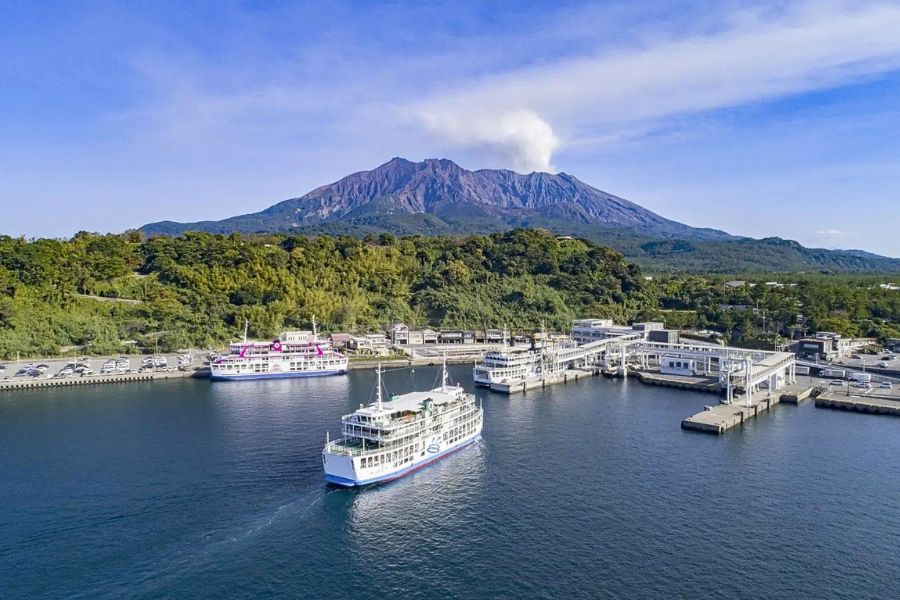
The Sakurajima Ferry is one of Kagoshima’s most useful transport links and also one of its attractions.
The crossing between Kagoshima Port and Sakurajima Port takes about 15 minutes, with frequent services throughout the day.
Independent passengers should still check the current schedule and leave enough time for onward travel from the ferry terminal back to Marine Port Kagoshima.
Sakurajima Island View Bus
Once on Sakurajima, the Island View sightseeing bus can be useful for passengers traveling independently.
It connects several of the western side’s principal sights and viewpoints, including areas near the Visitor Center and Yunohira Observatory.
Because cruise calls are time-sensitive, check the timetable before relying on the bus for your entire Sakurajima itinerary.
Private Vehicle and Guide
A private vehicle is particularly valuable in Kagoshima when the route includes several areas or destinations farther from the city.
It reduces time spent connecting Marine Port Kagoshima with public transport and makes combinations such as Chiran, Sengan-en or Sakurajima much easier to manage.
It can also make the day more comfortable for senior travelers who prefer to minimize long walks between transport stops.
Can You Explore Kagoshima Independently?
Yes. Independent sightseeing is realistic if your plans remain focused.
A simple route through downtown Kagoshima, Sengan-en or Sakurajima can be managed using taxis, trams and the ferry.
Independent planning becomes more complicated when you want to combine several distant attractions in the same port call.
A shore excursion becomes more useful when:
- you want to explore Sakurajima beyond the ferry terminal;
- you want to combine Sakurajima with city sightseeing;
- you plan to visit Chiran or Ibusuki;
- your ship has a limited port window;
- you prefer a vehicle waiting between stops;
- you are traveling with older passengers or prefer less walking;
- you want return timing managed around your ship schedule.
Walking and Mobility Considerations in Kagoshima
Kagoshima can be adapted well for senior cruise passengers, especially when vehicle transfers are used between attractions.
Sengan-en involves garden paths and sustained walking but can be explored at a slower pace without needing to cover every part of the grounds.
Shiroyama Observatory is a good scenic choice for travelers who want a major viewpoint without a demanding mountain climb when approached by vehicle.
On Sakurajima, the Visitor Center, Lava Nagisa Park and selected observatories can generally be combined at an easy-to-moderate pace.
The hot spring footbath at Lava Nagisa Park can also provide a useful rest during the day.
Passengers who prefer less walking should avoid trying to add too many separate viewpoints simply because they appear close on a map.
What Happens If Sakurajima Is Active During Your Visit?
Sakurajima is an active volcano, and small eruptions or ash emissions are part of life in Kagoshima.
Tourism around the volcano operates with established monitoring and safety systems, but access to specific areas can change if volcanic conditions require it.
Always follow local authorities, your cruise line and your tour operator if restrictions are introduced.
An itinerary should also remain worthwhile if access to part of Sakurajima changes. Sengan-en, Shiroyama, Tenmonkan and other Kagoshima city attractions provide strong alternatives.
What to Eat During a Kagoshima Port Day
Kagoshima Kurobuta Pork
Kagoshima is famous for Kurobuta black pork, commonly served as tonkatsu, shabu-shabu or other local dishes.
Tenmonkan is one of the easiest places to try it during a cruise day because restaurants are concentrated within the central district.
Kagoshima Wagyu
Kagoshima is also one of Japan’s major wagyu-producing regions.
A full wagyu meal can require more time, so it fits best into a relaxed city-focused itinerary rather than a tightly scheduled Sakurajima excursion.
Shirokuma Shaved Ice
Shirokuma is one of Kagoshima’s best-known sweets, made with shaved ice, condensed milk, fruit and other toppings.
It is particularly associated with Tenmonkan and makes an easy local stop toward the end of a port day.
Satsuma-age
Satsuma-age is a fried fish cake associated with Kagoshima and can be found in markets, shops and restaurants around the city.
It is an easy local specialty to try without scheduling a long meal.
How Much Time Do You Need in Kagoshima?
Kagoshima offers useful options for both short and long cruise calls.
- Around 3–4 usable hours: focus on Sengan-en and one central viewpoint or downtown stop.
- Around 4–5 usable hours: explore Kagoshima city comfortably or make a focused Sakurajima visit.
- Around 5–6 usable hours: Sakurajima plus Tenmonkan or selected city sightseeing becomes realistic.
- Around 6–7 usable hours: combine Sakurajima with a broader city route or travel farther toward Chiran.
- Longer calls: Ibusuki or more ambitious combinations become possible with efficient private transportation.
These are general planning examples rather than guarantees. Your actual sightseeing time depends on disembarkation, road conditions, ferry timing and your ship’s all-aboard schedule.
Which Kagoshima Itinerary Is Best for Senior Cruise Passengers?
For passengers who want a comfortable introduction to Kagoshima, I would consider either:
Sengan-en → Shiroyama Observatory → Tenmonkan
or
Sakurajima Visitor Center → Lava Nagisa Park → one volcanic observatory → Tenmonkan.
Both routes provide a strong sense of Kagoshima without requiring a long list of walking-intensive attractions.
The current Sakurajima & Tenmonkan shared excursion is listed with an easy-to-moderate walking level and combines chartered transport with the ferry and selected volcanic sights.
How Early Should You Return to Kagoshima Cruise Port?
Always use the all-aboard time provided by your cruise line as the final authority and plan to reach Marine Port Kagoshima comfortably before the deadline.
A central Kagoshima itinerary can be shortened relatively easily if the day runs late.
A Sakurajima excursion requires more planning because the return journey includes the ferry plus transport between the city-side ferry terminal and your cruise berth.
Chiran and Ibusuki require an even larger buffer because they lie farther from the ship.
If sightseeing runs behind schedule, remove the final shopping or viewpoint stop rather than reducing your return-to-ship margin.
Selected Kagoshima tours include licensed guides, port pickup and Back-to-Ship planning for cruise passengers.
Is Kagoshima Worth Visiting on a Cruise?
Absolutely. Kagoshima offers one of the most distinctive landscapes on a Japan cruise, and you do not need to travel far into the countryside to understand why.
Sakurajima gives the city a dramatic volcanic setting, while Sengan-en connects that landscape with the history of the powerful Satsuma domain. Shiroyama adds panoramic views, and Tenmonkan provides an easy introduction to Kagoshima food and everyday city life.
For first-time passengers, the best choice is usually either a focused Sakurajima day or a combination of Sengan-en, city scenery and local culture.
The goal should not be to cover every attraction in southern Kyushu during one cruise call. Choose the part of Kagoshima that interests you most and leave enough time to experience it without rushing back to the ship.
To compare the options, browse our Kagoshima shore excursions for cruise passengers. If you want an itinerary based on your ship time, interests and walking preference, you can also create your own private shore excursion.
Frequently Asked Questions About Kagoshima Cruise Port
Where do cruise ships dock in Kagoshima?
Many large international cruise ships use Marine Port Kagoshima on the southern side of Kagoshima City. Berth assignments may change, so always confirm the exact port information provided by your cruise line.
Is Kagoshima cruise port close to downtown?
Marine Port Kagoshima is outside the main downtown district. Tenmonkan and central sightseeing areas require additional transportation, so most cruise passengers use a taxi, shuttle, public transport connection or arranged vehicle.
Can you walk from Kagoshima cruise port to attractions?
The Marine Port waterfront itself can be explored on foot, but walking to central Kagoshima is not the most efficient use of a limited port day. Transport is recommended for most major attractions.
Can you visit Sakurajima from Kagoshima cruise port?
Yes. Sakurajima is one of the most popular shore excursions from Kagoshima. The regular ferry between Kagoshima Port and Sakurajima takes approximately 15 minutes, followed by additional transport if you want to visit volcanic observatories or other attractions around Sakurajima.
How long is the ferry to Sakurajima?
The regular crossing between Kagoshima Port and Sakurajima Port takes approximately 15 minutes. Cruise passengers should also allow time to travel between Marine Port Kagoshima and the city-side ferry terminal.
What are the best things to do from Kagoshima cruise port?
Popular first-time choices include Sakurajima, Sengan-en, Shiroyama Observatory and Tenmonkan. Longer calls can also include Chiran’s samurai district or Ibusuki.
Can I visit Sakurajima and Sengan-en in one cruise day?
Yes, with a sufficiently long port call and efficient transportation. Both are major attractions, so avoid adding too many additional stops if you want enough time to enjoy each one properly.
Is Sengan-en worth visiting?
Yes. Sengan-en combines traditional Japanese garden design, Shimadzu clan history, World Heritage connections and one of the classic views of Sakurajima across Kinko Bay.
Can I explore Kagoshima independently?
Yes. A focused city or Sakurajima itinerary can be planned independently using taxis, trams, buses and the ferry. A private excursion is more useful when you want to combine several areas or travel farther to Chiran or Ibusuki.
Is Kagoshima suitable for senior cruise passengers?
Yes. Many major attractions can be explored at an easy-to-moderate pace when vehicle transfers are used. Sengan-en, Shiroyama and selected Sakurajima viewpoints can all be adapted according to walking preference.
How many hours do you need in Kagoshima?
Four to five usable sightseeing hours are enough for a focused city or Sakurajima visit. Around six hours allows a stronger combination such as Sakurajima and Tenmonkan, while longer calls make Chiran or other destinations farther from the city more realistic.
Berth assignments, ferry schedules, volcanic conditions, attraction access and cruise timings can change. Always reconfirm your Kagoshima cruise berth and all-aboard time before finalizing your port-day plans.


 Send Inquiry