
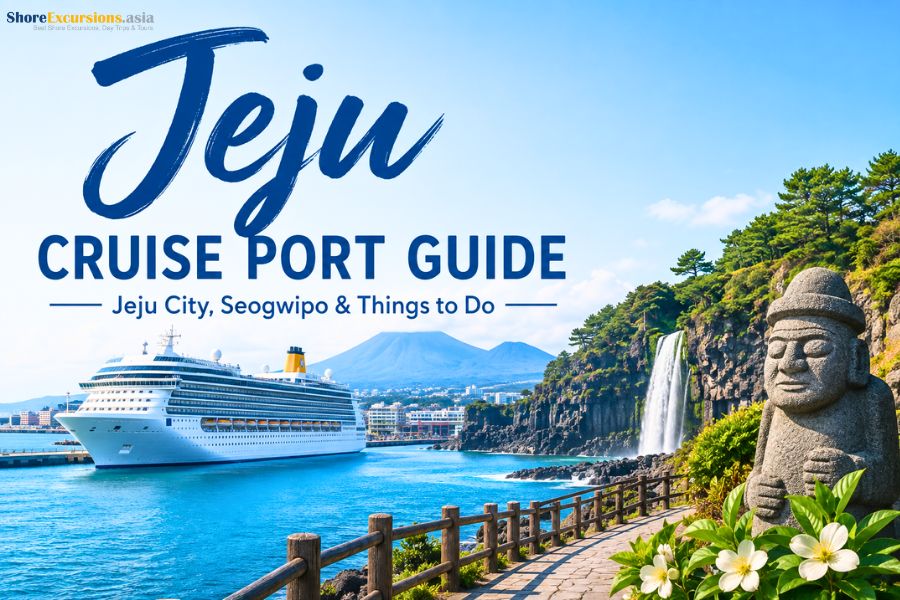
Jeju is unlike most cruise ports in South Korea. Instead of one central terminal serving the whole destination, cruise ships may arrive at Jeju Port in Jeju City on the north coast or Seogwipo Gangjeong Cruise Port on the south coast. That difference matters because the best sightseeing route changes significantly depending on where your ship docks.
From Jeju City, passengers can explore Dongmun Market, Yongduam Dragon Head Rock and local cultural sights, or travel east toward Seongsan Ilchulbong and Seongeup Folk Village. From Gangjeong, southern Jeju attractions such as Yakcheonsa Temple, Jusangjeolli Cliff, waterfalls and Seogwipo Olle Market are much more convenient.
This Jeju Cruise Port Guide explains the two cruise terminals, which attractions make sense from each port, how to get around and what can realistically fit into one cruise day. If you prefer transportation and sightseeing arranged around your ship schedule, Shore Excursions Asia offers private and selected small-group experiences for cruise passengers. Browse our Jeju shore excursions, Seogwipo shore excursions or explore more Korea shore excursions.
Where Do Cruise Ships Dock in Jeju?
Jeju Island has two main cruise ports, and they are on opposite sides of the island.
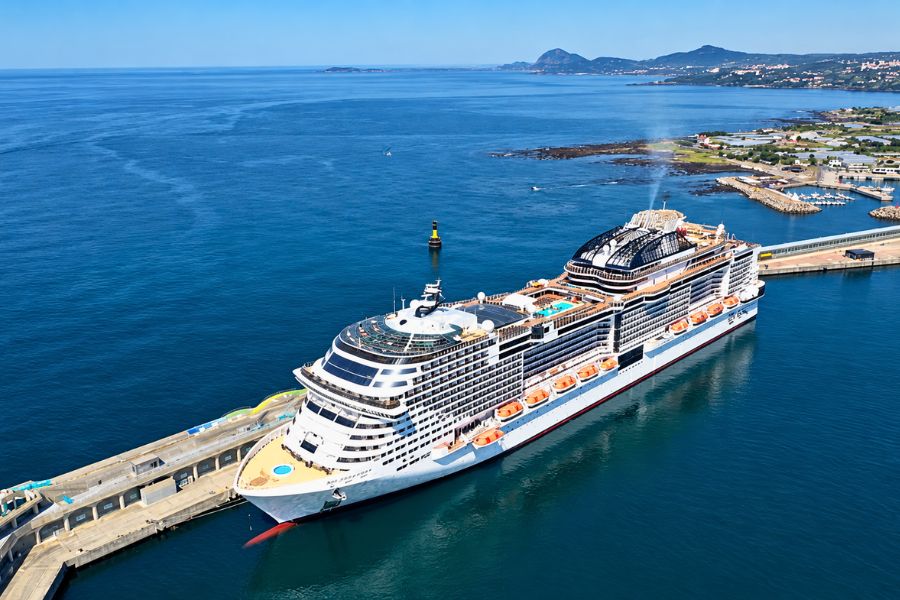
Jeju Cruise Terminal in Jeju City
Jeju Port is located on the northern side of the island in Jeju City. It provides convenient access to the old downtown area, traditional markets, coastal viewpoints and attractions across northern and eastern Jeju.
This is the better starting point for passengers who want to see places such as Dongmun Market, Yongduam Dragon Head Rock or cultural sites around Jeju City.
Eastern attractions such as Seongsan Ilchulbong and Seongeup Folk Village can also be reached from here, but they require a longer road journey and are better treated as a full shore excursion rather than an addition to a city walking day.
Seogwipo Gangjeong Cruise Port
Seogwipo Gangjeong Cruise Port is located on Jeju’s southern coast and can accommodate some of the island’s largest cruise ships.
Its location makes it particularly useful for exploring southern Jeju. The Jungmun area, coastal cliffs, temples, waterfalls and Seogwipo city attractions are significantly more convenient from Gangjeong than from Jeju City.
Passengers arriving here should not automatically follow an itinerary written for Jeju Port in the north. Crossing the island unnecessarily can consume a large part of a limited port day.
Jeju Cruise Ports at a Glance
- Jeju Port: North coast, Jeju City
- Gangjeong Cruise Port: South coast, Seogwipo
- Direct docking: Both are established cruise-port facilities
- Best from Jeju City: Dongmun Market, Yongduam and eastern Jeju
- Best from Gangjeong: Jungmun, waterfalls, Jusangjeolli Cliff and Seogwipo
- Cross-island sightseeing: Possible, but requires careful timing
- Best transport for a multi-stop day: Private vehicle or arranged excursion
How Do You Know Which Jeju Cruise Port Your Ship Uses?
Always check the port information supplied by your cruise line before planning transportation or meeting a guide.
The words Jeju, Jeju City, Seogwipo and Gangjeong are not interchangeable when planning a shore day.
If your itinerary lists Jeju Port or Jeju Cruise Terminal, you are generally arriving in the north. If it lists Seogwipo, Gangjeong or Seogwipo Gangjeong Cruise Terminal, you are arriving on the south coast.
This is especially important when booking independent transportation. A driver waiting at the wrong side of Jeju Island cannot simply move between the two terminals in a few minutes.
Can You Explore Jeju Cruise Port on Foot?
It depends on your port.
Passengers arriving in Jeju City have access to several urban attractions relatively close to the port. Dongmun Market, old downtown streets and other city sights make a short independent visit possible without crossing the island.
Passengers arriving at Gangjeong can explore some local areas, but most of the attractions that make southern Jeju worthwhile require transport.
Jeju is therefore not a destination where you should assume that the island’s headline attractions are within walking distance simply because the ship is docked.
To see Jeju’s volcanic landscapes, folk villages, waterfalls or scenic coastlines, a vehicle becomes much more useful.
Best Things to Do from Jeju City Cruise Port
Explore Dongmun Traditional Market
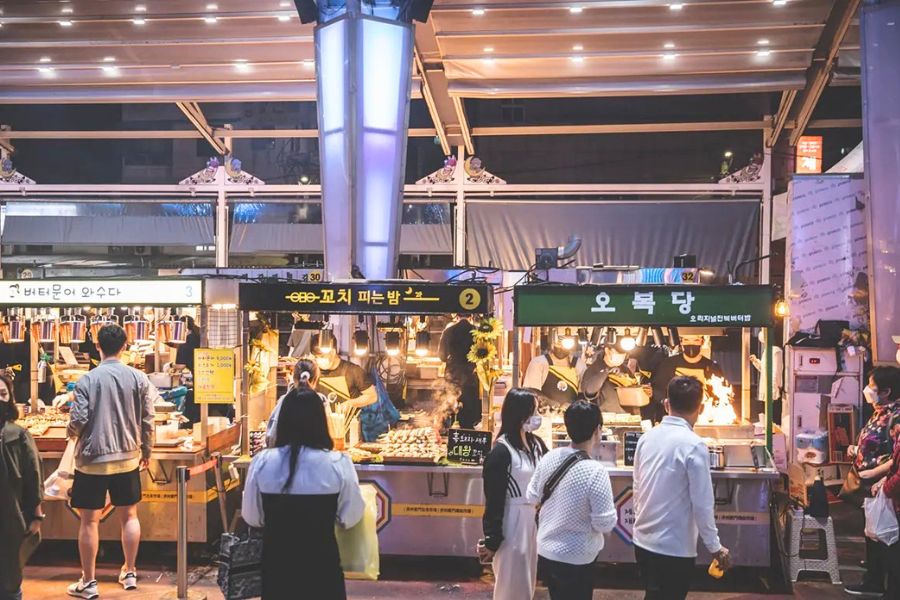
Dongmun Market is one of the easiest places to experience local life during a Jeju City port call.
The market brings together fresh produce, seafood, snacks, regional products and everyday shopping. It is particularly useful for cruise passengers because you do not need to devote several hours to the visit.
A short market stop can be combined with coastal sightseeing and cultural attractions in Jeju City, while a longer visit allows time to try local dishes or buy regional specialties.
Dongmun Market is included in our Jeju Island Culture Tour, a 4.5-hour route designed specifically for cruise passengers arriving at Jeju Port.
See Yongduam Dragon Head Rock
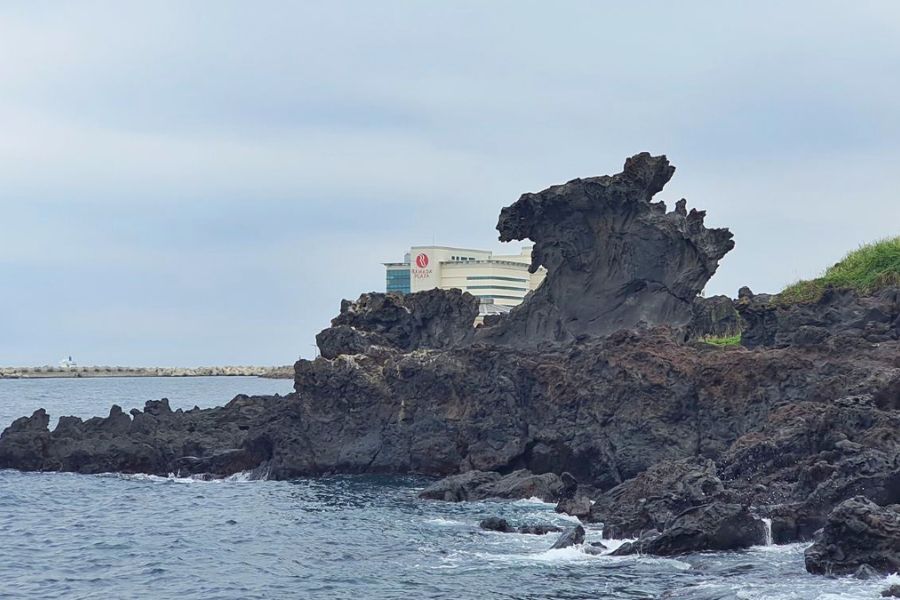
Yongduam, commonly called Dragon Head Rock, is one of Jeju City’s best-known coastal landmarks.
The volcanic rock formation sits beside the sea and is traditionally compared to the head of a dragon rising from the water.
This is a practical cruise-day stop because it does not require a long hiking route. Passengers can enjoy the coastal scenery, take photographs and continue toward other attractions without committing a large part of the day to a single site.
It is particularly suitable for shorter Jeju City calls or senior travelers who want a scenic stop with relatively limited walking.
Experience Jeju’s Dol Hareubang Culture
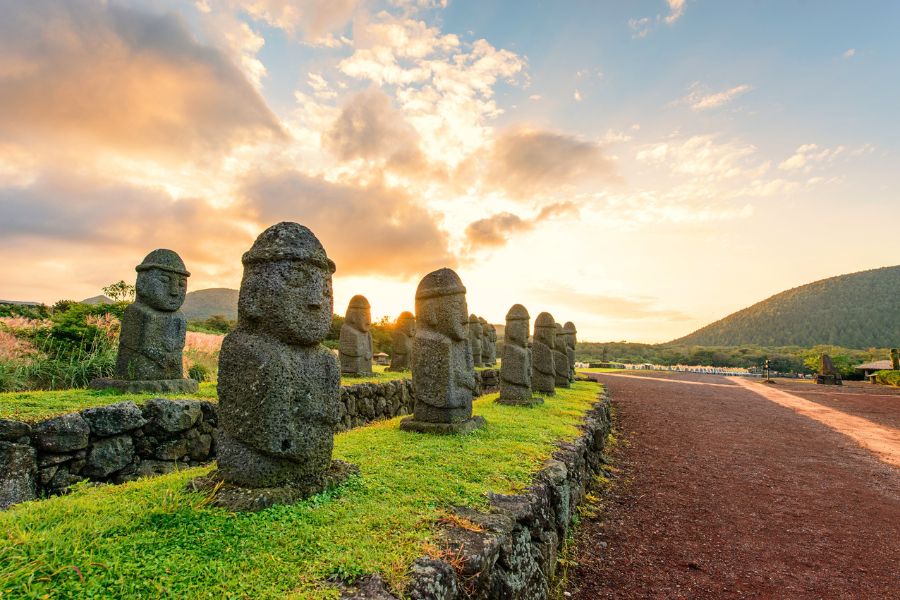
Dol hareubang, the stone grandfather statues seen throughout Jeju, are among the island’s most recognizable cultural symbols.
Carved from volcanic stone, the figures traditionally represented protection and have become closely associated with Jeju’s identity.
Rather than treating them simply as souvenir imagery, a cultural stop can provide useful context about how Jeju’s geography, volcanic landscape and relative isolation shaped traditions different from those on mainland Korea.
Visit Jeju’s Old Downtown
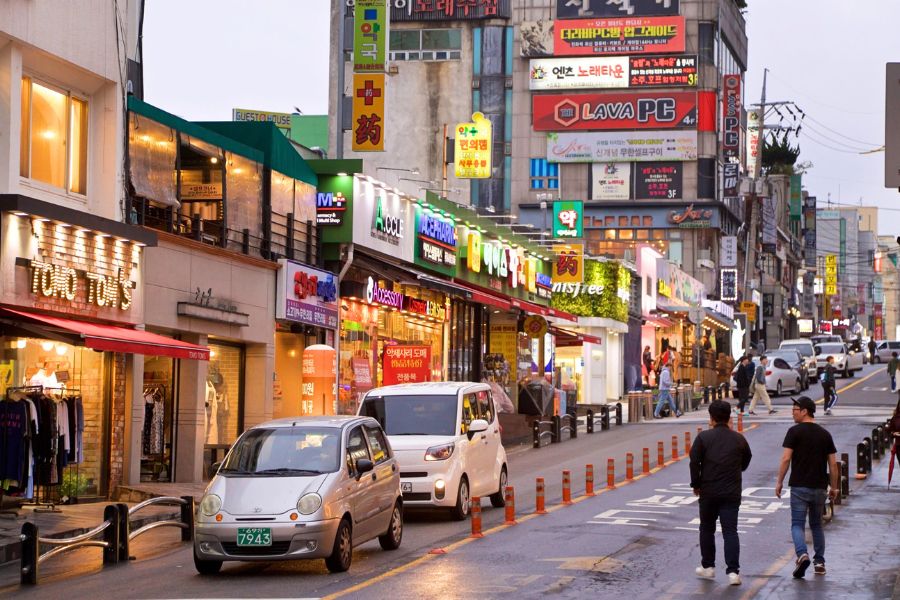
The older districts around Jeju City offer cafés, shopping streets, local restaurants and cultural spaces within relatively easy reach of Jeju Port.
This is a good option when your ship has a short call and you do not want to spend a significant part of the day traveling across the island.
A relaxed city day can combine downtown Jeju, Dongmun Market and coastal viewpoints before returning to the ship.
Best Things to Do from Seogwipo Gangjeong Cruise Port
Visit Yakcheonsa Temple
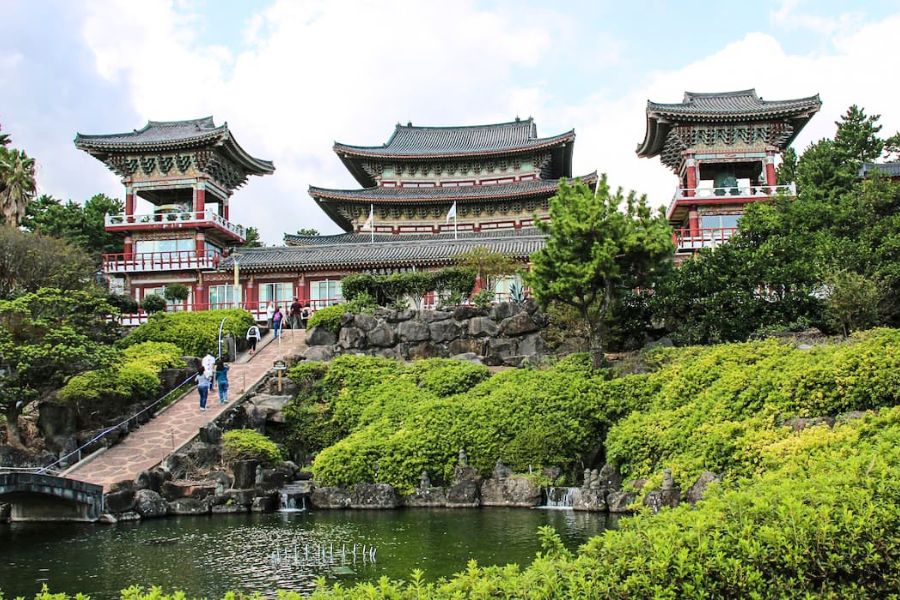
Yakcheonsa is one of southern Jeju’s major Buddhist temples and is easily included from the Gangjeong area.
The temple complex combines traditional Korean Buddhist architecture with a spacious setting and views toward Jeju’s southern landscape.
For cruise passengers, the stop provides a cultural contrast to the waterfalls and volcanic coastline that dominate many Seogwipo itineraries.
It is also relatively suitable for travelers who prefer an easy-to-moderate sightseeing day when transportation is provided between stops.
See Daepo Jusangjeolli Cliff
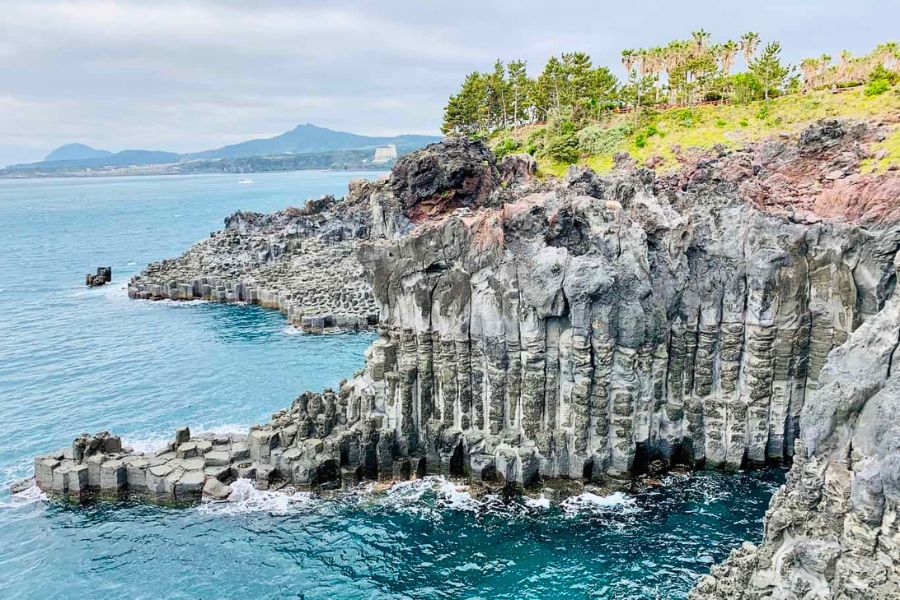
Jusangjeolli Cliff is one of the most distinctive examples of Jeju’s volcanic geology.
The coastline is formed by dramatic column-shaped volcanic rocks created as lava cooled and contracted. Waves from the sea strike the dark formations below the viewing area, producing one of southern Jeju’s most recognizable coastal scenes.
The attraction works particularly well from Gangjeong because it lies within the broader southern sightseeing region rather than requiring a cross-island journey.
Our five-hour Jeju South Coast Tour combines Jusangjeolli with Yakcheonsa, waterfalls and Seogwipo local sightseeing.
Visit Cheonjiyeon Waterfall
Cheonjiyeon Waterfall is one of Seogwipo’s best-known natural attractions.
The approach follows a landscaped path toward the waterfall, creating a greener and more relaxed experience than the exposed coastal scenery at Jusangjeolli.
For cruise passengers, it combines particularly well with Seogwipo city and nearby southern attractions because the transfer distances remain manageable.
Walking is generally reasonable for many travelers, although comfortable shoes are recommended and conditions can feel more demanding in hot or wet weather.
See Jeongbang Waterfall
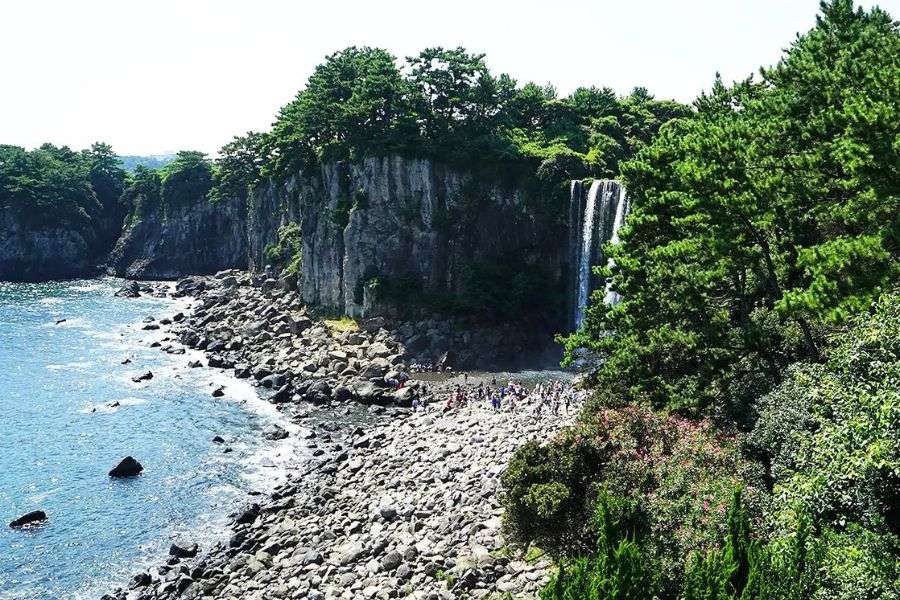
Jeongbang Waterfall is another famous waterfall near Seogwipo and is notable for its dramatic setting close to the sea.
The experience is different from Cheonjiyeon because visitors descend toward the rocky shoreline area.
The stairs and uneven surfaces deserve consideration for passengers with limited mobility, so it may not be the best waterfall choice for every senior traveler.
If easier walking is a priority, choose attractions with more accessible viewing paths instead of trying to include every major waterfall.
Explore Seogwipo Maeil Olle Market
Seogwipo Maeil Olle Market provides an easy way to add local food and everyday island life to a southern Jeju itinerary.
Stalls sell seafood, snacks, fruit, regional specialties and local products, including items associated with Jeju’s citrus-growing culture.
The market is useful near the end of a port day because the length of the stop can be adjusted according to the remaining time.
If sightseeing runs late, shopping can simply be shortened rather than reducing your return-to-ship buffer.
Can You Visit Seongsan Ilchulbong from Jeju Cruise Port?
Yes. Seongsan Ilchulbong, also known as Sunrise Peak, is one of the most famous natural landmarks on Jeju Island.
The volcanic tuff cone rises dramatically beside the sea on Jeju’s eastern coast and forms part of the UNESCO-listed Jeju Volcanic Island and Lava Tubes property.
For cruise passengers, Seongsan is best treated as a major destination rather than a quick addition to a city tour.
It is located far enough from both major cruise ports that efficient road transportation is important.
Those who want to climb toward the summit should also consider walking ability and available time. You do not have to complete the full climb to appreciate the landscape; the lower areas and nearby coastline already provide excellent views.
Our Jeju Exploring Day Tour combines Seongsan Ilchulbong with Gwangchigi Beach and Seongeup Folk Village in a 6–6.5 hour route from Jeju or Seogwipo Port.
Visit Gwangchigi Beach
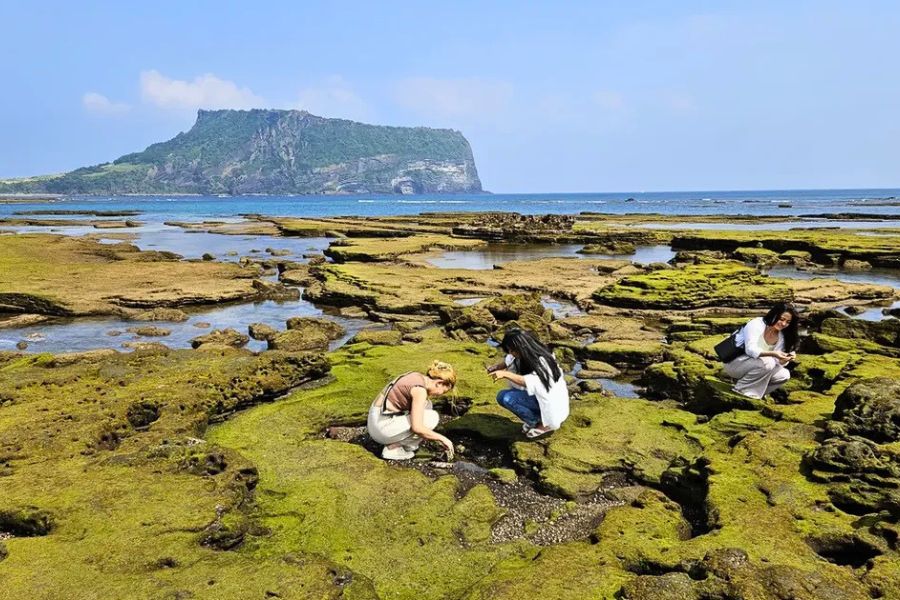
Gwangchigi Beach lies near Seongsan and is known for its dark volcanic shoreline and views toward Sunrise Peak.
It works particularly well as part of an eastern Jeju route because the landscape provides another perspective on Seongsan without adding a major detour.
For cruise passengers who do not want a strenuous climb, enjoying the coastal view of Seongsan from around Gwangchigi can be a more relaxed alternative.
Explore Seongeup Folk Village
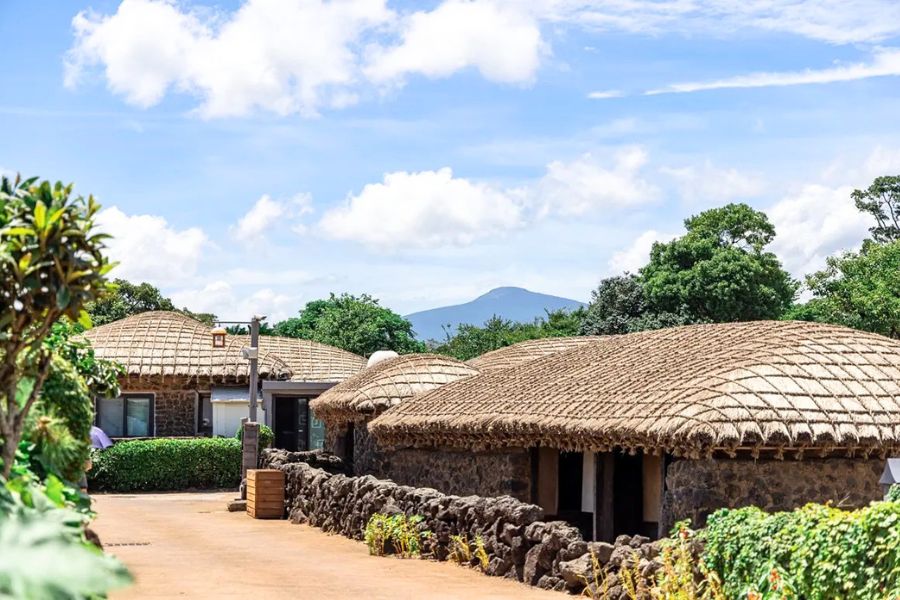
Seongeup Folk Village introduces a more traditional side of Jeju.
Thatched-roof homes, volcanic stone walls and village lanes reflect architectural styles shaped by the island’s climate and natural environment.
This makes Seongeup a useful cultural complement to the volcanic scenery of Seongsan.
Instead of spending the entire day moving between natural viewpoints, passengers can combine landscape and local heritage in the same eastern island route.
Explore Seopjikoji
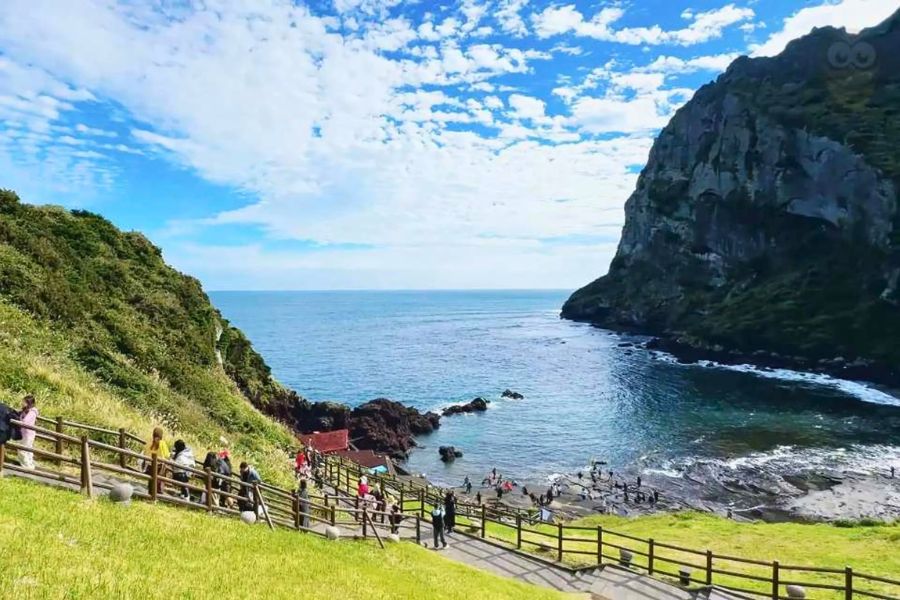
Seopjikoji is another scenic coastal area in eastern Jeju.
Open grassland, volcanic rock and sea views make it especially attractive for passengers whose priority is landscape photography and coastal scenery.
Because it lies in the same broad eastern region as Seongsan, combining the two makes more sense than trying to pair Seopjikoji with attractions on the far western side of the island.
The six-hour Jeju Island Eco Tour follows this general approach, combining Seongsan Ilchulbong, Seopjikoji and Jeju Stone Park.
Jeju City or Seogwipo: Which Port Has Better Sightseeing?
Neither port is simply “better.” They lead naturally to different types of cruise days.
Jeju City is better for passengers who want markets, local culture, easy city sightseeing or an excursion toward eastern Jeju.
Seogwipo Gangjeong is particularly convenient for waterfalls, temples, volcanic sea cliffs and southern Jeju attractions.
If your ship docks at Gangjeong, it usually makes little sense to drive north simply because a generic Jeju guide recommends a Jeju City attraction. Likewise, passengers arriving at Jeju Port should think carefully before devoting their short call entirely to southern Seogwipo.
The most successful port day generally begins by asking: What is best from my actual cruise terminal?
How to Spend One Day from Jeju Cruise Port
Option 1 Short Jeju City Culture Day
Jeju Port → Yongduam Dragon Head Rock → Local Cultural Stops → Dongmun Market → Jeju Old Downtown → Port
This is one of the most comfortable routes for a short northern port call.
It avoids long cross-island transfers and leaves time for local culture, coastal scenery and food.
The itinerary also works well for senior cruise passengers because it can be adjusted to an easy-to-moderate walking pace.
Our Jeju Island Culture Tour is built around this type of 4.5-hour cruise call.
Option 2 Eastern Jeju Highlights
Port → Seongeup Folk Village → Gwangchigi Beach → Seongsan Ilchulbong → Port
This is a stronger choice when your priority is seeing the landscapes Jeju is famous for.
The route requires significantly more driving than a Jeju City itinerary, so it works best with around six or more usable sightseeing hours and a dedicated vehicle.
Keep the number of stops limited rather than attempting to add the west and south coasts to the same day.
Option 3 Jeju Nature and Volcanic Landscapes
Port → Jeju Stone Park or Cultural Landscape → Seopjikoji → Seongsan Ilchulbong → Port
This route places more emphasis on the island’s volcanic origins and natural scenery.
It is particularly suitable for visitors who have already experienced Jeju City or who are less interested in markets and urban sightseeing.
Option 4 Seogwipo South Coast Highlights
Gangjeong Port → Yakcheonsa Temple → Jusangjeolli Cliff → Waterfall → Seogwipo Olle Market → Port
This is my preferred first-time route from Gangjeong.
It combines religion, geology, nature and local life while keeping the itinerary geographically concentrated in southern Jeju.
The route is also comparatively easy to adjust if the ship arrives late or road conditions affect the day.
Option 5 Relaxed Seogwipo Day
Gangjeong Port → Yakcheonsa Temple → Cheonjiyeon Waterfall → Seogwipo City → Olle Market → Port
This version removes some of the more demanding coastal walking and keeps the pace comfortable.
It is a good option for senior groups or passengers who prefer more time at fewer attractions.
How Much of Jeju Can You See in One Cruise Day?
Less than many first-time visitors expect.
Jeju may look compact on a map, but the island is large enough that traveling between northern, southern, eastern and western attractions can consume a significant part of a cruise call.
The best strategy is to choose one region and explore it well.
- Short port call: stay near Jeju City or Seogwipo
- Medium port call: explore one regional cluster
- Full 6–7 hour sightseeing window: eastern Jeju or a broader south-coast route becomes practical
- Long call: additional distant attractions may be possible, but avoid circling the entire island simply to increase the number of stops
A good Jeju shore day should feel like an island experience, not a road trip between disconnected photo stops.
Getting Around from Jeju Cruise Port
Taxi
Taxis are useful for short journeys around Jeju City and Seogwipo.
They can also work for one or two farther attractions, although cruise passengers planning a multi-stop day should consider how they will arrange the next vehicle and final return to the port.
Make sure your driver knows exactly which cruise terminal you need on the return journey.
Local Bus
Jeju has an extensive bus network connecting towns and tourist areas around the island.
For travelers staying near one city or following a simple route, buses can provide an economical independent option.
For a cruise call, however, using several buses across different parts of the island reduces flexibility and leaves more exposure to waiting time.
Passengers using public transport should allow a much larger return buffer than those traveling with a dedicated vehicle.
Private Vehicle and Guide
A private vehicle is especially useful in Jeju because the island’s attractions are widely dispersed.
Your driver can connect several sights within the same region without requiring repeated transfers or waits.
A licensed local guide also provides context about Jeju’s volcanic geology, folk culture and traditions that are noticeably different from mainland Korea.
This option is particularly useful when visiting Seongsan, Seongeup, Jusangjeolli or several south-coast attractions during the same call.
Can You Explore Jeju Independently?
Yes, particularly if you keep your plans local.
Independent passengers arriving in Jeju City can explore markets, downtown areas and nearby coastal attractions fairly easily.
Likewise, a simple Seogwipo plan can work with taxis and local transport.
A shore excursion becomes more valuable when:
- you want to travel far from your cruise terminal;
- you want to combine three or more island attractions;
- you are unsure whether your ship docks in Jeju City or Gangjeong;
- you prefer transportation waiting throughout the day;
- you are traveling with older passengers or want a controlled walking pace;
- you want the itinerary structured around the ship’s all-aboard time.
You can compare northern and eastern options on our Jeju shore excursions page or explore dedicated Seogwipo shore excursions for ships docking at Gangjeong.
Walking and Mobility Considerations in Jeju
Jeju can work very well for senior cruise passengers, but walking difficulty varies considerably between attractions.
Dongmun Market, Jeju City sightseeing and many cultural stops can be adapted to an easy-to-moderate pace.
Southern attractions such as Yakcheonsa and Seogwipo Market are also relatively flexible when a vehicle handles the transfers.
Seongsan Ilchulbong is more demanding if you plan to climb toward the crater viewpoint. Travelers who prefer less walking can remain around the lower area and still enjoy the volcanic scenery.
Jeongbang Waterfall involves stairs and rougher surfaces close to the coast, while some trails around scenic cliffs can also require more care.
For senior groups, choose the attraction itself based on walking conditions rather than assuming that a short tour duration automatically means an easy day.
Should You Climb Seongsan Ilchulbong on a Cruise Day?
Only if the climb itself is one of your priorities.
Reaching the higher viewpoint takes additional time and involves sustained uphill walking and stairs.
Passengers who enjoy an active excursion may find the climb worthwhile, but it is not essential to appreciate Seongsan.
The lower landscape, coastal setting and views from nearby Gwangchigi Beach already give you a strong sense of the volcanic landmark.
If your group has mixed mobility levels, one practical option is to allow active travelers to climb while others enjoy the lower area.
What to Eat During a Jeju Port Day
Jeju Black Pork
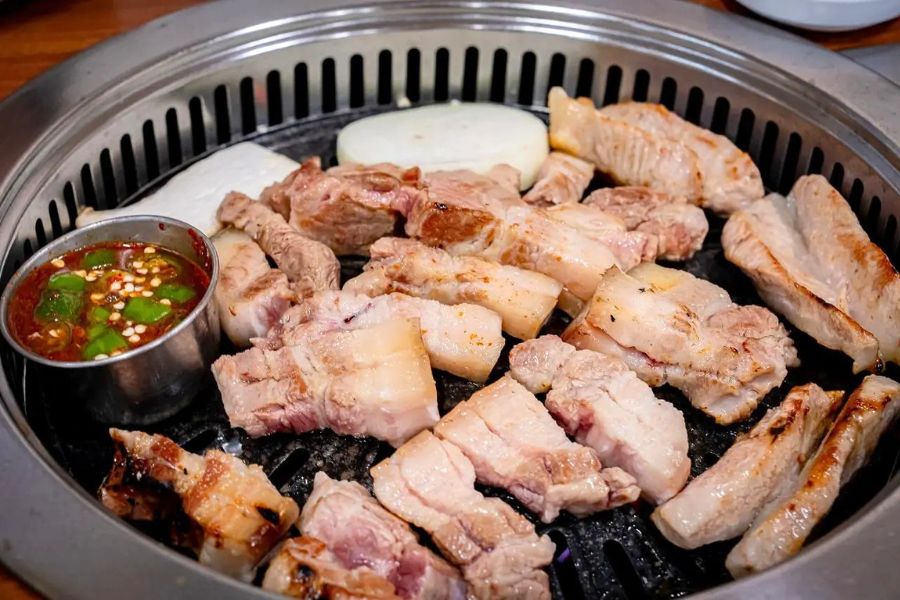
Jeju black pork is one of the island’s best-known specialties and is commonly served grilled.
A full barbecue meal requires more time, so it fits better into a relaxed city or Seogwipo itinerary than a tightly scheduled eastern island excursion.
Fresh Seafood
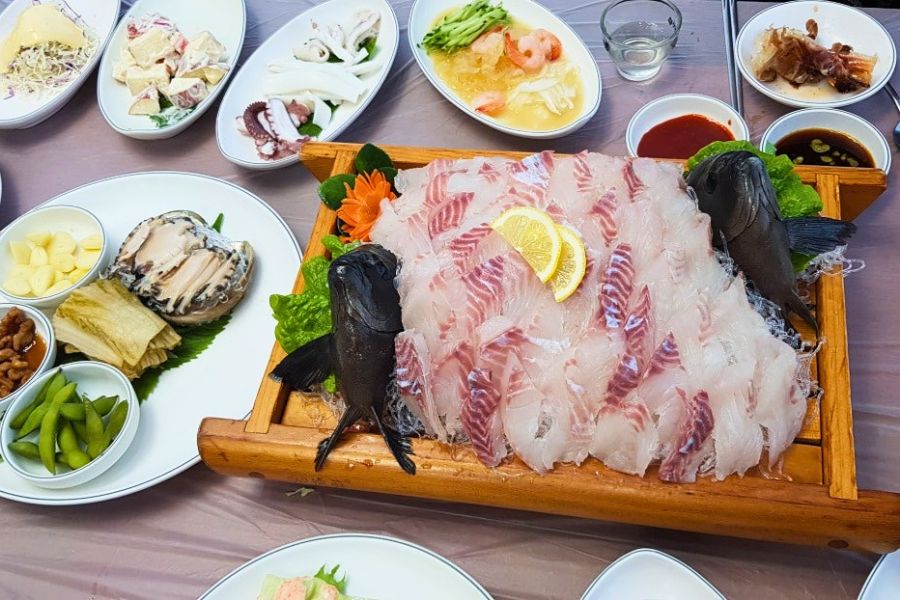
As an island destination, Jeju has a strong seafood culture. Markets in Jeju City and Seogwipo offer an easy way to see local fish and seafood products even if you do not have time for a long restaurant meal.
Jeju Tangerines
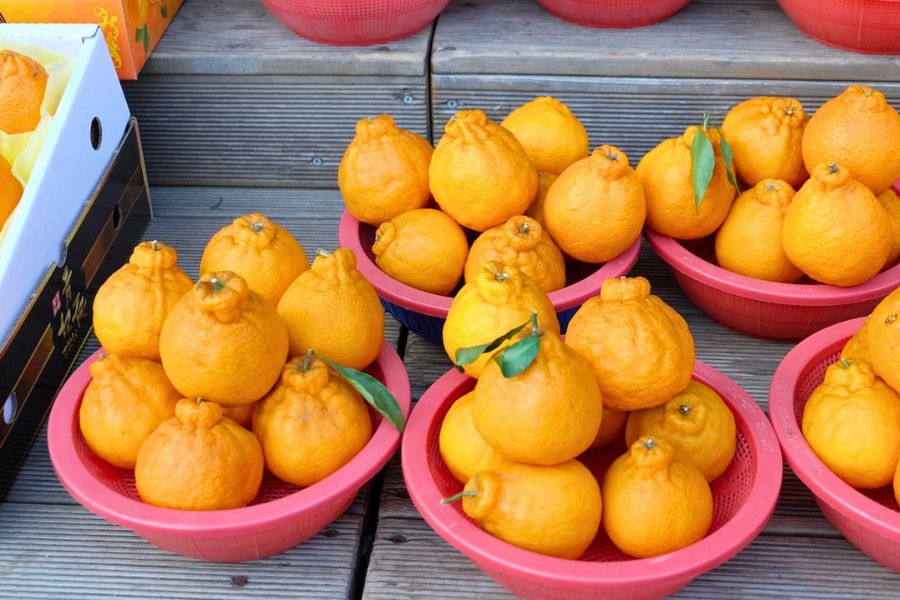
Jeju is famous throughout Korea for its citrus fruit, including mandarins and Hallabong varieties.
Fruit products, sweets and drinks are easy to find in markets and make convenient additions to a short cruise stop.
Omegi Tteok
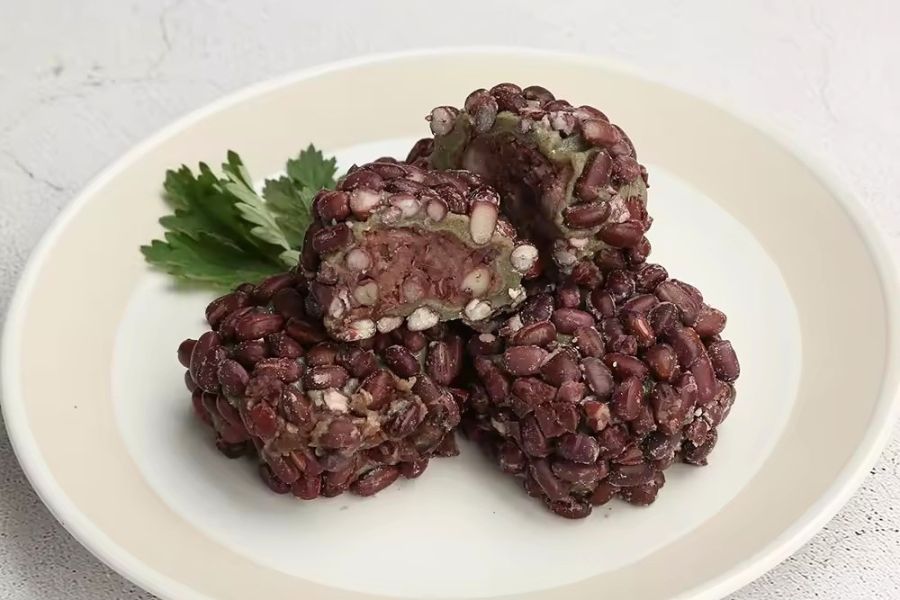
Omegi tteok is a traditional Jeju rice cake and another local snack that can be found in markets.
For cruise passengers, trying regional foods at Dongmun Market or Seogwipo Olle Market is often more practical than traveling to a separate restaurant simply because it appears on a food guide.
How Much Time Do You Need in Jeju?
The right amount of time depends heavily on your arrival terminal and the region you want to explore.
- Around 3–4 usable hours: stay near Jeju City or Seogwipo and keep the route compact.
- Around 4–5 usable hours: a cultural Jeju City day or south-coast Seogwipo route works comfortably.
- Around 6–6.5 usable hours: Seongsan, Seongeup and eastern Jeju become much more realistic.
- Around 7+ usable hours: you can expand the route, but it is still better to focus on one or two regions rather than trying to circle Jeju.
These are planning examples rather than fixed guarantees. Traffic, weather, attraction access and the ship’s actual disembarkation time all affect how much you can see.
Which Jeju Cruise Itinerary Is Best for Senior Passengers?
For a shorter call from Jeju City, I would prioritize Yongduam, local cultural stops and Dongmun Market.
This gives a mixture of coastal scenery, Jeju identity and local food without requiring long walks or a cross-island transfer.
From Gangjeong, a comfortable route might combine Yakcheonsa Temple, Jusangjeolli or an accessible waterfall viewpoint and Seogwipo Olle Market.
Active destinations such as a full Seongsan Ilchulbong climb can still be included, but they should be chosen intentionally rather than treated as mandatory simply because they are famous.
How Early Should You Return to Jeju Cruise Port?
Always follow your cruise line’s all-aboard time and plan to arrive back at the correct terminal comfortably before that deadline.
This is especially important in Jeju because your final attraction may be far from the ship.
A Jeju City itinerary remains relatively easy to shorten if the day starts running late. An eastern-island route or cross-island excursion requires a much larger return buffer.
Passengers arriving at Gangjeong should also confirm that the return destination is Seogwipo Gangjeong Cruise Terminal, not Jeju Port on the northern side of the island.
If traffic or sightseeing delays the schedule, remove the final stop rather than reducing your return-to-ship margin.
Selected Shore Excursions Asia Jeju tours and Seogwipo tours include licensed guides, port pickup and Back-to-Ship planning for cruise passengers.
Is Jeju Worth Visiting on a Cruise?
Absolutely. Jeju offers something very different from Korea’s large mainland cities.
The island’s volcanic landscapes, coastal scenery, folk traditions, markets and distinctive local culture make it one of the most varied port calls in South Korea.
The key is not trying to “see Jeju” in a single day. Instead, use your actual cruise terminal as the starting point and choose the region that gives you the strongest experience with the least unnecessary travel.
From Jeju City, that may mean local culture or an eastern island excursion. From Gangjeong, it may mean waterfalls, volcanic coastlines and Seogwipo.
To compare the options, browse our Jeju shore excursions for cruise passengers and Seogwipo cruise port tours. If you want an itinerary built around your exact ship, terminal, walking preference and interests, you can also create your own private shore excursion.
Frequently Asked Questions About Jeju Cruise Port
How many cruise ports are there in Jeju?
Jeju Island has two main cruise ports: Jeju Port in Jeju City on the north coast and Seogwipo Gangjeong Cruise Port on the south coast.
Where do cruise ships dock in Jeju?
Your ship may dock at Jeju Cruise Terminal in Jeju City or at Seogwipo Gangjeong Cruise Port. Always check your cruise documents because the two terminals are in different parts of the island.
Is Jeju cruise port close to the city?
Jeju Port is close to Jeju City and its old downtown area. Gangjeong Port is on the southern coast near Seogwipo and is better positioned for attractions around southern Jeju.
Can you walk from Jeju Cruise Terminal to attractions?
Some Jeju City attractions and downtown areas can be reached relatively easily from the northern port, but most of Jeju’s famous natural attractions require transportation. From Gangjeong, a vehicle is useful for almost any broader sightseeing route.
What are the best things to do from Jeju City cruise port?
For a short call, Dongmun Market, Yongduam Dragon Head Rock and local cultural sights are practical choices. With more time, passengers can travel east toward Seongsan Ilchulbong, Gwangchigi Beach and Seongeup Folk Village.
What are the best things to do from Seogwipo Gangjeong cruise port?
Popular southern attractions include Yakcheonsa Temple, Daepo Jusangjeolli Cliff, waterfalls around Seogwipo and Seogwipo Maeil Olle Market.
Can I visit Seongsan Ilchulbong from the cruise port?
Yes. Seongsan Ilchulbong is a realistic full shore-excursion destination with efficient transportation. It is usually combined with other eastern Jeju sights rather than with attractions on the opposite side of the island.
Can I see both Jeju City and Seogwipo in one cruise day?
It may be possible during a long call, but it is rarely the most efficient use of your time. Most cruise passengers will have a better experience by focusing on the region closest to their arrival port or choosing one dedicated island route.
Do I need a shore excursion in Jeju?
Not necessarily. Independent exploration works well for a simple Jeju City itinerary. A shore excursion becomes more useful when you want to visit distant natural attractions, cover several stops or have return timing planned around your ship.
Is Jeju suitable for senior cruise passengers?
Yes. Many Jeju routes can be adapted to an easy or moderate pace with vehicle transfers. Passengers should pay particular attention to stairs and slopes at attractions such as Seongsan Ilchulbong and some waterfalls.
How many hours do you need in Jeju?
Four to five usable hours are enough for a focused Jeju City or Seogwipo itinerary. Around six hours allows a stronger regional excursion, such as Seongsan and eastern Jeju, while longer calls provide more flexibility without requiring you to cross the entire island.
Port assignments, road conditions, attraction access and cruise schedules can change. Always reconfirm whether your ship is docking at Jeju Port or Seogwipo Gangjeong Cruise Port and check your all-aboard time before finalizing your Jeju cruise day.


 Send Inquiry