
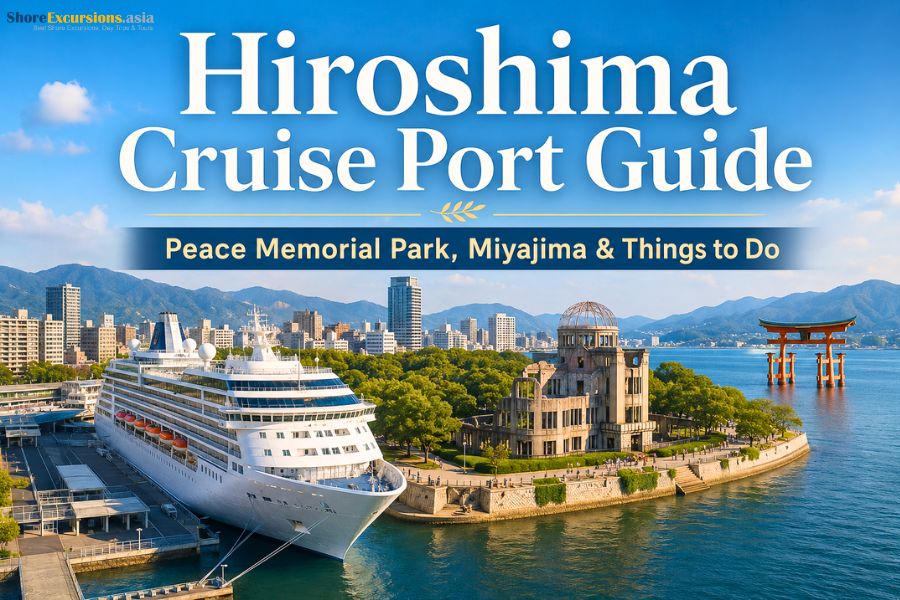
Hiroshima offers cruise passengers one of the most meaningful port days in Japan. Within a single call, you can stand beside the Atomic Bomb Dome and Peace Memorial Park, walk through a traditional Japanese garden, or cross Hiroshima Bay to Miyajima and the famous Itsukushima Shrine.
The main challenge is deciding how much to include. Hiroshima city and Miyajima are both major destinations, but they require different transport and timing. A shorter call is better focused on the city, while a sufficiently long port day can combine Hiroshima’s peace memorials with Miyajima in one carefully planned itinerary.
This Hiroshima Cruise Port Guide explains where ships dock, how to reach the city and Miyajima, the best things to do and which routes make sense for different cruise schedules. If you prefer to have transportation and sightseeing coordinated around your ship time, Shore Excursions Asia offers private and selected small-group experiences designed for cruise passengers. Browse our Hiroshima shore excursions or explore more Japan shore excursions.
Where Do Cruise Ships Dock in Hiroshima?
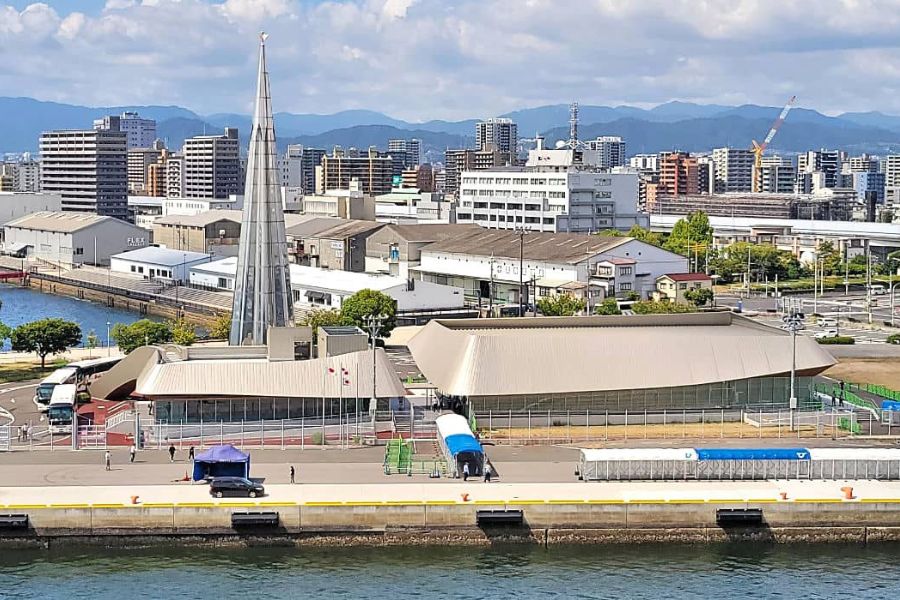
International cruise ships visiting Hiroshima generally berth in the Ujina area of Hiroshima Port, south of the city center.
Large international ships may use the Ujina Foreign Trade Wharf and Hiroshima Port Cruise Terminal facilities, while the nearby Ujina Passenger Terminal serves local ferry routes across Hiroshima Bay. Exact berth arrangements can vary, so always check the terminal or berth shown in your cruise documents before arranging an independent meeting point.
The port is not directly beside Peace Memorial Park, but central Hiroshima is still relatively easy to reach by taxi, tram, shuttle or arranged vehicle.
Hiroshima Cruise Port at a Glance
- Main cruise area: Ujina, Hiroshima Port
- Location: South of central Hiroshima
- Port type: Direct-docking port
- Main city attraction: Hiroshima Peace Memorial Park
- Major day-trip destination: Miyajima
- Useful transport: Taxi, tram, shuttle, ferry and private vehicle
- Good for independent sightseeing: Yes, with careful timing
- Best for: History, remembrance, Japanese culture and Miyajima scenery
Because Hiroshima has both city sightseeing and island excursions, your actual berth and available time ashore should be confirmed before deciding on the day’s route.
How Far Is Hiroshima Cruise Port from the City Center?
The Ujina cruise area lies several kilometers south of Hiroshima’s central sightseeing district.
By road, reaching the area around the Atomic Bomb Dome and Peace Memorial Park typically takes around twenty minutes under normal conditions, although traffic and cruise-day congestion can affect the journey.
Public transport is also available from the Hiroshima Port area, including the city’s streetcar network.
This means Hiroshima is not technically a walk-off sightseeing port, but the transfer into the city is short enough that even a half-day call can include several of its most important landmarks.
Hiroshima City or Miyajima: What Should Cruise Passengers Choose?
This is the most important decision to make before your Hiroshima port day.
Choose Hiroshima city if you have a shorter call, want to understand the history of August 6, 1945, or prefer to minimize transportation time.
Choose Miyajima if Itsukushima Shrine and the island’s traditional scenery are your highest priorities and your ship schedule provides enough time for the ferry journey.
Combine Hiroshima and Miyajima when you have roughly six or more usable sightseeing hours and efficient transportation between the two areas.
For many first-time visitors, combining Peace Memorial Park with Miyajima creates the most complete experience because the two places show very different sides of Hiroshima: one centered on remembrance and modern history, the other on centuries-old religious tradition and Seto Inland Sea scenery.
Best Things to Do from Hiroshima Cruise Port
Visit Hiroshima Peace Memorial Park
Peace Memorial Park is the most important stop for many visitors to Hiroshima.
The park occupies an area close to the hypocenter of the atomic bombing of August 6, 1945. Today it brings together memorials, museums and open spaces dedicated to the victims and to the hope for lasting peace.
Rather than rushing from monument to monument, allow time to understand the relationship between the different sites. The park is relatively compact, but its meaning comes from the story they tell together.
A city-focused port day can comfortably combine Peace Memorial Park with the museum, Atomic Bomb Dome, Children’s Peace Monument and Cenotaph.
See the Atomic Bomb Dome
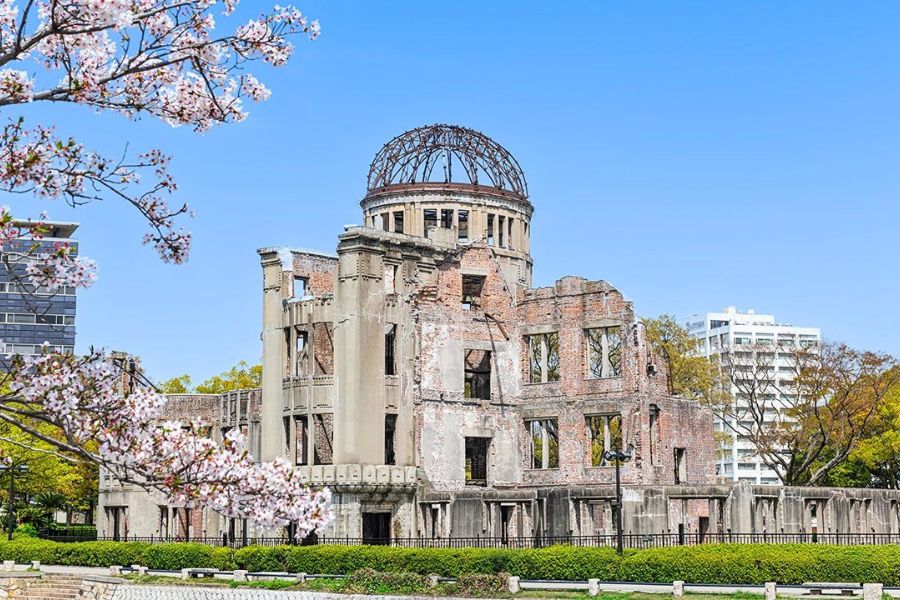
The Atomic Bomb Dome is one of Hiroshima’s most recognizable landmarks and a UNESCO World Heritage Site.
The former Hiroshima Prefectural Industrial Promotion Hall stood close to the hypocenter and was one of the few structures in the immediate area left partially standing after the explosion.
Its preserved shell now serves as a powerful visual reminder of the destruction and forms one of the central landmarks of Peace Memorial Park.
Because the Dome is outdoors and directly beside the park, it can be included even during a relatively short Hiroshima visit.
Explore Hiroshima Peace Memorial Museum
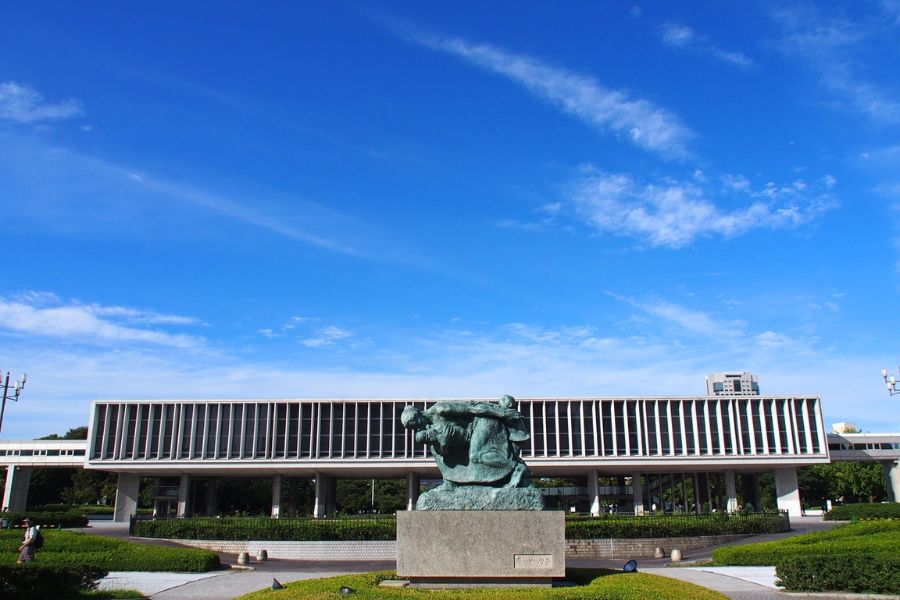
The Peace Memorial Museum provides the deeper historical context that cannot be understood from the monuments alone.
Its exhibitions document Hiroshima before the bombing, the events of August 6, the experiences of people affected by the explosion and the consequences of nuclear weapons.
This can be an emotionally demanding visit, so allow enough time rather than treating the museum as a quick sightseeing stop.
During busy cruise days, the museum may also attract significant visitor numbers. If it is central to your plans, build your itinerary around it rather than leaving it until the last part of the day.
Pause at the Cenotaph for the A-Bomb Victims
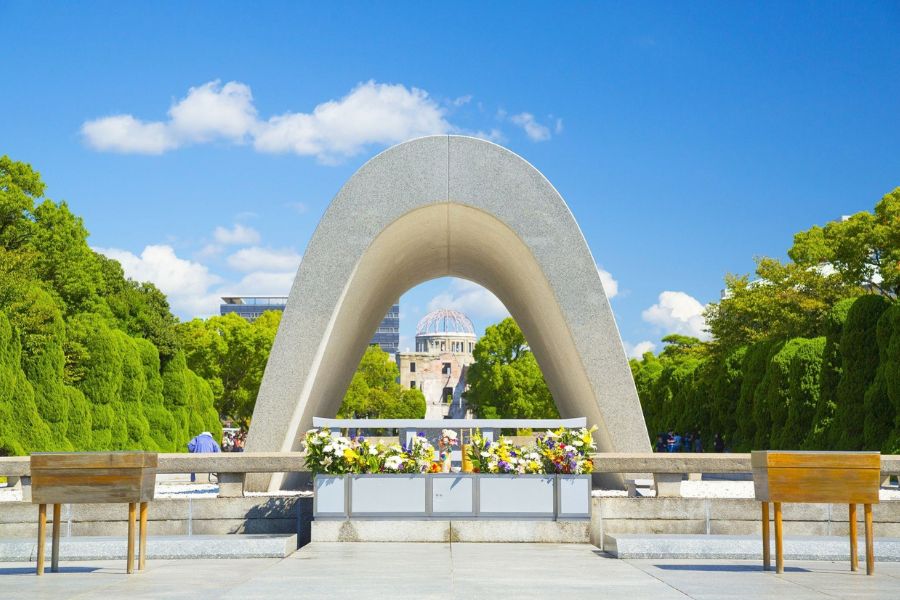
The Memorial Cenotaph stands near the center of Peace Memorial Park and contains the names of people who died as a result of the atomic bombing.
Its curved form frames a view toward the Peace Flame and Atomic Bomb Dome, creating one of the park’s most recognizable sightlines.
This is a place for reflection rather than a long sightseeing stop, but it forms an essential part of the Peace Park route.
Visit the Children’s Peace Monument
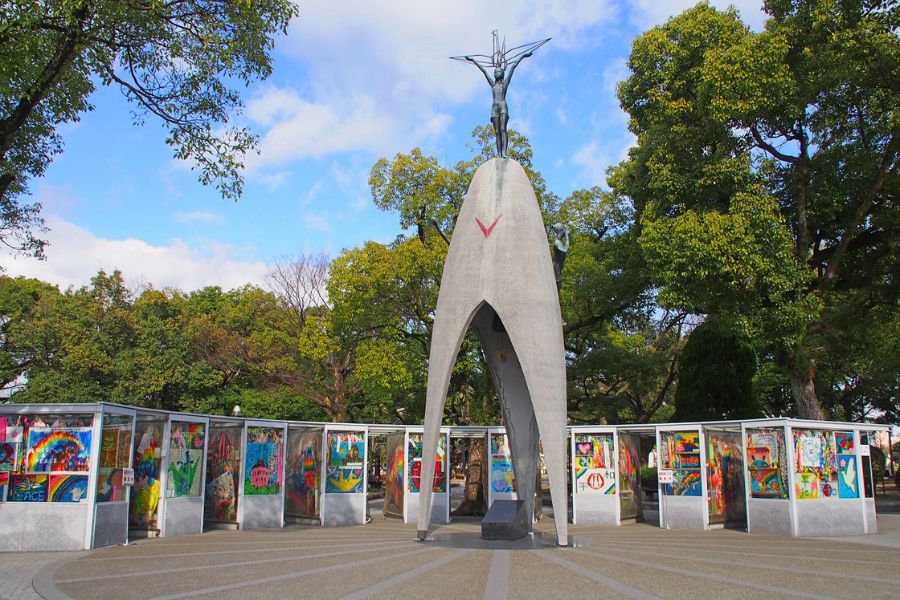
The Children’s Peace Monument commemorates children who died as a result of the atomic bombing.
The monument is closely associated with Sadako Sasaki and the story of folded paper cranes, which have become an international symbol of peace.
Visitors will often see thousands of colorful origami cranes displayed around the monument.
Walk Through Shukkeien Garden
Shukkeien offers a very different atmosphere after the intensity of Peace Memorial Park.
The traditional Japanese garden contains ponds, bridges, tea houses, miniature landscapes and carefully arranged viewpoints designed to represent larger natural scenes in a compact space.
For cruise passengers spending a half day in Hiroshima city, Shukkeien is one of the easiest ways to add traditional Japanese scenery without traveling far from the main historical district.
Our four-hour Hiroshima Half-day Tour combines Peace Memorial Park and Museum, the Atomic Bomb Dome, memorial sites and Shukkeien Garden in a route designed around a shorter cruise call.
See Hiroshima Castle
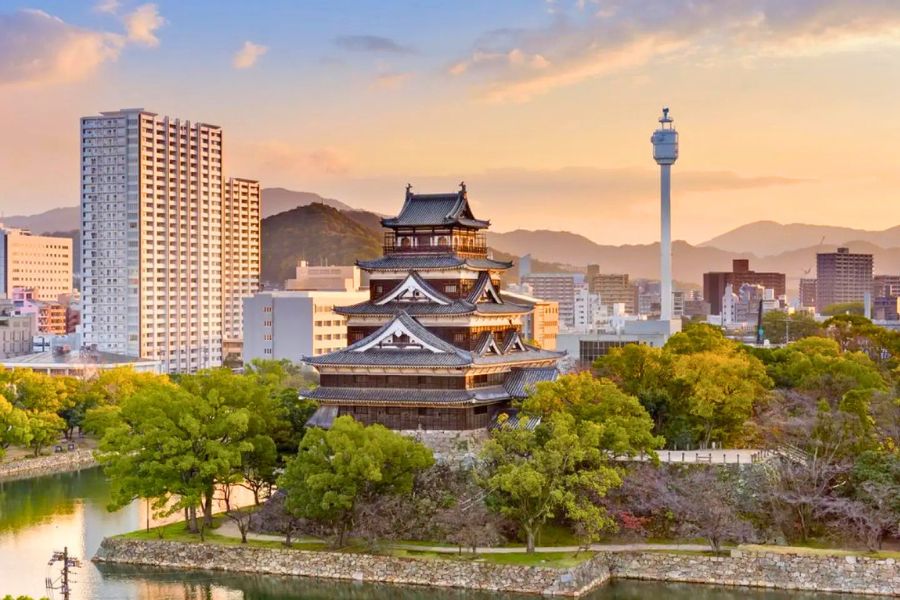
Hiroshima Castle adds another period of the city’s history to a port-day itinerary.
The original castle was built in the late sixteenth century and became the center of the surrounding castle town. It was destroyed in the atomic bombing and later reconstructed.
The grounds and moat can be included relatively easily when exploring central Hiroshima.
If Peace Memorial Park is your main priority, however, Hiroshima Castle should be treated as an optional addition rather than something that forces you to rush through the museum or memorials.
Try Hiroshima-Style Okonomiyaki
Food can be one of the easiest ways to add a lighter experience to a historically focused Hiroshima day.
Hiroshima-style okonomiyaki is prepared in layers and commonly includes batter, cabbage, pork, noodles, egg and sauce.
The city has numerous specialist restaurants, including concentrations around the central shopping districts.
If your itinerary combines the Peace Park with Miyajima, a long restaurant stop may not be practical. For a city-only day, however, allowing time for okonomiyaki can make the visit feel much less rushed.
Can You Visit Miyajima from Hiroshima Cruise Port?
Yes. Miyajima is one of the most popular excursions from Hiroshima Port and can be reached by boat or by a combination of road or rail transport and ferry.
The island is home to Itsukushima Shrine, famous for its large vermilion torii gate standing in the tidal waters of Hiroshima Bay.
Miyajima is not simply a photo stop. The island also includes traditional streets, temples, deer, forested hills and additional shrines, so allow enough time to experience it properly.
For cruise passengers, the biggest consideration is the complete transport chain. You need time to travel from the cruise terminal to the ferry connection, cross to Miyajima, explore the island and complete the entire journey back to the ship.
Getting to Miyajima from Hiroshima Port
One useful option is to travel from the cruise terminal area to Ujina Passenger Terminal and use a high-speed boat toward Miyajima when schedules align with your call.
Another common route involves traveling toward Miyajimaguchi and then taking the short ferry crossing to Miyajima.
There is also a World Heritage ferry route connecting the Peace Memorial Park area with Miyajima, which can be particularly useful when combining the two major UNESCO sites during the same day.
Ferry timetables can vary, so independent passengers should never build a cruise itinerary around a connection they have not checked for their actual port date.
Best Things to Do on Miyajima
Visit Itsukushima Shrine
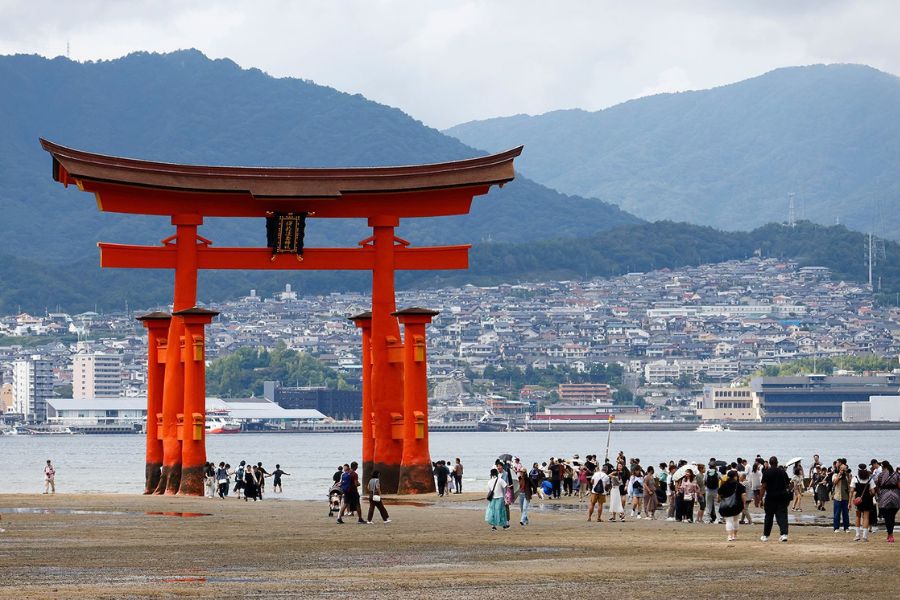
Itsukushima Shrine is Miyajima’s defining landmark and one of Japan’s most famous religious sites.
Parts of the shrine complex stand over the tidal flats, creating the impression that the buildings float above the sea when the tide is high.
The shrine and surrounding landscape have been shaped by the island’s long sacred tradition, in which the island itself was considered holy.
The appearance changes dramatically with the tide. High tide emphasizes the floating effect, while low tide exposes more of the seabed around the structures.
Both conditions offer different experiences, so cruise passengers should not consider a visit unsuccessful simply because the tide is not at its highest.
See the Great Torii Gate
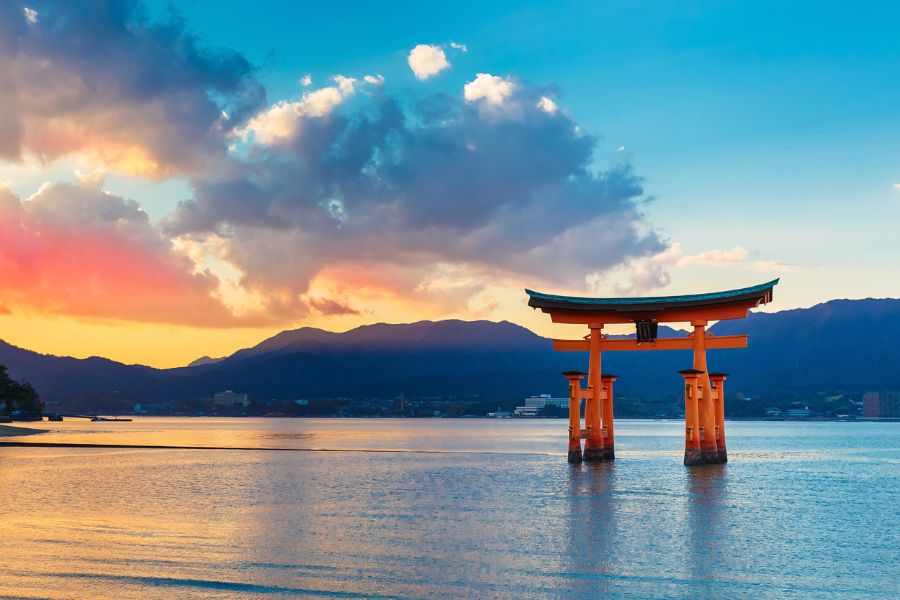
The large vermilion torii standing offshore is one of the most photographed views in Japan.
At higher tide, it appears to float in the sea. At lower tide, visitors may be able to see more of its base and surrounding tidal flats.
The gate is best understood as part of the wider Itsukushima Shrine landscape rather than as a separate photo stop.
Explore Miyajima’s Traditional Streets
The streets between the ferry pier and Itsukushima Shrine contain small shops, restaurants and traditional buildings.
This is a useful place to try local snacks or buy souvenirs without adding another major attraction to the itinerary.
Miyajima is particularly known for maple-leaf-shaped momiji manju cakes and oysters from Hiroshima Bay.
Visit Daisho-in Temple
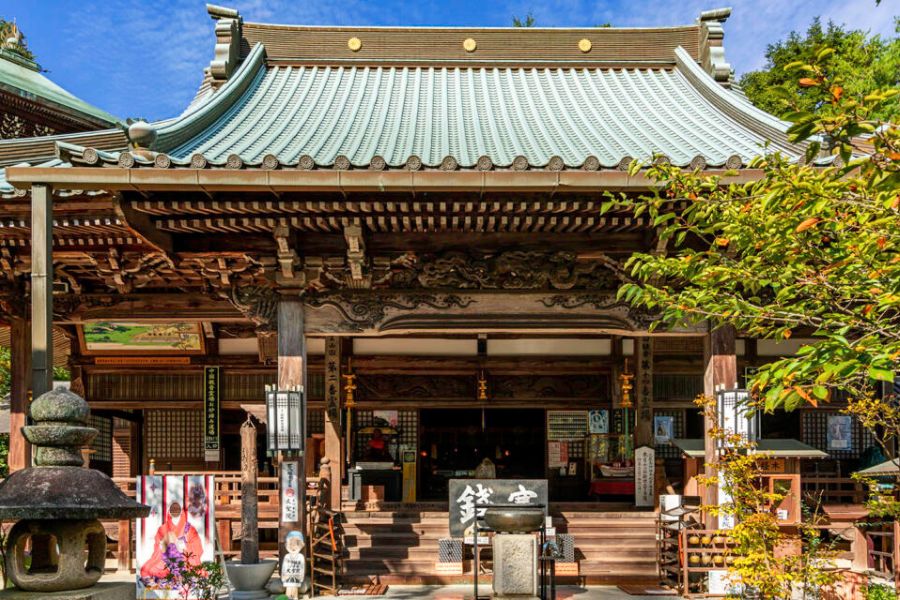
Daisho-in lies slightly away from the busiest waterfront route and provides a quieter religious experience.
The temple complex spreads across a hillside with halls, statues and stone steps surrounded by forest.
It is an excellent addition when your schedule allows, but cruise passengers with limited time should prioritize Itsukushima Shrine before adding Daisho-in.
The hills and steps also make this a more demanding stop for travelers with limited mobility.
Can You See Hiroshima and Miyajima in One Cruise Day?
Yes, and this is one of the strongest full-day options from Hiroshima Cruise Port.
The key is limiting the itinerary to the essential experiences rather than attempting to see every attraction in both destinations.
A realistic combined route might include:
Hiroshima Port → Miyajima → Itsukushima Shrine → Hiroshima Peace Memorial Park → Atomic Bomb Dome → Peace Memorial Museum → Port
Or the order can be reversed depending on traffic, ferry schedules and the ship’s arrival time.
Our six-hour Hiroshima & Miyajima Highlights Tour follows this approach, combining the Miyajima ferry and Itsukushima Shrine with Peace Memorial Park, the museum and Atomic Bomb Dome.
This is generally a much better use of six hours than trying to add Hiroshima Castle, Shukkeien, multiple Miyajima temples and extensive shopping into the same itinerary.
How to Spend One Day from Hiroshima Cruise Port
Option 1 Hiroshima Essentials for a Short Port Call
Port → Peace Memorial Park → Atomic Bomb Dome → Peace Memorial Museum → Shukkeien Garden → Port
This is the best option when your usable sightseeing time is around four hours.
The route remains entirely within Hiroshima city and avoids ferry schedules or long transport chains.
It also gives enough time to understand the city’s history rather than reducing the Peace Park to a quick photograph.
Option 2 Peace Memorial Park and Central Hiroshima
Port → Peace Memorial Park → Museum → Atomic Bomb Dome → Hiroshima Castle or Shukkeien → Okonomiyaki Lunch → Port
This works well for passengers who have already visited Miyajima or prefer to spend the full day understanding Hiroshima itself.
It is also the more flexible option because individual city stops can be shortened if the ship arrives later than expected.
Option 3 Hiroshima and Miyajima Highlights
Port → Miyajima → Itsukushima Shrine → Hiroshima Peace Memorial Park → Atomic Bomb Dome → Museum → Port
This is my preferred route for first-time visitors with a sufficiently long port call.
It combines Hiroshima’s two most important visitor experiences while keeping the sightseeing list disciplined.
The route involves more transportation and moderate walking, but it gives a far broader impression of Hiroshima Prefecture than a city-only visit.
Option 4 Miyajima-Focused Day
Port → Miyajima → Itsukushima Shrine → Traditional Streets → Daisho-in → Local Lunch → Port
This is a good choice for passengers who have previously visited Peace Memorial Park or whose main interest is traditional Japan and Seto Inland Sea scenery.
Leaving more time on the island also allows the visit to feel significantly less rushed.
Option 5 Alternative Hiroshima and Iwakuni
Port → Iwakuni → Kintaikyo Bridge → Yoshika Park → Iwakuni Castle → Return toward Hiroshima → Port
Repeat visitors may prefer to look beyond the classic Hiroshima–Miyajima combination.
Iwakuni is particularly known for the five-arched Kintaikyo Bridge and provides a mixture of castle-town history and mountain scenery.
Our seven-hour Best of Iwakuni with Bullet Train offers another option for passengers who have already seen Hiroshima’s headline attractions.
Getting Around from Hiroshima Cruise Port
Taxi
A taxi is one of the simplest ways to reach central Hiroshima from the Ujina cruise area.
It is especially useful for small groups or passengers who want to begin sightseeing quickly without learning the tram network.
On the return journey, make sure the driver has the exact cruise terminal or berth information rather than simply asking for “Hiroshima Port,” as the wider port area includes several facilities.
Hiroshima Streetcar
Hiroshima’s streetcars are one of the city’s most distinctive and useful forms of public transport.
Services from the Hiroshima Port area connect toward central Hiroshima and can be used to reach districts around the Peace Memorial Park and other city attractions.
The streetcar works particularly well for independent passengers who plan to stay within Hiroshima city.
Allow more time than you would with a direct taxi or private vehicle, particularly on a busy port day.
Ferry
Water transport is an important part of sightseeing around Hiroshima Bay.
Passengers planning Miyajima may use ferry services from the wider Ujina area, Miyajimaguchi or the World Heritage route connecting Peace Memorial Park with Miyajima.
The best option depends on your starting point and timetable on the day.
Always check both outbound and return departures before leaving for Miyajima independently.
Private Vehicle and Guide
A private vehicle is particularly useful when your itinerary combines the cruise port, central Hiroshima and ferry connections.
It removes time spent navigating several local transport changes and allows the route to be adjusted if disembarkation, museum queues or ferry timing affects the schedule.
A licensed guide can also provide important historical context at Peace Memorial Park, where many of the individual monuments make much more sense when understood as part of the wider story.
Can You Explore Hiroshima Independently?
Yes. Hiroshima is a relatively manageable destination for independent cruise passengers.
A city-only itinerary using the streetcar, walking and taxi is straightforward for travelers comfortable with public transport.
Miyajima can also be visited independently, but the day becomes more time-sensitive because ferry connections are added to the journey.
A shore excursion becomes more useful when:
- you want to combine Hiroshima city and Miyajima;
- your ship has a limited port window;
- you want transport coordinated between the port and ferry;
- you prefer historical interpretation from a licensed guide;
- you are traveling with senior passengers or prefer less transport planning;
- you want the return journey structured around your ship schedule.
Walking and Mobility Considerations in Hiroshima
Hiroshima city can generally be adapted well to different walking levels.
Peace Memorial Park is largely flat, but visitors should expect sustained walking and standing, particularly when including the museum and several memorials.
Shukkeien Garden includes paths and bridges, while Hiroshima Castle may involve additional walking depending on which parts you choose to visit.
Miyajima requires more consideration. The route between the ferry pier and Itsukushima Shrine is manageable for many travelers, but adding Daisho-in, Mt. Misen or extensive island exploration introduces slopes and stairs.
For senior passengers, the most comfortable combined day usually means focusing on Itsukushima Shrine plus the essential Peace Memorial Park sites rather than trying to cover every attraction in both locations.
The Hiroshima & Miyajima Highlights Tour is currently listed with a moderate walking level and combines vehicle and ferry transportation with the major sightseeing stops.
What to Eat During a Hiroshima Port Day
Hiroshima-Style Okonomiyaki

Okonomiyaki is the city’s signature comfort food and an excellent choice during a city-focused itinerary.
The Hiroshima version is prepared in layers rather than mixing all ingredients together, typically adding cabbage, pork, noodles and egg.
Hiroshima Oysters
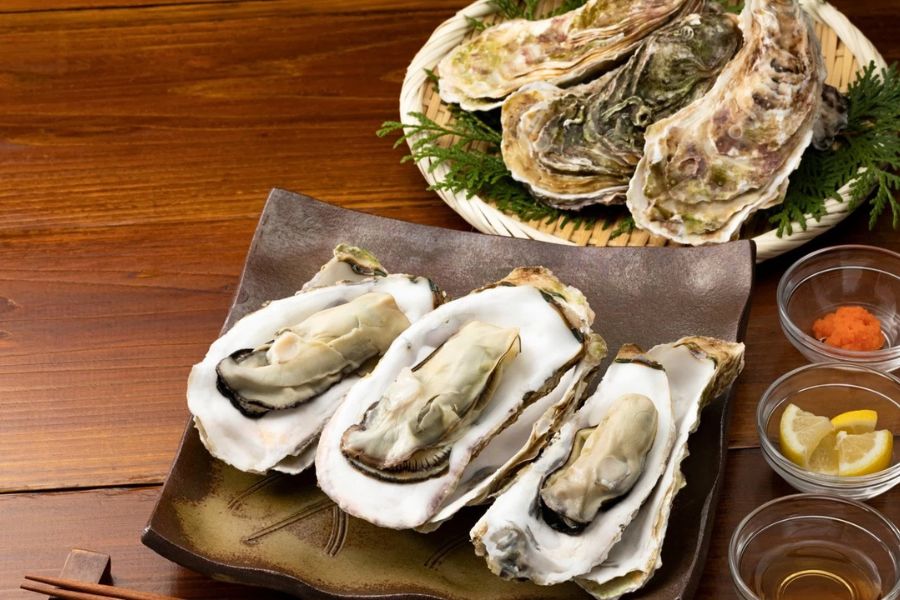
Hiroshima Bay is one of Japan’s best-known oyster-producing areas.
Oysters appear in several preparations, including grilled, fried and served with local dishes. Miyajima is an easy place to try them during an island visit.
Momiji Manju
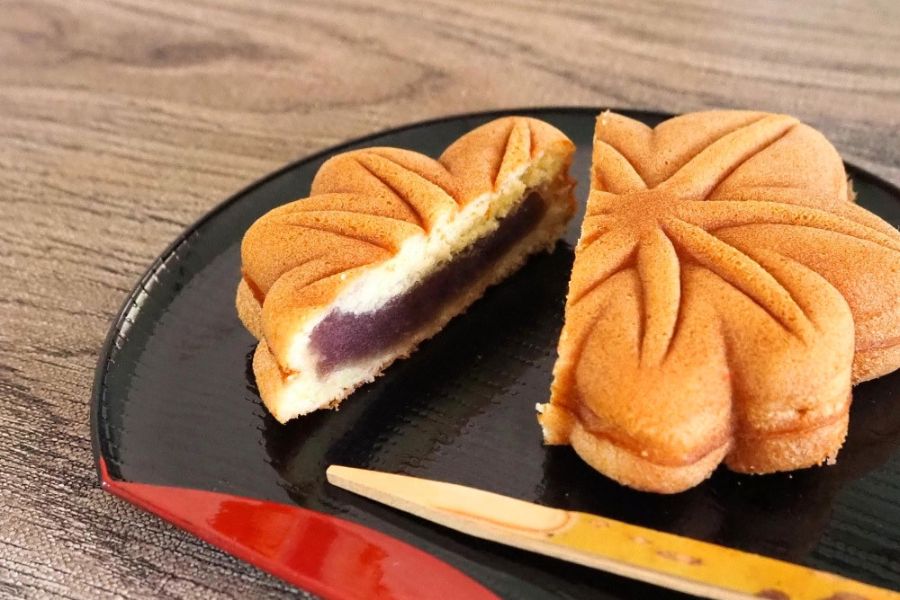
Momiji manju are small maple-leaf-shaped cakes strongly associated with Miyajima.
Traditional versions contain sweet red bean paste, although many other fillings are now available.
They are easy to sample without adding a long food stop to a tightly scheduled port day.
How Much Time Do You Need in Hiroshima?
Hiroshima is flexible because a meaningful city visit can be completed in a half day, while longer calls open the possibility of Miyajima.
- Around 3–4 usable hours: focus on Peace Memorial Park, the museum, Atomic Bomb Dome and perhaps Shukkeien.
- Around 4–5 usable hours: explore Hiroshima city more comfortably or choose a focused Miyajima visit.
- Around 5–6 usable hours: Hiroshima and Miyajima can become realistic with efficient transport and a disciplined itinerary.
- Around 6–7+ usable hours: combine both major destinations at a more comfortable pace or add one carefully selected extra stop.
These are planning examples rather than guarantees. Ferry schedules, museum waiting times, road conditions and your ship’s exact port hours can all affect the day.
Is Miyajima Worth It on a Short Cruise Call?
It depends on what you would have to sacrifice.
If reaching Miyajima leaves only enough time for a rushed photograph at Itsukushima Shrine before immediately returning, I would generally prioritize Hiroshima city instead.
Peace Memorial Park and the museum are not attractions that benefit from being hurried, and they are central to understanding Hiroshima.
If your schedule leaves enough time for at least a meaningful visit to Itsukushima Shrine and a short walk around the island, Miyajima becomes much more worthwhile.
For a first visit, the ideal situation is enough time to see both rather than choosing one at the expense of the other.
Should You Visit Hiroshima or Miyajima First?
There is no single correct order.
The best sequence depends on your ship arrival, ferry schedule, museum timing, traffic and predicted crowd levels.
Miyajima first can work well when an early ferry connection is convenient, leaving the more flexible city sightseeing for later.
Hiroshima first may make more sense when the museum is a priority or when ferry timing is better later in the day.
If traveling independently, check the full transport schedule before deciding. If using a private excursion, the local guide and driver can choose the order that makes the most sense for the actual port call.
How Early Should You Return to Hiroshima Cruise Port?
Always follow the all-aboard time provided by your cruise line and plan to return to the correct Ujina berth comfortably before that deadline.
A city-only itinerary is relatively flexible because Peace Memorial Park is not far from the port.
Miyajima requires a larger margin. The journey includes a ferry plus onward transport to the cruise terminal, so missing one connection can affect the entire return schedule.
Do not plan to take the last theoretically possible ferry that would still get you back before all aboard.
If the day begins running late, remove an optional attraction or shopping stop instead of reducing your return buffer.
Is Hiroshima Worth Visiting on a Cruise?
Absolutely. Hiroshima offers one of the most varied and meaningful port days on a Japan cruise.
A shorter call can focus entirely on Peace Memorial Park and the city’s history. A longer day can add Miyajima, where the atmosphere changes completely to shrines, traditional streets and the landscapes of the Seto Inland Sea.
The key is not trying to fit every famous attraction into the same day.
For many first-time cruise passengers, the strongest itinerary is simply Itsukushima Shrine on Miyajima plus Peace Memorial Park, the Atomic Bomb Dome and Peace Memorial Museum.
That combination provides enough contrast and depth to make Hiroshima memorable without turning the port day into a sightseeing race.
To compare the options, browse our Hiroshima shore excursions for cruise passengers. If you would prefer an itinerary based on your ship schedule, interests and walking preference, you can also create your own private shore excursion.
Frequently Asked Questions About Hiroshima Cruise Port
Where do cruise ships dock in Hiroshima?
International cruise ships generally use cruise facilities in the Ujina area of Hiroshima Port. Large ships may berth at the Ujina Foreign Trade Wharf, so passengers should always check the exact terminal or berth information supplied by their cruise line.
How far is Hiroshima cruise port from Peace Memorial Park?
The Ujina port area lies several kilometers south of central Hiroshima. The Atomic Bomb Dome and Peace Memorial Park can typically be reached in roughly twenty minutes by taxi under normal traffic conditions, while public transport takes longer.
Can you walk from Hiroshima cruise port to the city center?
Walking all the way to the main central attractions is not the most efficient use of a limited cruise day. Taxi, tram, shuttle or arranged vehicle are better options for reaching Peace Memorial Park.
Can you visit Miyajima from Hiroshima cruise port?
Yes. Miyajima can be reached using ferry connections from the Hiroshima area or by traveling to Miyajimaguchi and taking the short ferry crossing. The best route depends on the ferry schedule and your available port time.
Can you visit Hiroshima and Miyajima in one cruise day?
Yes. With around six or more usable sightseeing hours and efficient transportation, many passengers can combine Itsukushima Shrine on Miyajima with Peace Memorial Park, the Atomic Bomb Dome and Peace Memorial Museum.
How long do you need at Hiroshima Peace Memorial Park?
A quick walk through the outdoor memorials can be completed relatively quickly, but passengers who want to visit the Peace Memorial Museum and understand the main sites should allow significantly more time. For most first-time visitors, the Peace Park area should be treated as a major part of the day rather than a brief photo stop.
Is Miyajima better at high tide or low tide?
Both offer different experiences. At higher tide, Itsukushima Shrine and the Great Torii appear to float above the water. At lower tide, more of the tidal flats and the base of the torii are visible. Cruise passengers should generally plan around their ship schedule rather than sacrificing a comfortable return solely to match a particular tide.
What are the best things to do from Hiroshima cruise port?
For first-time visitors, the main highlights are Hiroshima Peace Memorial Park, the Atomic Bomb Dome, Peace Memorial Museum and Miyajima’s Itsukushima Shrine. Shukkeien Garden, Hiroshima Castle and central Hiroshima can be added when time allows.
Can you explore Hiroshima independently from the cruise port?
Yes. Hiroshima’s tram network, taxis and ferry services make independent sightseeing possible. Combining the city with Miyajima requires more careful timing because several transport stages need to fit around the ship’s all-aboard time.
Is Hiroshima suitable for senior cruise passengers?
Yes. A city-focused itinerary can be arranged with vehicle transfers and mostly flat walking around Peace Memorial Park. Miyajima adds more walking, and attractions such as Daisho-in involve slopes and steps, so the route should be adapted to the group’s preferred pace.
How many hours do you need in Hiroshima?
Three to four usable hours can cover the essential Hiroshima city sites. Around five to six hours begins to make a combined Hiroshima and Miyajima itinerary realistic, while a longer call allows a more relaxed experience.
Berth assignments, ferry schedules, attraction access and cruise timings can change. Always reconfirm your ship’s Hiroshima berth, ferry arrangements and all-aboard time before finalizing your port-day plans.


 Send Inquiry