
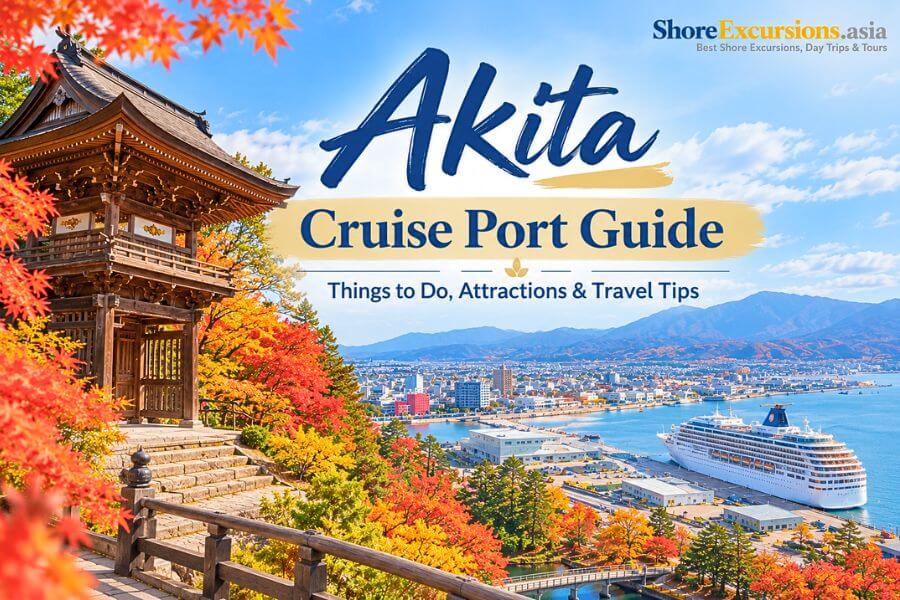
Akita offers cruise passengers a quieter and more regional side of Japan, combining samurai history, distinctive folklore, traditional food, sake culture, mountain scenery and the dramatic coastal landscapes of the Oga Peninsula. This Akita Cruise Port Guide from Shore Excursions Asia explains where cruise ships dock, what you can realistically see during a port day, and how to choose the right itinerary for your cruise.
Akita Cruise Port is located outside the central city, while some of the prefecture's most interesting destinations are even farther away. A short port call can work well around the port and Akita city, while a longer call may allow you to travel toward Oga, Kakunodate or Lake Tazawa. For cruise passengers who prefer a professionally planned route, explore our Akita Shore Excursions for private and small-group itineraries built around your ship's schedule.
Where Do Cruise Ships Dock in Akita?
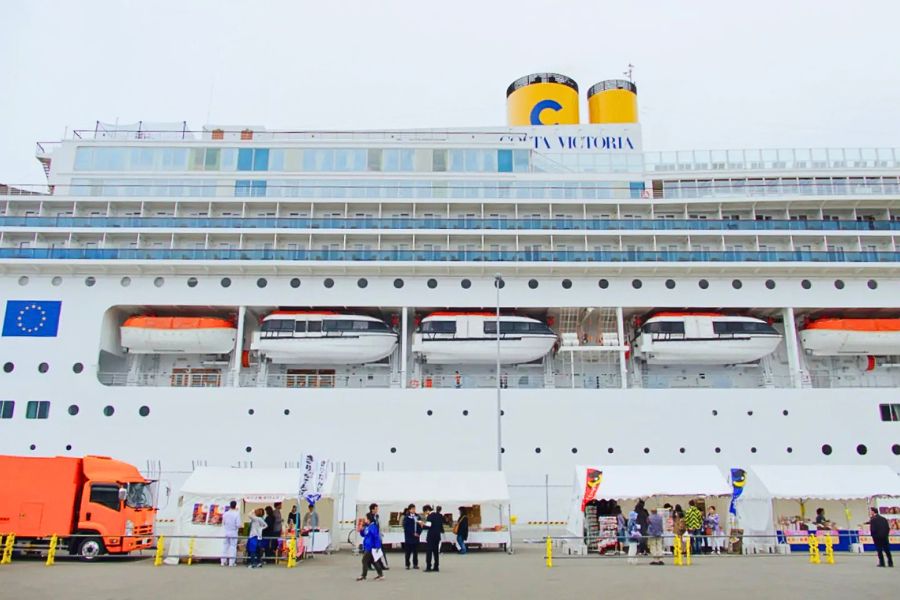
Cruise ships visiting Akita normally use the Nakajima Wharf area at Akita Port, where the Akita Port Cruise Terminal is located.
The cruise berths are listed as Nakajima Wharf No. 2 and No. 3. The terminal is in the Tsuchizaki area of Akita City, northwest of the central city.
This location is important because Akita is not a traditional walk-off port where passengers can simply leave the ship and immediately find the city's main sightseeing district.
The cruise terminal is close to Port Tower Selion, but central Akita and JR Akita Station are farther away.
Akita Cruise Port at a Glance
- Main cruise area: Nakajima Wharf No. 2 and No. 3
- Port area: Tsuchizaki, Akita City
- Nearest major landmark: Port Tower Selion
- Selion from the cruise berth: roughly a 10-minute walk
- Akita Station: approximately 25–30 minutes by road, depending on traffic and transport
- Central Akita: not realistically walkable from the cruise terminal
- Main regional excursions: Oga Peninsula, Kakunodate and Lake Tazawa
Is Akita Cruise Port Close to the City?
Not particularly. One of the easiest mistakes for first-time visitors is to assume that because the cruise terminal is officially in Akita City, the main downtown attractions are immediately outside the ship.
They are not. The central city and JR Akita Station are several kilometers from the cruise terminal. Passengers generally need a taxi, bus, cruise-line shuttle when available, or arranged private transportation to reach the central sightseeing area.
The situation is different for Port Tower Selion, which is located close to the cruise berth and can be visited on foot.
This makes Selion one of the most practical attractions for passengers with very limited time ashore.
Important: The Akita Cruise Train Is No Longer Running
Some older Akita cruise port guides still mention a dedicated cruise train connecting Akita Port with JR Akita Station.
Do not rely on this information for a 2026 or later cruise.
The former cruise passenger rail service ended in 2026, and the port railway connection is no longer a current cruise-day transportation option.
Instead, passengers should check their ship's daily program for any cruise-line shuttle service. If no suitable shuttle is provided, taxi, local bus connections or pre-arranged private transportation are the practical alternatives.
This is especially important if you are planning a cruise-day itinerary around the Akita Shinkansen to Kakunodate or Lake Tazawa. The journey to the railway station is now part of the overall port-day calculation.
Port Tower Selion: The Easiest Attraction From the Cruise Terminal
Port Tower Selion is the most convenient sightseeing option for passengers who want to see something immediately after leaving the ship.
The tower rises 143 meters above the port area, with an observation deck approximately 100 meters above ground level.
From the observation deck, visitors can look across the Sea of Japan, Akita City, the Oga Peninsula and, on clear days, distant mountain landscapes.
Because the tower is so close to the cruise berth, it is useful for several types of cruise passengers:
- travelers with a short port call;
- passengers waiting for arranged transportation;
- senior travelers who prefer minimal walking;
- families looking for an easy first stop;
- and independent travelers who want a simple introduction to Akita.
The surrounding Michi-no-Eki Akita Port area also includes shops and local products, making it possible to combine the observation deck with a quick look at Akita specialties.
Best Things to Do From Akita Cruise Port
Akita offers several very different cruise-day experiences. Rather than thinking of the prefecture as one sightseeing area, it is better to divide your options into several routes:
- Akita Port & City: Selion, museums, Senshu Park, local food and urban culture;
- Oga Peninsula: Namahage, Mt. Kanpu and coastal scenery;
- Kakunodate: preserved samurai houses and traditional architecture;
- Lake Tazawa: deep blue crater-lake scenery and mountain landscapes;
- Akita food & sake: regional cuisine and brewery experiences.
If you are comparing different Japan shore excursions, Akita stands out for travelers who want a more regional experience built around folklore, traditional culture, history and nature rather than major metropolitan attractions.
Akita City: A Compact Introduction to Local Culture
If your cruise call is relatively short, staying closer to Akita City can be the safest option.
Central Akita offers a combination of history, art, local food and traditional culture that can be explored without committing to a long regional transfer.
Key city attractions include:
- Senshu Park;
- Akita Museum of Art;
- Akita City Folk Performing Arts Heritage Center;
- Kanto Festival Center;
- Akarenga Kyodokan;
- local restaurants and markets;
- and Port Tower Selion.
Senshu Park: Akita's Former Castle Grounds
Senshu Park occupies the former site of Kubota Castle, the historic stronghold of the Satake clan.
Today, the park combines traces of Akita's feudal history with gardens, walking paths and seasonal scenery.
It is particularly attractive during spring when cherry blossoms appear across the park.
The park also changes significantly through the year. Summer brings lush greenery, while autumn foliage adds another layer of color to the historic landscape.
For travelers who want a taste of traditional Japan without spending several hours traveling outside Akita, Senshu Park is a strong city option.
Akita Museum of Art
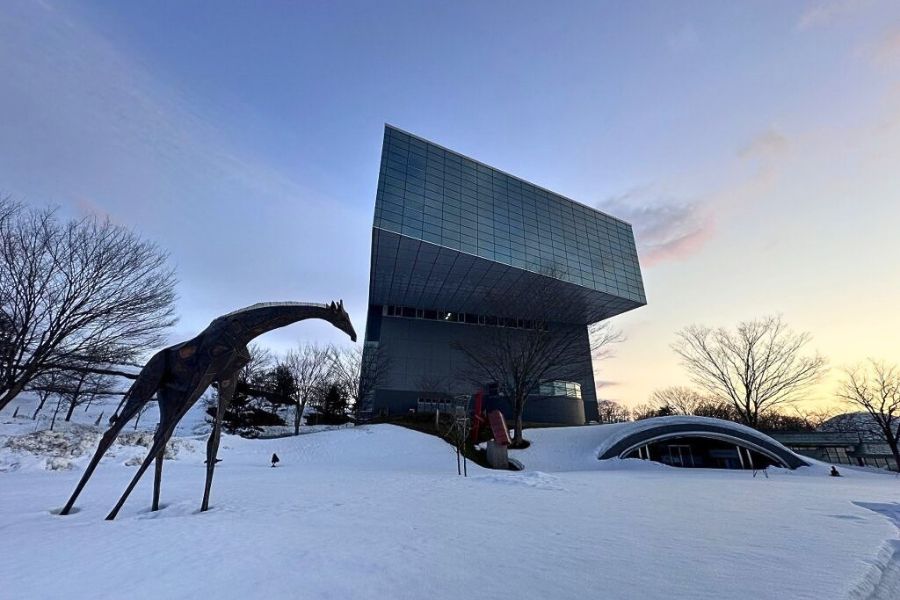
The Akita Museum of Art is located near Senshu Park and provides a cultural alternative to outdoor sightseeing.
The museum building was designed by architect Tadao Ando and is known for its distinctive geometric architecture.
One of its best-known works is Leonard Foujita's large mural depicting scenes of life in Akita.
Its location near the central city makes it practical to combine with Senshu Park and other Akita city attractions during a longer port call.
Kanto Festival Center: Experience Akita's Famous Lantern Tradition
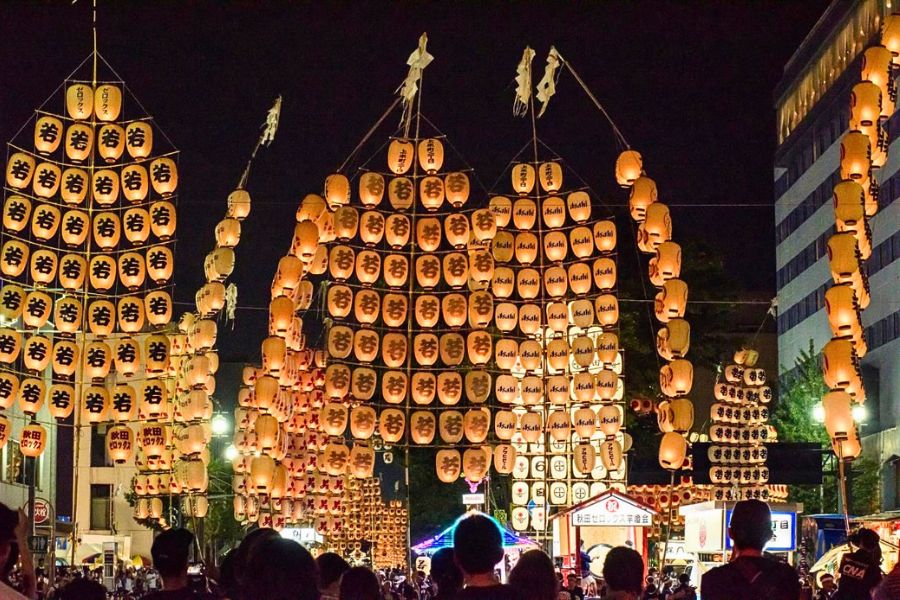
The Kanto Festival is one of Akita's most recognizable cultural traditions.
Held annually in early August, the festival features enormous bamboo poles decorated with rows of illuminated paper lanterns. Performers balance the poles using their palms, shoulders, hips and foreheads.
The tradition is closely connected with prayers for a successful harvest and is one of the major summer festivals of the Tohoku region.
The Kanto Festival Center provides a way to learn about the festival outside the main August event period.
For cruise passengers visiting outside festival season, this is a useful way to understand one of Akita's most distinctive cultural traditions without needing to time an entire cruise around the festival.
Akarenga Kyodokan: Akita's Historic Red-Brick Architecture
Akarenga Kyodokan is a historic red-brick building in central Akita that provides another perspective on the city's modern history.
The former Akita Bank headquarters combines Western architectural influences with Japan's late nineteenth- and early twentieth-century modernization.
It works particularly well for travelers interested in architecture and local history rather than large outdoor attractions.
Oga Peninsula: Akita's Most Distinctive Regional Experience
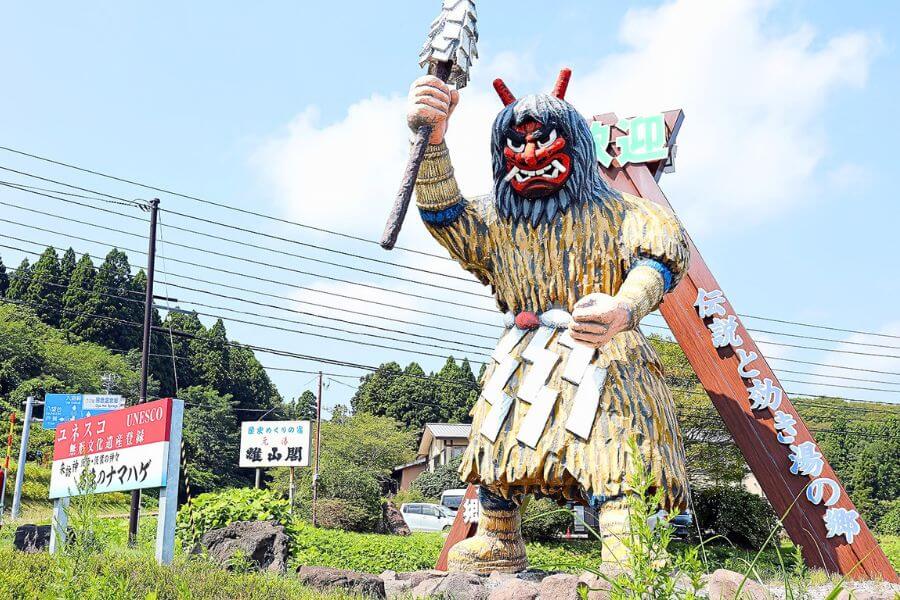
If you have enough time to travel beyond Akita City, the Oga Peninsula is one of the strongest choices.
The peninsula is famous for Namahage, a distinctive folk tradition that is deeply connected to the local identity of Oga.
It also offers coastal scenery, mountain landscapes, hot springs and regional food.
For cruise passengers, Oga is especially appealing because the combination of the Namahage Museum, Shinzan Folklore Museum and Mt. Kanpu can form a coherent private excursion rather than a collection of unrelated stops.
Namahage Museum: Discover Oga's Folk Tradition
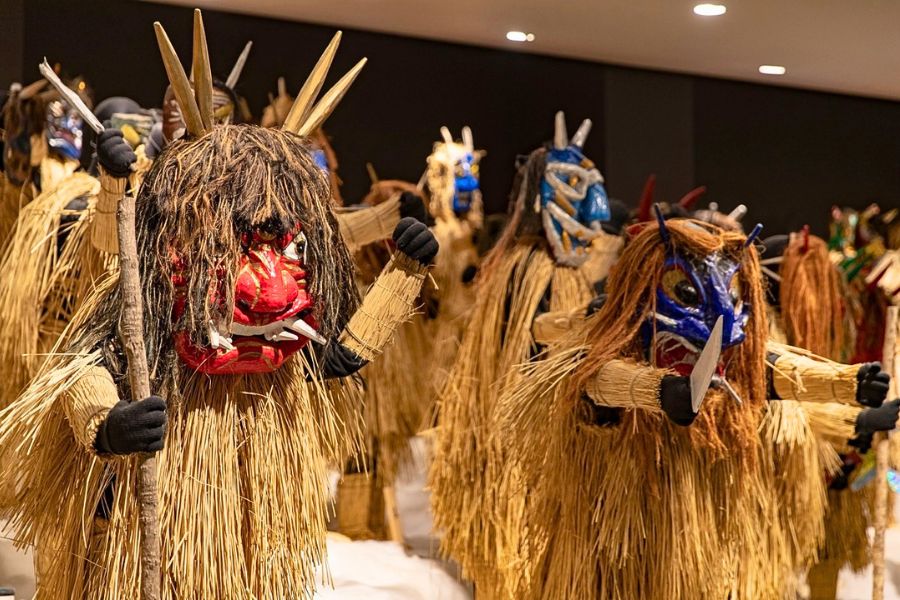
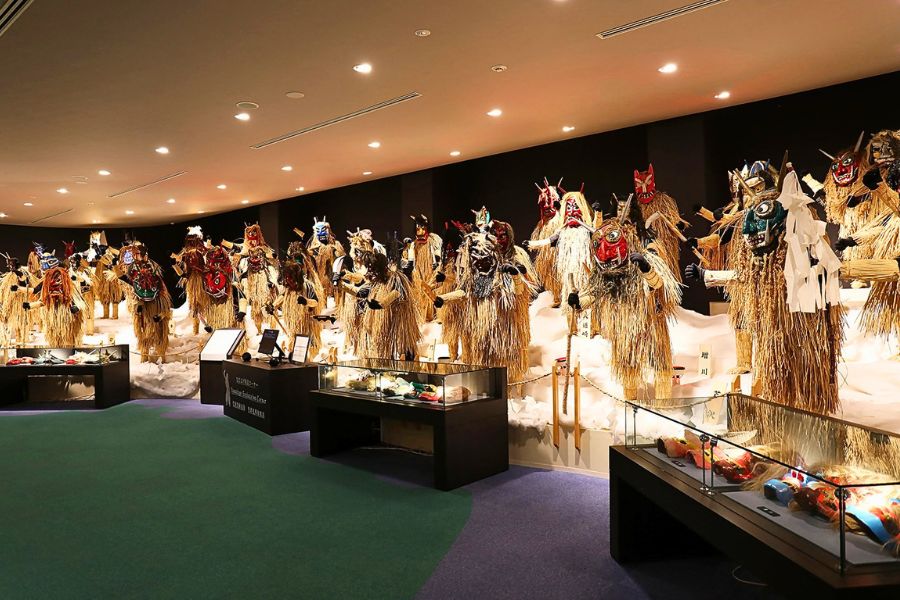
The Namahage Museum introduces one of northern Japan's most distinctive folk traditions.
Namahage are supernatural figures associated with the Oga Peninsula. Traditionally, masked figures visit homes around New Year's Eve, warning against laziness and bad behavior while wishing for health and a good harvest.
The tradition was designated a National Important Folk Cultural Property and was later included in UNESCO's Intangible Cultural Heritage recognition.
The museum displays masks and costumes from communities across Oga and provides a deeper explanation of the beliefs and customs behind the tradition.
Visitors can also see examples of Namahage masks and experience the visual character of the tradition without needing to visit Oga during New Year's Eve.
Shinzan Folklore Museum: See Namahage in Performance
Located near the Namahage Museum, the Shinzan Folklore Museum offers a more immersive experience.
The museum presents traditional Namahage performances in a preserved traditional-style house, allowing visitors to see how the figures interact with a household.
This is particularly valuable for cruise passengers because the performance provides cultural context that a museum display alone cannot offer.
For first-time visitors to Akita, combining the Namahage Museum with the Shinzan Folklore Museum creates a much stronger understanding of the Oga Peninsula's identity.
Mt. Kanpu: Panoramic Views Across Oga
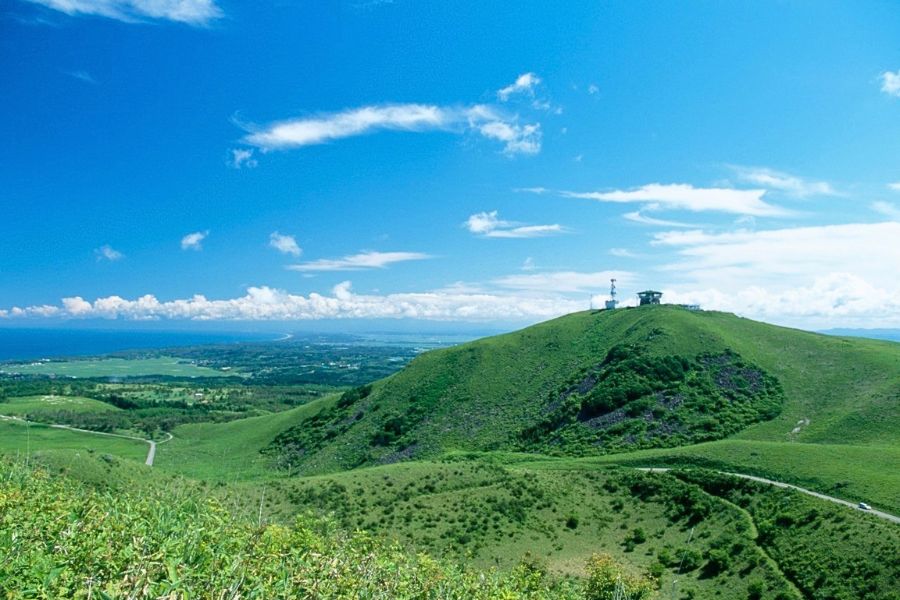
Mt. Kanpu rises above the Oga Peninsula and offers expansive views over the surrounding landscape.
The mountain is relatively low compared with Japan's major alpine destinations, but its position on the peninsula makes the summit particularly scenic.
The rotating observatory provides views across the Sea of Japan, Oga's coastline, surrounding countryside and mountain landscapes.
It is especially useful for cruise passengers because it adds a landscape component to an otherwise culture-focused Namahage itinerary.
A route combining:
- Namahage Museum;
- Shinzan Folklore Museum;
- and Mt. Kanpu
is one of the clearest ways to experience Oga during a cruise port day.
Can You Visit Oga Peninsula From Akita Cruise Port?
Yes, and it is one of the most practical regional excursions when you have enough time.
However, Oga should not be treated as a quick city sightseeing stop.
The peninsula is separated from the central Akita cruise area by road travel, so transportation time needs to be included in the itinerary from the beginning.
For a port call of around five to six usable sightseeing hours, a focused Oga itinerary can work with private transportation.
Trying to combine Oga with Kakunodate or Lake Tazawa on the same standard port day is generally too ambitious.
Kakunodate: Akita's Samurai Town
Kakunodate is one of the most rewarding destinations in Akita Prefecture for travelers interested in samurai history.
The former castle town developed in the early seventeenth century and retains a remarkably well-preserved collection of samurai residences.
Its historic streets are often described as one of the best places in Japan to experience the atmosphere of a traditional samurai district.
The area is particularly beautiful during spring when weeping cherry trees bloom along the Hinokinai River and around the historic district.
What Can You See in Kakunodate?
- Samurai House District;
- preserved samurai residences;
- traditional Japanese gardens;
- cherry-bark craft known as kabazaiku;
- local sweets and food;
- and historic merchant buildings.
Kakunodate is best for travelers who want architecture, history and traditional Japanese atmosphere rather than modern city sightseeing.
Is Kakunodate Practical From Akita Cruise Port?
This depends strongly on your ship's arrival and departure times.
From JR Akita Station, Kakunodate can be reached in roughly 45–50 minutes by the Akita Shinkansen under normal conditions.
But cruise passengers must first travel from the port to Akita Station and then allow time to return to the ship.
That makes Kakunodate much more suitable for:
- longer port calls;
- ships arriving early in the morning;
- carefully timed private excursions;
- or passengers using a dedicated cruise-day itinerary.
It is not a destination that should automatically be recommended for every six-hour port call.
Lake Tazawa: Japan's Deepest Lake
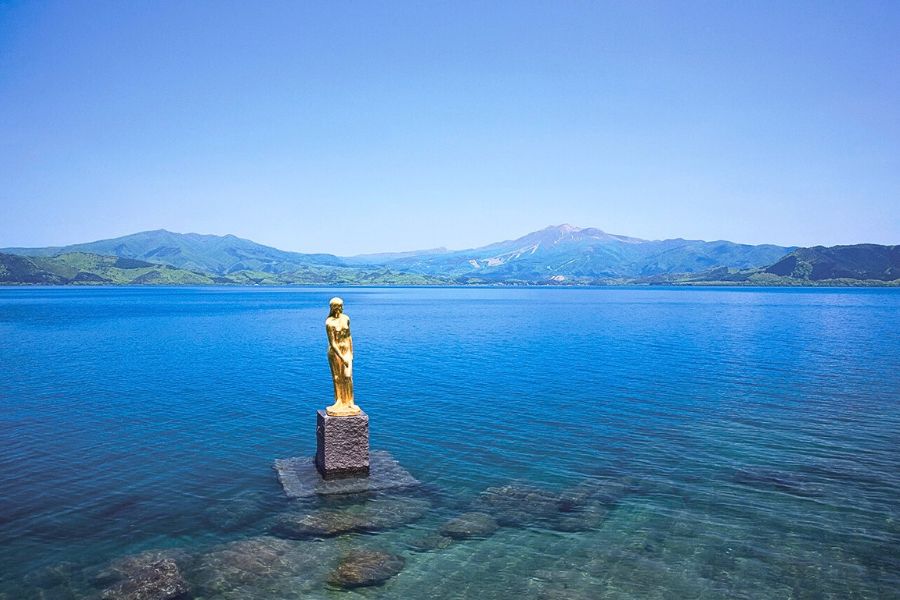
Lake Tazawa is a deep blue crater lake surrounded by mountains in eastern Akita Prefecture.
At 423 meters deep, it is the deepest lake in Japan.
The lake is known for its striking blue color, scenic mountain setting and the legend of Princess Tatsuko.
Visitors can enjoy lakeside scenery, viewpoints, boat experiences during the appropriate season and nearby cultural sites.
Lake Tazawa or Kakunodate?
These two destinations are often combined because they lie in the same broader region, but they provide very different experiences.
| Kakunodate | Lake Tazawa |
|---|---|
| Samurai history | Natural scenery |
| Historic residences | Deep blue crater lake |
| Traditional architecture | Mountain landscapes |
| Cherry blossoms in spring | Seasonal scenery throughout the year |
| Walking-focused | Scenic and relaxed |
Combining both can create a very rewarding full-day Akita excursion, but the route requires careful time management.
Akita Sake: A Strong Local Food and Culture Experience
Akita is one of Japan's important rice-producing regions, and the prefecture's sake culture is closely connected with its agricultural environment.
High-quality rice, clean water and a cold climate have supported sake production across the region for generations.
For cruise passengers, a brewery visit can be one of the easiest ways to connect food with local history and agriculture.
It can also be combined naturally with Kakunodate or Akita city depending on the port schedule.
What to Eat in Akita
A cruise day in Akita does not need to revolve entirely around sightseeing. Local food can be an important part of the experience, particularly when the port call is short and you want something distinctly regional.
- Kiritanpo: grilled pounded rice served with miso or in a hot pot;
- Inaniwa Udon: thin, hand-stretched regional noodles;
- Hinai Chicken: premium local chicken;
- Akita sake: sake produced using local rice and water;
- Hatahata: a fish strongly associated with Akita's regional food culture.
Akita Cruise Port Itinerary for 4–5 Hours
A shorter port call should stay relatively close to Akita.
A practical route is:
- Akita Cruise Port;
- Port Tower Selion;
- transfer to central Akita;
- Senshu Park;
- Akita Museum of Art or Kanto Festival Center;
- local lunch;
- return to the port.
This route minimizes long-distance travel and leaves more flexibility if transportation takes longer than expected.
For a very short call, simply combining Selion with one or two central attractions is safer than attempting Oga or Kakunodate.
Akita Cruise Port Itinerary for 5–6 Hours
With approximately five to six usable sightseeing hours, you can choose between a city-focused day and a focused Oga Peninsula excursion.
Option 1: Akita City and Local Culture
- Port Tower Selion;
- Senshu Park;
- Akita Museum of Art;
- Kanto Festival Center;
- local Akita lunch;
- return to port.
Option 2: Oga Peninsula
- Akita Port;
- Namahage Museum;
- Shinzan Folklore Museum;
- Mt. Kanpu;
- return to Akita Port.
Akita Cruise Port Itinerary for 7–8 Hours
A longer port call creates room for a regional excursion.
One of the strongest options is:
- Akita Port;
- Kakunodate Samurai House District;
- samurai residence;
- local lunch or sake experience;
- Akita city or Selion;
- return to port.
Another possibility is Kakunodate combined with Lake Tazawa.
This route is particularly attractive for travelers who want to combine traditional Japanese architecture with dramatic natural scenery.
Akita Cruise Port Itinerary for 9+ Hours
A longer port call provides considerably more flexibility.
Possible routes include:
- Kakunodate and Lake Tazawa;
- Oga Peninsula plus additional Akita city sightseeing;
- Kakunodate and a sake brewery;
- Akita city, local cuisine and regional cultural attractions;
- or a customized private itinerary based on your interests.
Even with nine or more hours, it is still better to choose one main regional direction rather than trying to cover Oga, Kakunodate and Lake Tazawa in a single day.
Akita or Oga Peninsula: Which Should You Choose?
| Akita City | Oga Peninsula |
|---|---|
| Shorter transfers | Longer road travel |
| Art and history | Namahage culture |
| Senshu Park | Namahage Museum |
| Kanto Festival Center | Shinzan Folklore Museum |
| Local food and shopping | Mt. Kanpu and coastal scenery |
| Better for shorter port calls | Better for a dedicated regional excursion |
If this is your first time in Akita and you have a relatively short port call, staying in the city is the lower-risk option.
If you have enough time and want something that feels particularly unique to northern Japan, Oga is one of the strongest choices.
Kakunodate or Oga Peninsula: Which Is Better?
| Kakunodate | Oga Peninsula |
|---|---|
| Samurai history | Regional folklore |
| Historic residences | Namahage culture |
| Traditional architecture | Coastal and mountain scenery |
| Excellent in spring | Strong year-round cultural appeal |
| Longer inland transfer | Longer road transfer |
| Best for history lovers | Best for folklore and local culture |
There is no universal winner.
Kakunodate is the stronger choice if you want samurai history and traditional architecture. Oga is more distinctive if you want folklore, local traditions and coastal scenery.
Akita in Spring
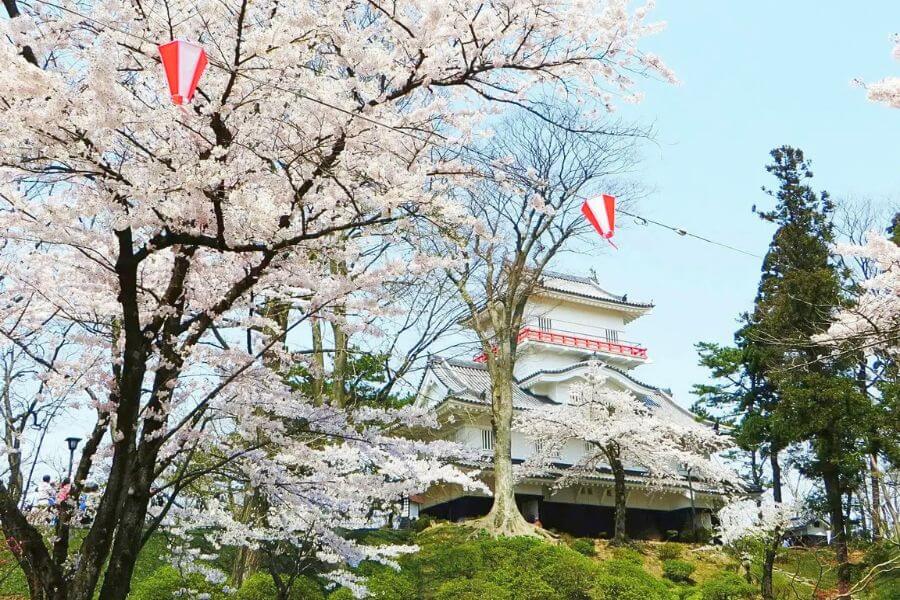
Spring is one of the most attractive times to visit Akita.
Kakunodate is particularly famous for its spring scenery, with weeping cherry trees and the historic samurai district creating one of the most recognizable spring landscapes in northern Japan.
Senshu Park in central Akita is also a popular cherry blossom destination.
Because Akita lies farther north than Tokyo, Kyoto and many of the country's southern destinations, cherry blossom timing is later and varies considerably by location and year.
If your cruise is part of a wider spring itinerary, our Japan in April guide provides broader seasonal planning.
Akita in Summer
Summer brings warmer temperatures and lush green landscapes to Akita.
The biggest cultural highlight is the Akita Kanto Festival, held in early August.
If your cruise happens to coincide with the festival, the experience is dramatically different from a normal port call.
Outside the festival period, summer is a good season for Oga Peninsula scenery, Lake Tazawa and other outdoor excursions.
Akita in Autumn
Autumn is one of the strongest seasons for a regional Akita shore excursion.
The cooler weather makes walking more comfortable, while mountain and rural areas begin developing seasonal color.
Kakunodate can be combined with autumn scenery, while Lake Tazawa and surrounding mountain areas provide a more natural landscape.
Autumn also works particularly well for travelers interested in Akita's food and sake culture.
For wider seasonal planning, see our Japan Fall Foliage Guide.
Akita in Winter
Winter gives Akita a very different character.
The prefecture receives substantial snowfall, and mountain destinations can become significantly more difficult to access than during spring, summer or autumn.
For cruise passengers, winter conditions make conservative itinerary planning particularly important.
City-based sightseeing can be more comfortable when snow or road conditions make long regional transfers less predictable.
Akita for Senior Travelers
Akita can work very well for senior cruise passengers when the itinerary is designed around realistic transfers and a comfortable walking pace.
Good options include:
- Port Tower Selion;
- Akita city cultural attractions;
- selected Oga Peninsula attractions with private transportation;
- Kakunodate with controlled walking time;
- Lake Tazawa scenic stops;
- and local food or sake experiences.
The key is not to confuse a geographically possible itinerary with a comfortable itinerary.
Kakunodate, Lake Tazawa and Oga all require more transportation than central Akita sightseeing.
Practical Tips for an Akita Cruise Port Call
1. Confirm Your Actual Port Call and All-Aboard Time
Do not plan an excursion using only the published arrival and departure times.
You need to account for disembarkation, the time required to reach your vehicle or transportation, and a conservative buffer before all-aboard.
2. Do Not Assume the Cruise Train Exists
Older Akita information may still mention the cruise train between Akita Port and Akita Station.
That service is no longer a current option in 2026.
3. Check Whether Your Cruise Line Provides a Shuttle
Shuttle arrangements can vary by cruise line and sailing.
Check the daily program or onboard information before relying on a particular shuttle route or departure time.
4. Keep the Farthest Destination Earlier in the Day
If your itinerary includes Kakunodate, Lake Tazawa or Oga, consider visiting the more distant destination earlier and finishing closer to Akita Port.
This gives you more flexibility if road traffic or sightseeing takes longer than expected.
5. Do Not Combine Too Many Regions
Oga Peninsula and Kakunodate are both interesting, but they lie in different directions from the port.
Trying to combine them with Lake Tazawa in a single standard port call can create an itinerary that looks impressive on paper but leaves little room for unexpected delays.
6. Consider Private Transportation
Private transportation is particularly valuable in Akita because the best regional attractions are spread across a large area.
A private vehicle allows you to minimize transfers, control the pace and adjust the itinerary according to your ship's schedule.
7. Check Seasonal Conditions
Akita changes dramatically by season.
Spring can bring cherry blossoms, summer brings festivals and greenery, autumn brings foliage and winter can bring substantial snow.
Do not assume that an itinerary that works perfectly in October will be equally practical in January.
Akita Cruise Port vs Other Northern Japan Ports
| Port | Main Experience |
|---|---|
| Akita | Samurai history, Namahage, sake and regional landscapes |
| Aomori | Nebuta culture, Hirosaki and northern heritage |
| Sakata | Merchant history, rice trade and Mt. Haguro |
| Niigata | Sake, seafood, port-city culture and Sado Island |
| Otaru | Historic canal, crafts, seafood and access to Sapporo |
Akita is particularly strong for travelers who want a combination of regional Japanese culture and landscapes rather than a major metropolitan experience.
It also provides a useful contrast with other northern ports because Oga's Namahage tradition and Kakunodate's samurai heritage are both strongly tied to the local identity.
Frequently Asked Questions About Akita Cruise Port
Where do cruise ships dock in Akita?
Cruise ships visiting Akita normally use Nakajima Wharf No. 2 and No. 3 at Akita Port, where the Akita Port Cruise Terminal is located.
Is Akita Cruise Port close to the city center?
No. The cruise terminal is in the Tsuchizaki area, several kilometers from central Akita. Passengers generally need a taxi, bus, cruise-line shuttle when available or arranged transportation to reach the city center.
Can I walk from Akita Cruise Port to Port Tower Selion?
Yes. Port Tower Selion is located close to the cruise berth and can be reached on foot in approximately ten minutes.
Does the Akita cruise train still operate?
No. The former cruise passenger train connecting Akita Port with Akita Station is no longer a current option in 2026. Travelers should check for cruise-line shuttle services or use taxi, bus or private transportation.
What are the best things to do from Akita Cruise Port?
Popular options include Port Tower Selion, Akita city attractions, the Namahage Museum, Shinzan Folklore Museum, Mt. Kanpu, Kakunodate, Lake Tazawa and local sake or food experiences.
Can I visit Oga Peninsula from Akita Cruise Port?
Yes. Oga Peninsula is one of the strongest regional excursions from Akita, particularly for the Namahage Museum, Shinzan Folklore Museum and Mt. Kanpu. Because the attractions require road travel, sufficient port time and private transportation are recommended.
Can I visit Kakunodate from Akita Cruise Port?
Yes, but it is better suited to longer port calls. The journey from JR Akita Station to Kakunodate takes roughly 45–50 minutes by Akita Shinkansen, and cruise passengers must also allow time to travel between the port and station.
Can I visit Lake Tazawa from Akita Cruise Port?
Yes. Lake Tazawa can be combined with Kakunodate for a longer regional excursion, but the route requires careful timing because both destinations are inland from the port.
Is Akita worth visiting on a Japan cruise?
Yes. Akita offers a distinctly regional Japanese experience centered on folklore, samurai heritage, food, sake, mountain scenery and traditional culture rather than major-city sightseeing.
What is Akita famous for?
Akita is known for Namahage folklore, Akita sake, Kiritanpo, Inaniwa Udon, Akita Inu dogs, Kakunodate's samurai district, Lake Tazawa and the Akita Kanto Festival.
What is Namahage?
Namahage are supernatural figures from the Oga Peninsula's traditional folklore. The masked figures are associated with New Year's visits to households and are traditionally understood as protective figures who warn against laziness while wishing for health and good fortune.
Is Kakunodate or Oga better for a cruise excursion?
Kakunodate is better for travelers interested in samurai history and traditional architecture. Oga is better for travelers interested in local folklore, Namahage culture and coastal scenery. The better choice depends on your port time and interests.
Does Akita have cherry blossoms?
Yes. Senshu Park and Kakunodate are both notable spring destinations, while the timing of blossoms is later than in many destinations farther south in Japan and varies by year.
Is Akita good for autumn foliage?
Yes. Mountain and inland areas around Akita, including Kakunodate and Lake Tazawa, can be particularly attractive during the autumn foliage season.
What food should I try in Akita?
Kiritanpo, Inaniwa Udon, Hinai Chicken, local sake and Hatahata are among the regional specialties worth trying during a cruise visit.
Is Akita suitable for senior travelers?
Yes. A private vehicle and carefully paced itinerary can make Akita comfortable for senior travelers. City sightseeing and selected regional attractions can be adapted to different walking levels.
Plan Your Akita Shore Excursion
Akita is one of the best Japanese cruise ports for travelers who want to go beyond the country's most familiar tourist destinations.
A short port call can focus on Selion and Akita city. A medium-length visit can explore the distinctive culture of the Oga Peninsula. Longer calls open the possibility of traveling toward Kakunodate and Lake Tazawa for samurai history, mountain scenery and traditional Japanese landscapes.
The key is choosing one realistic route based on your ship's actual time in port. Akita is large enough that trying to cover every major attraction in one day can quickly turn a rewarding excursion into a race against the clock.
Explore our Akita Highlight Tour for an Oga-focused experience, or discover our Kakunodate & Sake Brewery itinerary for a combination of samurai heritage and local sake culture.
For a longer regional route, our Lake Tazawa Cruise & Kakunodate combines two of Akita's most distinctive destinations, while Mt. Kanpuzan Observatory & Namahage Exploration focuses on Oga's folklore and coastal scenery.
If you have a different cruise schedule or want to combine attractions at your own pace, request a customized itinerary built around your ship's arrival, departure time and preferred sightseeing style.


 Send Inquiry