
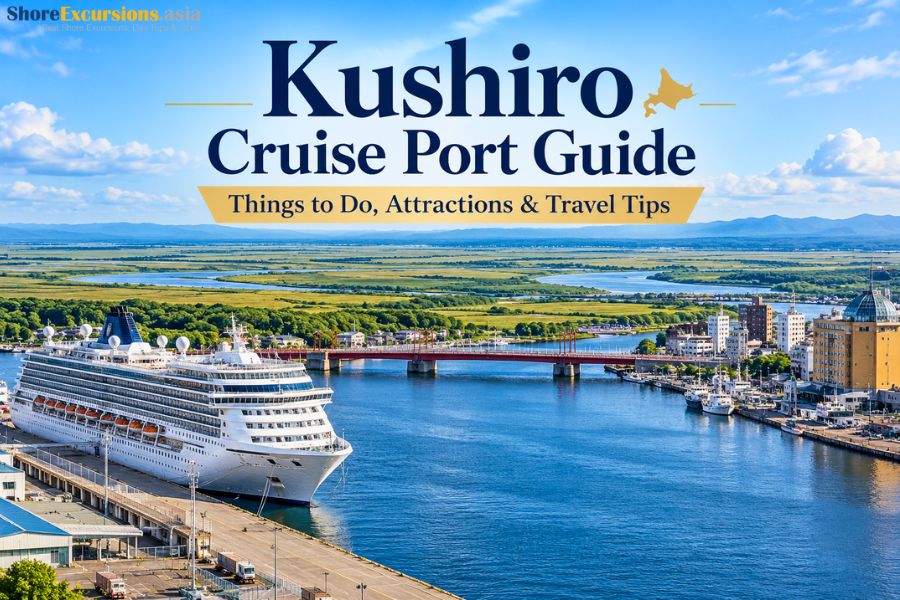
Kushiro offers cruise passengers a very different side of Japan. Located in eastern Hokkaido, the city is a gateway to vast wetlands, rare wildlife, volcanic landscapes, Ainu culture and some of the region's most distinctive seafood. This Kushiro Cruise Port Guide from Shore Excursions Asia explains where cruise ships dock, what you can realistically see during a port day, and how to choose an itinerary that fits your ship's schedule.
One of the first things to understand is that Kushiro Port has two cruise berth areas. The East Area Earthquake-resistant Cruise Ship Terminal is located near the city center, while larger passenger ships that cannot use that terminal may be received at West Area No. 4 Wharf. The difference matters because the East Area is close to Kushiro's markets, waterfront and station, while the West Area requires additional transportation into the city.
For travelers looking for a professionally planned route, explore our Kushiro Shore Excursions for private and small-group itineraries covering Kushiro Marshland, red-crowned cranes, Lake Akan, Ainu culture and local food.
Where Do Cruise Ships Dock in Kushiro?
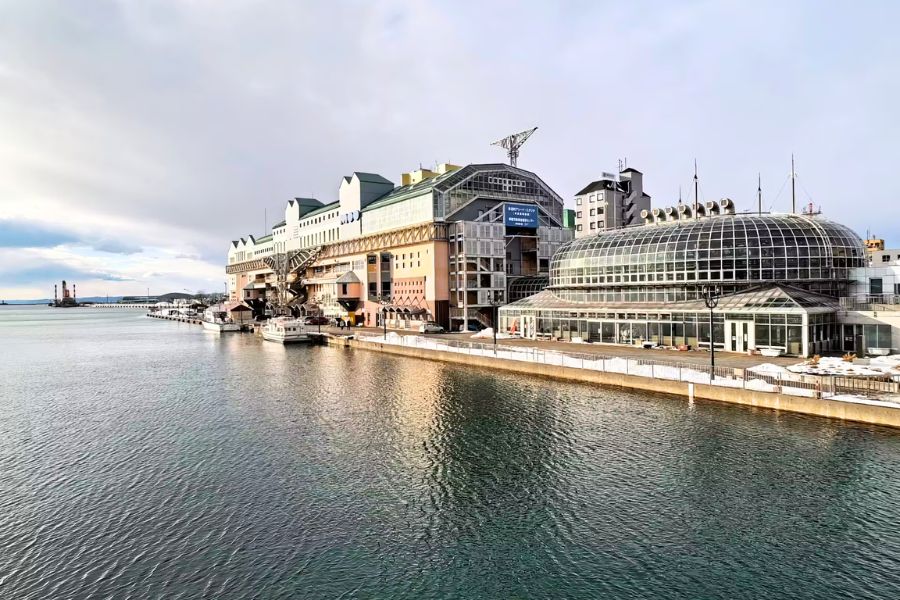
Kushiro Port is divided into eastern and western port areas by the Shin-Kushiro River.
The East Area Cruise Ship Terminal is in the center of Kushiro and opened as an earthquake-resistant passenger terminal in 2011. It sits next to Kushiro Fisherman's Wharf MOO, making this the most convenient area for passengers who want to explore the city on foot.
Larger passenger ships that cannot use the East Area terminal are received at West Area No. 4 Wharf.
This distinction is important for cruise passengers because the sightseeing experience can be very different depending on where your ship docks.
Kushiro Cruise Port at a Glance
- East Area: Earthquake-resistant Cruise Ship Terminal
- West Area: No. 4 Wharf
- JR Kushiro Station from East Area: approximately 15 minutes on foot
- Kushiro Fisherman's Wharf MOO: approximately 5 minutes on foot from the East Area
- Nusamai Bridge: approximately 5 minutes on foot from the East Area
- Washo Market: approximately 12 minutes on foot from the port
- Kushiro Marsh: approximately 20 km from the port area, depending on the access point
- Lake Akan: approximately 73 km and around 90 minutes by car from the berth
East Area vs West Area: Which Kushiro Cruise Terminal Are You Using?
| East Area Cruise Terminal | West Area No. 4 Wharf |
|---|---|
| Located near central Kushiro | Located farther west of the city center |
| JR Kushiro Station about 15 minutes on foot | Requires additional transportation to central Kushiro |
| MOO and waterfront attractions nearby | Less convenient for independent city walking |
| Washo Market is within walking distance | Allow extra transfer time |
| Convenient for short city-focused port calls | Better suited to organized transportation |
If your cruise documents specify the berth, use that location when calculating your sightseeing route.
The official Cruise Port Guide of Japan lists both the East Area Earthquake-resistant Cruise Ship Terminal and West Area No. 4 Wharf as Kushiro's cruise berths. The same source notes that the East Area is in the city center, while larger ships that cannot use the terminal are handled at the West Area. :chatgpt-content-reference{index="4"}
Is Kushiro Cruise Port Close to the City?
If your ship docks in the East Area, yes.
JR Kushiro Station is approximately 15 minutes away on foot, while Kushiro Fisherman's Wharf MOO is around five minutes from the port.
Washo Market is also within walking distance, making it possible to experience local seafood and city life without arranging a full-day excursion.
This is particularly useful for passengers with a short port call or travelers who prefer to spend their day at a relaxed pace.
If your ship docks at West Area No. 4 Wharf, however, you should allow additional transportation time before reaching central Kushiro.
Why Visit Kushiro on a Japan Cruise?
Kushiro provides an experience that is difficult to replicate in Japan's larger cruise destinations.
Instead of focusing mainly on temples, shopping streets and major urban landmarks, Kushiro is about nature, wildlife, regional food and eastern Hokkaido culture.
The destination is particularly appealing to travelers interested in:
- large-scale wetlands;
- red-crowned cranes;
- birdwatching and wildlife;
- volcanic lakes and mountain scenery;
- Ainu culture;
- fresh seafood;
- local markets;
- and quieter regional Japan.
The contrast is especially noticeable for passengers arriving after visiting Tokyo, Kyoto or Osaka.
For travelers comparing different Japan shore excursions, Kushiro is one of the strongest choices for a nature-focused port day.
Best Things to Do From Kushiro Cruise Port
The best Kushiro excursion depends heavily on how many hours your ship has in port.
The main choices include:
- Kushiro Marsh: Japan's largest wetland;
- Kushiro Marsh Observatory: panoramic views over the wetlands;
- Onnenai: a boardwalk through the marsh environment;
- Kushiro City Tancho Crane Nature Park: a year-round opportunity to observe red-crowned cranes;
- Washo Market: local seafood and the famous Katte-don;
- Kushiro Fisherman's Wharf MOO: waterfront shopping and dining;
- Nusamai Bridge: one of Kushiro's best-known waterfront landmarks;
- Lake Akan: volcanic scenery and marimo;
- Ainu Kotan: traditional Ainu culture and crafts;
- and local food experiences throughout the city.
Kushiro Marsh: Japan's Largest Wetland
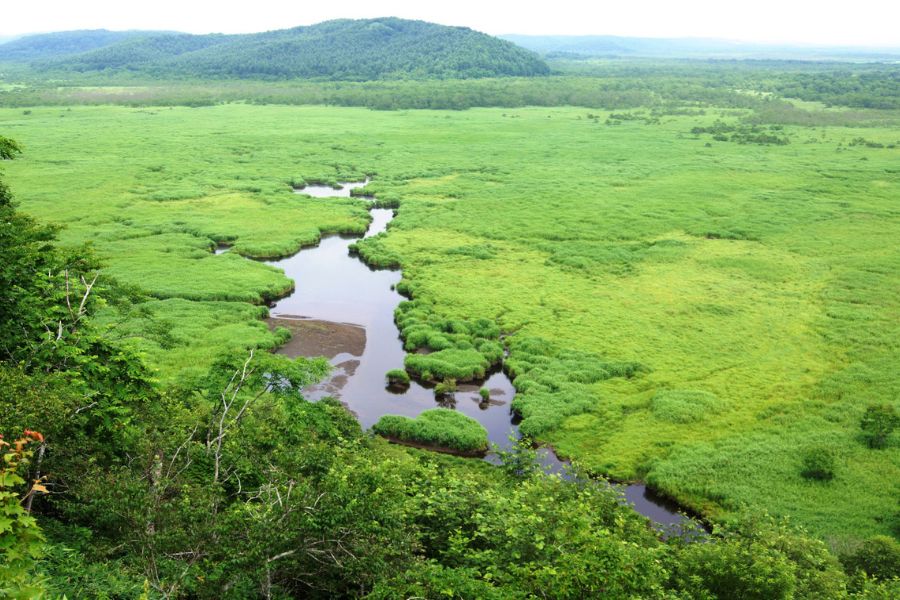
Kushiro Marsh is the natural highlight most closely associated with the region.
Designated as a national park in 1987, it is the largest wetland in Japan and was registered under the Ramsar Convention in 1980.
The marsh covers an enormous area of reeds, rivers, ponds and wetland vegetation, creating an ecosystem that is very different from the urban landscapes found elsewhere in Japan.
The Kushiro River winds through the wetlands, while different observation points provide views across the expansive landscape.
For cruise passengers, the most important consideration is that Kushiro Marsh is not one single sightseeing point. Different viewpoints are spread across a large area, so your itinerary should be built around the specific section you want to visit.
Kushiro Marsh Observatory
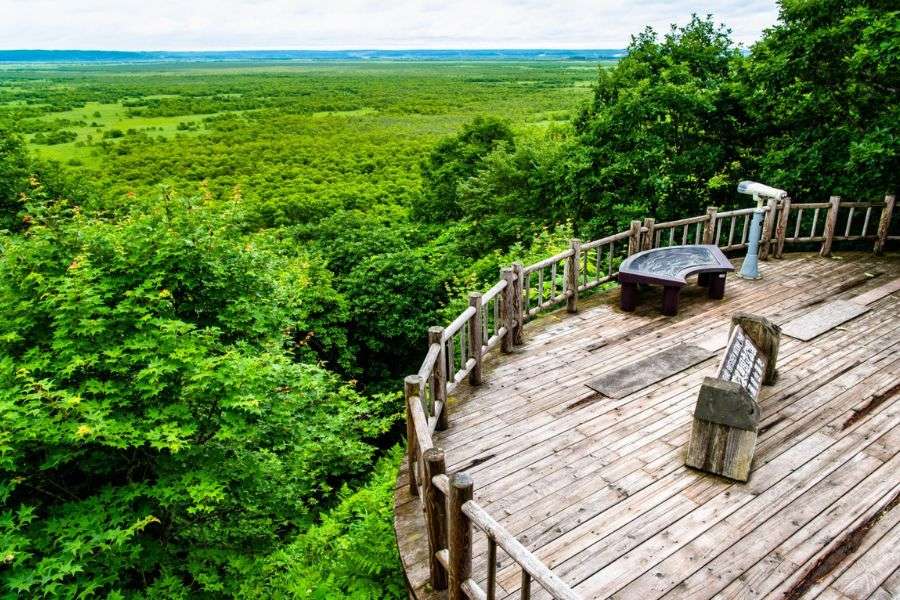
Kushiro Marsh Observatory is one of the easiest ways to understand the scale of the wetland.
The three-story visitor facility includes exhibitions about the marsh, local history, flora and fauna, as well as an observation deck and rooftop with panoramic views.
Around the observatory, a roughly 2.5-kilometer boardwalk loop provides access to additional viewpoints.
This makes the observatory suitable for travelers who want to experience the marsh without committing to a long wilderness walk.
For cruise passengers with limited time, a private vehicle is particularly useful because the marsh is spread over a large area and public transportation does not always align conveniently with a ship's port schedule.
Onnenai: Walking Through the Marsh
Onnenai provides a more immersive wetland experience.
A boardwalk leads through the marsh environment, allowing visitors to observe vegetation and birdlife at a much closer level than from a distant observation deck.
It is particularly appealing to travelers who enjoy nature photography and birdwatching.
However, walking conditions and the amount of time available should be considered carefully when adding Onnenai to a cruise itinerary.
If you are traveling with senior guests or passengers who prefer limited walking, an observation deck may provide a more comfortable experience.
Red-Crowned Cranes: Kushiro's Most Iconic Wildlife
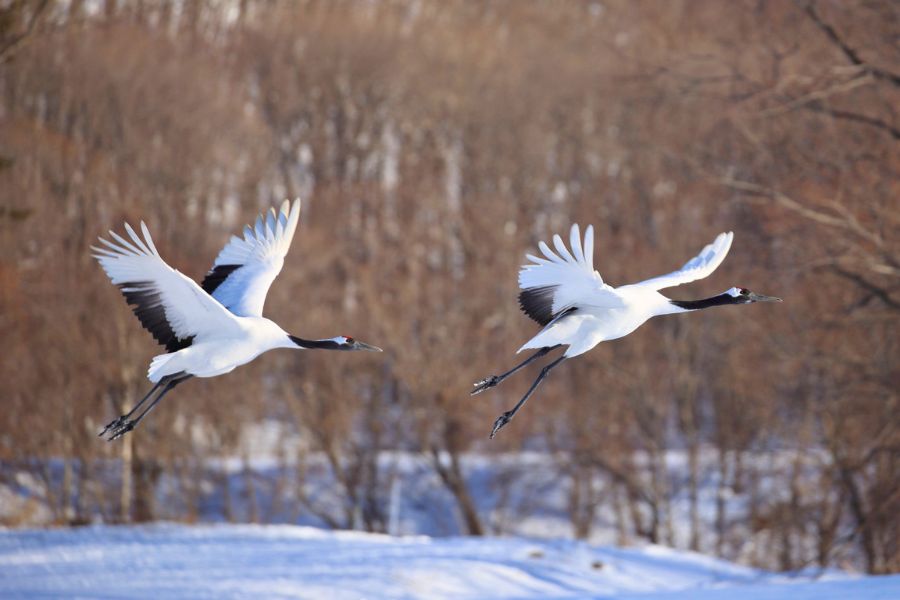
The red-crowned crane, known in Japan as tancho, is one of Hokkaido's most recognizable animals.
The birds are designated as a Special Natural Monument of Japan and have become closely associated with the wetlands around Kushiro.
Kushiro Marsh and the surrounding region are particularly important for observing these cranes in their natural environment.
The chance to see tancho is one of the strongest reasons to choose Kushiro over more conventional city-focused cruise destinations.
Kushiro City Tancho Crane Nature Park
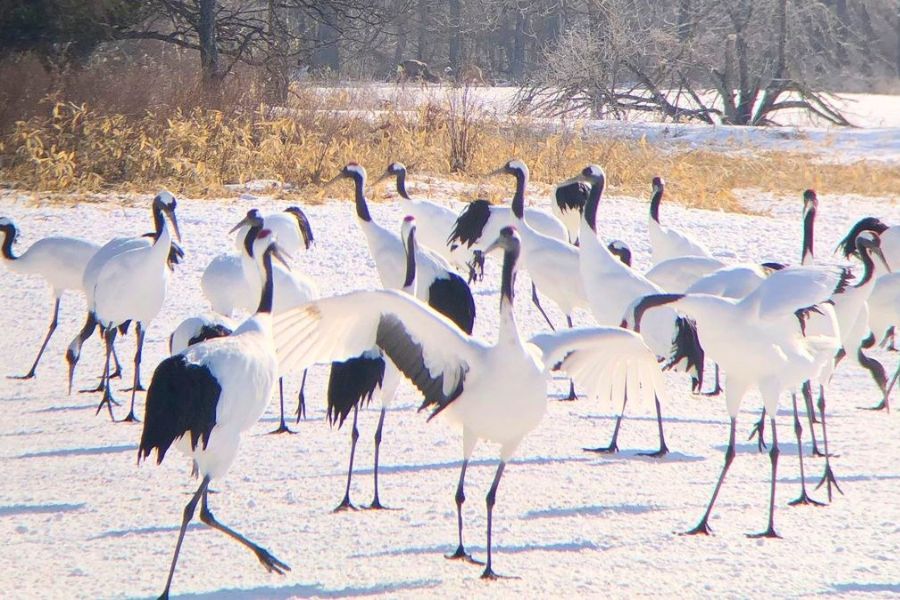
Kushiro City Tancho Crane Nature Park provides a reliable opportunity to observe red-crowned cranes throughout the year.
The park was established as a conservation and educational facility and allows visitors to see cranes in an environment designed to resemble their natural wetland habitat.
There are observation paths and educational displays explaining the birds and conservation efforts.
The park is particularly useful for cruise passengers because it provides a more reliable wildlife experience than simply hoping to spot a crane from the roadside.
According to Hokkaido's official tourism information, the park is approximately 40 minutes by car from JR Kushiro Station and is close to Kushiro Airport. Opening hours vary seasonally, so travelers should check current information before visiting. :chatgpt-content-reference{index="5"}
Can You See Cranes All Year?
Yes, red-crowned cranes remain in the Kushiro region throughout the year.
Winter can be particularly impressive because feeding sites may attract larger concentrations of cranes, making the birds easier to observe.
Spring also has a special appeal because young chicks may be visible at conservation facilities and surrounding areas.
However, wildlife is unpredictable. No responsible itinerary should promise a particular number of wild cranes or guarantee a specific behavior.
Washo Market and Katte-don
Washo Market is one of the easiest attractions to combine with a Kushiro port call.
The market has around 60 shops selling seafood, fruit, local products and everyday goods.
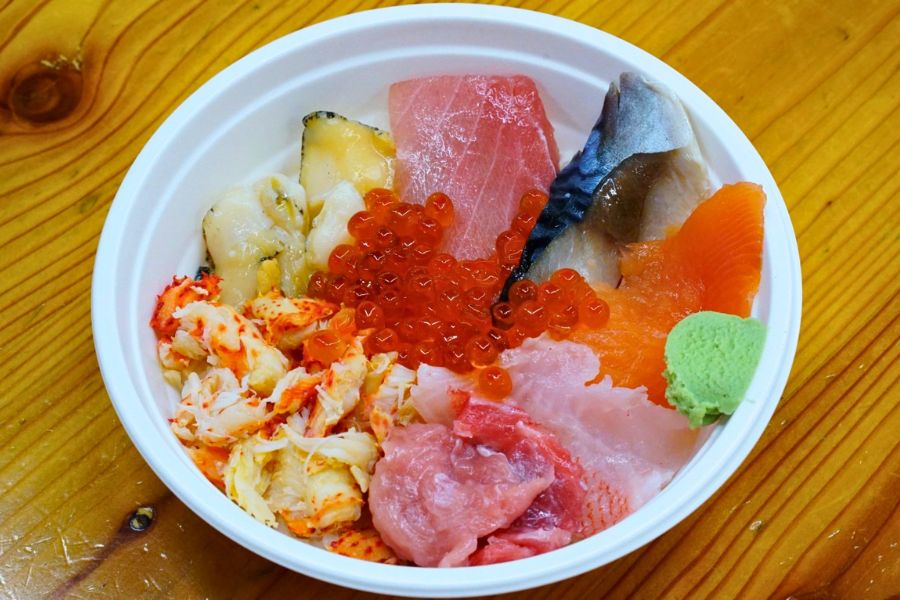
Its most famous specialty is Katte-don, a seafood rice bowl that visitors assemble themselves.
The concept is simple: start with a bowl of rice, then walk around the market choosing different seafood toppings to create your own combination.
It is a particularly good experience for cruise passengers because it combines local food, market atmosphere and independence in one short stop.
The official Cruise Port Guide of Japan lists Washo Market at approximately 1 km or 12 minutes on foot from the port. :chatgpt-content-reference{index="6"}
What Is Katte-don?
Katte-don is essentially a customizable seafood bowl.
Instead of ordering one predetermined combination, you select individual seafood toppings from different market vendors and build your own bowl.
Depending on the day and season, choices can include different types of fish, shellfish and other seafood.
The experience is as much about walking through the market and choosing what looks appealing as it is about the final bowl.
For travelers who want a distinctly Kushiro meal without spending several hours at a restaurant, Katte-don is one of the best choices.
Kushiro Fisherman's Wharf MOO
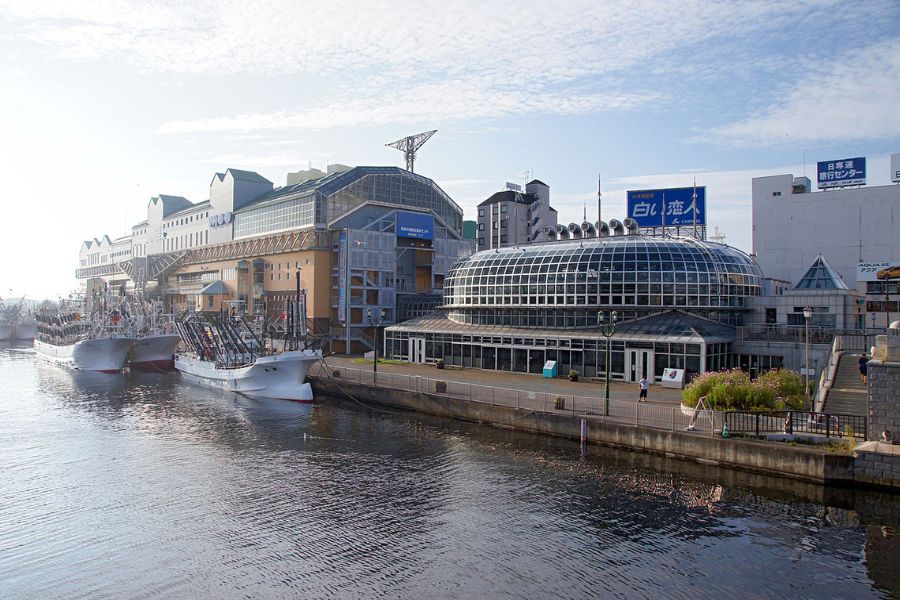
Kushiro Fisherman's Wharf MOO is located beside the East Area cruise terminal and is one of the most convenient places for passengers who want a short sightseeing experience.
The complex includes shops selling seafood, sweets and souvenirs, together with restaurants and food areas.
During part of the warmer season, the waterfront also hosts open-air seafood grilling experiences.
Because MOO is so close to the East Area terminal, it can be used as:
- a short independent visit;
- a meal stop;
- a souvenir stop;
- or a final stop before returning to the ship.
The official port information places MOO approximately 400 meters or five minutes on foot from the East Area port. :chatgpt-content-reference{index="7"}
Nusamai Bridge
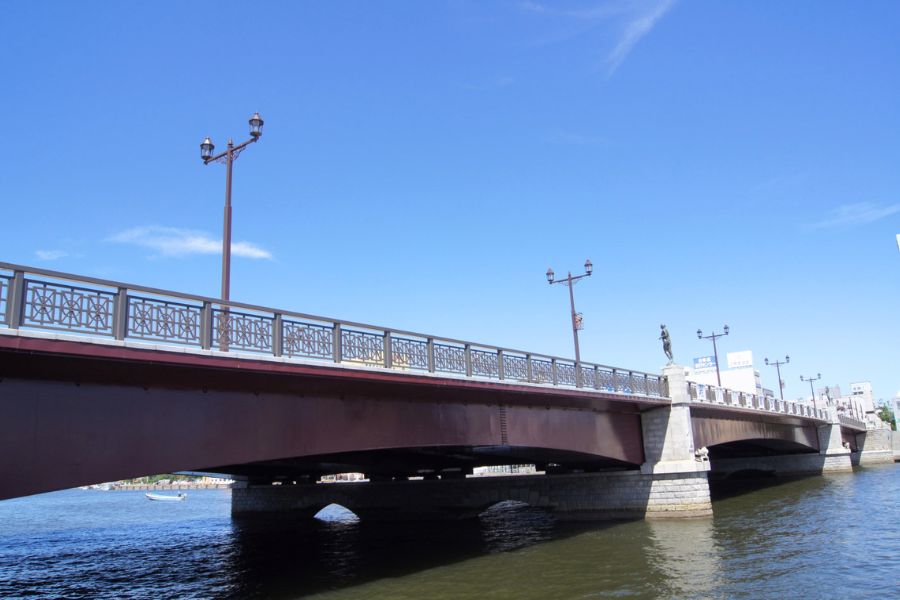
Nusamai Bridge is one of Kushiro's best-known urban landmarks.
The bridge crosses the Kushiro River near the waterfront and is decorated with sculptures representing the changing seasons.
Its position makes it especially attractive around sunset, when the waterfront takes on a different atmosphere.
The bridge is also an easy addition to a short city-focused port day because it is approximately 450 meters or five minutes on foot from the port. :chatgpt-content-reference{index="8"}
Kushiro Soba: A Local Food Specialty
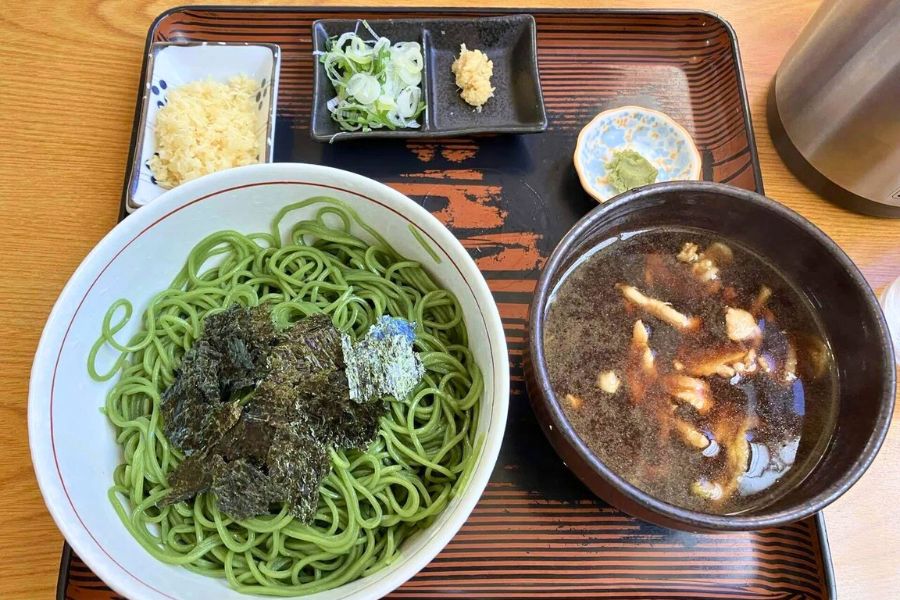
Kushiro soba is another regional food worth trying during a port call.
The noodles are distinctive in appearance and are traditionally made with chlorella, giving them a green color.
They are commonly served with a flavorful broth and can be enjoyed as a relatively light meal during a busy sightseeing day.
For travelers who want something different from seafood, Kushiro soba provides an easy introduction to local cuisine.
Robata and Kushiro Seafood
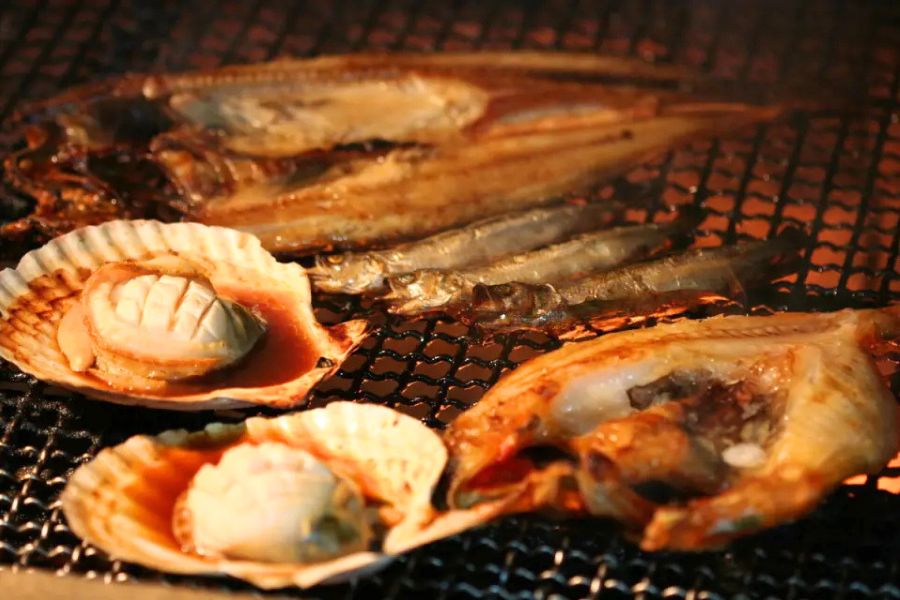
Kushiro is strongly associated with seafood, and local robata-style grilling provides another way to experience the region's food culture.
Fish and seafood are grilled over charcoal and served simply, allowing the ingredients to remain the focus.
This style of dining works particularly well after visiting Washo Market or during a relaxed city itinerary.
Seasonal availability varies, so travelers should think of the menu as part of the local experience rather than expecting one fixed list of seafood throughout the year.
Lake Akan: Volcanic Scenery and Marimo
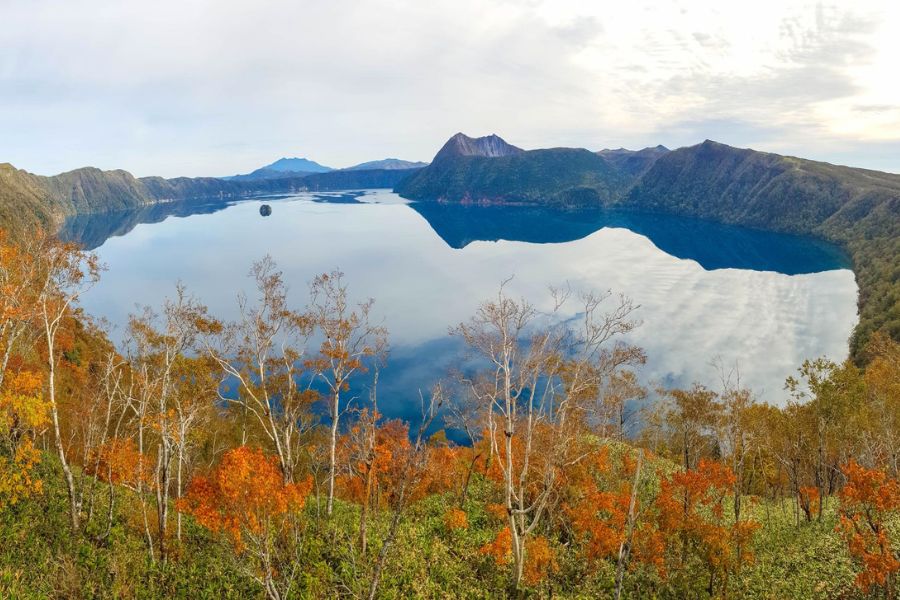
Lake Akan is one of eastern Hokkaido's most distinctive natural destinations.
The lake was formed by volcanic activity and is surrounded by the mountains of Akan-Mashu National Park.
It is particularly famous for marimo, spherical green algae that have become an important natural symbol of the region.
Visitors can also enjoy views of Mount Oakan and Mount Meakan, depending on weather and visibility.
The official Cruise Port Guide of Japan lists Lake Akan at approximately 73 km and around 90 minutes by car from the berth. :chatgpt-content-reference{index="9"}
Is Lake Akan Practical From Kushiro Cruise Port?
Yes, but only if you treat it as a major excursion rather than a quick sightseeing stop.
A round trip already involves roughly three hours of road travel under the official port guide's estimated conditions.
That means Lake Akan is much better suited to:
- longer port calls;
- private transportation;
- travelers who specifically prioritize Lake Akan;
- and carefully timed regional excursions.
It is not a destination to casually add after a full morning at the marsh, especially if your ship has a short port window.
Akan Ainu Kotan
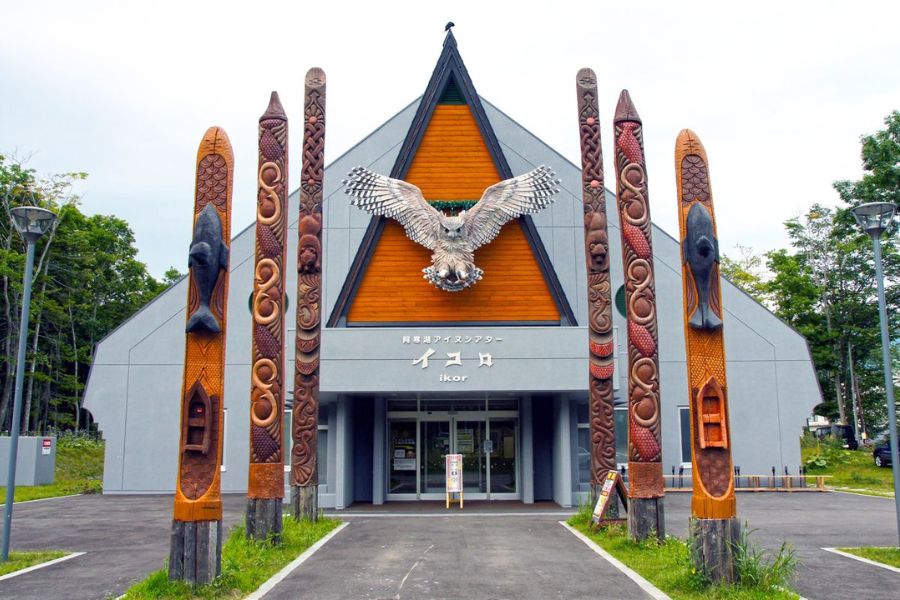
Akan Ainu Kotan is a traditional Ainu cultural village near Lake Akan.
The village includes shops selling traditional crafts, restaurants and cultural experiences connected with Ainu heritage.
The Ainu are the Indigenous people of northern Japan, and learning about their traditions adds an important cultural dimension to a Kushiro excursion.
The Ainu Theater Ikor also presents traditional performances and cultural programs.
For travelers who want to understand eastern Hokkaido beyond its scenery, Akan Ainu Kotan is one of the strongest cultural additions to a Lake Akan route.
Lake Akan and Ainu Culture: One Excursion or Two?
These two experiences naturally complement each other.
Lake Akan provides the landscape, while Akan Ainu Kotan provides cultural context.
However, both are far from Kushiro Port.
If your ship has limited time, it is better to prioritize the Lake Akan and Ainu experience and avoid adding several additional distant attractions.
SEA currently offers an Akan Ainu Village & Kushiro Marshland route for cruise passengers, with private arrangements also available when the shared dates do not match your sailing. :chatgpt-content-reference{index="10"}
Kushiro Marsh or Lake Akan: Which Should You Choose?
| Kushiro Marsh | Lake Akan |
|---|---|
| Closer to Kushiro | Approximately 73 km from port |
| Best for wetlands and wildlife | Best for volcanic lake scenery |
| Red-crowned crane opportunities | Marimo and mountain scenery |
| Better for shorter port calls | Better for longer port calls |
| Nature-focused | Nature + Ainu culture |
| Several observation points | One major regional destination |
For a first-time cruise passenger with a standard port call, Kushiro Marsh is usually the more practical choice.
Lake Akan becomes more attractive when you have a longer port window or when its scenery and Ainu culture are the main reason you want to travel inland.
Kushiro Cruise Port Itinerary for 4 Hours
A four-hour port call should stay close to the port or focus on one nearby nature experience.
Option 1: Kushiro City and Local Food
- Kushiro Cruise Port
- Nusamai Bridge
- Washo Market
- Katte-don lunch
- Kushiro Fisherman's Wharf MOO
- Return to port
This is the safest option for passengers who want to minimize road travel.
Option 2: Short Nature-Focused Route
- Kushiro Cruise Port
- Selected Kushiro Marsh viewpoint
- Short nature walk
- Return through the city
- Return to port
The exact marsh stop should be selected according to your available time and current road conditions.
Kushiro Cruise Port Itinerary for 5-6 Hours
Five to six hours allows a more complete nature-focused experience.
Recommended Route: Cranes, Marshland and Market
- Kushiro Port
- Kushiro City Tancho Crane Nature Park
- Kushiro Marsh observation area
- Washo Market
- Return to port
This is close to the structure of SEA's existing Kushiro Marshland & Cranes Nature Park excursion, which is currently listed as a five-hour port-to-port experience. :chatgpt-content-reference{index="11"}
Kushiro Cruise Port Itinerary for 6-7 Hours
With more time, you can consider a deeper cultural and natural route.
Option: Lake Akan and Ainu Culture
- Kushiro Port
- Drive toward Lake Akan
- Akan Ainu Kotan
- Lake Akan
- Return directly toward Kushiro Port
Because Lake Akan is approximately 90 minutes from the berth, this route should not be overloaded with additional distant attractions.
If your port window is only six hours, the itinerary needs particularly careful timing.
Kushiro Cruise Port Itinerary for 8+ Hours
An eight-hour or longer port call provides considerably more flexibility.
Possible routes include:
- Kushiro Marsh + Crane Nature Park + Washo Market;
- Lake Akan + Akan Ainu Kotan;
- Lake Akan + selected marsh viewpoint;
- extended Kushiro nature and wildlife route;
- or a customized itinerary based on your cruise schedule.
Even with a long port call, avoid combining too many destinations spread across eastern Hokkaido.
The strongest Kushiro itineraries usually have one clear theme rather than trying to cover every attraction.
Which Attractions Are Best for Each Port Area?
| Attraction | East Area | West Area |
|---|---|---|
| JR Kushiro Station | Very convenient | Requires transportation |
| Washo Market | Convenient | Requires transportation |
| Kushiro Fisherman's Wharf MOO | Very convenient | Requires transportation |
| Nusamai Bridge | Very convenient | Requires transportation |
| Kushiro Marsh | Regional excursion | Regional excursion |
| Crane Nature Park | Regional excursion | Regional excursion |
| Lake Akan | Long regional excursion | Long regional excursion |
| Akan Ainu Kotan | Long regional excursion | Long regional excursion |
Kushiro in Spring
Spring marks the transition from the cold season toward greener landscapes.
Temperatures remain cool, particularly in the morning, but outdoor sightseeing becomes progressively more comfortable.
The marsh is attractive as vegetation begins returning, while wildlife remains an important part of the regional experience.
Travelers visiting later in spring may also have opportunities to see young cranes at conservation facilities.
Spring is a good season for travelers who prefer quieter nature experiences rather than the more intense colors of autumn.
Kushiro in Summer
Summer is one of Kushiro's most distinctive seasons because the city is famous for its cool climate and summer fog.
While other parts of Japan can become hot and humid, Kushiro often remains noticeably cooler.
This makes summer particularly attractive for outdoor sightseeing in the marsh.
Longer daylight hours also make it easier to combine a wildlife stop with a market or city visit.
However, fog can affect visibility, so travelers should avoid building an itinerary around one specific panoramic view.
Kushiro in Autumn
Autumn is one of the strongest seasons for a Kushiro cruise stop.
The surrounding landscape begins changing color, temperatures become cooler and the region's seasonal food becomes especially appealing.
Autumn also works well for travelers combining Kushiro with other northern Japan ports.
If your cruise includes Hokkaido and northern Honshu during October, see our Japan in October guide for broader seasonal planning.
Because Kushiro is farther north than Tokyo, Kyoto and Osaka, autumn conditions can arrive earlier, especially in higher-elevation and inland areas.
Kushiro in Winter
Winter transforms eastern Hokkaido into a very different landscape.
Snow, frozen water and colder temperatures create a dramatic setting, while red-crowned cranes become particularly attractive for wildlife enthusiasts.
Winter feeding sites can attract larger numbers of cranes, making this an especially rewarding season for dedicated birdwatchers.
However, winter also requires more conservative cruise planning.
- Road conditions can change;
- walking surfaces may be slippery;
- daylight hours are shorter;
- and outdoor stops may take longer than expected.
Private transportation is particularly valuable during winter because the itinerary can be adjusted around weather and road conditions.
What Is the Best Season for Red-Crowned Cranes?
Red-crowned cranes can be seen throughout the year, but the experience changes with the season.
Winter is especially attractive for seeing larger concentrations around feeding areas.
Spring can offer opportunities to see young birds at conservation facilities.
Summer provides greener wetland scenery and comfortable conditions compared with much of Japan.
Autumn combines cooler weather with changing landscapes.
If crane viewing is the primary purpose of your excursion, choose the season based on the type of experience you want rather than expecting identical conditions throughout the year.
Is Kushiro Good for Senior Travelers?
Yes, particularly when the itinerary is designed around comfortable transportation and limited walking.
Good options include:
- Washo Market;
- Kushiro Fisherman's Wharf MOO;
- Nusamai Bridge;
- Kushiro Marsh Observatory;
- Kushiro City Tancho Crane Nature Park;
- and selected Lake Akan viewpoints.
The marsh can be adapted to different walking abilities by choosing an observation deck rather than a long boardwalk.
Lake Akan is also possible for senior travelers, but the long drive should be considered carefully.
For senior groups, a private vehicle allows the itinerary to include more frequent rest stops, easier restroom access and a more flexible pace.
Is Kushiro Easy to Explore Independently?
If your ship docks in the East Area, the city is relatively easy to explore independently.
JR Kushiro Station, MOO, Nusamai Bridge and Washo Market are all accessible without a complicated transfer.
The situation changes when you want to visit the marsh, Crane Nature Park or Lake Akan.
These destinations are spread across a large area, and a cruise passenger has a fixed return deadline.
Public transportation can work for travelers staying longer in Kushiro, but a private vehicle is generally more practical for combining several regional attractions within one cruise day.
This is particularly important for Lake Akan because the official port guide places it approximately 73 km and around 90 minutes from the berth by car. :chatgpt-content-reference{index="12"}
Kushiro Cruise Port vs Other Hokkaido Ports
| Port | Main Experience |
|---|---|
| Kushiro | Wetlands, cranes, Ainu culture and eastern Hokkaido nature |
| Otaru | Historic canal, crafts, seafood and access to Sapporo |
| Hakodate | Historic districts, markets, Goryokaku and Mt. Hakodate |
| Aomori | Regional culture, Hirosaki and northern Honshu scenery |
Kushiro stands apart because its strongest attractions are primarily natural and wildlife-focused rather than urban.
If your Japan cruise already includes several historic cities, Kushiro can provide a valuable change of pace.
Practical Tips for a Kushiro Cruise Port Day
1. Confirm Your Actual Berth
First check whether your ship is using the East Area Cruise Ship Terminal or West Area No. 4 Wharf.
This affects the amount of time needed before and after your excursion.
2. Decide Whether You Want City or Nature
Kushiro can serve two very different types of cruise passenger.
You can stay close to port for:
- markets;
- seafood;
- shopping;
- waterfront sightseeing.
Or you can travel inland for:
- wetlands;
- cranes;
- Lake Akan;
- Ainu culture.
Trying to do both at full depth can make a cruise day unnecessarily rushed.
3. Do Not Underestimate Lake Akan's Distance
Lake Akan is approximately 73 km from the berth and around 90 minutes away by car under the official port guide's estimate.
That means the round trip alone can consume around three hours.
Choose Lake Akan because it is your priority, not because it happens to be another attraction you can add at the end of the day.
4. Build Around the Ship's All-Aboard Time
Your usable sightseeing window is shorter than the ship's published time in port.
Allow time for disembarkation, meeting your guide, walking to the vehicle and returning to the ship before the all-aboard deadline.
5. Check Wildlife Expectations
Red-crowned cranes are wild animals, and sightings in natural areas cannot be guaranteed.
If seeing cranes is a major priority, a conservation facility such as Kushiro City Tancho Crane Nature Park provides a more reliable experience.
6. Dress for Kushiro's Weather
Kushiro can feel significantly cooler than many other Japanese cruise ports, particularly in summer and autumn.
Layers are useful throughout the year.
In winter, proper cold-weather clothing and suitable footwear are essential.
7. Allow Extra Time for Weather
Fog, rain, snow and road conditions can affect travel time.
A flexible itinerary is therefore preferable to a schedule that leaves no room for delays.
8. Keep the Return Route Simple
If your excursion travels far inland, return directly toward the port rather than adding another distant sightseeing stop late in the day.
Frequently Asked Questions About Kushiro Cruise Port
Where do cruise ships dock in Kushiro?
Cruise ships can use the East Area Earthquake-resistant Cruise Ship Terminal or West Area No. 4 Wharf. Larger ships that cannot use the East Area terminal may be received at the West Area berth.
Is Kushiro Cruise Port close to the city?
If your ship docks in the East Area, yes. JR Kushiro Station is approximately 15 minutes on foot, while MOO and Nusamai Bridge are only about five minutes away.
How far is Washo Market from Kushiro Cruise Port?
Washo Market is approximately 1 km or 12 minutes on foot from the port according to the official Cruise Port Guide of Japan.
What is Kushiro famous for?
Kushiro is best known for its vast wetlands, red-crowned cranes, eastern Hokkaido nature, fresh seafood, Katte-don, Ainu culture and Lake Akan.
What are the best things to do from Kushiro Cruise Port?
The strongest options include Kushiro Marsh, Kushiro City Tancho Crane Nature Park, Washo Market, Kushiro Fisherman's Wharf MOO, Nusamai Bridge, Lake Akan and Akan Ainu Kotan.
Can I visit Kushiro Marsh from the cruise port?
Yes. Kushiro Marsh is one of the most practical major nature attractions from the port, although the wetland covers a large area. Choose a specific observation point rather than assuming the entire marsh can be explored in one short stop.
How far is Kushiro Marsh from the cruise port?
The official Kushiro Port Tourist Information lists the Kushiro Wetland at approximately 20 km from the port, with access depending on the specific area and transport route.
Can I see red-crowned cranes in Kushiro?
Yes. Kushiro and the surrounding wetlands are one of Japan's best-known regions for red-crowned cranes. They can be seen in natural areas and at dedicated conservation facilities.
Where is the best place to see cranes in Kushiro?
Kushiro City Tancho Crane Nature Park provides a reliable year-round opportunity to observe cranes. For wild birds, the wider Kushiro Marsh and surrounding areas offer opportunities that vary by season and location.
Can I visit Lake Akan from Kushiro Cruise Port?
Yes, but it is a long regional excursion. The official port guide lists Lake Akan at approximately 73 km and around 90 minutes by car from the berth.
Is Lake Akan worth visiting on a cruise stop?
It can be, particularly for travelers who prioritize volcanic scenery, marimo and Ainu culture. Because of the travel distance, it is best suited to longer port calls and a carefully planned private excursion.
Can I visit Lake Akan and Kushiro Marsh in one day?
Yes, but the itinerary needs careful timing. Both destinations are spread out, and Lake Akan alone involves substantial road travel from the port. For a comfortable cruise day, prioritize one main inland experience and add only stops that fit naturally along the route.
What is Katte-don?
Katte-don is a customizable seafood rice bowl associated with Washo Market. Visitors buy rice and then select different seafood toppings from market vendors to create their own bowl.
Is Kushiro good for senior travelers?
Yes. Short city routes, the marsh observatory and the crane nature park can all be adapted for senior travelers. Private transportation is especially useful for controlling walking time and adding rest breaks.
Is Kushiro easy to explore without a tour?
The central area is relatively easy to explore independently if your ship docks in the East Area. Regional attractions such as the marsh, crane facilities and Lake Akan require more transportation planning.
What is the best season to visit Kushiro?
Summer is comfortable for outdoor sightseeing, autumn offers cooler weather and seasonal scenery, winter is especially attractive for crane watching, and spring provides a quieter transition into the warmer season.
Can I visit Kushiro Marsh in winter?
Yes. The marsh is open year-round, but winter conditions require appropriate clothing, footwear and additional travel time.
Is Kushiro colder than Tokyo in summer?
Generally, yes. Kushiro has a much cooler maritime climate than Tokyo and is known for summer fog. This can make it an appealing destination for travelers looking to escape Japan's summer heat.
What food should I try in Kushiro?
Katte-don, fresh seafood, Kushiro soba and charcoal-grilled seafood are among the strongest local choices.
Is Kushiro worth visiting on a Japan cruise?
Yes. Kushiro provides a distinctly different experience from Japan's major urban and cultural ports, with wetlands, wildlife, seafood and Ainu culture forming the core of the destination.
Plan Your Kushiro Shore Excursion
Kushiro is one of the most rewarding cruise ports in Japan for travelers who want to experience the country's wild side.
A short port call can stay close to the city with Washo Market, Katte-don, MOO and Nusamai Bridge. A moderate-length excursion can move toward Kushiro Marsh and the red-crowned cranes. Longer port calls can venture farther inland toward Lake Akan and Ainu culture.
The most important thing is to respect the geography of eastern Hokkaido. Kushiro's attractions are not packed into one compact sightseeing district, and destinations such as Lake Akan require significant travel time.
For a five-hour nature-focused experience, explore our Kushiro Marshland & Cranes Nature Park, combining crane viewing, Kushiro Marsh and Washo Market.
For travelers who want to combine Lake Akan, Ainu culture and Kushiro Marsh, see our Akan Ainu Village & Kushiro Marshland excursion.
You can also browse all Kushiro Shore Excursions or explore our wider Japan Shore Excursions collection.
If your ship's port time or berth is different from the standard itineraries, request a customized private excursion built around your actual arrival time, departure time, preferred attractions and sightseeing pace.


 Send Inquiry