
Asia is one of the world's most diverse regions for cruise travel, with itineraries connecting historic Japanese cities, South Korean coastal destinations, Taiwan's lively ports, the cultural landmarks of Vietnam, and the tropical islands of Southeast Asia. But choosing the right shore excursion requires more than knowing which cities appear on your cruise itinerary. You also need to know where your ship actually docks, how far the main attractions are, and how much time you can realistically spend ashore.
At Shore Excursions Asia, we help international cruise passengers explore ports across Japan, South Korea, Taiwan, Southeast Asia, and other destinations through private and small-group shore excursions. With so many possible routes, the best place to begin is with your actual port of call rather than the destination name alone.
Some Asian cruise ports are within walking distance of historic districts and waterfront attractions. Others are industrial harbours located far from the cities shown on cruise itineraries. Ships visiting Bangkok, for example, may dock at Laem Chabang, while passengers visiting Ho Chi Minh City often arrive at Phu My. Hong Kong, Kobe, and several other destinations have multiple terminals that can significantly change transportation arrangements.
This Asia Cruise Ports Guide provides an overview of major cruise ports in Japan, South Korea, Taiwan, Vietnam, Thailand, Malaysia, Indonesia, the Philippines, Singapore, and Hong Kong. It explains different terminal arrangements, common transportation challenges, the types of attractions worth exploring, and when private transportation can make a port day more comfortable.
What Are the Main Cruise Ports in Asia?
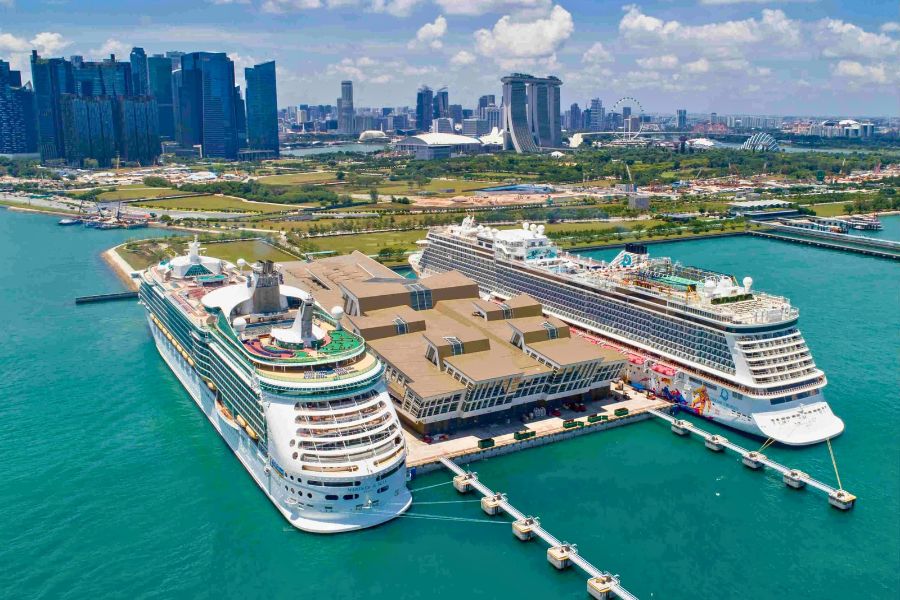
Asia's cruise network extends across several distinct regions. Japan and South Korea offer a combination of modern port cities and historic destinations, while Taiwan provides convenient gateways to Taipei, cultural towns, and coastal landscapes.
Southeast Asia adds tropical scenery, historic cities, temples, colonial heritage, island destinations, and culturally diverse local communities.
The following table introduces some of the principal ports cruise passengers encounter on Asian itineraries.
| Country or Destination | Popular Cruise Ports | Popular Shore Experiences |
|---|---|---|
| Japan | Yokohama, Kobe, Osaka, Shimizu, Hiroshima, Nagasaki, Naha | Historic temples, Japanese gardens, Mount Fuji scenery, cultural cities |
| South Korea | Busan, Jeju, Seogwipo, Incheon, Yeosu | Coastal temples, cultural villages, markets, volcanic landscapes |
| Taiwan | Keelung, Kaohsiung, Hualien | Taipei landmarks, traditional towns, temples, coastal scenery |
| Vietnam | Ha Long Bay, Chan May, Nha Trang, Phu My | Limestone landscapes, imperial heritage, Hoi An, Ho Chi Minh City |
| Thailand | Laem Chabang, Phuket, Koh Samui | Bangkok temples, Thai culture, beaches, island sightseeing |
| Malaysia | Penang, Port Klang, Langkawi | George Town heritage, Kuala Lumpur, island landscapes |
| Indonesia | Bali, Komodo, Lombok, Semarang, Surabaya | Temples, traditional villages, wildlife, island landscapes |
| Philippines | Manila, Boracay, Puerto Princesa and other island ports | Historic districts, tropical scenery, cultural landmarks |
| Singapore | Marina Bay and HarbourFront cruise terminals | Marina Bay, Gardens by the Bay, heritage districts |
| Hong Kong | Kai Tak Cruise Terminal, Ocean Terminal | Victoria Harbour, Victoria Peak, markets, cultural districts |
Not every cruise ship visits every port, and the actual terminal can change according to vessel size, berth availability, weather, and local operating conditions.
Always confirm the exact location shown in your cruise documents before arranging a tour meeting point.
Understanding Cruise Terminals in Asia
One of the most important things to understand about cruising in Asia is that a port's name does not always describe where passengers will step ashore.
A cruise itinerary may display the nearest major tourist city, while the actual vessel arrives at a commercial port located some distance away.
Other destinations use multiple terminals, with one beside the city centre and another requiring a vehicle transfer.
City-Centre Cruise Terminals
Some cruise terminals are located beside major waterfront attractions or within easy reach of public transportation.
Examples include selected cruise berths in Yokohama and Hong Kong's Ocean Terminal.
These ports can be particularly convenient for independent travelers who want to explore a smaller area on foot.
However, accessibility still depends on the actual assigned berth and immigration arrangements.
Commercial Cruise Ports Outside Major Cities
Industrial ports often require additional transportation before passengers can begin sightseeing.
Laem Chabang, serving Bangkok and Pattaya, and Phu My, serving Ho Chi Minh City and Vung Tau, are important examples.
The distance between the ship and the main tourist destination may have a greater effect on the day than the number of attractions available.
Travelers should always calculate the return journey before choosing a long city excursion.
Ports with Multiple Cruise Terminals
Hong Kong has two major international cruise facilities, Kai Tak and Ocean Terminal, located in different parts of Kowloon.
Busan also has multiple passenger facilities, while cruise ships visiting Kobe may arrive at different port areas.
These distinctions matter because a meeting point described simply as the city name may not be enough to locate a guide.
Check the terminal, pier, berth, and designated passenger exit before booking independent transportation.
Tender Ports and Island Destinations
At some destinations, cruise ships anchor offshore and transfer passengers to land using smaller boats.
These are known as tender ports.
Tendering can be common at selected island destinations and during certain seasonal operations.
Passengers may need to obtain a tender ticket or join an assigned disembarkation group.
Allow extra time for boarding, the boat crossing, and the return tender before the ship's final departure.
Japan Cruise Ports: Temples, Historic Cities and Scenic Landscapes
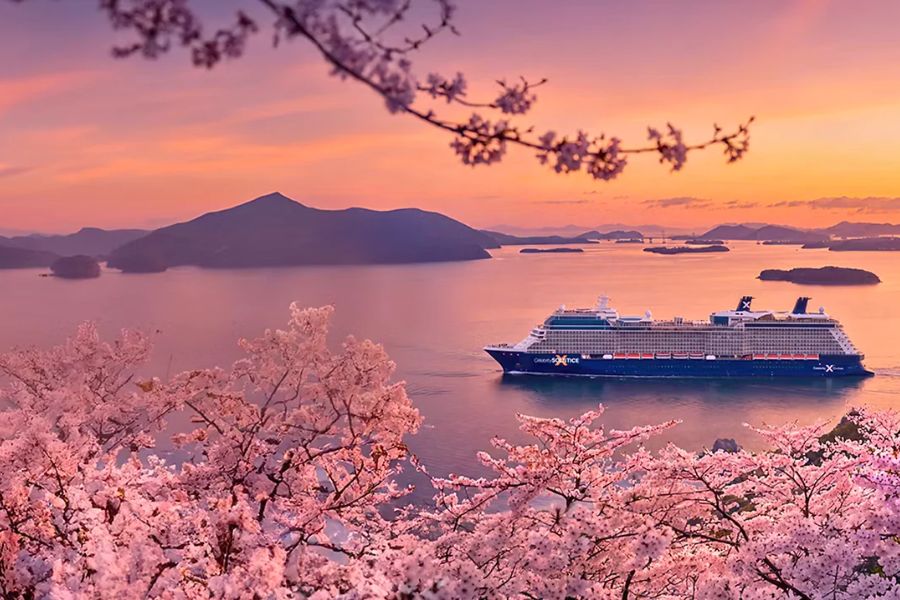
Japan offers one of the broadest selections of cruise destinations in Asia, ranging from international cities to historic castle towns, coastal scenery, gardens, and traditional cultural experiences.
Popular routes may include ports across Honshu, Kyushu, Shikoku, Hokkaido, and Okinawa.
For cruise passengers, the most important planning questions are the exact terminal location, the distance to the main attraction, and the realistic amount of sightseeing time available.
Yokohama Cruise Port: Gateway to Tokyo and Kamakura
Yokohama is an important cruise gateway to the Tokyo metropolitan area.
Ships may use terminals including Osanbashi and other designated cruise facilities, depending on their operating requirements.
The Osanbashi waterfront is especially convenient for exploring central Yokohama, with attractions such as Yamashita Park and Chinatown nearby.
Travelers interested in a longer day can consider Tokyo or the historic temples and Great Buddha of Kamakura.
However, traveling into Tokyo requires additional transportation, and the best itinerary depends on the ship's arrival and all-aboard time.
Best for: City sightseeing, Japanese culture, gardens, temples, and historic landmarks.
Read our Yokohama Cruise Port Guide or explore Japan shore excursions.
Kobe Cruise Port: Kyoto, Osaka or Nara?
Kobe is a popular gateway to the Kansai region of Japan.
Many cruise passengers consider traveling to Kyoto, Osaka, or Nara, but these destinations offer different experiences and require different transfer arrangements.
Kyoto is particularly attractive for temples, shrines, gardens, and historic neighborhoods.
Osaka offers lively urban culture, markets, and famous city landmarks, while Nara is known for its ancient temples and deer park.
The challenge is choosing a realistic route rather than attempting to visit every city in a single port call.
Best for: Japanese history, temples, gardens, cultural cities, and regional cuisine.
Explore our Kobe Cruise Port Guide for a comparison of Kyoto, Osaka, and Nara.
Shimizu Cruise Port: Mount Fuji and Shizuoka
Shimizu is famous for its views of Mount Fuji across Suruga Bay.
Cruise visitors can explore the Shimizu waterfront, Miho-no-Matsubara, Nihondaira, and historic Kunozan Toshogu Shrine.
Mount Fuji visibility depends on weather and cloud cover, so the best shore excursion should remain enjoyable even if the mountain is not visible.
Longer journeys toward Hakone or the wider Mount Fuji region require additional planning.
Best for: Mount Fuji scenery, coastal landscapes, gardens, and Japanese heritage.
Read our Shimizu Cruise Port Guide.
Hiroshima Cruise Port: Peace Memorial Park and Miyajima
Hiroshima is one of Japan's most important cultural and historic cruise destinations.
Visitors can explore the Peace Memorial Park, Hiroshima Peace Memorial Museum, and other landmarks associated with the city's history.
Another major destination is Miyajima, known for Itsukushima Shrine and the iconic torii gate.
Combining central Hiroshima and Miyajima requires careful transportation planning, including ferry connections.
Best for: History, heritage, cultural landmarks, and island scenery.
Read our Hiroshima Cruise Port Guide.
Other Popular Japan Cruise Ports
Japan itineraries can also include Nagasaki, Kagoshima, Kochi, Kanazawa, Hakodate, Sakaiminato, and Naha in Okinawa.
Each port offers different attractions, from samurai heritage and traditional gardens to volcanic landscapes and subtropical island culture.
For travelers visiting several Japanese ports, consider varying your experiences instead of choosing similar temple or city tours at every stop.
Explore our Kochi Cruise Port Guide, Sakaiminato Cruise Port Guide, and Naha Cruise Port Guide.
South Korea Cruise Ports: Busan, Jeju and Beyond
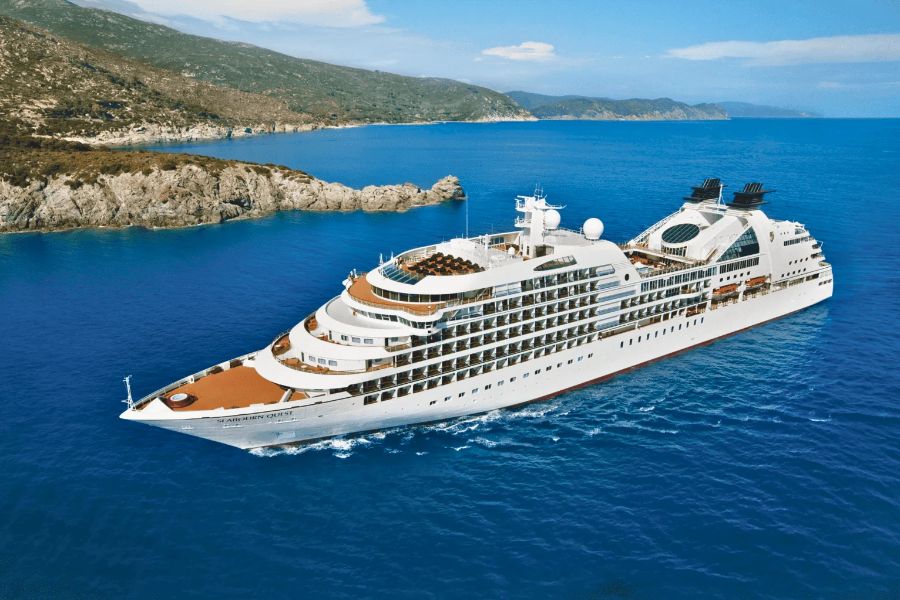
South Korea combines historic cultural sites, modern port cities, beautiful coastlines, markets, and scenic islands.
Cruise itineraries may include Busan, Jeju, Seogwipo, Incheon, and Yeosu.
Busan Cruise Port
Busan is one of South Korea's largest coastal cities and an important international cruise destination.
Popular attractions include Gamcheon Culture Village, Haedong Yonggungsa Temple, Jagalchi Market, and selected panoramic coastal viewpoints.
Because these attractions are spread across different parts of the city, combining all of them requires careful route planning.
The assigned cruise terminal also affects the journey to the first attraction.
Best for: Coastal temples, markets, colorful neighborhoods, and city photography.
Read our Busan Cruise Port Guide.
Jeju Island Cruise Ports
Jeju is known for volcanic landscapes, coastal formations, gardens, waterfalls, and distinctive island traditions.
Cruise ships may arrive at different passenger facilities serving Jeju City and the southern part of the island.
It is important to distinguish Jeju and Seogwipo cruise arrival locations because the main attractions are spread across the island.
Long transfers can make it unrealistic to combine distant attractions in one short port call.
Best for: Volcanic scenery, coastal landscapes, gardens, and island culture.
Read our Jeju Cruise Port Guide or explore South Korea shore excursions.
Incheon and Yeosu
Incheon serves as a gateway to the Seoul metropolitan region, while Yeosu offers coastal scenery, maritime attractions, and regional cultural experiences.
Seoul is a longer excursion from the cruise arrival area, so travelers should plan around road conditions and the ship's schedule.
Yeosu may be more suitable for scenic sightseeing closer to the harbour, depending on the assigned berth.
Taiwan Cruise Ports: Taipei, Kaohsiung and Hualien
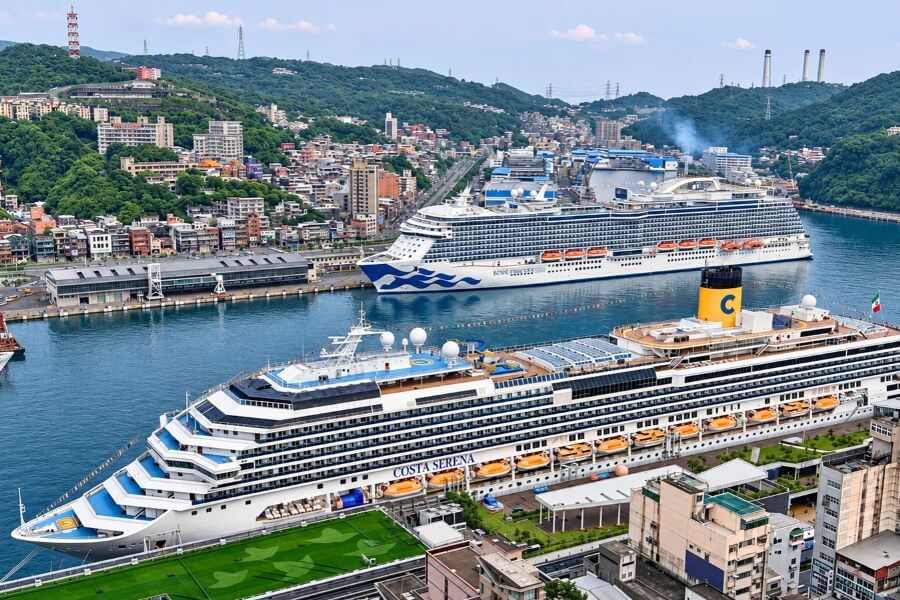
Taiwan offers an appealing variety of traditional towns, temples, modern city landmarks, coastal landscapes, and local food culture.
The principal cruise destinations include Keelung, Kaohsiung, and Hualien.
Keelung Cruise Port: Gateway to Taipei
Keelung is a major cruise gateway to northern Taiwan and the capital city of Taipei.
Ships may use the East or West passenger terminal, so passengers should confirm the assigned arrival location.
Popular excursions can include Taipei 101, the National Palace Museum, historic temples, and traditional neighborhoods.
Other visitors prefer northern Taiwan's coastal attractions, such as Yehliu Geopark, Jiufen, and Shifen.
Combining Taipei's urban attractions with the northern coast is possible only with a suitable route and enough time ashore.
Best for: Taipei landmarks, temples, historic towns, and coastal landscapes.
Explore our Keelung and Taipei shore excursions.
Kaohsiung Cruise Port
Kaohsiung is one of Taiwan's principal southern cities, with an attractive waterfront, temples, art districts, and urban cultural landmarks.
Popular sightseeing areas include the Pier-2 Art Center, Lotus Pond, and selected historic temples.
The actual passenger terminal affects how visitors reach the city.
For cruise passengers, a focused city itinerary is often more practical than a long-distance journey across southern Taiwan.
Hualien Cruise Port
Hualien is associated with Taiwan's eastern coastline, mountainous landscapes, and access to the wider Taroko region.
However, mountain roads and national park areas can be affected by earthquakes, landslides, repairs, and temporary restrictions.
Do not assume that all trails and scenic routes are open simply because they appear in older travel guides.
For a cruise stop, verify the current access conditions before booking a mountain excursion.
Explore our Taiwan shore excursions for available destinations and tours.
Vietnam Cruise Ports: Ha Long Bay, Chan May, Nha Trang and Phu My
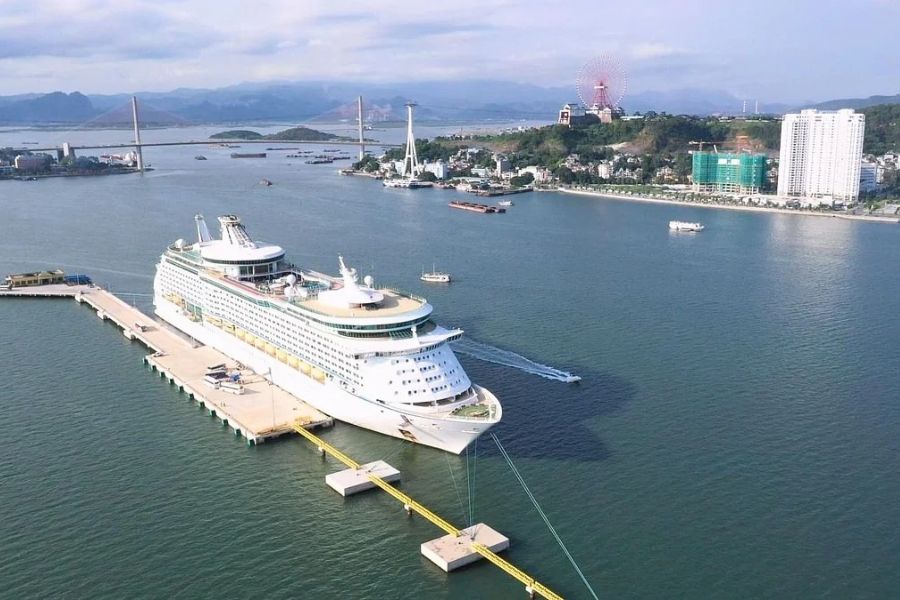
Vietnam offers cruise passengers a remarkable variety of landscapes and historic destinations.
From the limestone islands of Ha Long Bay to the imperial heritage of Hue and the vibrant streets of Ho Chi Minh City, each port provides a different experience.
Ha Long International Cruise Port
Ha Long International Cruise Port provides access to the famous limestone landscapes of Ha Long Bay.
Visitors can enjoy scheduled sightseeing cruises, caves, coastal scenery, and selected regional attractions.
However, passengers should distinguish an international cruise ship arrival from the separate departure arrangements for local sightseeing boats.
The available time ashore determines the length and route of a suitable Ha Long Bay experience.
Best for: Scenic boat cruises, limestone islands, natural heritage, and photography.
Read our Ha Long International Cruise Port Guide.
Chan May Cruise Port: Hue, Da Nang or Hoi An?
Chan May is an important cruise gateway in central Vietnam.
It provides access to several major destinations, including the historic imperial city of Hue and the coastal cities of Da Nang and Hoi An.
These destinations are located in different directions from the port, and choosing between them is one of the most important decisions for cruise passengers.
Hue is particularly appealing for imperial history and royal architecture, while Hoi An is known for its historic town and traditional streets.
Da Nang offers coastal scenery and attractions such as the Marble Mountains.
A realistic itinerary should focus on the attractions that fit the available road travel and port schedule.
Nha Trang Cruise Port
Nha Trang is a coastal destination known for beaches, Cham heritage, temples, and regional sightseeing.
Depending on the cruise ship and local arrangements, passengers may need to use transport from their designated arrival point before reaching the central city.
Popular experiences include cultural landmarks, scenic coastal areas, and local markets.
Phu My Cruise Port: Ho Chi Minh City or Vung Tau?
Phu My is a major cruise gateway to southern Vietnam.
The port is located outside Ho Chi Minh City, so visitors must allow time for a significant road journey to reach the urban attractions.
Passengers can choose between a longer city excursion to Ho Chi Minh City and a shorter coastal journey to Vung Tau.
For guests who prefer historic landmarks, markets, and the energy of a large city, Ho Chi Minh City can be rewarding when the port call is sufficiently long.
For travelers wanting a slower pace and less driving, Vung Tau may be a more practical choice.
Best for: Vietnamese history, city culture, markets, and coastal sightseeing.
Read our Phu My Cruise Port Guide or explore Vietnam shore excursions.
Thailand Cruise Ports: Bangkok, Phuket and Koh Samui
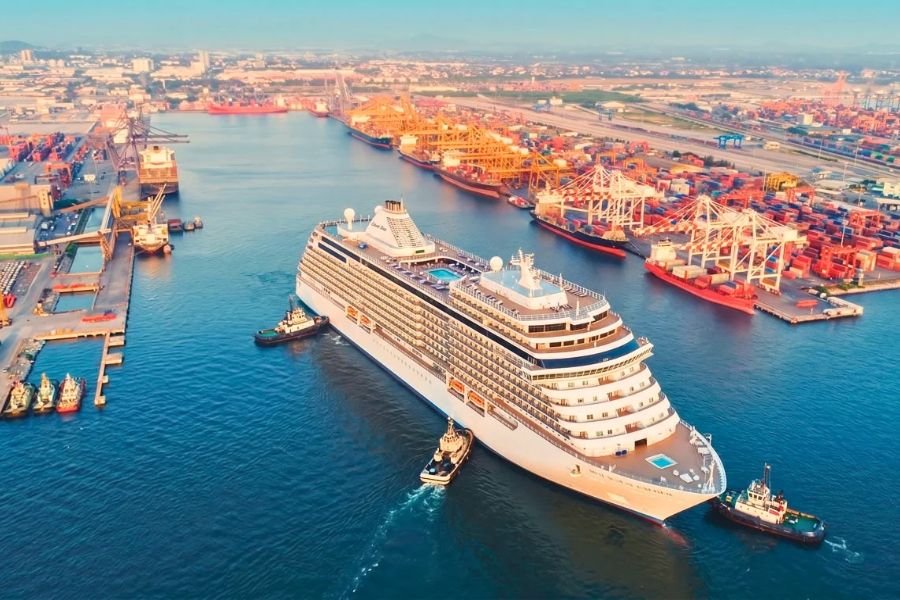
Thailand is an important destination on Southeast Asian cruise itineraries, offering temples, royal landmarks, tropical scenery, and vibrant local culture.
Laem Chabang Cruise Port: Gateway to Bangkok
Many cruise itineraries list Bangkok as a destination, but large ships often dock at Laem Chabang on Thailand's eastern coast.
The port is a substantial distance from Bangkok, making transportation planning essential.
Passengers may choose a guided visit to the capital's temples and royal landmarks or a shorter excursion around Pattaya and nearby attractions.
The most suitable option depends on the ship's port window and the amount of driving guests are comfortable with.
Best for: Bangkok temples, royal heritage, Pattaya sightseeing, and Thai culture.
Read our Laem Chabang Cruise Port Guide.
Phuket Cruise Port
Phuket has more than one possible cruise arrival location.
Some ships tender passengers near Patong, while others dock at the deep-water facilities around Ao Makham.
The arrival point can significantly affect the journey to Phuket Old Town, Wat Chalong, beaches, and other landmarks.
Passengers should confirm their exact landing before arranging independent transportation.
Best for: Thai temples, old town architecture, viewpoints, and beaches.
Read our Phuket Cruise Port Guide.
Koh Samui Cruise Port
Koh Samui is a tropical island destination in the Gulf of Thailand.
Cruise passengers can explore temples, viewpoints, beaches, and local communities.
Some arrivals use tender boats, and local transportation depends on the landing location.
Because roads can become congested near popular resort areas, visitors should choose a manageable island route rather than attempting to circle the entire island during a short call.
Explore our Thailand shore excursions.
Malaysia Cruise Ports: Penang, Port Klang and Langkawi
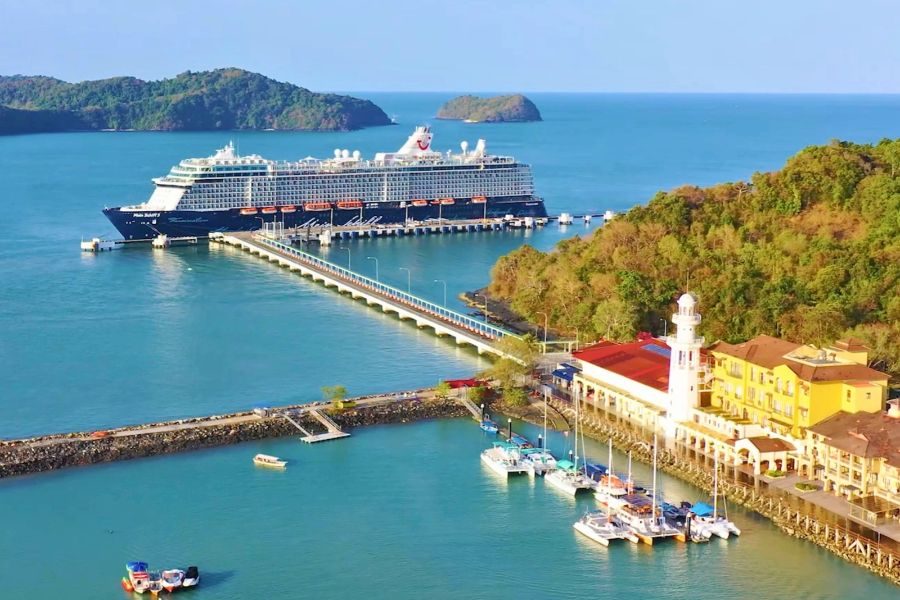
Malaysia combines historic urban districts, modern architecture, diverse cultures, and tropical island scenery.
Penang Cruise Port
Penang is one of Southeast Asia's most convenient cruise destinations for independent sightseeing.
Swettenham Pier is located close to George Town, allowing visitors to explore nearby heritage streets and waterfront attractions.
Popular experiences include historic architecture, local food, street art, temples, and traditional clan jetties.
Additional transportation may be useful for attractions farther from George Town.
Best for: UNESCO-listed heritage, multicultural history, street art, and food.
Read our Penang Cruise Port Guide.
Port Klang Cruise Port: Gateway to Kuala Lumpur
Port Klang is the principal cruise gateway to Kuala Lumpur and the surrounding region.
The port is located outside the Malaysian capital, so a road or rail journey is required to reach the city.
Popular Kuala Lumpur attractions include the Petronas Twin Towers, historic colonial buildings, temples, and the Batu Caves.
Travelers should take traffic conditions and return transport arrangements into account.
Best for: Kuala Lumpur sightseeing, architecture, temples, and cultural landmarks.
Read our Port Klang Cruise Port Guide.
Langkawi Cruise Port
Langkawi is an island destination known for beaches, forested mountains, tropical scenery, and scenic viewpoints.
Popular experiences may include the Langkawi SkyCab, local beaches, and selected nature attractions.
The actual cruise landing location and journey to the island's principal sights should be confirmed before departure.
Explore more Malaysia shore excursions.
Indonesia Cruise Ports: Bali, Komodo, Lombok and Java
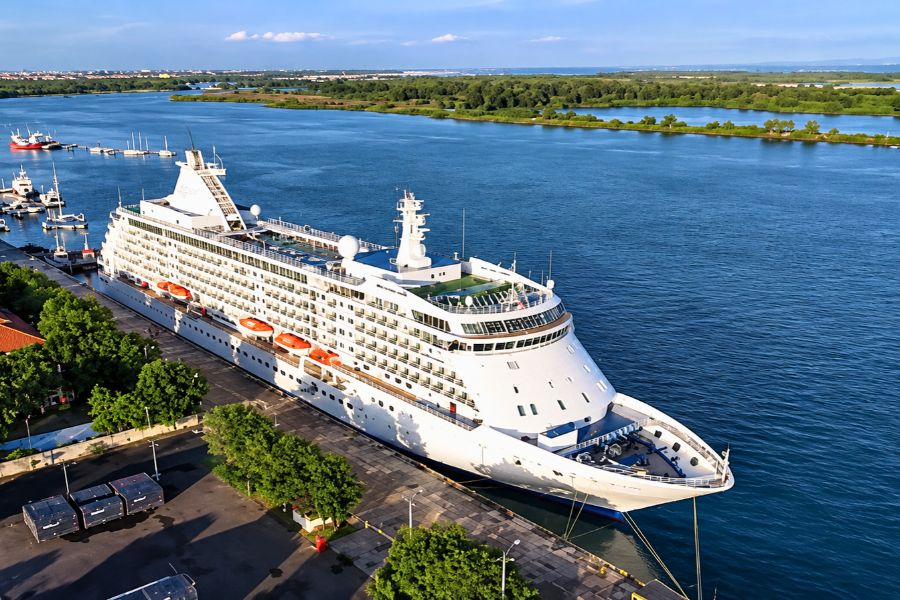
Indonesia is an extensive archipelago with many different cruise destinations, each offering its own natural and cultural attractions.
Travel arrangements vary significantly between large island ports, smaller coastal communities, and protected marine destinations.
Bali Cruise Port
Bali offers temples, traditional villages, gardens, volcanic landscapes, and beautiful coastal areas.
Cruise ships may arrive at Benoa or other designated facilities, including Celukan Bawang in northern Bali.
The arrival location has a major effect on transfer time because the island's attractions are spread across several regions.
Traffic congestion can also be significant around popular areas.
Best for: Hindu temples, Balinese traditions, villages, landscapes, and local crafts.
Read our Bali Cruise Port Guide.
Komodo Island Cruise Port
Komodo is known for its dramatic island landscapes and the protected habitat of the Komodo dragon.
Depending on the cruise itinerary, visitors may arrive at designated landing facilities or use tender boats and authorized local transport.
Activities can include wildlife observation, island walks, and scenic marine experiences.
Access to Komodo National Park is controlled, and visitors must follow the current conservation and guide requirements.
Walking can involve heat, exposed paths, and uneven surfaces.
Best for: Wildlife, conservation, island scenery, and photography.
Lombok Cruise Port
Lombok offers an appealing combination of traditional Sasak culture, coastal landscapes, local crafts, and beautiful beaches.
Ships arriving at Lembar may require a road journey to reach villages and popular sightseeing areas.
For cruise passengers, a focused cultural route often provides a practical introduction to the island.
Semarang and Java Cruise Ports
Semarang serves as a gateway to central Java and its cultural heritage.
Some travelers consider visiting Borobudur Temple, while others prefer historic city attractions and destinations closer to the port.
Long road transfers can make distant attractions demanding during shorter cruise calls.
Explore Indonesia shore excursions for Bali, Komodo, Lombok, Java, and other ports.
Philippines Cruise Ports: Manila and Island Destinations
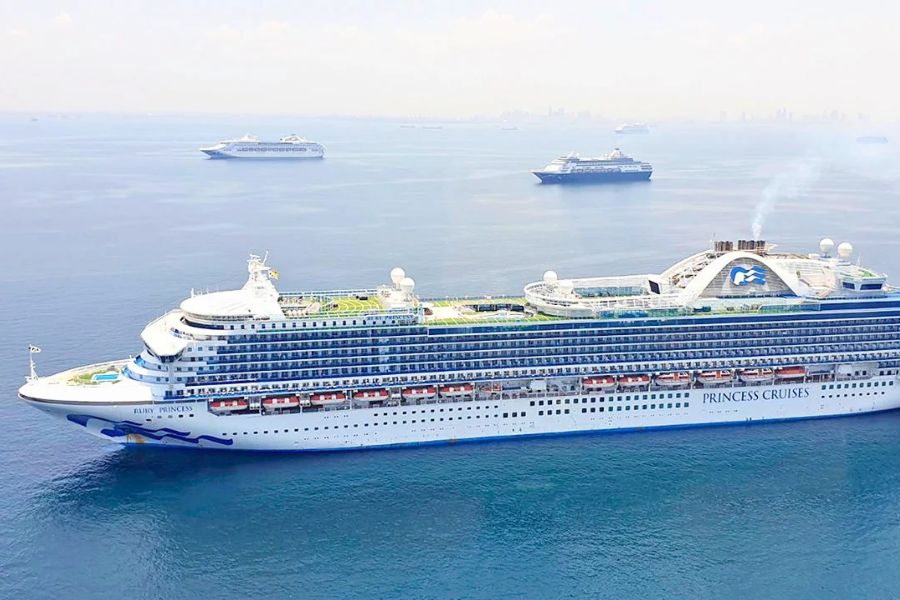
The Philippines offers a wide range of cruise experiences, from historic Manila to beautiful islands and tropical coastal destinations.
Manila Cruise Port
Manila is a major gateway to the history and culture of the Philippines.
Popular sightseeing attractions include Intramuros, historic churches, Rizal Park, and selected urban landmarks.
Because city traffic can be heavy, travelers should plan a compact route instead of attempting to visit too many distant destinations.
Best for: Spanish-era heritage, history, architecture, and city culture.
Read our Manila Cruise Port Guide.
Boracay and Other Island Ports
Island destinations such as Boracay offer beaches, coastal scenery, marine activities, and local communities.
Tender operations and transportation arrangements can vary depending on the ship and island facilities.
Visitors should verify local access restrictions, environmental rules, and marine conditions before booking independent activities.
Singapore Cruise Ports: Marina Bay and HarbourFront
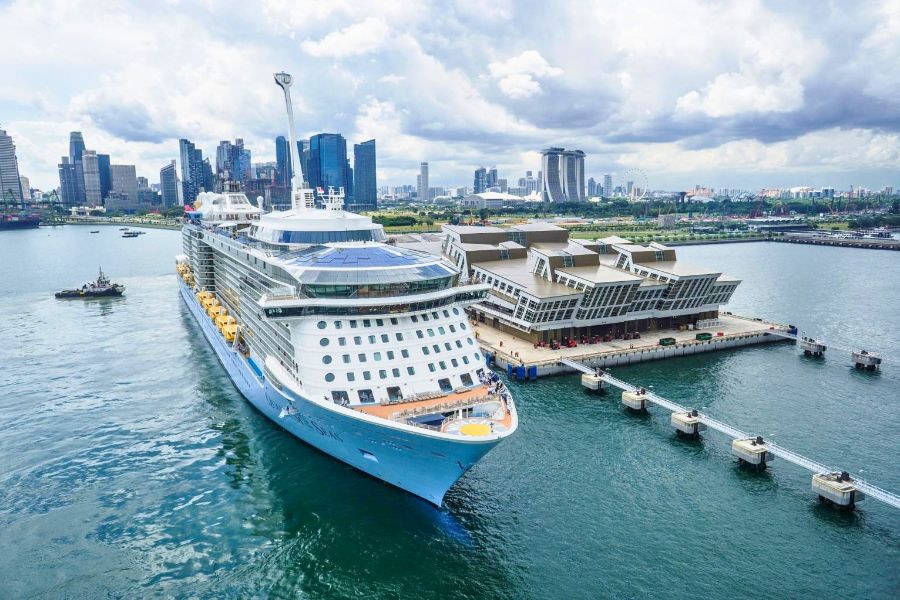
Singapore is an important embarkation, disembarkation, and port-of-call destination in Southeast Asia.
Its two principal cruise terminal areas are Marina Bay Cruise Centre Singapore and Singapore Cruise Centre at HarbourFront.
These terminals are located in different parts of the city.
Passengers must confirm the assigned terminal before arranging transportation, a private guide, or an airport transfer.
Marina Bay Cruise Centre
Marina Bay Cruise Centre serves large cruise ships near the southern edge of central Singapore.
Visitors can use taxis, private transportation, and the wider public transport network to reach the principal attractions.
Popular sightseeing destinations include Marina Bay Sands, Gardens by the Bay, Chinatown, and historic civic landmarks.
Singapore Cruise Centre at HarbourFront
The HarbourFront terminal is connected to a major commercial and public transport district.
It is convenient for selected urban attractions and connections toward Sentosa.
However, travelers should not assume their ship uses HarbourFront simply because they are sailing from Singapore.
Best for: Modern architecture, gardens, cultural neighborhoods, and city sightseeing.
Hong Kong Cruise Ports: Kai Tak vs Ocean Terminal
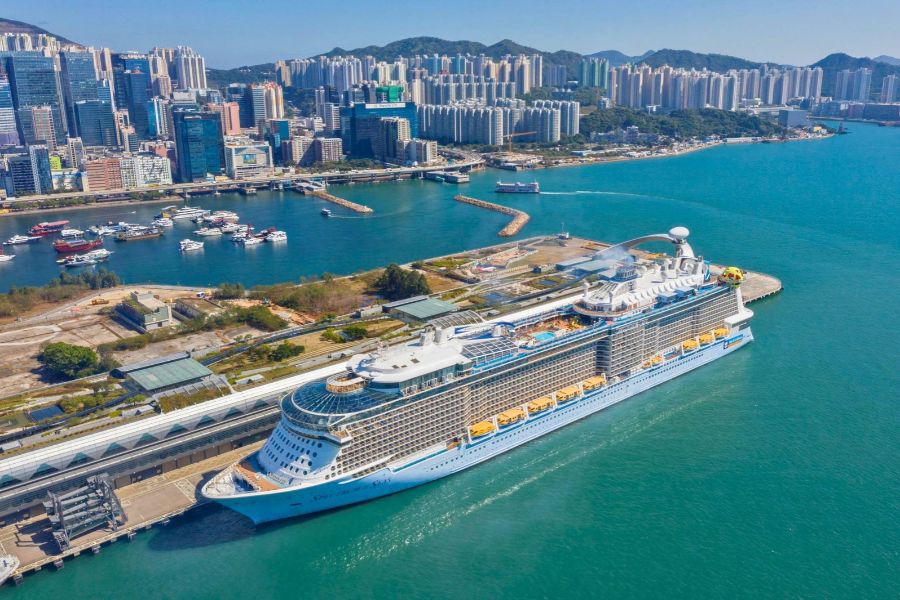
Hong Kong is one of the most recognizable cruise destinations in East Asia, famous for Victoria Harbour, the skyline of Hong Kong Island, bustling markets, temples, and historic neighborhoods.
Its two main cruise terminals create very different passenger arrival experiences.
Kai Tak Cruise Terminal
Kai Tak Cruise Terminal is located on the former airport runway in eastern Kowloon.
It offers modern facilities and attractive harbour views, but it is not immediately beside the principal shopping and sightseeing districts.
Passengers generally need transportation to reach destinations such as Tsim Sha Tsui, Central, and Victoria Peak.
Ocean Terminal at Tsim Sha Tsui
Ocean Terminal is located beside Harbour City and the Tsim Sha Tsui waterfront.
Visitors can explore nearby attractions such as the Star Ferry, Clock Tower, and Victoria Harbour promenade on foot.
This terminal is more convenient for independent waterfront sightseeing.
However, the cruise line determines the assigned terminal, and passengers should not assume the same ship always uses the same facility.
Read our Hong Kong Cruise Port Guide for detailed comparisons of Kai Tak and Ocean Terminal.
Which Asia Cruise Ports Are Best for Independent Sightseeing?
Some ports are more suitable for independent exploration than others.
The main deciding factors are the distance between the terminal and attractions, availability of public transport, language considerations, walking requirements, and the amount of time ashore.
| Cruise Port | Independent Sightseeing | Main Consideration |
|---|---|---|
| Penang, Malaysia | Relatively convenient | George Town attractions near Swettenham Pier |
| Yokohama, Japan | Convenient from selected terminals | Actual berth and onward transport to Tokyo |
| Hong Kong Ocean Terminal | Very convenient for waterfront sightseeing | Confirm Ocean Terminal rather than Kai Tak |
| Shimizu, Japan | Convenient for nearby waterfront attractions | Vehicle useful for major Fuji viewpoints |
| Laem Chabang, Thailand | Challenging for independent sightseeing | Long transfer to Bangkok |
| Phu My, Vietnam | Challenging for independent sightseeing | Industrial port and distance to major attractions |
| Port Klang, Malaysia | Additional transport required | Travel to Kuala Lumpur |
| Komodo, Indonesia | Controlled local access | Conservation rules and authorized guiding |
The classifications above are general planning guidance, not guarantees of walk-off access. Actual berth instructions and local security requirements take priority.
How to Choose the Right Asia Shore Excursion
The best shore excursion is not necessarily the one that visits the greatest number of attractions.
For cruise passengers, a rewarding day depends on choosing places that fit the actual port arrival, transport requirements, personal interests, and final boarding time.
1. Start with Your Ship and Port of Call
Check the cruise line's published itinerary and identify the exact port name.
Find out if the vessel docks alongside or uses tenders, and confirm the passenger terminal when the destination has more than one.
2. Calculate Your Usable Time Ashore
Do not treat the ship's scheduled arrival and departure times as the full sightseeing window.
Allow time for immigration, disembarkation, tender transfers, terminal exits, and return procedures.
The final all-aboard time may be earlier than the published sailing time.
3. Consider Travel Distance Before Attractions
A landmark can look close on a map but require a lengthy journey through city traffic or winding island roads.
For long-distance ports such as Laem Chabang and Phu My, road transportation may occupy a substantial portion of the day.
A shorter itinerary with fewer attractions may provide a better experience.
4. Match Walking Level to Your Group
Review walking distances, steps, steep slopes, uneven surfaces, heat, and the availability of rest stops.
Travelers seeking a senior-friendly itinerary may prefer cultural sightseeing with a private vehicle, shorter walks, and flexible breaks.
Active travelers may enjoy kayaking, hiking, or longer outdoor adventures where suitable.
5. Choose Private or Shared Small-Group Tours
Private shore excursions offer greater flexibility to adjust the route, walking pace, and sightseeing priorities.
Shared small-group departures can offer good value for passengers traveling on eligible cruise dates and comfortable following a fixed itinerary.
Both options should have clear pickup instructions, tour inclusions, and return arrangements.
Explore our shared small-group shore excursions or request a customized private excursion.
Best Asia Cruise Ports for Senior Travelers
Asia offers many enjoyable destinations for older cruise passengers, particularly when sightseeing is planned at a comfortable pace.
However, a destination's suitability depends on the specific attractions and not simply the city or country.
Choose Comfortable City and Cultural Experiences
Selected tours in Yokohama, Busan, Keelung, Penang, and central Hong Kong can provide cultural experiences without requiring extended hiking.
Private transportation can reduce unnecessary walking between attractions.
Consider Tropical Heat and Humidity
Vietnam, Thailand, Malaysia, Singapore, Indonesia, and the Philippines can experience high temperatures and humidity.
Choose itineraries with shaded stops, air-conditioned transport, regular drinking water breaks, and appropriate rest periods.
Review Steps and Uneven Surfaces
Historic temples, gardens, forts, markets, and coastal viewpoints may include stairs or uneven pathways.
Ask about the amount of walking before booking, particularly if someone in your group uses a walking aid.
Prefer Realistic, Unhurried Itineraries
A comfortable day visiting two or three meaningful attractions may be more rewarding than attempting a demanding multi-city route.
Allow time for lunch, restrooms, photography, and the return journey to the ship.
Important Travel Tips for Asia Cruise Passengers
Confirm Visa and Entry Requirements
Entry requirements vary by nationality, country, passport type, and cruise itinerary.
Some cruise passengers may qualify for visa exemptions or special entry arrangements, while others require advance approval.
Always check the current official immigration rules for every destination on your itinerary and follow your cruise line's instructions.
Read our Asia cruise visa guide for general preparation advice, but verify the official requirements before departure.
Check the Local Currency
Asian cruise itineraries often cross several countries with different currencies.
International credit cards are common in major cities, but smaller markets, local taxis, and rural attractions may require cash.
Carry an appropriate payment method and confirm currency requirements before leaving the ship.
Prepare for Different Weather Conditions
Asia spans several climate zones.
Japan and South Korea have distinct seasonal changes, while much of Southeast Asia experiences tropical weather and regional monsoon patterns.
Rainfall, typhoons, extreme heat, and other weather conditions can affect sightseeing and port operations.
Understand Cultural Etiquette
Temples, shrines, mosques, palaces, and other cultural landmarks may have specific dress codes and visitor rules.
Covering shoulders and knees, removing shoes, and respecting restrictions on photography may be required at selected sites.
Follow your local guide's instructions and any signs displayed at the attraction.
Do Not Assume Every Port Has Easy Taxis
Some commercial ports restrict independent vehicle access.
Others are located far from the city, with limited local transport available at the passenger exit.
Confirm your pickup location and transportation arrangements before disembarking.
Plan Around the Final All-Aboard Time
Always use the final boarding time announced by your cruise line.
Allow time for traffic, pier security, terminal access, and tender queues where applicable.
A realistic return buffer is especially important for excursions involving long road transfers or multiple transport connections.
Frequently Asked Questions About Asia Cruise Ports
What are the most popular cruise ports in Asia?
Popular Asian cruise destinations include Yokohama, Kobe, Busan, Jeju, Keelung, Hong Kong, Ha Long Bay, Phu My, Laem Chabang, Phuket, Penang, Port Klang, Singapore, Bali, and other regional ports.
Which Asian cruise ports are closest to city centres?
Some terminals, such as Hong Kong's Ocean Terminal and Penang's Swettenham Pier, are convenient for nearby waterfront or heritage sightseeing. Other ports require transportation before visitors can reach the main attractions.
Are all Asia cruise terminals within walking distance of attractions?
No. Some terminals are located in secure commercial ports or outside major cities. Passengers may need an authorized shuttle, taxi, public transport, or prearranged excursion vehicle.
Do cruise ships dock or tender in Asia?
Both arrangements are common. Some vessels dock directly at cruise terminals, while others anchor offshore and transfer passengers using smaller tender boats. The arrangement depends on the destination, berth, ship, and local conditions.
What is the difference between a cruise terminal and a cruise port?
A cruise port is the wider maritime destination or harbour area. A cruise terminal is a specific passenger facility or designated arrival point within that port. Large destinations may have several terminals.
Can you explore Asia cruise ports independently?
Yes, particularly at centrally located terminals. However, industrial ports, distant city gateways, and islands with limited transportation may be easier to explore through organized shore excursions.
Which cruise ports in Asia are best for cultural sightseeing?
Japan, South Korea, Taiwan, Vietnam, Malaysia, and other destinations offer numerous historic and cultural experiences. The best choice depends on the actual port, transfer distance, and the available sightseeing time.
Which Asia cruise ports are best for nature and scenery?
Shimizu, Jeju, Ha Long Bay, Phuket, Bali, Komodo, Langkawi, and several other destinations offer scenic and nature-focused experiences.
Are private shore excursions available in Asia?
Yes. Private shore excursions can be arranged in many Asian cruise destinations, with transportation, guides, and sightseeing routes planned around the cruise ship's schedule.
Are shared small-group shore excursions available?
Yes. Selected ships and sailing dates may have shared small-group departures. Availability varies by port, itinerary, and travel date.
Do cruise passengers need visas in Asia?
Visa and entry requirements vary by nationality, destination, and cruise itinerary. Always verify the current official rules and cruise line requirements before traveling.
How early should I book shore excursions in Asia?
Advance booking is recommended for popular destinations, busy cruise dates, specialized activities, and private transportation. Booking earlier provides more time to confirm the meeting point and suitable itinerary.
What happens if my cruise ship changes port or arrival time?
Port calls can change for operational or weather-related reasons. Contact your tour provider as soon as a change is announced to discuss the applicable booking conditions and possible adjustments.
How do I choose between a cruise line tour and an independent excursion?
Compare the actual itinerary, group size, transport arrangements, walking level, price, cancellation policy, and return-to-ship provisions. The most suitable option depends on your priorities and the port's logistics.
Explore Asia Shore Excursions with Local Experts
From Japan's historic cities and South Korea's coastal temples to the cultural landmarks of Vietnam, the tropical islands of Southeast Asia, and the spectacular skylines of Hong Kong and Singapore, Asia offers an extraordinary range of destinations for cruise passengers.
The most rewarding shore excursions begin with a clear understanding of the port itself. Knowing your arrival terminal, transportation options, available sightseeing time, and preferred walking pace allows you to make more informed choices before stepping ashore.
At Shore Excursions Asia, we organize private and selected shared small-group experiences across Asia and beyond, with local guides, practical transportation arrangements, and sightseeing plans built around cruise schedules.
Explore our destination collections for Japan shore excursions, South Korea shore excursions, Taiwan shore excursions, Vietnam shore excursions, Thailand shore excursions, Malaysia shore excursions, and Indonesia shore excursions.
For guests seeking a personalized experience, design your private shore excursion by sharing your cruise ship name, port of call, arrival date, final boarding time, and preferred attractions.
Let the port guide your planning, choose experiences that fit your available time, and enjoy discovering Asia at a comfortable pace.


 Send Inquiry